Wine Storage in a Kitchen Island: Layout and Design Options
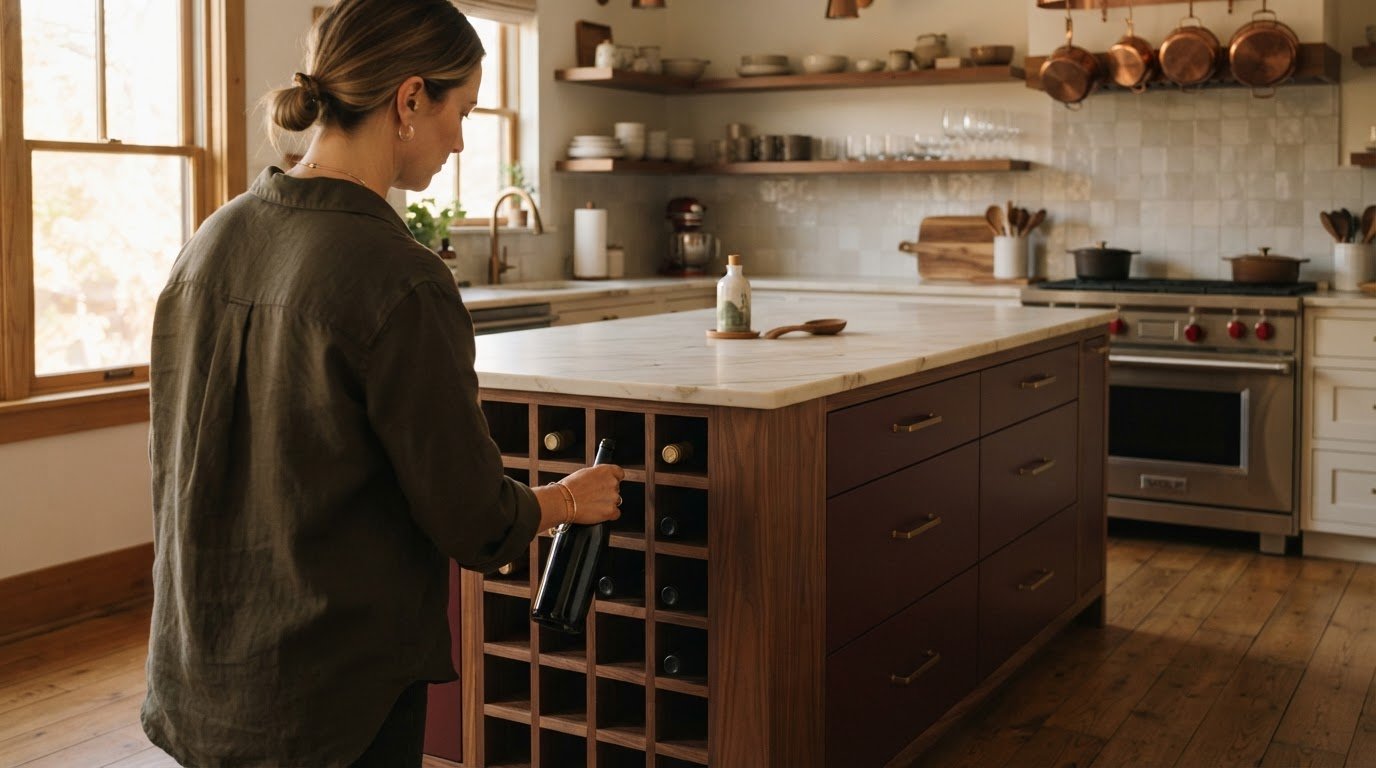
*Pictures are renderings. Actual wine racks may look different
A kitchen island can make room for wine storage without giving up its role as a gathering and work surface. Options include an integrated wine rack or a kitchen island dining table with a wine rack and three drawers; one such table measures 70.8 inches. Planning wine storage in a kitchen island means balancing bottle access and display with the island's layout.
It makes sense to want wine storage in a kitchen island to feel intentional, not like an afterthought. The right design depends on how you use the island, whether you want bottles on display or tucked away, and how the storage fits with the cabinetry and walkways. A well-planned layout can bring your collection into the room while keeping the island practical.
This guide covers wine rack configurations and design choices for kitchen islands, along with layout decisions that shape a cohesive result. Learn what to consider when adding storage to a new or existing island, and when a custom wine storage solution may better suit your space.
Key Takeaways
- Choose a rack configuration that suits the island's layout and the way you want to access or display your bottles.
- Consider how wine storage will fit alongside the island's other functions, including dining, preparation, and cabinetry.
- Coordinate the storage design with the room's materials and finishes for a cohesive look.
- For a tailored design, explore custom wine storage and cooling options that suit the space and collection.
Table of Contents
Wine storage in kitchen island
A kitchen island can combine bottle storage with work, dining, or serving space. One example is a 70.8-inch kitchen island dining table with a wine rack and three drawers. That configuration pairs open bottle storage with enclosed space for dining items. A custom design can instead integrate wine racks into the island cabinetry, keeping the storage visually connected to the kitchen.
Start by deciding what the island needs to do each day. An island used for meal preparation may need a clear work surface and accessible storage. On a seating-focused island, a rack on the dining side keeps bottles within easy reach. If the island serves both purposes, separate preparation, seating, and wine display across different faces.
Choose a rack layout that suits the island
Open bottle cubbies put a collection on view, while a more contained rack creates a quieter look. A horizontal arrangement can run along one cabinet face; a compact grid can define a display area. For example, placing the rack at the end of the island, away from the main work surface, keeps bottles accessible without taking up the central area.
Consider how you will select and return bottles. A rack facing the kitchen makes serving during meal preparation convenient. Storage facing the dining area is easy to reach when the island is a gathering place. A two-sided design can dedicate one face to wine and the other to drawers or cabinets. Choose an arrangement that suits the island's main use and the room's circulation.
- End-panel rack: Uses an island end for a distinct wine display, leaving the long work surface available.
- Cabinet-face rack: Integrates storage into one side, which can suit an island with seating on the opposite side.
- Open cubbies: Put bottles on view and can complement a display-focused kitchen.
- Dining-table arrangement: Combines wine storage with drawers, as in the 70.8-inch example.
Coordinate storage with the rest of the island
Rack placement is only one part of the design. Cabinet fronts, countertop edges, hardware, and nearby finishes all influence how the wine area looks. A wood rack, for example, can echo wood cabinetry, while a contrasting finish can make it a focal point. Aligning the rack's edges with cabinet divisions helps it look integrated rather than added later.
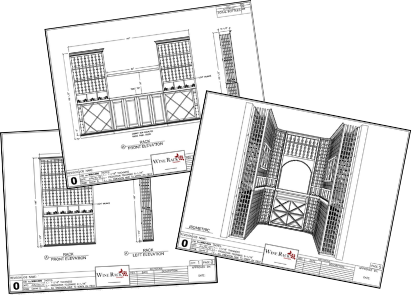
Plan the rack alongside drawers, doors, and seating rather than treating it as a separate insert. A drawer above or beside the rack can affect how easily you reach bottles. Stools need room around the seating face, and handles should not interrupt the display. A coordinated elevation drawing can help show how these elements fit together before construction.
Consider access, display, and collection size
The size and shape of your collection can guide the rack layout. A small selection may fit naturally at the end of an island, while a larger collection may call for storage across a cabinet face. Consider how you access bottles, too. If your collection changes often, an open arrangement makes labels easier to see. If the island serves several purposes, a more restrained rack can preserve usable cabinet space.
Kitchen islands are surrounded by active work zones, so account for nearby appliances, sinks, and walkways. A rack beside the main prep area, for example, may compete with space for ingredients and serving dishes. Placing it on a less busy end can make it easier to access. A custom design can coordinate the rack with the island cabinetry and the kitchen's overall plan.
For a polished result, settle the island's purpose, rack location, and display style as connected decisions. A 70.8-inch dining-table example shows one way to combine a wine rack and drawers, while a built-in arrangement can be tailored to a kitchen's cabinet layout. The final design should make bottles easy to reach and keep the island's work or dining function clear.
Wine Rack Concepts
Wine Rack Concepts, LLC helps bring kitchen wine storage into a cohesive design, with solutions shaped around the room, collection, and intended display. If an island requires a tailored approach, a custom wine cellar design can inform choices about rack placement and how wine storage relates to the broader space. The Wall Wine Rack Series and Classic Series offer additional rack options for considering how materials and presentation can complement the kitchen. For a project that also requires a dedicated storage environment, Wine Cellar Cooling is another relevant consideration. The right direction depends on whether the priority is island integration, a wider wine display, or storage beyond the kitchen. To discuss your kitchen wine storage plans, contact Wine Rack Concepts, LLC.
Shape the Island Around Your Collection
Wine storage in a kitchen island can make your collection part of the room's character. Let the island's everyday purpose guide the design, whether it primarily supports meal preparation, dining, or entertaining. Balancing display, access, and the kitchen's style gives you a practical starting point for an integrated design.
Wine Rack Concepts, LLC can help translate those priorities into a coordinated plan for your space. Consider how you want the wine area to relate to cabinetry, finishes, and the way people move through the kitchen. A thoughtful design process connects those decisions, so the island's wine storage feels integrated with the room and suits the way you want to enjoy your collection.
Request a free custom design from Wine Rack Concepts, LLC to explore a wine storage plan tailored to your kitchen island.
Have an expert help today!
Free 2D wine cellar design