Wine Pegs vs. Cable Racks: Choosing the Best Modern Wine Display System

*Pictures are renderings. Actual wine racks may look different
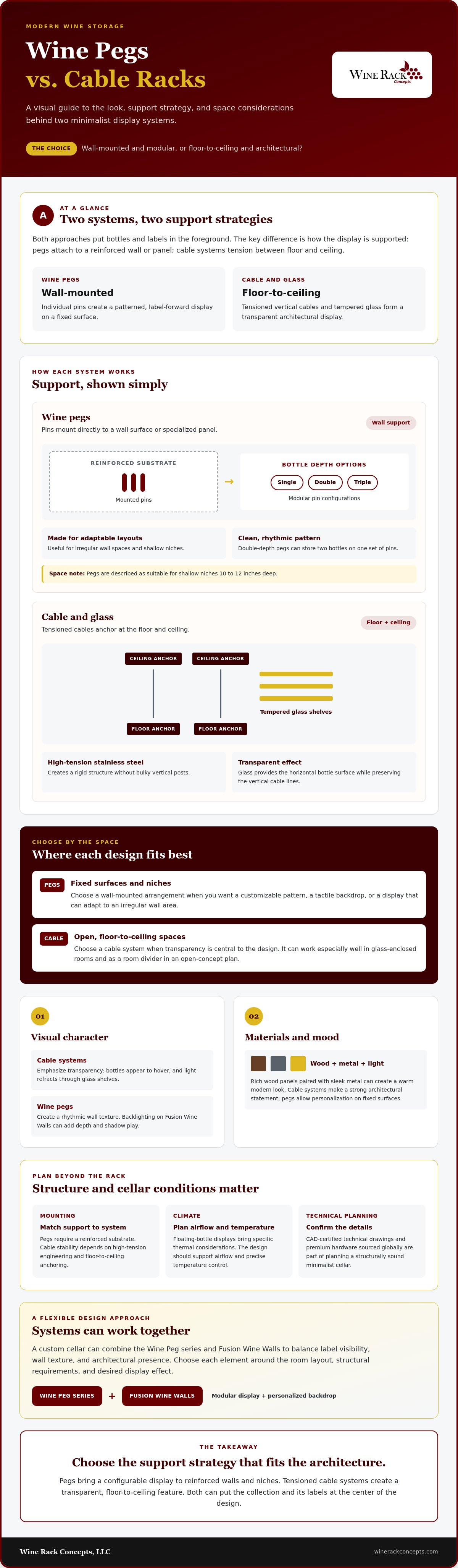
The most secure way to store a high-value wine collection might actually be the one that looks the most invisible. You've likely spent years curating a selection of labels that reflect your personal taste, and now you want a display that does them justice without the visual weight of traditional wood racking. It's common to feel a bit of hesitation when considering minimalist systems. Seeing hundreds of pounds of glass suspended by slim hardware often triggers a valid concern about structural integrity and long-term safety.
We understand that choosing between wine pegs vs cable racks isn't just about aesthetics; it's about finding a solution that supports your collection's weight while providing maximum label visibility. If you're looking for a gravity-defying focal point that doesn't compromise on durability, this expert comparison will provide the clarity you need. We'll examine the technical nuances of both modular wall-mounted pegs and architectural floating cable systems. This guide narrows down the options based on your specific space, helping you design a high-performance cellar that functions as a stunning piece of modern decor.
Key Takeaways
- Evaluate the core differences between wine pegs vs cable racks to determine whether a wall-mounted or floor-to-ceiling architectural system best suits your specific layout.
- Understand the critical structural requirements for each design, including the wall blocking needed for pins and the high-tension engineering required for cable stability.
- Identify how to optimize airflow and maintain precise temperature control in modern cellars where floating bottles present unique thermal challenges.
- Learn how to combine various systems, like the Wine Peg series and Fusion Wine Walls, to achieve maximum label visibility and professional-grade durability.
- Discover how CAD-certified technical drawings and globally sourced premium hardware ensure your minimalist cellar is both aesthetically stunning and structurally sound.
Understanding Modern Minimalist Wine Storage Systems
Modern wine storage has moved beyond the dark corners of the basement. Today, collectors seek an architectural focal point that integrates seamlessly with their living space. This shift has led to a debate over wine pegs vs cable racks, as both offer a minimalist aesthetic that prioritizes visual impact. While traditional wood racks focus on density, these modern systems treat each bottle like a piece of art. High-end displays now emphasize label-forward visibility, ensuring that the bottle is the star of the show.
Proper display doesn't mean sacrificing the ideal temperature and humidity for wine storage. Whether you choose a wall-mounted pin or a suspended cable, the goal is to maintain professional-grade conditions within a visually light structure. We utilize premium hardware sourced globally to ensure these systems meet the rigorous demands of both residential and commercial cellars. This approach allows for a gravity-defying look that remains rooted in the classic principles of wine preservation.
The Anatomy of a Wine Peg System
Wine peg systems consist of individual metal or wood pins mounted directly to a wall surface or a specialized panel. The Wine Peg series utilizes machined aluminum pins that can be configured for single, double, or even triple bottle depths. This modularity is perfect for irregular wall spaces or shallow niches where a standard rack won't fit. By mounting these metal wine racks directly into a reinforced substrate, you create a rhythmic, textured pattern that highlights the geometry of your collection. If your design requires a dense yet clean look, double-depth pegs allow you to store two bottles on a single set of pins while maintaining a slim profile.
The Mechanics of Cable and Glass Systems
Cable and Glass Wine Racks utilize a different engineering principle altogether. Instead of relying on a wall for support, these systems use high-tension vertical cables anchored to the floor and ceiling. This creates a rigid, safe structure that can support significant weight without the need for bulky vertical posts. The role of tempered glass is particularly vital, as it provides the necessary horizontal surface for the bottles without interrupting the vertical lines of the cables. High-tension stainless steel cables create a sophisticated illusion where bottles appear to float effortlessly in mid-air. This system is particularly effective for floor-to-ceiling installations in glass-enclosed rooms where transparency is the primary design goal.
Aesthetic Comparison: Visual Impact and Design Versatility
Choosing between wine pegs vs cable racks often comes down to the specific visual energy you want to create in your home. Cable systems prioritize transparency. They make your bottles appear as if they're hovering in a void, creating a clean and architectural look. In contrast, wine pegs create a rhythmic, tactile texture against a wall. This pattern can be customized to follow the unique lines of your room, making it a favorite for collectors who view their storage as a structural art installation. While cables disappear to let the wine shine, pegs provide a sophisticated backdrop that anchors the collection.
Lighting behaves differently with each system. In a cable and glass setup, light refracts through the glass shelves. This creates a brilliant sparkle that illuminates the entire collection from top to bottom. Wine pegs offer unique backlighting opportunities, especially when mounted on Fusion Wine Walls. You can wash the wall panel in soft LED light to create depth and shadow play. Regarding spatial depth, pegs are exceptionally versatile. If you have a shallow niche only 10 to 12 inches deep, pegs allow for a stunning display. Cable systems typically require a full floor-to-ceiling path, which makes them ideal for open spaces rather than recessed alcoves.
The Fusion of Materials in Modern Design
Modern design thrives on the contrast between organic and industrial elements. Integrating rich wood panels with sleek metal wine racks creates a "warm modern" aesthetic that fits both contemporary and transitional homes. While cable systems often act as striking room dividers in open-concept floor plans, peg systems allow for a high degree of personalization on fixed surfaces. If you're struggling to visualize which style fits your home, our free design service can help map out the visual impact of each system before installation begins.
Label-Forward vs. Presentation Angles
Visibility is a major factor in creating the right space for your vino. Cable racks offer 360-degree visibility. This makes them perfect for glass enclosures where the wine can be seen from multiple rooms. Peg systems excel at "retail-style" presentation. By using angled pegs, you can tilt bottles toward the viewer to showcase the labels clearly. A single 750ml bottle weighs approximately 2.6 to 3 pounds, so your chosen angle must be supported by professional-grade hardware. For a deeper dive into material choices and storage standards, see our sibling article, The Definitive Guide to Custom Wine Racks.
Structural Engineering: Tension Loads and Mounting Requirements
The structural integrity of your wine room depends entirely on what's happening behind the finished wall or above the ceiling. When evaluating wine pegs vs cable racks, you must consider how each system transfers the weight of your collection to the building's frame. A standard 750ml bottle weighs approximately 3 pounds. This means a 100-bottle display adds a 300-pound load to your structure. Pegs exert a shear force on the wall, while cable systems create a high-tension vertical load between the floor and the ceiling.
For the Wine Peg series, mounting hardware must be anchored into structural blocking or a 3/4-inch plywood substrate. Drywall alone will fail under the weight of a full collection. Cable systems require even more foresight during the planning phase. The top and bottom anchors must be secured into ceiling joists and floor plates to handle the tension required for stability. We source premium hardware globally, including aircraft-grade stainless steel, to ensure these high-stress components never yield. This technical precision is what allows for a gravity-defying look without the fear of structural failure.
The integration of glass within cable systems is a technical feat that requires specialized cradles. These cradles must grip the 1/2-inch tempered glass shelves securely without scratching the surface or creating pressure points. Unlike pegs that support the bottle at two points, glass shelves distribute the weight across a flat surface. This can be safer for delicate or oversized bottles. This structural choice provides a completely transparent path for light, which significantly enhances the floating effect mentioned in previous sections.
Installation Complexity: Pegs vs. Cables
Precision is the greatest challenge during the setup process. Aligning hundreds of individual pegs perfectly across a wall requires meticulous measurements and a steady hand. If one pin is off by even a fraction of an inch, the entire row will look crooked. While some homeowners attempt a DIY peg installation, cable systems almost always require professional expertise. The mechanics involve ball-end cables and threaded tensioners that must be tightened to specific tolerances. If the tension is uneven, the entire structure can look skewed or feel unstable under the weight of the wine.
Material Durability and Long-Term Maintenance
Long-term performance varies between the two designs. Cable systems are remarkably durable, though they may require a minor adjustment to the threaded tensioners every few years to account for natural building settling. Cleaning also differs. Individual pegs require dusting one by one, which can be time-consuming for large collections. In contrast, cable systems utilize glass shelves that catch dust but are easily wiped clean with a microfiber cloth. Standard 1/2-inch tempered glass used in these systems is engineered to support substantial horizontal loads while maintaining a sleek profile.
Integrating Modern Racking with Climate Control Systems
Designing a modern wine display requires a deep understanding of thermodynamics. When comparing wine pegs vs cable racks, the primary environmental concern is how the racking interacts with refrigerated air. Minimalist designs often feature large glass walls, which create a significant thermal load that standard home air conditioning cannot handle. To protect your collection, you must install dedicated wine cellar cooling systems that are specifically rated for high-glass-content environments. These systems are engineered to manage the higher heat gain associated with modern materials, ensuring your wine remains at a consistent temperature year-round.
A successful installation begins with a proper vapor barrier and high-grade insulation behind any wall panels used for wine pegs. If you're building a glass "jewel box" cellar, the refrigeration choice becomes even more critical. Self-contained units are often suitable for smaller, through-the-wall applications, while split systems offer a quieter, more powerful solution for larger architectural displays. We utilize globally sourced components to ensure our systems provide the technical performance required to maintain a stable environment regardless of the cellar's visual complexity. Proper planning at this stage prevents future issues with mold or temperature fluctuations that could ruin a fine vintage.
Airflow Management in Minimalist Racking
Cable systems provide an inherent advantage in airflow management when evaluating wine pegs vs cable racks. Because there are no solid horizontal shelves or thick vertical posts, air can circulate 360 degrees around every bottle. This prevents the "dead zones" often found in traditional wood racking where air can become stagnant and uneven. When positioning your cooling vents, it's vital to avoid directing cold air directly onto glass shelves or cable hardware. Rapid temperature fluctuations can cause condensation or even structural stress on the glass components. For more on the foundational elements of a high-end cellar, explore our guide on Custom Wine Cellar Design.
Thermal Pane Glass and Modern Enclosures
Standard tempered glass is excellent for safety, but it offers very little in terms of thermal resistance. For climate-controlled rooms, we recommend insulated thermal pane glass. This reduces the workload on your cooling unit and prevents condensation from forming on your premium cable hardware. In humid environments, metal components can "sweat" if the temperature differential is too high, potentially leading to label damage or slipping. Specialized refrigeration is a non-negotiable requirement for any floating wine room to ensure the longevity of both the wine and the display system itself. Investing in the right glass and cooling combination protects your investment for decades to come.
Designing Your Custom Cellar with Wine Rack Concepts
Deciding between wine pegs vs cable racks involves more than just picking a favorite look. It requires a careful evaluation of your room's architectural constraints and long-term storage goals. If your space features a prominent, solid wall, the Wine Peg series allows for a modular arrangement that can grow with your collection. Conversely, if you want to define a space without closing it off, Cable and Glass Wine Racks offer a transparent partition that maintains an open-concept feel. Our role is to act as your Master Craftsman, guiding you through these technical nuances to ensure the final result is both safe and breathtaking.
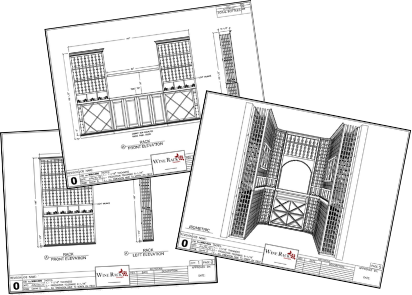
Our collaborative design process is built on precision and transparency. We move beyond simple sketches to provide CAD-certified technical drawings that account for every dimension of your space. Because we prioritize performance, we utilize premium hardware sourced from global partners to ensure that every tensioner, cradle, and pin meets our rigorous standards. This global sourcing allows us to offer the most innovative and durable components available, even if they aren't all made in America. This commitment to quality ensures that your high-value collection is protected by a system that won't fail under stress.
We also specialize in hybrid designs that push the boundaries of traditional storage. You can choose to mix the Wine Peg series with our Fusion Wine Walls to create a multi-dimensional display that features both backlighting and varied bottle depths. Whether you're a residential collector or a commercial operator, we provide professional support and shipping for high-end projects across the country. Our national reach means you have access to expert guidance regardless of your location, ensuring your vision is executed with professional-grade integrity.
Free Design and Consultation Services
One of the biggest hurdles in cellar planning is the fear that the finished product won't match the initial vision. Our free design service solves this planning anxiety by providing a 3D visualization of your modern wine wall before fabrication begins. During this consultation, our team evaluates your specific wall and ceiling structure. We determine if you need additional ceiling joist reinforcement for a cable system or specific plywood blocking for a peg installation. For those seeking a comprehensive, full-service approach, our custom wine cellars division handles every detail from climate control integration to final hardware selection.
Start Your Modern Wine Project Today
Transforming an underutilized space into a sophisticated wine gallery is a journey that starts with a single step. We're here to help you navigate the complexities of material selection, structural requirements, and aesthetic harmony. By combining technical expertise with a passion for fine wine, we ensure your storage solution is as enduring as the bottles it holds. Don't let planning confusion stall your project. Take the leap from inspiration to technical execution with a partner who understands the nuances of luxury storage.
Elevating Your Collection with Modern Precision
The decision between wine pegs vs cable racks ultimately rests on how you envision your space interacting with your collection. If you desire a rhythmic, textured wall display, the Wine Peg series offers unmatched modularity and personalization. For those seeking a fully transparent, architectural statement that divides a room without blocking light, the high-tension cable and glass system remains the gold standard. Each system brings a unique visual energy to your home, transforming simple storage into a sophisticated gallery.
Success in modern cellar design depends on professional-grade structural engineering and integrated climate control. We are specialists in high-tension cable and glass systems, bringing comprehensive cooling expertise to every project. By combining globally sourced premium hardware with a consultative design approach, we help you transition from an initial vision to a high-performance reality. Our team ensures that every technical detail is addressed, from ceiling joist reinforcement to precise airflow management.
Your journey toward a masterfully crafted wine room is just beginning. We look forward to acting as your helpful guide, helping you curate a space that reflects your pride of ownership and passion for the craft. Take the first step toward a gravity-defying display that protects your investment for years to come.
Frequently Asked Questions
Are cable wine racks safe for homes with children or pets?
Cable wine racks are safe when professionally installed using high-tension engineering. The aircraft-grade stainless steel cables are tightened to a point where they remain rigid and do not sway easily. While the structure is sound, the open nature of the display means bottles are reachable. If you have active pets or small children, consider enclosing the system within a glass-walled room to provide a protective barrier while maintaining the floating aesthetic.
Do I need to reinforce my wall to install wine pegs?
Structural reinforcement is a non-negotiable requirement for a safe installation. Because a standard wine bottle weighs approximately 3 pounds, a full display can exert hundreds of pounds of shear force on your wall. You must anchor the pins into 3/4-inch plywood backing or structural blocking behind the finished surface. Mounting directly into drywall will lead to failure. Proper prep ensures your collection remains secure and your wall stays intact for the long term.
Can cable and glass wine racks be installed in a closet?
You can certainly install cable and glass systems in a closet provided there is a clear vertical path for the floor-to-ceiling anchors. This setup is perfect for transforming a reach-in closet into a modern jewel box. You must ensure the ceiling joists and floor plates are accessible for secure mounting. If the closet is climate-controlled, remember to account for the necessary insulation and vapor barriers to protect your home's structure from moisture issues.
How much weight can a single wine peg support?
A single high-quality wine peg is designed to support a significant amount of weight. Most individual pins feature an anchor point rated for 10 to 15 lbs. Since a 750ml bottle weighs only about 3 lbs, the hardware itself has a high safety margin. The true weight limit is determined by the strength of your wall substrate. This is why we emphasize the use of professional-grade blocking to prevent any sagging or structural fatigue over time.
What is the difference between floor-to-ceiling and wall-mounted cable racks?
Floor-to-ceiling systems are the most common choice for creating a floating effect. These rely on tension between the floor and the ceiling joists. Wall-mounted cable racks are an alternative for spaces where floor or ceiling anchoring isn't possible. They use brackets to hold the cables away from the wall. When choosing between wine pegs vs cable racks, consider if you have the structural path required for a full vertical installation.
Do cable systems work for different bottle sizes like Magnums or Champagne?
Cable systems are highly adaptable to various bottle formats. By adjusting the horizontal spacing of the cables or the depth of the glass shelves, you can easily accommodate Magnums, Champagne, or even larger 3-liter bottles. This flexibility is a major advantage for collectors with diverse portfolios. We recommend planning your bottle mix during the design phase so the tensioners and cradles are positioned to provide optimal support and maximum label visibility.
How do I clean a glass and cable wine rack without moving the bottles?
Maintaining a pristine look is straightforward with the right tools. You can use a microfiber cloth and a telescoping duster to clean the cables and the exposed areas of the glass shelves. Because these systems are open, dust doesn't get trapped in deep corners like it does in traditional wood racking. For a thorough cleaning of the glass surfaces, it's best to temporarily move the bottles to ensure no streaks or debris remain on the shelves.
Are these modern racking systems compatible with refrigerated cellars?
Both systems are fully compatible with refrigerated cellars and are often preferred for their modern look. When evaluating wine pegs vs cable racks for a climate-controlled space, cable systems offer the added benefit of 360-degree air circulation. It's essential to use dedicated wine cellar cooling systems and insulated glass to manage the thermal load. Proper vapor barriers are also required to prevent moisture from affecting the hardware or the surrounding wall structure.
Have an expert help today!
Free 2D wine cellar design