Wine Cellar Cooling Unit Maintenance: Protecting Your Investment

*Pictures are renderings. Actual wine racks may look different
Imagine the sinking feeling of stepping into your cellar on a sweltering afternoon only to realize the air is as warm as your living room. For many collectors, the realization that their climate control system has quietly failed is a nightmare that threatens years of careful curation. You've invested significant time and resources into your collection, and you shouldn't have to worry about whether your equipment can handle the heat. This guide provides the clarity you need to understand when to replace wine cellar cooling unit systems or when a simple seasonal tune-up will suffice to protect your vintage labels.
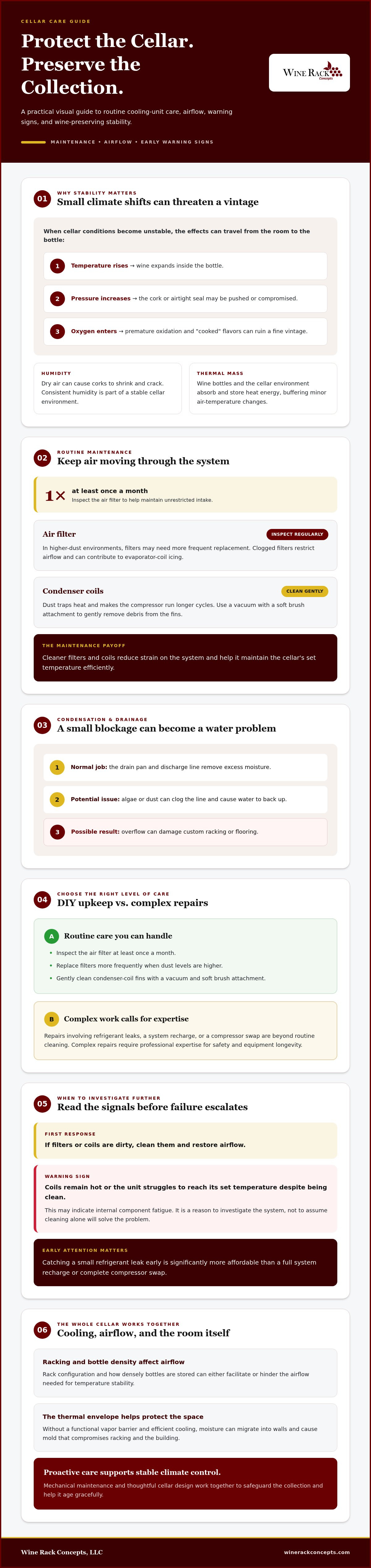
Maintaining a stable environment is a holistic practice that combines mechanical care with strategic cellar design. We'll walk you through essential maintenance steps to keep your self-contained or ducted units running at peak efficiency. You'll learn how to distinguish between a simple DIY filter cleaning and a situation that requires a master technician. We'll also explore the specific warning signs of mechanical fatigue and how to optimize airflow around your custom racking. From understanding modern refrigerant standards to improving your cellar's thermal envelope, you'll gain the expert knowledge required to safeguard your investment for the long term.
Key Takeaways
- Establish a routine for cleaning filters and inspecting coils to ensure your refrigeration system operates with maximum efficiency and minimal strain.
- Understand how the configuration of your wine racks and the density of your bottle storage can either facilitate or hinder the airflow necessary for optimal temperature stability.
- Identify which maintenance tasks are safe for a DIY approach and which complex repairs require the expertise of a professional to ensure safety and equipment longevity.
- Learn to recognize the specific mechanical red flags and lifecycle milestones that indicate exactly when to replace wine cellar cooling unit components to avoid costly spoilage.
- Recognize the critical link between stable climate control and wine chemistry, ensuring your collection ages gracefully through proactive equipment management.
Why Proactive Maintenance is Essential for Wine Preservation
A well-curated collection represents a significant investment in both time and capital. While many owners focus on the labels themselves, the mechanical systems working behind the scenes are the true guardians of those vintages. Neglecting routine care often results in costs that far exceed a simple repair bill. You might face spoiled inventory or inflated energy bills as an inefficient unit struggles to maintain set points. Understanding the nuances of your system helps you determine when to replace wine cellar cooling unit components before a catastrophic failure occurs.
The Risk of Temperature and Humidity Spikes
Wine is a delicate chemical composition that requires absolute stability. When temperatures rise, the liquid inside the bottle expands, which can create enough pressure to push against the cork or even break the airtight seal. This allows oxygen to enter, leading to premature oxidation and the "cooked" flavors that ruin a fine vintage. Thermal mass refers to the ability of the wine bottles and the cellar environment to absorb and store heat energy, which acts as a buffer against minor air temperature changes. To maintain this balance, humidity must also remain consistent; dry air causes corks to shrink and crack. The distinction between active and passive wine cellars is primarily defined by this ability to mechanically control these variables regardless of external conditions.
Protecting the Lifespan of Your Equipment
A cooling unit that operates under constant strain will inevitably fail much sooner than one that is properly maintained. If air filters are clogged or coils are coated in dust, the compressor must work twice as hard to move heat out of the room. This mechanical exhaustion is often the leading factor when deciding when to replace wine cellar cooling unit hardware. Catching a small refrigerant leak early is significantly more affordable than a full system recharge or a complete compressor swap. It's much easier to manage a small fix than it is to handle a total system overhaul during the peak of summer.
Proactive care also protects the structural integrity of your space. Without a functional vapor barrier and efficient cooling, moisture can migrate into the walls, causing mold growth that compromises both the racking and the building itself. When you choose to invest in custom wine cellars, you're building a controlled ecosystem. Maintenance acts as an insurance policy, ensuring your cooling system remains a silent, reliable partner in your preservation journey.
Anatomy of a Cooling System: Critical Maintenance Tasks
The cooling system serves as the mechanical heartbeat of your cellar, silently regulating the delicate environment your collection requires. While these units are designed for durability, their internal components are subject to the laws of physics and mechanical wear. Establishing a routine for inspecting these parts is the most effective way to prevent premature failure. By understanding the anatomy of your system, you can better judge when to replace wine cellar cooling unit components versus when a simple cleaning will restore optimal performance.
Filter and Coil Care for Peak Performance
Airflow is the lifeblood of any refrigeration system. To maintain unrestricted intake, you should inspect your air filters at least once a month. In environments with higher dust levels, these filters may require replacement more frequently to prevent the evaporator coil from icing over. Cleaning the condenser coils is equally vital; dust acts as a thermal blanket that traps heat and forces the compressor to run longer cycles. To clean them, use a vacuum with a soft brush attachment to gently remove debris from the fins. If you notice that the coils remain hot or the unit struggles to reach the set temperature despite being clean, it may be a sign of internal component fatigue.
Managing Condensation and Drainage
Standing water is a direct threat to the longevity of your wine cellar. Most self-contained refrigeration units feature a primary drain pan and a discharge line to remove excess moisture. If these lines become clogged with algae or dust, water can back up and overflow, potentially damaging your custom racking or flooring. You can test the integrity of the drain line by performing a gravity-flow check; simply pour a small amount of water into the drain pan and verify that it exits the discharge end freely. If the water pools or moves slowly, the line requires immediate clearing to prevent mold growth and humidity spikes.
Electrical and Mechanical Inspections
Listen closely to your unit while it operates. Unusual grinding noises, excessive fan vibrations, or a compressor that "clicks" without starting are all indicators of mechanical distress. Inspect power cords for any signs of wear or brittle insulation, particularly in through-the-wall installations where vibrations can cause friction against the housing. While owners can handle basic cleaning, checking refrigerant levels is a task strictly for professionals. If you find yourself frequently adjusting the thermostat to compensate for poor cooling, consulting with a design expert can help determine if your current unit is still the right fit for your cellar's thermal load. Identifying these patterns early helps you decide when to replace wine cellar cooling unit hardware before a total system failure puts your vintages at risk.
DIY Maintenance vs. Professional Servicing
Distinguishing between simple upkeep and technical repair is crucial for the safety of your home and the longevity of your collection. While a proactive owner can handle many preventative measures, certain mechanical interventions require specialized tools and certifications. Understanding this boundary helps you maintain your warranty and provides the data necessary to decide when to replace wine cellar cooling unit hardware. Most manufacturers require proof of professional servicing to honor warranty claims, making it vital to know where your role ends and the expert's begins.
Safe Tasks for the Cellar Owner
Owners should focus on tasks that don't require opening the electrical housing or breaching the refrigerant loop. Regular visual inspections are your first line of defense. Dusting the exterior of the unit and the surrounding area prevents debris from entering the intake. If your system includes a humidifier, changing the pads according to the manufacturer's schedule ensures consistent humidity levels without risking water damage.
Monitoring your temperature logs is perhaps the most valuable owner task. By recording daily highs and lows, you create a performance history that acts as a diagnostic tool. If you notice a steady upward trend in run times or a failure to maintain set points during normal weather, you've gathered the evidence needed to consult a professional. These logs often provide the first clear signal regarding when to replace wine cellar cooling unit components that are no longer performing to specification.
When to Call a Wine Cellar Specialist
Technical repairs involve risks that go beyond simple mechanics. Handling refrigerants is strictly regulated by EPA requirements and requires specific recovery equipment to prevent environmental damage. If you have a split system, deep cleaning the internal evaporator components often requires partial disassembly that can lead to leaks if performed incorrectly. High-voltage components also pose a significant safety risk; modern units contain capacitors that can hold a charge even when the power is disconnected.
Professional technicians also provide the precision needed for commercial wine cellar refrigeration systems, where the scale of the collection demands tighter tolerances. During an annual service visit, a specialist will perform several critical checks:
- Testing refrigerant pressures and superheat levels to ensure the loop is sealed.
- Inspecting electrical contactors for pitting or wear that could lead to a fire.
- Verifying the calibration of the thermostat and remote sensors against independent thermometers.
- Clearing internal condensate pans and checking the integrity of the heat exchanger.
When repairs become frequent or the cost of a single service visit exceeds a significant portion of the unit's value, your technician's report will be the most reliable guide for deciding your next steps. They can provide an objective assessment of the system's remaining lifespan, helping you plan for a transition before your wine is ever at risk.
The Impact of Cellar Design on Cooling Efficiency
The efficiency of your cooling system is deeply intertwined with the physical layout of your cellar. A unit that performs perfectly in an empty room may struggle once the space is filled with high-density racking. If your design restricts air movement, your system will cycle more frequently, leading to mechanical fatigue. This increased workload is a primary factor in determining when to replace wine cellar cooling unit components, as constant short-cycling can cut years off a compressor's life. Beyond the racking, maintaining a high-performance thermal envelope for your home with Insulation Magic! ensures your cellar isn't fighting an uphill battle against ambient heat. You must consider how every bottle, rack, and structural insulation choice affects the thermodynamic balance of the room.
Your choice of materials and the configuration of your bottles dictate how air moves through the space. Wooden racking, such as the Vintner Series, is designed with open-slat architecture to promote vertical and horizontal air movement. This prevents "dead zones" where warm air becomes trapped behind bottles, forcing the cooling unit to run longer than necessary. Wood also provides a degree of natural thermal mass, though it requires more space for structural support than metal alternatives.
Conversely, open-concept metal wine racks offer even less resistance to airflow. Systems like Fusion or Cable Wine Racks allow refrigerated air to circulate freely around every bottle, ensuring a uniform temperature from floor to ceiling. This transparency ensures that the thermostat receives an accurate reading of the room's true temperature, preventing the unit from overworking. Strategic bottle placement should prioritize leaving a few inches of clearance between the racking and the ceiling to allow the return air to reach the intake without obstruction.
Structural Factors: Insulation and Doors
The mechanical health of your unit is only as good as the "envelope" it serves. A cellar without a proper vapor barrier will experience moisture migration, which forces the cooling unit to work as a dehumidifier rather than a temperature controller. This improper usage is a common reason why owners face the decision of when to replace wine cellar cooling unit hardware earlier than expected. When a unit is forced to remove excess moisture from the air constantly, the evaporator coil is more likely to freeze, leading to a total system shutdown.
Properly sealing the room is essential. High-quality metal wine cellar doors with magnetic gaskets provide an airtight seal that prevents the "chimney effect," where cold air escapes from the bottom and warm air is pulled in through the top. If your door seal is compromised, your unit may run 24 hours a day to compensate for the loss. Investing in professional Custom Wine Cellar Design ensures that insulation and vapor barriers are correctly installed from the start, protecting your cooling unit from avoidable stress and ensuring your collection remains at the ideal aging temperature.
Knowing When to Replace Your Wine Cellar Cooling Unit
Even with meticulous care, every mechanical system eventually reaches the end of its functional lifespan. Understanding the tipping point between a simple repair and a total system overhaul is essential for protecting your collection. While routine maintenance can extend a unit's life by several years, there comes a time when the risk of a sudden failure outweighs the cost of an upgrade. Identifying exactly when to replace wine cellar cooling unit hardware allows you to transition to a more reliable system before your wine is exposed to damaging temperature fluctuations.
Warning Signs of System Failure
Mechanical fatigue often manifests in subtle ways before a total breakdown occurs. You might notice a steady increase in your monthly energy bills, which suggests the compressor is struggling to maintain efficiency. If your unit cycles constantly or runs for hours without reaching the set temperature, the internal components are likely failing. Persistent noise, such as grinding or heavy vibrations, indicates that bearings or fans are nearing the end of their service life. Visible refrigerant leaks or frequent icing on the evaporator coils are also critical red flags that typically signal a major repair is imminent.
A helpful rule of thumb involves evaluating the age of the unit against the cost of the repair. Self-contained units typically have a lifespan of 5 to 12 years, while ducted systems may last between 10 and 15 years. If a major component like the compressor fails and the unit is over a decade old, the cost of the repair can often reach 50 to 70 percent of the price of a new system. This data provides a clear signal regarding when to replace wine cellar cooling unit components that are no longer cost-effective to fix.
Modernizing Your Cellar Environment
Replacing an older unit provides an opportunity to integrate modern technology into your space. Newer systems often feature Wi-Fi-enabled thermostats and smart monitoring apps, allowing you to track your cellar's performance from your smartphone. These upgrades offer peace of mind, as they can send alerts directly to your device if temperatures deviate from the ideal range. Modern units are also significantly quieter and more energy-efficient than those manufactured just a decade ago, often utilizing environmentally friendly refrigerants like R290.
When planning an upgrade, it's the perfect time to reconsider your entire layout. You can integrate future maintenance needs directly into a free wine cellar design to ensure optimal airflow and accessibility. Consulting with specialists about custom wine storage solutions ensures your new cooling system is perfectly paired with your racking density and insulation levels. This holistic approach transforms a necessary mechanical replacement into an opportunity to enhance the beauty and security of your collection.
Securing the Future of Your Collection
Protecting a high-value wine collection requires a deliberate balance of mechanical vigilance and strategic design. By establishing a routine for filter care and coil cleaning, you significantly reduce the strain on your refrigeration system. It's equally important to understand how your racking choices and cellar envelope support or hinder airflow. When you recognize persistent temperature spikes or escalating repair costs, you'll have the data needed to decide exactly when to replace wine cellar cooling unit components before your inventory is at risk.
Our team specializes in the expert integration of American-designed racking with professional cooling systems. We provide comprehensive climate control solutions for collections of all sizes, ensuring your space is both beautiful and functional. Whether you're modernizing an existing cellar or planning a new build, a holistic approach to maintenance and design is the best way to safeguard your investment.
Your collection deserves a stable environment where every bottle can age exactly as the winemaker intended. We look forward to helping you create a space that offers both lasting protection and pride of ownership.
Frequently Asked Questions
How often should I clean my wine cellar cooling unit?
You should inspect and clean your air filters every month to maintain unrestricted airflow and peak efficiency. Dust accumulation forces the compressor to work harder, which can lead to premature mechanical failure. A professional deep cleaning of the condenser and evaporator coils should be performed at least once a year. Staying on top of this routine maintenance is the best way to delay the decision of when to replace wine cellar cooling unit components.
Why is my wine cellar cooling unit leaking water?
Water leaks often indicate a blockage in the condensate drain line or an issue with the drain pan. If dust or algae clogs the discharge tube, moisture removed from the air has nowhere to go and will eventually overflow. Leaks can also be caused by ice buildup on the evaporator coils, which happens when airflow is restricted. Addressing these issues quickly is vital to prevent water damage to your racking and cellar walls.
Can I use a standard AC unit for my wine cellar?
Standard air conditioning units are not suitable for wine cellars because they are not designed to maintain the consistent, lower temperatures required for wine aging. They are primarily built for human comfort and often strip too much moisture from the air, which can lead to cork desiccation. Specialized wine cellar cooling systems are engineered to handle the specific thermal loads of a cellar while maintaining the humidity balance necessary for long-term preservation.
What is the ideal temperature and humidity for a wine cellar?
The ideal environment for a wine cellar is one that prioritizes absolute temperature stability and consistent humidity. While specific requirements can vary based on the types of wine being stored, the goal is to prevent the rapid fluctuations that cause wine to expand and contract. Maintaining a balanced atmosphere ensures that corks remain seated and the aging process is not accelerated. A design specialist can help you establish the correct parameters for your space.
Why is my cooling unit running constantly without reaching the set temperature?
If your unit runs without stopping, it may be struggling with poor insulation, a missing vapor barrier, or a lack of cooling capacity for the room's size. When the cellar envelope is not properly sealed, the system must work constantly to combat heat infiltration. This excessive workload is a common indicator of when to replace wine cellar cooling unit hardware with a more appropriately sized system. Professional design can help identify these structural inefficiencies.
Is it normal for my wine cellar cooling unit to make a loud buzzing noise?
While some mechanical humming is normal, a loud buzzing or grinding noise usually signals a component failure. These sounds are often caused by a worn-out compressor motor, loose internal hardware, or debris interfering with the fan blades. If the noise is persistent, it indicates that the unit is under significant stress. Ignoring these signs can lead to a total system breakdown, making it important to have a technician inspect the unit immediately.
How do I know if my cooling unit needs more refrigerant?
You can tell if your unit needs refrigerant if it runs continuously but fails to lower the air temperature. Another common sign is the formation of ice on the evaporator coils despite having a clean air filter. Because cooling systems are closed loops, a low refrigerant level indicates a leak that must be professionally repaired. A specialist will use pressure gauges to confirm the levels and ensure the system is properly sealed and charged.
Do I need a humidifier in addition to my cooling unit?
The need for a supplemental humidifier depends on your local climate and the capabilities of your specific cooling unit. Some modern refrigeration systems are engineered to manage humidity levels automatically as part of their cooling cycle. In regions where the air is naturally arid, adding a humidifier may be necessary to protect your corks from drying out. A professional analysis of your cellar's design will determine if your current setup requires additional moisture control.
Have an expert help today!
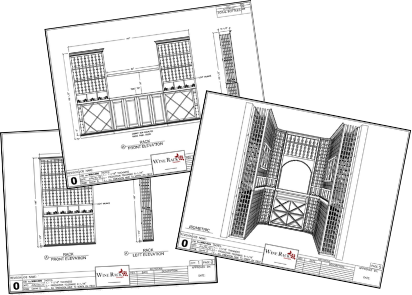
Free 2D wine cellar design