Wine Cellar Capacity Planning: How to Estimate the Space Your Collection Needs

*Pictures are renderings. Actual wine racks may look different
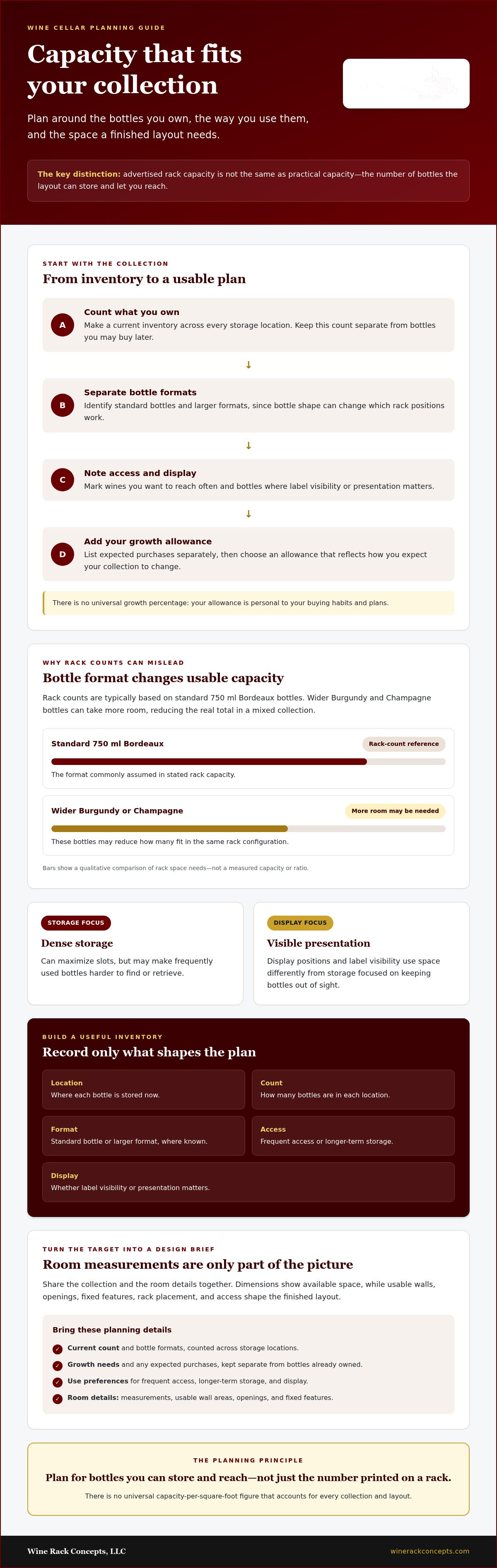
What if a cellar’s advertised bottle capacity doesn’t match what you can actually store? Rack counts are typically based on standard 750 ml Bordeaux bottles, while wider Burgundy and Champagne bottles can reduce the real total. That’s why wine cellar capacity planning should start with the bottles you own, not just room dimensions or a headline capacity.
If you’re unsure how to count mixed formats, allow for future purchases, or avoid an inefficient layout, you’re not alone. A practical plan connects your current inventory to the way you collect and use wine, leaving room for growth without treating every inch as storage.
This guide will help you build a realistic bottle count, estimate usable rather than theoretical capacity, and turn your target into a clear brief for cellar design. We’ll look at bottle formats, growth, and the space needed for racks and access, so you can approach the design process with a clearer understanding of what your collection requires.
Key Takeaways
- Define capacity by how many bottles the full layout can store and let you reach, not by rack counts alone.
- For wine cellar capacity planning, track bottle formats and storage preferences so the layout reflects the collection you actually have.
- Decide which wines need frequent access or display, since presentation choices can shape the storage plan.
- Turn your target into a design brief that includes room measurements, usable wall areas, openings, and fixed features.
- Bring your current count, growth needs, and room details to a designer to explore which layout and racking approach may suit your collection.
What Wine Cellar Capacity Planning Should Measure
A room’s length, width, and height show how much space is available, but not how many bottles a finished cellar will hold comfortably. Practical cellar capacity is the number of bottles a planned layout can store and let you access, accounting for bottle formats, rack placement, and display choices. In wine cellar capacity planning, the collection and its intended use should guide the layout, rather than room measurements alone.
A cellar is designed to protect wine as well as organize it. For an overview of active and passive wine cellars, consider how the cellar’s purpose and environmental conditions relate to its storage plan. Capacity estimates in this guide focus on the collection and usable storage, not on engineering a high-capacity system.
For context on one part of cellar design, watch this video on wine cellar insulation:
Nominal capacity versus practical storage
A rack’s stated bottle count describes a particular configuration, not a guarantee that every collection will fit that way. Capacity figures commonly assume standard 750 ml Bordeaux bottles. Wider Burgundy or Champagne bottles may take more room, while display positions, varied bottle shapes, and space to reach bottles can change the usable total. A rack listed for a certain number of bottles may therefore hold fewer bottles from a mixed collection. There’s no universal capacity-per-square-foot figure that accounts for every layout.
Access matters, too. A dense arrangement may maximize the number of slots, but it may not suit wines you want to find or retrieve often. A design with visible display positions also allocates space differently from one focused on storing bottles out of sight.
Start with the collection you actually own
Before choosing a room layout or rack configuration, make a current inventory. Count the bottles you own separately from purchases you’re considering, then note formats and which wines you’d like to keep readily accessible or display. This gives a designer a grounded starting point, while planned growth stays a separate part of the brief. Your capacity target will then reflect your collection, not an abstract rack count.
How to Estimate Wine Cellar Capacity from Your Inventory
Begin by counting the bottles you physically own. This gives your plan a dependable baseline before possible purchases or room limitations enter the picture. A simple spreadsheet or paper worksheet is enough. Follow the same process across every storage location and record details that could affect where or how each bottle will be stored.
Build a dependable bottle inventory
Work through your current storage locations one at a time, such as a kitchen rack, cabinet, or existing cellar. Record each bottle as you count it, then check the list against each location to catch omissions or duplicate entries. Keep standard 750 ml bottles separate from larger formats, since they may not fit the same rack positions.
Capture only details that will influence the plan. A useful worksheet might include:
- Location: Where the bottle is stored now.
- Count: Number of bottles in that location.
- Format: Standard bottle or larger format, with the format noted where known.
- Access: Everyday or frequent access, or longer-term storage.
- Display: Whether label visibility or presentation matters.
Wine type or other categories can help if they determine placement, access, or display. Skip details that won’t affect the storage plan. The goal is a clear, usable inventory, not an elaborate catalog.
Turn the inventory into a planning target
Keep your current collection distinct from future plans. List bottles you own in one total and specific purchases you expect to make separately. Then choose a growth allowance that reflects your buying habits and how you expect the collection to change. There’s no universal percentage to apply; the right allowance is personal.
A concise planning sequence is: count current bottles, separate formats, note access and display preferences, then add the growth allowance you choose. This turns wine cellar capacity planning into a brief a designer can use to explore a functional arrangement, rather than relying on one headline bottle number.
Once your inventory and target are clear, a wine cellar design consultation can help translate those priorities into a storage plan.
How Bottle Formats, Access, and Display Change Usable Capacity
A bottle count is a useful storage target only if the planned racks suit the bottles and the way you want to use the cellar. Standard 750 ml bottles are not all identical, with typical dimensions of 11.5 to 13 inches tall and 2.9 to 3.5 inches in diameter. Wider Burgundy and Champagne bottles can occupy rack space differently, so treating every bottle as interchangeable may overstate practical capacity.
Plan for bottle shape and format variety
Review your inventory for larger formats and bottles with shapes that differ from the standard bottles in your collection. Note how many you have and whether you want them stored together, displayed, or kept in a particular area. This helps a designer assess which rack configurations may suit the collection. Don’t convert larger bottles into a guessed number of standard-bottle spaces; fit depends on the rack design.
Balance density with access and display
Compact storage can prioritize bottle quantity, while frequent access and prominent display may call for a different arrangement. Decide which wines you reach for regularly, which should be easy to identify, and which you want visible as part of the cellar’s presentation. Label visibility, retrieval space, and dedicated display positions all influence how much of the room serves as dense storage.
Use this comparison to describe your priorities before settling on a layout:
| Storage priority | Planning consideration | Capacity tradeoff |
|---|---|---|
| Compact storage | Prioritize orderly storage over prominent display. | May devote more of the arrangement to bottle storage, though formats still affect fit. |
| Frequent access | Keep everyday selections easy to reach and identify. | Convenience can shape rack placement and reduce the space available for tightly packed storage. |
| Visible presentation | Set aside positions for bottles you want to feature or view by label. | Display choices can shift the balance from maximum storage toward presentation. |
There’s no single arrangement that best serves every collection. As you refine wine cellar capacity planning, record the formats, access needs, and display preferences that matter most. Those decisions help turn your bottle target into a usable layout. Wine Rack Concepts, LLC offers options including the Classic, Carpenter, and Vintner rack series, as well as Wall Wine Racks, Fusion Wine Walls, and cable and glass systems. Explore custom wine cellar design to see how room layout and storage priorities can come together. Wine Rack Concepts, LLC is dedicated to helping you optimize every square inch.
How to Convert Your Capacity Estimate into a Cellar Plan
With a bottle target in hand, describe the room and the priorities the layout needs to serve. A useful brief connects the collection to the space: target capacity, bottle formats, access and display preferences, and physical constraints. This gives a designer practical inputs to assess rather than a bottle count in isolation.
Document the room and storage priorities
Measure the intended room and note which surfaces could accommodate storage. Record openings, windows, doors, and fixed features that may limit rack placement. Note anything that affects how you move through or use the space. Room dimensions and rack arrangement need to be considered together: a wall may appear suitable on a sketch, but openings or other fixed elements can change how much of it is usable.
Keep the brief focused on decisions that affect the plan. Include:
- Collection target: Current bottle count, planned purchases, and your chosen growth allowance.
- Formats: Standard bottles and any larger or unusually shaped bottles.
- Use: Which wines should be easy to reach, stored for longer-term keeping, or displayed.
- Room details: Measurements, usable wall areas, openings, and fixed features.
- Design priorities: The balance you want between storage density, visibility, and convenient access.
These are planning inputs, not a construction specification. Detailed building requirements can be assessed as the design develops. The aim is to give the design process a clear picture of what the cellar needs to hold and how you expect to use it.
Consider cellar conditions alongside capacity
Capacity and climate control are related parts of cellar planning, but bottle count alone doesn’t determine the cooling approach. The room and its intended use need to be considered separately when assessing cellar conditions. If you’re evaluating that part of the project, review wine cellar cooling options and raise room-specific questions during design.
A well-prepared brief makes wine cellar capacity planning more concrete. It helps a designer consider how your target, room, and storage preferences can work together, while identifying questions that still need expert assessment.
Make Your Wine Cellar Capacity Plan Ready for Design
A useful capacity estimate becomes more valuable when you can hand it to a designer as a clear, flexible brief. Summarize what you own, how you want to store it, and what the room can accommodate. Treat the numbers as planning inputs, not a promise that every bottle will fit a particular rack arrangement.
Prepare a concise cellar design brief
Bring the key details together in one place. Include your current bottle count, formats, preferred access and display, growth allowance, and room measurements. Note which measurements or collection details are uncertain so they can be checked rather than treated as final.
- Collection: Current count, bottle formats, and any expected purchases or growth.
- Use and presentation: Wines you want close at hand, bottles intended for longer-term storage, and any display priorities.
- Room: Dimensions, usable wall areas, openings, and fixed features that may affect rack placement.
- Open questions: Details you still need to confirm, such as how an unusual bottle format may fit a proposed arrangement.
This brief gives the design conversation a practical starting point. A designer can help assess how the collection, room, access needs, and presentation goals might work together, and what information is still needed before selecting a layout. If you’re ready to explore options, review custom wine cellar designs.
Get help translating the estimate into a layout
Share your brief when requesting design guidance. It helps frame the questions that matter: whether the room can support the target, how different formats may affect rack choices, and how to balance compact storage with visibility and convenient access. The right arrangement depends on the collection and space, so treat the estimate as a conversation starter rather than a capacity guarantee.
Thoughtful wine cellar capacity planning connects a bottle target to a space you can use and enjoy. With your notes prepared, you can work with a designer to explore a tailored storage plan.
Turn Your Capacity Estimate into a Cellar Design
A useful cellar plan begins with the collection you own, then accounts for bottle formats, access, display, and room constraints. This practical approach to wine cellar capacity planning helps turn a bottle target into a clear design brief, without mistaking a rack’s stated capacity for a guaranteed fit.
With your inventory and room notes prepared, explore how different storage arrangements might suit your collection. Wine Rack Concepts designs and manufactures custom wine cellars and offers a range of wine storage and racking solutions to help translate your priorities into a considered plan.
Your collection has its own character and rhythm. With a clear starting point and thoughtful design guidance, you can create a space planned around the wines you value and the way you want to enjoy them.
Frequently Asked Questions
How do you calculate wine cellar capacity?
Start by counting the bottles you own, recording their formats and where they’re stored. Separate standard bottles from larger or unusually shaped ones, then note which wines need frequent access or display. Add a growth allowance based on your own purchasing habits. This gives you a planning target to compare with a proposed rack layout, using usable space rather than relying only on a rack’s stated bottle count.
How many bottles should a wine cellar hold?
A wine cellar should hold the collection you want to store, plus an allowance for growth that reflects your buying habits. There’s no single bottle target that suits every collector. Consider how many bottles you own now, how your collection may change, and whether you want room for visible display or convenient access. A practical target balances these priorities with the usable space in the planned layout.
Can a wine cellar hold different bottle sizes?
Yes. A cellar can be planned for a mix of bottle sizes, but the rack configuration needs to account for that variety. Capacity claims commonly use standard 750 ml Bordeaux bottles as their reference. Wider Burgundy and Champagne bottles may not fit as densely in the same arrangement. List larger formats separately in your inventory so the proposed layout can be assessed against the bottles you actually own.
Does room size determine wine cellar capacity?
Room size is one input, but it doesn’t determine capacity on its own. Usable wall areas, openings, and fixed features affect where racks can go, while bottle formats, access, and display choices influence the arrangement. Two rooms with similar dimensions can support different practical layouts. Measure the intended space and consider its features alongside your collection before estimating usable bottle capacity.
Should I plan extra space for a growing wine collection?
Plan for growth if you expect your collection to expand, but choose an allowance that fits your purchasing patterns rather than applying an arbitrary percentage. Keep the count of bottles you own separate from bottles you plan to buy. That distinction makes your starting inventory clear and helps a designer understand which part of the target reflects current needs and which part allows for future collecting.
How do bottle shapes affect wine cellar capacity?
Bottle shape affects how efficiently bottles fit into a rack. Standard 750 ml bottles vary in dimensions, and broader Burgundy or Champagne bottles can take up more room than a slim Bordeaux-style bottle. Unusually shaped bottles may also need a different storage position. If a capacity estimate assumes every bottle has the same shape, it can overstate usable storage for a varied collection. Record formats and shapes where possible.
When should I ask a wine cellar designer for help?
Ask for design guidance once you have a current bottle count, notes on formats and access, a growth target, and measurements of the intended room. A designer can help assess how those inputs may translate into a layout, identify details that need clarification, and consider storage and presentation priorities together. Wine Rack Concepts, LLC offers custom wine cellar design and a range of wine storage solutions to support that planning process.
Have an expert help today!
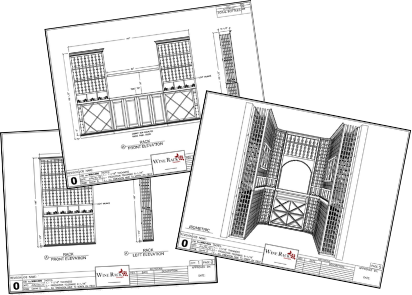
Free 2D wine cellar design