White Oak Wine Racks: The Premium Guide to Durable Wood Storage

*Pictures are renderings. Actual wine racks may look different
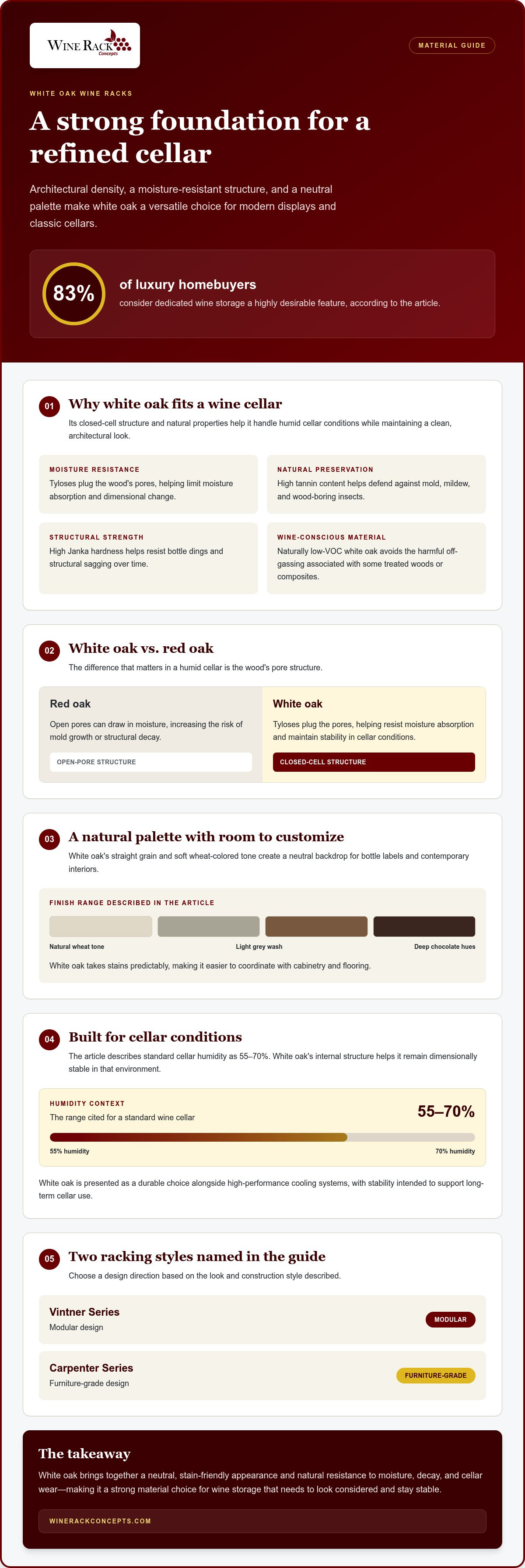
White oak is the only hardwood that successfully bridges the gap between architectural-grade structural density and a neutral palette designed for modern luxury. While traditional materials often lean too red or too rustic, white oak wine racks offer a sophisticated foundation that complements contemporary glass-enclosed showpieces and classic cellars alike. You likely understand the frustration of trying to match high-end home decor while worrying if your storage will succumb to rot or off-gassing in a humid, climate-controlled environment.
It's a valid concern, especially as 83% of luxury homebuyers now consider dedicated wine storage a highly desirable feature. You deserve a solution that provides lasting protection without compromising your home's aesthetic. This guide explores why white oak is the premier choice for collectors who demand both durability and design flexibility. We'll examine how this dense wood supports high-performance cooling systems, takes custom stains beautifully, and creates a stable environment for your growing collection.
Key Takeaways
- Discover why white oak's neutral palette and straight grain make it the ideal choice for modern, glass-enclosed display cellars.
- Learn how the high tannin content in white oak wine racks provides natural protection against mold and structural decay in high-humidity environments.
- Compare white oak's architectural density against redwood and mahogany to determine the best fit for your collection's weight and longevity.
- Explore the design differences between the modular Vintner Series and the furniture-grade Carpenter Series to find your perfect aesthetic.
- Gain insights into how premium wood selection improves the efficiency and stability of your climate control system over several decades.
The Allure of White Oak in Custom Wine Storage
Selecting a material for your cellar is more than a design choice; it's an act of stewardship for your collection. White oak stands as the premier hardwood for high-end wine storage, offering a unique combination of structural integrity and aesthetic grace. Historically, the relationship between wine and oak began with the art of cooperage. Species like Quercus alba became the gold standard for aging barrels because of their ability to hold liquid without leaking. Today, that same legacy translates into white oak wine racks, providing a functional investment that mirrors the quality of the bottles they hold. The wood's sophisticated texture and straight grain patterns create a sense of rhythm and order that enhances any display.
Why White Oak is a Designer Favorite
Interior designers frequently turn to white oak for its remarkable versatility. In its natural state, the wood features a soft, wheat-colored tone that provides a neutral backdrop for any label. This understated palette aligns perfectly with current organic modern and transitional design trends. You'll find it integrates seamlessly into homes where clean lines and natural materials are a priority. Unlike resinous woods like redwood, white oak takes stains with incredible predictability. You can achieve a wide range of finishes, from light grey washes to deep, chocolatey hues, without the uneven blotching often found in other species. This makes it an ideal choice for white oak wine racks that must match existing cabinetry or high-end flooring. It's a wood that adapts to your vision rather than forcing a specific look.
White Oak vs. Red Oak: The Critical Difference
It's a common misconception that all oak species are created equal. Red oak is a popular choice for general home furniture, but it's fundamentally unsuitable for the high-humidity environment of a wine cellar. Red oak has an open-pore structure that acts like a bundle of microscopic straws. This allows it to draw in moisture, which eventually leads to mold growth or structural decay. White oak is different. It possesses a closed-cell structure that naturally resists moisture absorption and prevents off-gassing that could spoil your wine. Tyloses are the biological feature that plugs the wood's pores, making White Oak virtually water-resistant and structurally superior for long-term storage. This density ensures your racking system remains stable and pristine for decades, even when paired with high-performance cooling systems. You won't have to worry about the wood sagging under the weight of a growing collection.
The Structural Science: Why White Oak is Technically Superior
The structural integrity of a cellar depends entirely on how a material reacts to constant environmental stress. While many hardwoods are praised for their appearance, white oak is valued by specialists for its physical properties. It possesses a high Janka hardness rating, which means it resists dings from heavy bottles and avoids the structural sagging that plagues softer woods over time. In a cellar maintained at the standard 55-70% humidity, most materials eventually warp or shift. White oak wine racks remain dimensionally stable because the wood's internal structure is uniquely equipped to handle moisture without compromising its shape.
Understanding Tyloses and Moisture Protection
White oak's secret lies in its vascular anatomy. Tyloses are balloon-like outgrowths that plug the wood's pores, effectively creating a natural vapor barrier. This prevents the "sponging" effect where wood absorbs ambient moisture and expands. For collectors browsing a wooden wine racks collection, this technical detail ensures the racking won't become a breeding ground for structural instability. It's the same reason the wood is trusted for liquid-tight barrels; it simply won't allow moisture to travel through its grain.
Tannins and Natural Preservation
Beyond moisture protection, the chemical makeup of white oak provides a built-in defense system. High levels of tannins act as a natural preservative, warding off mold, mildew, and wood-boring insects. This is essential in dark, damp cellar environments where fungal growth can thrive. According to the USDA white oak database, this species is noted for being heavy, hard, and exceptionally durable. These tannins don't just protect the wood; they ensure the environment remains wine-safe. Unlike some treated woods or composites, white oak is naturally low-VOC and won't release harmful off-gassing that could permeate a cork and spoil your vintage.
If you're planning a high-capacity cellar, the weight-bearing capacity of your shelving is paramount. A single bottle of wine weighs roughly three pounds; a full rack can easily exceed half a ton of pressure. White oak supports these loads without shelf deflection, maintaining the perfect horizontal alignment your corks require. If you're unsure how to calculate the load requirements for your specific space, you can request a free design consultation to ensure your layout is both beautiful and structurally sound.
Comparing White Oak to Other Premium Wine Rack Woods
Choosing the right timber for your cellar is a decision that impacts both the longevity of your bottles and the long-term value of your home. While several species are marketed for storage, white oak wine racks offer a unique balance of mechanical strength and aesthetic neutrality. Most collectors weigh their options between four primary wood types, but the technical and stylistic advantages of white oak often make it the clear winner for luxury installations.
White Oak vs. Redwood: The Aesthetic Shift
For decades, redwood was considered a viable choice because of its natural rot resistance. However, design preferences have shifted away from the saturated red and pink tones that defined cellars in the past. Today's collectors prefer organic modern palettes that feel light and airy. White oak provides a wheat-colored foundation that complements contemporary glass and metal elements perfectly. Beyond color, white oak's structural properties are significantly superior on the Janka hardness scale. While redwood is relatively soft and prone to surface dings, white oak resists damage even in high-traffic commercial environments.
Mahogany is another common contender, known for its fine grain and traditional appeal. While it shares some durability traits with oak, its interlocking grain can be more difficult to stain uniformly. Pine represents a significant luxury gap. It's a soft wood that lacks the density to support high-capacity collections over several decades. Choosing pine often leads to shelf deflection or sagging, which can eventually put your bottles at risk. The higher initial investment in white oak pays off through its structural stability and superior resale value.
Sustainability and Sourcing
Environmental impact is an increasingly important factor for modern homeowners. Choosing domestic white oak reduces the carbon footprint associated with international shipping. Because this wood is exceptionally long-lasting, you won't need to replace your racking system for the life of your home. This longevity makes it a truly eco-friendly choice compared to cheaper materials that end up in landfills after a decade. For a deeper look at how these materials compare across different installation styles, you can explore our full range of wooden wine racks. It's about finding the intersection of beauty, strength, and responsibility.
Designing Your Space with White Oak Racking Series
Transitioning from the technical properties of the wood to the practical application in your home requires a clear strategy. When you choose white oak wine racks, you're selecting a material that serves as a versatile canvas for your design. Whether you're building a compact closet cellar or an expansive commercial display, the adaptability of this hardwood allows it to suit various scales and styles. It's about more than just storage; it's about creating a visual narrative that respects the quality of your collection.
Modular vs. Custom White Oak Solutions
The Vintner Series represents the pinnacle of high-density modularity. This system is designed for collectors who value scalability, allowing you to add new components as your collection matures over the years. If your goal is a more cohesive, architectural look, the Carpenter Series offers a furniture-grade finish that mimics custom millwork. These racks are ideal for seamless floor-to-ceiling installations that eliminate gaps and provide a truly built-in appearance. For those planning a full-scale renovation, reviewing our guide to Custom Wine Cellar Design can help you decide which series best fits your spatial constraints.
Finish and Stain Options
One of the greatest advantages of white oak is how it responds to different finishing techniques. A simple clear coat is often preferred by purists because it highlights the medullary rays, which are the distinctive shimmering flecks found in the grain. If you want to match specific home elements, white oak takes stains like Weathered Grey or Dark Walnut more predictably than most other hardwoods. A helpful tip is to match your cellar's stain to your home’s existing flooring or kitchen cabinetry to ensure the space feels like a natural extension of your living environment.
Contemporary design often benefits from a hybrid approach. You can pair white oak frames with American-made metal doors or specialized peg series to create a transitional aesthetic. Mixing the warmth of the wood grain with the sleek lines of glass or metal provides a sophisticated contrast. This combination is particularly effective in high-visibility areas like dining rooms or under-stair displays where the rack is both a functional tool and a piece of decor.
Climate Control and Longevity for White Oak Cellars
Building a cellar involves creating a precise ecosystem where your racking and cooling systems work in harmony. While white oak wine racks are celebrated for their beauty, they also play a functional role in thermal regulation. The material you choose impacts how hard your cooling system must work to maintain a steady environment. White oak's density provides a significant thermal mass, which helps the room hold its temperature and prevents the cooling unit from cycling too frequently. This stability is essential for the chemical maturation of your wine, as even minor temperature fluctuations can cause the liquid to expand and contract against the cork.
Cooling Unit Compatibility
To maintain the ideal aging temperature of 55°F, you need a system that integrates seamlessly with your wood choice. Brands like WhisperKOOL and CellarPro are specifically engineered to handle the unique demands of a luxury cellar, providing the humidity control that standard air conditioners lack. White oak's closed-cell structure makes it particularly resilient to the constant airflow and high humidity these units produce. If you're outfitting a smaller oak-lined closet or a reach-in display, self-contained wine cellar cooling units offer a compact way to manage the climate without the need for extensive ductwork. These systems ensure that the air surrounding your white oak wine racks remains crisp and stable.
The Role of Vapor Barriers
Even a rot-resistant material like white oak requires a properly sealed environment to perform at its best over several decades. A vapor barrier prevents warm, moist air from migrating into the cellar walls, where it could cause condensation and mold behind your racks. A standard wine cellar wall requires a minimum insulation rating of R-19 to ensure the cooling system operates efficiently without overworking. Before installing your racking, follow this preparation checklist:
- Apply 6-mil plastic sheeting on the warm side of the insulation.
- Seal all penetrations for electrical or plumbing lines with expanding spray foam.
- Ensure the cellar door features a full weatherstrip and an airtight threshold.
- Use moisture-resistant green board or marine-grade plywood for wall finishes.
Maintaining your white oak racks is a simple process that ensures they remain a centerpiece of your home. You don't need harsh chemical cleaners; in fact, they can leave behind scents that might eventually permeate the cellar environment. A light dusting with a dry microfiber cloth is usually sufficient to keep the grain looking sharp. If a bottle leaks or a spill occurs, wipe it immediately with a damp cloth and dry the area thoroughly. This prevents the liquid from settling into the grain and ensures your investment stays in pristine condition for as long as you own your collection.
Investing in Your Collection's Future
Choosing the right foundation for your cellar is a decision that protects your investment for decades. White oak wine racks provide the unique combination of high tannin content for rot resistance and the architectural density required to support high-capacity collections without sagging. Whether you select the modular flexibility of the Vintner Series or the furniture-grade detail of the Carpenter Series, you're opting for a material that adapts to your evolving design needs. If you're ready to elevate your storage environment, selecting a material with proven resilience is the most important first step.
Our team provides expert design consultations to help you navigate these choices, ensuring your storage system integrates perfectly with your home's climate control and interior style. We offer national shipping on all racking systems to bring these premium solutions directly to your door. Transforming your vision into a professional, high-performance cellar is a methodical process that begins with the right materials and a clear plan.
Your collection deserves a space that reflects the care you've put into its curation. We're here to help you build a legacy of storage that remains as timeless as the vintages you protect.
Frequently Asked Questions
Is white oak better than redwood for wine racks?
White oak is often the superior choice for modern cellars because it combines extreme durability with a neutral, wheat-colored palette. Redwood was once the standard for rot resistance, but its pinkish tones often clash with contemporary home decor. White oak wine racks offer comparable moisture resistance while providing a much harder surface that resists dings. If you want a rack that takes custom stains predictably, white oak is more versatile than the resinous grain of redwood.
Does white oak need to be stained or finished for use in a cellar?
It doesn't require a finish for protection because it's naturally resistant to rot and insects. Many collectors prefer the raw, organic look of unfinished oak to emphasize its straight grain. However, the wood's porous surface accepts stains beautifully if you need to match existing cabinetry. A simple clear coat is often the best compromise. It protects the wood from occasional spills while showcasing the shimmering medullary rays unique to this species.
How does white oak handle high humidity in a climate-controlled room?
High humidity is where white oak wine racks truly excel. The wood contains tyloses, which are biological structures that plug the vascular tissue and create a natural vapor barrier. This prevents the wood from absorbing excess moisture and becoming a breeding ground for mold. Unlike red oak or softer pines, white oak remains dimensionally stable. It won't warp or soften even when exposed to the constant 60% humidity levels required for long-term aging.
Can I use white oak wine racks for a large 1000-bottle collection?
Yes, white oak is one of the most reliable materials for high-capacity storage. Its high density provides exceptional weight-bearing strength, which prevents shelf deflection under the massive pressure of a 1000-bottle collection. You can utilize specialized series like the Vintner or Carpenter series to create a secure, floor-to-ceiling installation. The wood's structural integrity ensures that your racks stay perfectly level, which is critical for keeping corks moist and preventing leaks.
Is white oak safe for wine, or will it off-gas and ruin the corks?
White oak is completely wine-safe and has been used in the cooperage industry for centuries. It's a low-VOC material that doesn't produce harmful off-gassing that could penetrate corks and taint your vintages. Species like Quercus alba are prized for their purity and lack of resinous oils. This makes it a much safer alternative to certain treated woods or composite materials that might release chemicals into the sensitive environment of a sealed cellar.
What is the Janka hardness rating of white oak compared to other woods?
White oak has a Janka hardness rating of approximately 1360, making it significantly harder than other common cellar woods. For comparison, California redwood typically sits around 450, while various pine species range from 380 to 420. This high rating means your racking is much less likely to suffer from scratches or impact damage during bottle rotation. It's a Master Craftsman's choice for a storage solution that looks pristine for several decades.
Does white oak expand and contract significantly in a cellar?
Movement is minimal because of the wood's closed-cell anatomy. While all natural materials react to temperature shifts, white oak's density allows it to maintain its shape better than most hardwoods. This dimensional stability is a key reason it integrates so well with climate control systems like WhisperKOOL or CellarPro. You won't have to worry about joints loosening or shelves shifting as the cooling unit cycles, ensuring your collection remains undisturbed in its cradle.
How do I clean and maintain white oak wine racks?
Maintenance is straightforward and requires no specialized chemicals. You can keep your racks in top condition by dusting them occasionally with a dry microfiber cloth. If a spill occurs, it's best to wipe it immediately with a slightly damp cloth and dry the surface thoroughly. Avoid using furniture polishes or oil-based cleaners. These products can introduce unwanted odors into your cellar that might eventually affect the flavor profile of your wine through the cork.
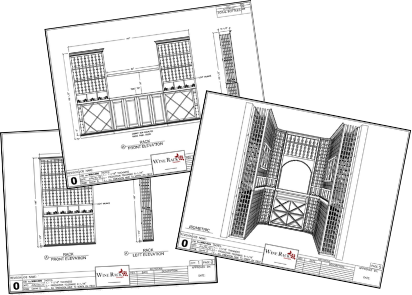
Have an expert help today!
Free 2D wine cellar design