Vintner Series Wine Racks: The Professional Guide to Modular Storage

*Pictures are renderings. Actual wine racks may look different
What if you could achieve the seamless look of a five-figure custom wine cellar for a fraction of the investment? Many collectors feel trapped between the limitations of basic, off-the-shelf kits and the staggering price tags of bespoke millwork. It's frustrating when standard racks leave awkward gaps in your room or fail to scale as your collection grows. You deserve a storage solution that respects the value of your wine while enhancing the beauty of your home.
We believe that high-end aesthetics shouldn't be reserved for unlimited budgets. By utilizing Vintner Series wine racks, you can design a professional-grade display that fits your space perfectly. This guide explores how to leverage modular flexibility to achieve optimal bottle density and aesthetic harmony. We'll walk through stacking options for various ceiling heights, material choices like Mahogany or White Oak, and the strategic use of display rows to create a truly personalized cellar.
Key Takeaways
- Learn how to scale your storage from 3-foot starters to 10-foot floor-to-ceiling displays to fit any room dimension precisely.
- Discover the balance between high-density individual bottle storage and the aesthetic appeal of display rows for improved label visibility.
- Explore a wide range of wood species and finish options that allow Vintner Series wine racks to blend seamlessly with your existing home decor.
- Understand how modular components provide a custom-built look and professional feel without the high cost of bespoke millwork.
- Find out how to integrate climate control and professional design services to ensure your collection is both protected and beautifully showcased.
Understanding the Versatility of Vintner Series Racking
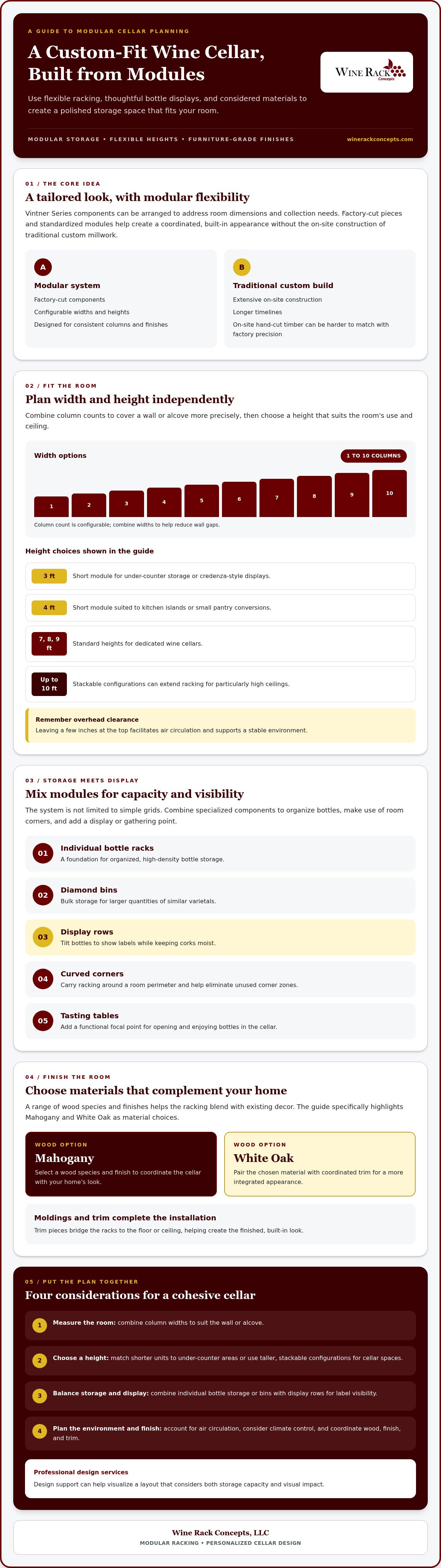
Achieving a professional cellar aesthetic no longer requires the exhaustive timelines associated with traditional carpentry. The Vintner Series wine racks provide a framework where standardized modules are configured to solve the specific spatial challenges of your room. It is a system designed to emulate the look of bespoke millwork while maintaining the efficiency of a modular kit. This philosophy allows collectors to build a sophisticated environment that feels intentional and tailored without the prohibitive costs of a full custom build.
The series has become an industry standard for high-density residential storage because it balances volume with elegance. While Wikipedia's overview of wine racks highlights various materials used for storage, wood remains the preferred choice for those seeking a timeless, furniture-grade finish. By using a modular approach, you gain the ability to scale your storage as your collection grows, ensuring that every bottle is housed in a secure and accessible manner.
Modular vs. Bespoke: Finding the Sweet Spot
Choosing a modular system significantly reduces lead times. Traditional custom builds require extensive on-site construction, which can be disruptive and prone to human error. In contrast, these components are factory-cut with high precision, ensuring that every piece fits together perfectly upon arrival. This level of accuracy is difficult to replicate with hand-cut timber on-site. If you are planning a large-scale installation, the modular nature of the system ensures aesthetic consistency. Every column and every shelf maintains the same grain direction and finish quality, creating a unified look across the entire wall. It's the smart path for those who want a premium result without the logistical headaches of traditional construction.
Key Components of the Vintner Ecosystem
The strength of this system lies in its variety of specialized modules. You aren't limited to simple grids; instead, you can mix and match components to suit your inventory. Individual bottle racks serve as the foundation for organization, while bulk storage options like diamond bins allow for larger quantities of similar varietals. To achieve a truly finished look, the ecosystem includes various moldings and trim pieces. These elements bridge the gap between the racks and your ceiling or floor, creating the "built-in" appearance that defines luxury cellars. For more complex layouts, you can integrate specialized modules:
- Curved Corners: These allow for a continuous flow of racking around the perimeter of a room, eliminating "dead zones."
- Tasting Tables: These provide a functional focal point for opening and enjoying bottles within the cellar itself.
- Display Rows: These tilt bottles at an angle to showcase labels while keeping the corks moist.
If you're unsure how to arrange these elements, taking advantage of professional design services can help you visualize the final layout. This collaborative process ensures that your wooden wine racks are positioned for both maximum capacity and visual impact.
The Engineering of Modularity: Achieving a Custom Fit
The precision of the Vintner Series wine racks lies in their mathematical approach to space. By offering modules that range from a single column to 10-column widths, the system allows for granular control over your floor plan. Modular widths allow for precise, wall-to-wall coverage by combining different column counts to eliminate unsightly gaps. This flexibility ensures that whether your wall is five feet wide or fifty, the racking appears as a singular, continuous installation. You don't have to settle for "close enough" when you can calculate the exact number of columns required to fill a specific alcove.
Customizing Heights for Every Space
Planning for verticality is just as critical as managing floor space. If you are working with limited room, 3-foot and 4-foot modules function perfectly for under-counter storage or credenza-style displays. These shorter units are ideal for kitchen islands or small pantry conversions. For dedicated wine cellars, heights of 7, 8, or 9 feet are standard. If your ceiling is particularly high, stackable configurations can reach up to 10 feet. It's vital to consider technical requirements like overhead clearance. Leaving a few inches at the top facilitates proper air circulation, which is essential for maintaining a stable environment. This attention to detail ensures your collection remains protected while looking professionally installed.
Solving Corner and Transition Challenges
Many rooms feature architectural quirks like support pillars or non-standard angles. The Vintner ecosystem includes curved corner racks that provide a seamless transition between perpendicular walls. These modules prevent the "dead space" often found in DIY setups. If you're mixing different racking depths, transition pieces can bridge the gap to maintain a smooth visual line. Choosing the right material for these complex joints is important; you might find this expert discussion on wood finishes helpful when deciding how to protect these high-contact areas. Integrating these racks with existing features requires careful planning. If you find the dimensions of your room particularly challenging, our experts can help you visualize the perfect layout through a complimentary design consultation. This collaborative approach turns obstacles into unique design opportunities.
Maximizing Storage Capacity and Bottle Visibility
A well-designed cellar does more than just hold bottles; it organizes your passion. When you utilize Vintner Series wine racks, the primary goal is often to maximize bottle density without sacrificing the ability to browse your collection. Individual bottle storage serves as the foundation for this high-density organization, providing a dedicated space for every acquisition. This approach ensures that your inventory remains stable and protected, while the open-air design allows for consistent temperature regulation across every bottle in the rack.
Calculating your storage needs starts with understanding the footprint. For instance, a specific Vintner wine rack model can accommodate up to 300 bottles in a relatively compact area. High-reveal display rows allow you to organize your cellar by varietal or region at a glance, significantly reducing the time spent searching through high-density racks. By prioritizing depth and height, you can achieve a density that rivals commercial storage facilities while maintaining the elegance of a private residence. This balance between volume and visibility is what separates a professional cellar from a simple storage room.
Individual Bottle Racks: The Collector’s Choice
Standardized openings are a hallmark of this series. The racks are designed to accommodate bottles between three and three and a half inches in diameter, which comfortably fits most Bordeaux, Burgundy, and Champagne styles. This universal fit eliminates the frustration of bottles that won't slide in or sit crooked. Beyond standard sizes, the system offers specialized configurations for magnums and larger format bottles. Because the structure is open, air from your cooling system circulates freely around each bottle. This prevents hot spots in the cellar and ensures that every vintage ages at the same steady rate. For those focusing on wooden wine racks, this airflow is essential for preventing moisture buildup on the labels.
Integrating High-Reveal Display Rows
The addition of a display row transforms the visual impact of your storage. By tilting the bottles at a precise 15-degree angle, the system keeps the wine in contact with the cork to prevent drying while keeping the label fully visible. Strategic placement of these rows at eye level creates a natural focal point for visitors. It's a gallery-style approach that highlights your most prized labels. When you combine these rows with integrated LED lighting, the wood grain and glass reflections create a professional atmosphere. This setup doesn't just store wine; it showcases a curated gallery that reflects your personal taste and dedication to the craft.
Selecting Materials and Finishes for Aesthetic Harmony
The visual appeal of a wine cellar is heavily dictated by the materials used in its construction. Choosing the right wood is a balance of aesthetic preference and technical requirement, especially in the high-humidity environments necessary for long-term storage. Vintner Series wine racks offer a range of timber options that allow you to customize the look and feel of your space while ensuring the structural integrity of the racking remains intact for years to come. By selecting materials that resonate with your home's architecture, you transform a storage area into a sophisticated extension of your living space.
Selecting a material that thrives in a climate-controlled room is essential for protecting your investment. It's a common misconception that all premium racking is manufactured domestically; in fact, high-quality timber is often sourced from international forests to ensure consistent grain patterns and the structural strength required for floor-to-ceiling installations. This global approach to sourcing provides a wider variety of textures and colors that can be matched precisely to your existing cabinetry or flooring, creating a seamless transition between rooms.
Wood Species Comparison
Redwood remains a traditional favorite because of its natural resistance to moisture and decay. It doesn't require a finish to stay durable in a cellar, making it a reliable choice for those who prefer a natural, earthy look. Hardwoods like Mahogany, Walnut, and White Oak offer alternative textures and deeper grain profiles that feel more contemporary. Mahogany provides a rich, reddish-brown hue that darkens beautifully over time, while White Oak offers a lighter, modern feel. Unfinished wood is often preferred by purists because it ensures there are no artificial scents that could potentially penetrate the corks and affect the wine's delicate profile over decades of aging.
Stains and Protective Coatings
If your design calls for a specific color palette, stains can transform the mood of the room. You can choose from a spectrum that includes clear coats, walnut stains, or deep espresso. When selecting a finish, it's vital to prioritize low-VOC (Volatile Organic Compound) options. In an enclosed, refrigerated space, air quality is paramount; low-VOC coatings provide protection and shine without releasing harmful chemicals into the environment. To ensure a perfect match with your home decor, we suggest using sample kits. Testing a small piece of stained wood against your cellar's specific lighting conditions helps you avoid surprises when the full shipment arrives.
Integrating Infrastructure: Cooling and Professional Design
Designing a high-end cellar involves more than just aesthetics; it requires a deep understanding of technical infrastructure. The Vintner Series wine racks are specifically engineered to function within climate-controlled environments. Their open-slat design isn't just a stylistic choice. It's a functional necessity that promotes uniform airflow, preventing stagnant air pockets that can lead to temperature fluctuations or mold growth. When you integrate these racks into a room, you're building a system where the storage and the cooling work in tandem to preserve your collection.
Incorporating self-contained refrigeration units into a modular layout requires careful spatial planning. These units must be positioned to exhaust heat effectively while drawing in cool air. Because the Vintner system is modular, you can easily create dedicated openings or alcoves to house these cooling components, ensuring they look integrated rather than like an afterthought. For projects that involve structural modifications or unique architectural constraints, transitioning into full custom wine cellars might be the best path to ensure every technical requirement is met.
Planning for Climate Control
Selecting the right wine cellar cooling unit depends heavily on the total cubic footage and the racking volume of your space. A unit that's too small will struggle to maintain the 55-degree standard, while an oversized unit may cycle too frequently, causing humidity issues. Beyond the cooling hardware, the hidden essentials of cellar design are just as critical. You must install a proper vapor barrier and high-grade insulation before the racks go in. Without these elements, your cooling system will work overtime, leading to premature failure and potential damage to your wine labels and corks.
The Value of Professional Design Services
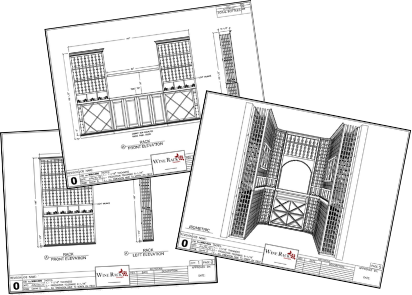
A free design consultation acts as a safeguard against common planning errors, such as miscalculating ceiling clearance or forgetting to account for door swings. The process starts with your basic room sketch and evolves into a detailed 3D plan. These renderings allow you to visualize the final bottle count and the spatial flow before a single piece of wood is cut. Once the layout is perfected, you can finalize the aesthetic with professional touches like metal wine cellar doors and specialized LED lighting. This collaborative approach bridges the gap between a simple DIY project and a professional-grade installation that adds significant value to your home.
Transforming Your Vision into a Professional Cellar
Creating a world-class wine cellar is a journey that balances aesthetic beauty with technical precision. By choosing Vintner Series wine racks, you've selected a framework that provides the architectural flexibility of custom millwork without the associated lead times or expense. You can now achieve a seamless, wall-to-wall display that maximizes every square foot of your room while ensuring your collection remains perfectly preserved in a climate-controlled environment.
Our expert design team brings over 15 years of experience to every project, helping you navigate the nuances of timber selection, cooling integration, and spatial flow. We provide comprehensive support that covers everything from the initial 3D rendering to the final installation of cabinetry and cooling units. It's time to move beyond standard storage and build a space that truly reflects your passion for curation.
We look forward to helping you design a space where your collection can thrive and your home's value can grow.
Frequently Asked Questions
What is the difference between Vintner and other modular wine rack series?
The primary difference lies in the specialized modularity of the Vintner Series wine racks, which allows for a bespoke appearance at a more accessible price point. While the Classic Series focuses on essential storage, Vintner offers a wider array of components like curved corners and display rows. This system is specifically engineered to be stackable, enabling you to reach heights from 3 feet to 10 feet with a uniform, furniture-grade finish.
Can Vintner Series racks be customized to fit my specific ceiling height?
You can absolutely customize the height to fit your specific room dimensions. The system utilizes stackable modules that allow for configurations ranging from 3 feet for under-counter use to 10 feet for floor-to-ceiling displays. By combining different top and bottom stacks, you can achieve a precise fit for non-standard ceilings. This flexibility ensures that you don't have to settle for awkward gaps at the top of your racking.
What wood species are best for long-term wine storage in a humid cellar?
Redwood is the traditional choice for high-humidity environments because of its natural resistance to decay and moisture. If you prefer a different aesthetic, Mahogany and White Oak are also excellent options that maintain their structural integrity in climate-controlled spaces. These woods are selected for their consistent grain patterns and durability. Choosing the right material ensures that your racks won't warp or degrade over decades of long-term storage.
Do I need a professional to install Vintner Series wine racks?
Assembly is required for these modular units, but the level of professional help depends on your project's complexity. Many homeowners successfully install individual racks as a DIY project using basic tools. However, if you're integrating cooling systems, vapor barriers, or complex wall-to-wall layouts, we recommend professional assistance. This ensures that the structural components are secure and that the climate control functions efficiently within the finished space.
How many bottles can I fit in a standard 8-foot Vintner individual rack?
A standard 8-foot individual bottle rack provides high-density storage that varies based on the number of columns selected. For example, a 10-column module at this height can accommodate approximately 190 to 200 bottles. Because the system is modular, you can combine multiple units to reach a specific capacity, such as a 300-bottle configuration. This allows you to plan your storage volume precisely based on your current collection and future growth.
Are these racks compatible with large format bottles like Magnums or Champagnes?
These racks are designed with universal openings that typically accommodate bottles between three and three and a half inches in diameter. This size comfortably fits most standard Bordeaux, Burgundy, and Champagne bottles. If your collection includes a significant number of Magnums or larger format bottles, we offer specialized modules designed specifically for those dimensions. This ensures every bottle in your inventory is housed securely without crowding or risk of breakage.
How do I integrate a cooling unit with my Vintner racking system?
Integrating a cooling unit involves selecting a system that matches the total cubic footage of your cellar. Vintner Series wine racks are designed with open slats to facilitate the airflow required for temperature consistency. You can incorporate self-contained refrigeration units directly into your modular layout by planning for dedicated alcoves. It's essential to install a proper vapor barrier and insulation before the racks are placed to ensure the cooling system operates efficiently.
What is the typical lead time for a Vintner Series modular cellar?
The typical lead time for a modular cellar is significantly shorter than that of a full custom build. While bespoke millwork can take several months to design and manufacture, modular components are often ready to ship much sooner. This efficiency allows you to transition from the design phase to the installation phase more quickly. The exact duration depends on your choice of wood species and finishes, but the standardized nature of the components streamlines the entire process.
Have an expert help today!
Free 2D wine cellar design