Through-the-Wall Wine Cellar Cooling Units: A Complete Reference Guide

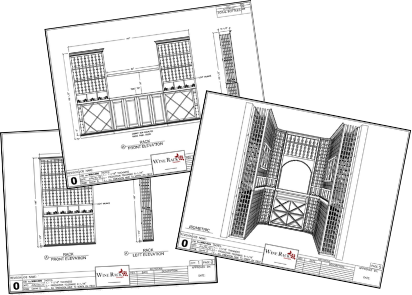
*Pictures are renderings. Actual wine racks may look different
A high-performance cooling system is only as capable as the walls that surround it. You've likely spent years curating a collection that reflects your personal taste, so the fear of improper installation leading to wine spoilage is a valid concern. It's common to feel a bit lost when comparing technical specs or to worry that a through the wall wine cellar cooling unit might create unwanted noise in adjacent living areas. We understand that you want a solution that balances technical precision with the sophisticated atmosphere of a luxury home.
This reference guide will help you master the nuances of self-contained climate control. You'll discover how these units provide efficient cooling and exactly how to prepare your cellar's insulation envelope to support them. We'll provide a clear decision framework for choosing between system types and actionable steps to ensure your cellar remains a sanctuary for your finest vintages. By the end, you'll have the confidence to transition from the initial planning phase to a fully realized, professional-grade wine room.
Key Takeaways
- Learn how a through the wall wine cellar cooling unit offers a streamlined, all-in-one refrigeration solution that simplifies installation while providing expert-level climate control.
- Discover why specialized wine cooling technology is necessary to balance temperature and humidity, unlike standard HVAC systems that can lead to cork dehydration.
- Compare the spatial requirements and investment profiles of self-contained units versus split systems to find the most effective match for your cellar's footprint.
- Identify the critical steps for preparing your cellar envelope, ensuring that proper insulation and vapor barriers work in harmony with your cooling unit.
- Master the decision-making process for matching unit capacity to your specific heat load while maintaining the aesthetic integrity of your custom design.
Understanding Through-the-Wall Self-Contained Cooling Units
A properly curated wine collection deserves a climate that respects its complexity and potential. When you begin designing your storage space, the through the wall wine cellar cooling unit often emerges as the most practical choice for residential environments. These systems are defined as "self-contained" because every essential component, including the compressor, evaporator, and condenser, is housed within a single chassis. This all-in-one format eliminates the need for complex copper piping or external condenser units, making it an approachable entry point for enthusiasts who value both efficiency and simplicity.
The popularity of this format stems from its straightforward integration into a home's existing structure. If you have a dedicated room that shares a wall with a well-ventilated utility space, these units offer a streamlined path to professional-grade preservation. They represent a significant shift away from the complexity of traditional HVAC builds, providing a specialized solution that focuses exclusively on the unique requirements of viticulture.
The Core Mechanics of Self-Contained Refrigeration
These units function through a specialized refrigeration cycle engineered for the delicate needs of aging wine. Unlike a standard air conditioner that prioritizes rapid cooling and aggressive moisture removal, a self-contained wine unit manages a precise thermal balance. It pulls warm air from the cellar, passes it over cooling coils, and returns it as chilled air. Most units are sized to provide between 3.5 and 4.5 BTU per cubic foot of cellar volume, ensuring the system maintains the 55-degree gold standard without overtaxing the hardware.
Because these systems are designed for 24/7 operation, they utilize heavy-duty components that handle the constant cycling required to keep temperatures stable. An internal thermostat monitors the environment with high sensitivity. If the temperature deviates by even a few degrees, the unit activates to restore the ideal climate. You should expect noise levels between 60 and 70 dB during active cooling, which is comparable to a standard window air conditioner. This continuous oversight protects your investment from the thermal fluctuations that can lead to premature aging.
Ideal Applications for Through-the-Wall Systems
If you are planning a small to medium-sized cellar, a self-contained unit is likely your most effective tool. These systems are typically rated for spaces up to 2,000 cubic feet. They are particularly effective in specific architectural scenarios:
- Walk-in closet conversions that require dedicated climate control without extensive remodeling.
- Under-stair storage areas where space is at a premium and a compact footprint is essential.
- Basement wine rooms that share a wall with a large, unfinished area for heat exhaustion.
For collectors seeking a plug-and-play solution, the simplicity of a through the wall wine cellar cooling unit is difficult to match. It avoids the high labor costs associated with licensed HVAC technicians required for split systems. If your project prioritizes a streamlined installation and professional-grade results within a defined budget, this format provides the reliability you need to protect your curation.
How Self-Contained Systems Manage Temperature and Humidity
Maintaining the ideal climate for a vintage collection is a precise science that goes far beyond simply chilling the air. While a standard home HVAC system is designed to strip moisture for human comfort, a specialized through the wall wine cellar cooling unit is engineered to preserve it. If the air becomes too dry, the corks in your collection will begin to shrink, allowing oxygen to seep into the bottle and spoil the wine. This specialized equipment manages a delicate equilibrium by using a larger evaporator coil that operates at a higher temperature than standard air conditioning, ensuring that humidity remains within the ideal range.
The efficiency of your system also depends on the "differential," which is the temperature difference between the cellar and the exhaust room. If the adjacent room exceeds 85 or 90 degrees Fahrenheit, the unit may struggle to shed heat effectively. Sophisticated controls now allow collectors to monitor these variables in real time, preventing the wine from experiencing the thermal shocks that occur when a system is overtaxed and forced to cycle too frequently.
Managing Relative Humidity (RH) for Cork Integrity
To ensure long-term aging, you should aim for a relative humidity level between 50% and 70%. When humidity drops below the 50% threshold, the structural integrity of the cork is compromised. This "breathing" effect is the primary enemy of vintage preservation. Modern units utilize advanced sensors to monitor these levels constantly, providing a stable environment that respects the traditions of the hobby. Conversely, keeping humidity below 70% prevents the growth of mold, which can damage labels and affect the pride of ownership you feel when displaying your bottles.
Exhaust and Venting: Where Does the Heat Go?
One of the most overlooked aspects of installation is the exhaust environment. A through the wall wine cellar cooling unit operates by transferring heat from the cellar to an adjacent area. This exhaust room must be well-ventilated and typically needs to be at least twice the size of the cellar itself to prevent heat buildup. If you vent into a small, trapped space like a crawlspace or a tiny closet, the unit will eventually overheat and fail.
You can choose between rear-venting and top-venting configurations depending on your architectural layout. Rear-venting is standard for most installations where the unit sits flush against the wall, while top-venting allows for more flexible ducting options in tighter spaces. If you are unsure which configuration fits your specific floor plan, you can consult with a specialist to review your design requirements and ensure proper airflow.
Comparing Through-the-Wall Units to Split Systems
Choosing between a through the wall wine cellar cooling unit and a split system involves balancing immediate convenience with long-term atmospheric goals. A self-contained unit is generally the more economical choice for the initial investment. It avoids the professional installation costs for split systems, which often range from $1,500 to $6,000. Because the compressor is housed within the unit itself, it does occupy a visible footprint on your cellar wall. This contrasts with split systems that utilize a remote condenser, allowing for a more minimalist interior aesthetic.
Noise is another primary differentiator that impacts the daily experience of your home. A standard through the wall wine cellar cooling unit operates at 60 to 70 dB, which is audible if the cellar is adjacent to a quiet living space. From a maintenance perspective, however, self-contained units offer a distinct advantage. If a repair is needed, the entire unit can often be removed and serviced without the need for a technician to cut into your walls or manage complex refrigerant lines. It's a simpler, more modular approach to climate control.
When to Upgrade to a Split System
While self-contained units are remarkably efficient for many projects, certain scenarios demand the power of a split system. If your cellar exceeds 2,000 cubic feet or lacks a properly insulated R-20 envelope, a through-the-wall unit may struggle to maintain the necessary climate. Additionally, if the only available exhaust wall leads into a high-traffic dining room or a bedroom, the vibration and sound levels may become a distraction. Split systems provide nearly silent operation inside the cellar, making them the preferred choice for collectors who prioritize a museum-like atmosphere for their curation.
Choosing Based on Your Cellar's Location
The physical location of your wine room often dictates which system is most viable. Basement cellars are the natural home for through-the-wall units. They typically share walls with large, unfinished utility spaces that can easily absorb exhaust heat. If you are venting into a garage or a basement workshop, the unit remains highly efficient. However, if your cellar is located on a main floor without an adjacent mechanical room, a split system becomes necessary to vent heat directly to the exterior. You must always consider the ambient temperature of the exhaust area. If that space consistently climbs above 85 degrees, the performance of a self-contained unit will decrease significantly.

Installation Requirements: Preparing the Cellar Envelope
The success of your climate control project depends more on the construction of the room than the power of the machinery itself. A through the wall wine cellar cooling unit is an exceptional tool for preservation, but it cannot compensate for a poorly insulated space. If your cellar walls allow heat to seep in or moisture to escape, the unit will run constantly, leading to mechanical fatigue and unstable temperatures. True professional-grade storage requires a sealed environment, often referred to as a "cellar envelope," that isolates your collection from the rest of the home's climate.
Sizing your unit requires a methodical approach. It's a common mistake to assume that a larger unit is always better. If a system is significantly overpowered for the space, it will engage in "short-cycling." This occurs when the unit turns on and off in rapid succession, failing to pull enough moisture from the air while placing unnecessary strain on the compressor. Additionally, ensure your installation includes a dedicated electrical circuit. These units require consistent power without interference from other household appliances. High-quality surge protection is also a non-negotiable requirement to protect the sensitive digital controllers.
Insulation and R-Values for Wine Storage
To achieve optimal efficiency, your cellar walls and ceiling should reach a minimum insulation value of R-20. While standard fiberglass batts are common in home construction, they often fall short in a cellar environment unless they are paired with meticulous air-sealing techniques. Any gaps in the insulation act as thermal bridges. These gaps force your cooling unit to work harder than necessary. If your design includes large glass doors or windows, you must account for their lower R-value. Glass is essentially a thermal hole in your envelope. You may need a unit with higher BTU capacity to offset the heat gain through these transparent surfaces.
The Critical Role of the Vapor Barrier
The most frequent cause of cellar failure isn't the cooling unit itself. It's the absence of a proper vapor barrier. This barrier must be installed on the warm side of the insulation, which is typically the exterior side of the cellar walls. Without this protection, warm, moist air will migrate toward the cold cellar air. This air then condenses inside your wall cavities, leading to hidden mold growth and structural rot. A vapor barrier is a non-permeable membrane that prevents moisture migration into the cellar. By installing this correctly, you ensure that the humidity managed by your through the wall wine cellar cooling unit remains stable and safe for your corks.
Selecting the Right Cooling Unit for Your Custom Project
Selecting the ideal through the wall wine cellar cooling unit is the final, critical step in transforming a vision into a functional reality. This decision requires a harmony between the technical requirements of your space and the aesthetic goals of your design. A professional heat load calculation is the foundation of this process. It accounts for more than just the square footage; it evaluates the thermal properties of your insulation, the presence of glass, and the typical ambient temperatures of your home. By matching the unit's capacity precisely to these variables, you ensure a stable environment that respects the aging process of your collection.
Integrating these systems into a luxury space involves more than just cutting a hole in the wall. You must consider how the unit interacts with your chosen materials and lighting. While the unit provides the essential climate control, the surrounding elements define the room's character. A consultative approach allows you to envision how the cooling hardware will sit alongside specialized components, such as metal wine cellar doors or custom racking, to create a cohesive and professional result. This methodical planning prevents the unit from becoming an eyesore, instead positioning it as a functional part of a master-crafted space.
Integrating Cooling with Custom Racking
Proper airflow is the lifeblood of any refrigeration system. When designing your layout, you must ensure that the unit's intake and exhaust remain unobstructed by bottles or structural supports. Our Vintner Series and Classic Series racking are engineered with these requirements in mind. They can be configured to frame the through the wall wine cellar cooling unit, allowing it to blend into the overall geometry of the room. This integration also prioritizes long-term maintenance. By leaving adequate clearance, you maintain easy access for routine filter cleanings and component inspections, ensuring the system operates at peak efficiency for the life of your cellar.
The Complete Cellar Solution
A truly professional wine room is a holistic system where every part supports the others. Pairing your cooling unit with a metal wine cellar door provides the tight, gasketed seal necessary to maintain the pressure and humidity of the cellar envelope. This prevents the air leakage that often forces units to overwork and fail prematurely. The most successful projects are those that move from a vague concept to a detailed, conditioned environment through a collaborative design process. This expert guidance helps you avoid costly mistakes in sizing or placement, giving you the peace of mind that your curation is protected.
If you are ready to start your project, connect with our design experts for a custom consultation and take the first step toward a perfectly preserved collection.
Designing Your Sanctuary for Long-Term Preservation
Creating a controlled environment for a fine collection requires more than just high-quality hardware. It's about the harmony between the room's construction and the mechanical systems that sustain it. We've examined how a through the wall wine cellar cooling unit serves as a dependable heart for your cellar when paired with proper envelope preparation and strategic airflow. These elements work together to protect the structural integrity of your corks and the nuanced flavor profiles of your vintages, ensuring every bottle reaches its full potential.
Our team acts as custom racking and cooling integration experts, focusing on the specific technical needs of each unique project. As specialists in climate-controlled cellar design, we provide the consultative support necessary to ensure your storage solution is both beautiful and technically sound. We are dedicated to helping you realize a space that reflects your passion for curation while providing the peace of mind that your investment is secure for years to come.
Frequently Asked Questions
How loud are through-the-wall wine cellar cooling units during operation?
Most through-the-wall units operate at a noise level between 60 and 70 dB, which is comparable to a standard window air conditioner. While this is audible in quiet rooms, some specialized models can operate as low as 48 dBA. If your cellar is located near a bedroom or a formal dining area, you might consider these quieter options. Proper mounting and insulation around the unit's frame can also help dampen vibrations.
Can I vent a self-contained cooling unit into a crawl space or attic?
You should only vent a self-contained cooling unit into a crawl space or attic if that area is large and well-ventilated. Most attics become far too hot during the summer, often exceeding the 85 or 90 degree threshold required for heat exhaustion. If the exhaust space cannot effectively absorb the heat, the unit will struggle to maintain cellar temperatures. Always ensure the exhaust room is at least twice the size of the cellar.
Do through-the-wall cooling units require a dedicated drain line for condensate?
Many through-the-wall units utilize a condensate evaporation system, but installing a dedicated drain line is a wise precautionary measure. In regions with high humidity, the unit may generate more moisture than the internal heating element can evaporate. A drain line prevents water from pooling inside the unit or leaking into your walls. This setup ensures your through the wall wine cellar cooling unit operates reliably without the risk of water damage to your custom racking.
How often do I need to clean the filters on a self-contained wine cooling system?
You should inspect and clean your system's filters every three to six months to maintain peak efficiency. Dust and debris restrict the airflow necessary for the refrigeration cycle, forcing the compressor to run longer and hotter. Regular maintenance is the simplest way to extend the life of your hardware. If your unit is located in a high-traffic area or a dusty utility room, you may need to perform these cleanings more frequently to protect the components.
What happens if the room I am venting into gets too hot?
If the exhaust room temperature exceeds the unit's maximum operating limit, the system will lose its ability to cool the cellar effectively. Most units are designed to operate with an exhaust ambient temperature below 85 or 90 degrees Fahrenheit. When heat builds up in the venting area, the compressor must work harder, leading to increased energy consumption and eventual mechanical failure. Ensuring proper ventilation in the exhaust space is critical for long-term stability.
Is it possible to install a through-the-wall unit in an exterior wall?
You can install a unit in an exterior wall only if the specific model is rated for outdoor venting. Standard self-contained systems are designed for interior use and will fail if exposed to rain, direct sunlight, or freezing temperatures. Exterior-rated units include specialized housings and heating elements to handle weather fluctuations. If your architectural layout requires exterior venting, ensure you select a model with a factory-installed exterior hood to protect the sensitive internal electronics.
How do I calculate the BTU requirements for my specific wine cellar size?
A standard guideline is to calculate 3.5 to 4.5 BTU per cubic foot of cellar volume. This calculation assumes your space has a proper R-20 insulation envelope and a functional vapor barrier. If your design features large glass walls or is located in a particularly warm part of the home, you will need to increase the BTU capacity. A through the wall wine cellar cooling unit must be sized accurately to avoid the short-cycling issues caused by overpowered systems.
Can a self-contained unit be ducted if I want to hide it from view?
Standard self-contained through-the-wall units are not designed for ducting and require direct airflow for both intake and exhaust. Attempting to add ducts to a non-ducted model will restrict airflow and cause the motor to burn out. If you prefer to hide the cooling hardware entirely, you should choose a fully ducted self-contained system. These specialized models allow you to locate the unit in a remote room and move air through insulated ducts into the cellar.
Have an expert help today!
Free 2D wine cellar design