The Ultimate Buyer’s Guide to Champagne Storage Racks: Protecting Your Collection

*Pictures are renderings. Actual wine racks may look different
You reach for a vintage bottle to celebrate a special moment, only to find the label torn and the glass wedged tight in a standard wine rack. It's a common frustration for collectors who realize too late that sparkling wine requires more than a basic three-inch cubby. You've likely invested significant time and resources into your collection, so it's only natural to want a storage solution that respects the craftsmanship of the bottle. Choosing a specialized champagne storage rack is about more than just finding extra space; it's about engineering a home for bottles that are heavier and wider than your average Bordeaux.
In this guide, you'll discover how to select racking that accommodates the unique dimensions of champagne and magnums while maintaining long-term wine health. We'll explore the technical requirements for weight distribution, the importance of smooth bottle entry to protect delicate labels, and how to seamlessly integrate these specialized sections into your overall cellar design. Whether you prefer the classic look of the Vintner series or the modern profile of a Fusion wine wall, you'll find the perfect balance between high-end display and practical protection.
Key Takeaways
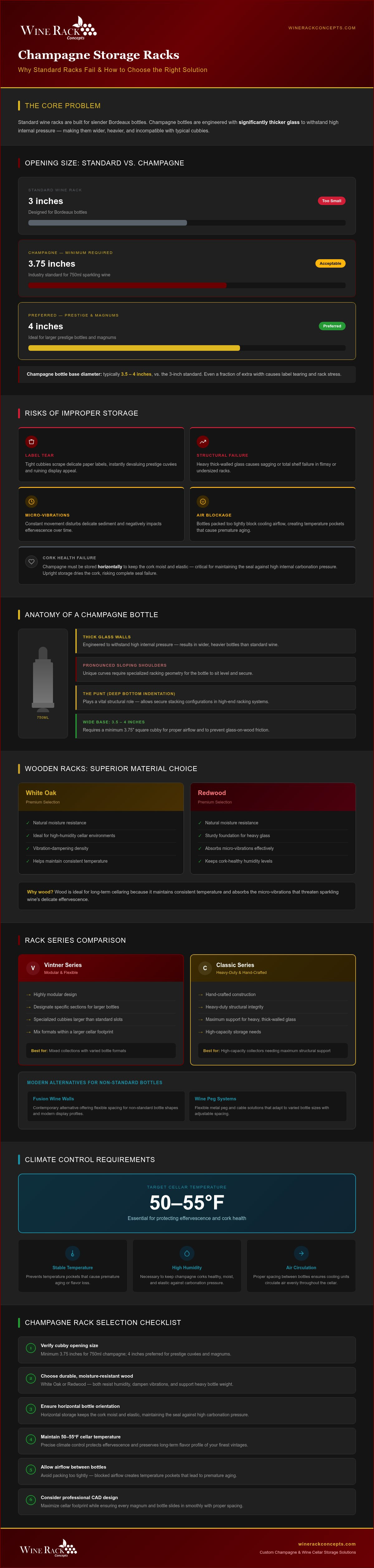
- Understand why standard three-inch cubbies cause label damage and why specialized racking geometry is essential for larger sparkling wine bottles.
- Learn how to choose a champagne storage rack made from durable materials like White Oak or Redwood that can support the increased weight of heavy glass bottles.
- Explore contemporary alternatives like Fusion Wine Walls and Wine Peg systems that offer flexible spacing for non-standard bottle shapes.
- Identify the specific climate control requirements, such as maintaining 50-55°F, to protect the effervescence and cork health of your finest vintages.
- Discover the benefits of professional CAD design to maximize your cellar's footprint while ensuring every magnum and bottle slides in with ease.
The Girth Problem: Why Standard Racks Fail Champagne Bottles
Most standard wine racks are designed with a three-inch opening, which accommodates the slender profile of a Bordeaux bottle quite well. However, when you introduce sparkling wine into the mix, these dimensions quickly become a liability. A Champagne wine overview reveals that these bottles are engineered with significantly thicker glass to withstand high internal pressure. This structural necessity results in a wider base, often measuring between 3.5 and 4 inches in diameter. If you attempt to force these larger bottles into standard cubbies, you'll likely encounter the "label-tear" phenomenon. This occurs when the tight fit scrapes the delicate paper, instantly devaluing a prestige cuvée and ruining the visual appeal of your display.
A dedicated champagne storage rack is engineered to solve these specific geometry challenges. Industry standards for sparkling wine storage dictate openings of at least 3.75 inches, though 4 inches is preferred for larger prestige bottles and magnums. Beyond the fit, you must consider the physical weight of the collection. Thick-walled glass is heavy; a full case of champagne weighs considerably more than a case of Pinot Noir. Using a flimsy or undersized rack can lead to structural sagging or even total shelf failure, putting your investment at risk. Professional-grade racking ensures that each bottle is cradled securely without putting undue stress on the frame.
Anatomy of a Champagne Bottle
Champagne bottles feature pronounced, sloping shoulders and a wide base that tapers toward the neck. The punt, or the deep indentation at the bottom of the bottle, plays a vital role in structural racking by allowing for secure stacking in certain configurations. High-end systems account for these unique curves to ensure the bottle sits perfectly level. A 750ml Champagne bottle requires a cubby size of at least 3.75 inches square to facilitate proper airflow and prevent glass-on-wood friction.
The Risks of Improper Storage
Sparkling wine is uniquely sensitive to its environment and requires a stable foundation. Constant micro-vibrations can disturb the delicate sediment and negatively impact the effervescence over time. Sturdy wooden wine racks provide the necessary density to dampen these movements effectively. You must also store these bottles horizontally to keep the cork moist and elastic, which is critical for maintaining the seal against high internal carbonation. When bottles are packed too tightly into an improper champagne storage rack, they block the essential path of wine cellar cooling units. This lack of circulation creates temperature pockets that can lead to premature aging or loss of flavor profile.
Wooden Champagne Racks: Classic Elegance and Durability
Wooden racking remains the premier choice for collectors who value traditional aesthetics and long-term durability. It offers a warmth and timeless quality that reflects the heritage of world-renowned estates. When you are looking for a champagne storage rack, the specific species of wood you choose is critical. Redwood and White Oak are superior selections for this purpose. These materials possess a natural resistance to moisture, making them ideal for the high-humidity environments necessary to keep champagne corks healthy. They provide a sturdy, vibration-dampening foundation that protects the delicate effervescence of your finest bottles.
The Vintner Series and Classic Series represent two distinct approaches to this craftsmanship. The Vintner Series is highly modular. This allows you to designate specific sections for larger bottle formats within a larger cellar footprint. It utilizes specialized cubbies that are slightly larger than standard wine slots to ensure a smooth fit. In contrast, the Classic Series focuses on hand-crafted, heavy-duty construction. This is often the preferred option for collectors with high-capacity needs who require maximum structural support for heavy, thick-walled glass. Many enthusiasts look for expert wine and Champagne guidance to understand the nuances of aging. Most experts agree that wood is an ideal medium for long-term cellaring because it helps maintain a consistent temperature and absorbs micro-vibrations.
Vintner vs. Classic Series for Sparkling Wine
Comparing these two options often comes down to the scale and depth of your collection. Vintner components are designed with a standard 13.5-inch depth. This ensures that the entire bottle, including the neck, is safely contained within the rack. The Classic series often features thicker structural members, providing extra peace of mind for those storing hundreds of bottles. If your collection includes 1.5L magnums, you can specify custom-sized openings in either series. Mixing standard modules with champagne-specific ones creates a versatile system that adapts to your changing inventory. It's a practical way to ensure you never have to force a bottle into a space where it doesn't fit.
Finish and Aesthetic Integration
The aesthetic appeal of a cellar is just as important as its functionality. Choosing the right stain can complement the luxury branding of prestigious champagne houses. Darker finishes offer a sense of gravity and history; lighter finishes feel modern and airy. Integrating "display rows" into your wooden racking allows you to showcase the labels of your most prized bottles while they rest at a slight angle. This protects the cork while making the bottles easy to identify. For a deeper look at material selection and design, check out this resource on Custom Wine Racks. If you are ready to start planning your space, our experts are available to provide a free design that accounts for every bottle in your inventory.
Modern Champagne Storage: Metal, Peg, and Cable Systems
Modern design often calls for a departure from traditional wood, favoring clean lines and industrial materials. If you're looking for a contemporary champagne storage rack, metal and cable systems offer a sophisticated way to showcase your collection. Unlike generic wire shelving that may lack the depth to support wide-bodied bottles, professional-grade metal wine racks are engineered with heavy-gauge materials. These systems focus on label-forward orientation, allowing you to appreciate the branding of your favorite champagne houses without moving a single bottle. This visibility is particularly useful for collectors who manage a rotating inventory of vintage and non-vintage bottles.
The Fusion Wine Wall represents a high-end hybrid approach, blending the structural warmth of wood with the sleekness of metal. It's an ideal choice if you want to integrate a modern display into a space that already features wooden accents or custom cabinetry. For those seeking the ultimate in minimalist design, Cable Wine Racks create a stunning "floating" effect. High-tension stainless steel cables hold each bottle securely in place, making the heavy glass of a champagne bottle appear weightless. This system requires precise installation to ensure the tension handles the increased load of sparkling wine, but the visual reward is a cellar that feels open and airy.
The Versatility of Wine Pegs
The Wine Peg Series provides the highest level of flexibility for a collection with varying bottle diameters. Because these pegs are installed individually, you aren't restricted by the fixed dimensions of a standard cubby. This is a significant advantage when your collection includes both slender bottles and wide prestige cuvées. Technical precision is vital here; the pegs must be deep enough to support the bottle's center of gravity to prevent any slipping. To accommodate a mixed collection, you should space your pegs at 4-inch intervals for Champagne bottles and 3.25-inch intervals for standard Bordeaux bottles.
Fusion Wine Walls and Contemporary Displays
Fusion systems and wall-mounted pegs excel at turning a wine collection into a piece of art. These systems are particularly effective in small alcoves or as part of a feature wall in a dining area. Because champagne bottles are heavier than standard still wines, the anchoring system must be robust. Before starting your project, it's wise to review the Ultimate Guide to Wall Mounted Wine Racks for specific safety and installation tips. These modern displays don't just store your wine; they celebrate it, providing a professional-grade solution that respects both the weight and the beauty of your sparkling collection.
Climate and Planning: Designing Your Champagne Cellar
Champagne is a living product that requires a more precise environment than almost any other wine variety. While most collectors aim for a standard cellar temperature, sparkling wine enthusiasts often prefer a slightly cooler range of 50-55°F. This specific climate slows down the aging process just enough to preserve the bright acidity and delicate floral notes that define a great vintage. Beyond temperature, you must maintain humidity levels between 60% and 70%. If the air becomes too dry, the corks can shrink, leading to oxidation and a loss of that critical effervescence. A well-designed cellar also requires a high-quality vapor barrier and professional-grade insulation to prevent external moisture from compromising your collection's home.
The layout of your champagne storage rack plays a significant role in maintaining these conditions. You shouldn't pack bottles so tightly that you block the natural movement of air. Consistent circulation ensures that every bottle, whether it's on the top shelf or near the floor, stays at the same temperature. Stagnant pockets of air can lead to micro-climates within the room, causing some bottles to age faster than others. When planning your space, leave enough clearance around the cooling vents to allow the system to breathe and distribute chilled air effectively throughout the racking.
Selecting the Right Cooling System
Choosing between self-contained refrigeration and split systems depends largely on the size of your room and the level of noise you're willing to tolerate. Self-contained units are often easier to install in smaller spaces, while split systems allow you to place the noisy compressor in a separate area. Leading brands like WhisperKOOL and CellarPro offer specialized wine cellar cooling units that are designed to handle the high-humidity requirements of a champagne room. For those planning a high-capacity or commercial space, it's helpful to consult a professional guide to commercial wine cellar refrigeration systems to ensure your hardware can meet the demands of a larger inventory.
Lighting and Vibration Control
Ultraviolet light is the enemy of sparkling wine, as it can cause "light strike," which ruins the flavor profile of the liquid. You should utilize LED cellar lighting, which doesn't emit UV rays and stays cool to the touch. Vibration control is another critical factor. Constant movement from a poorly mounted cooling unit or a flimsy champagne storage rack can disturb the fine sediment in aged bottles, potentially muddling the taste. Secure your racking to the wall studs and use vibration-dampening mounts for your refrigeration hardware. Finally, design for accessibility. Place your most delicate or oldest bottles in easy-to-reach display rows so you don't have to move multiple bottles just to find the one you're looking for.
Custom Solutions: The Wine Rack Concepts, LLC Design Process
Generic storage solutions often fall short because they prioritize mass production over the specific requirements of a diverse wine collection. A standard champagne storage rack purchased from a retail outlet rarely accounts for the physical variance between a slender non-vintage bottle and the wide-based prestige cuvées that define a high-end inventory. This mismatch often leads to the label damage and structural frustrations that professional collectors seek to avoid. By opting for a custom approach, you ensure that every square inch of your cellar is optimized for the specific bottles you own, rather than forcing your collection to fit a pre-made mold.
The Wine Rack Concepts, LLC consultative process begins with a deep dive into your goals for the space. We look at the project through the lens of a master craftsman, balancing technical requirements with the aesthetic vision you have for your home. We integrate high-end features such as American-made metal doors and all-glass wine enclosures to create a seamless, luxury look. This method transforms a simple storage room into a sophisticated gallery that protects the integrity of your wine while serving as a centerpiece for entertaining. It's a collaborative effort that moves away from high-pressure sales and toward a professional partnership.
From Concept to Installation
- Step 1: Measuring Your Collection. We begin by identifying the specific bottle types in your inventory. You'll need an accurate count of standard 750ml bottles, magnums, and any unique formats to ensure the racking geometry is correct from the start.
- Step 2: Selecting Materials. You can choose from our wooden wine racks, modern metal wine racks, or a hybrid Fusion design. Each material offers different benefits for weight support and climate resilience.
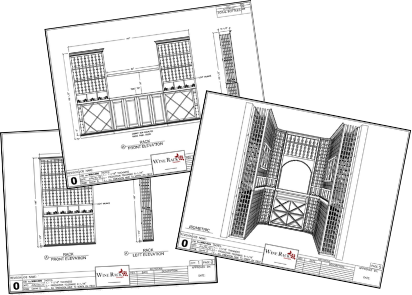
- Step 3: Professional Layout. Utilizing our Free Design Service, we provide a detailed CAD blueprint. This allows you to visualize the airflow, bottle density, and display rows before any components are manufactured.
Why Professional Design Matters
Professional design is about avoiding the common pitfalls that compromise a cellar's longevity. Improper weight distribution is a significant risk with heavy sparkling wine bottles; a poorly planned rack can bow or fail under the cumulative stress of thick-walled glass. A custom wine cellar accounts for these loads while ensuring that cooling units like WhisperKOOL or CellarPro can circulate air without obstruction. When you invest in a tailored storage system from Wine Rack Concepts, LLC, you aren't just buying furniture; you're adding measurable value to your property and ensuring your collection ages in peak condition.
Ready to build? Get your complimentary wine cellar design today.
Elevating Your Sparkling Wine Collection
Choosing the right home for your sparkling wine ensures that every bottle is preserved for that perfect moment of celebration. You now understand that specialized geometry, such as 3.75-inch openings, is essential for preventing label damage and ensuring proper airflow. Whether you prefer the traditional density of a wooden champagne storage rack or the sleek lines of a modern peg system, the priority remains structural integrity and climate consistency. Professional planning bridges the gap between a simple shelf and a high-performance cellar that respects the weight of heavy glass and the sensitivity of aged sediment.
Our expert design consultants use precision CAD layouts to maximize your space while incorporating high-quality American-made components. We simplify the complex decisions regarding material selection and refrigeration integration, acting as your knowledgeable partner throughout the process. This collaborative approach ensures your finished cellar is both a functional tool and a stunning piece of decor.
Take the next step toward a transformed space that showcases your passion for curation. We're here to help you build a storage solution that feels as sophisticated as the vintages it protects.
Frequently Asked Questions
Do I really need a special rack for champagne bottles?
Yes, you truly do need specialized racking because champagne bottles are wider and much heavier than standard Bordeaux bottles. Standard wine racks often result in scratched labels or bottles that become physically stuck in the cubbies. A dedicated champagne storage rack provides the necessary 3.75-inch to 4-inch clearance and structural support to keep your collection safe. It's about protecting both the visual value of the label and the physical integrity of the glass.
Will a champagne bottle fit in a standard 3.5-inch wine rack opening?
Most champagne bottles won't fit comfortably in a 3.5-inch opening. While some smaller non-vintage bottles might slide in, many prestige cuvées and vintage champagnes have base diameters closer to 3.75 or 4 inches. Forcing them into smaller cubbies leads to friction and torn labels. It's better to use racking designed specifically for larger formats to ensure a smooth, secure fit and proper airflow around the glass of every bottle you store.
What is the best material for storing heavy champagne bottles?
Dense hardwoods like White Oak and Redwood are excellent choices because they offer natural moisture resistance and high load-bearing capacity. These materials help dampen micro-vibrations that can disturb the wine's development. If you prefer a contemporary look, high-gauge metal racking or the Wine Peg Series also provides the strength required for heavy glass. The key is choosing a material that resists warping under the significant weight of a sparkling wine collection over many years.
Can I store champagne magnums in a standard champagne rack?
Standard champagne cubbies are usually sized for 750ml bottles and won't accommodate 1.5L magnums. Magnums require significantly wider openings, often exceeding 4.5 inches in diameter. If your collection includes these larger formats, it's best to specify magnum-sized modules or use adjustable systems like wine pegs. This ensures each bottle sits level and remains accessible without disturbing the rest of the inventory or risking damage to the delicate glass and its pressurized contents.
How much space should I leave between champagne bottles for airflow?
You should maintain at least a quarter-inch of clearance around each bottle to allow for consistent air circulation within the cellar. Proper airflow is vital for temperature uniformity and prevents the growth of mold in high-humidity environments. If the bottles are packed too tightly, the cooling system can't effectively regulate the temperature of the liquid. This spacing also makes it much easier to remove bottles without scraping adjacent labels or causing accidental vibrations in the rack.
Should champagne be stored label-forward or neck-forward?
Both orientations are acceptable, but they serve different storage purposes. Neck-forward storage in a champagne storage rack maximizes bottle density and is a classic choice for traditional cellars. Label-forward storage, often found in metal or Fusion systems, turns your collection into a visual display. Regardless of the orientation, the bottle must remain horizontal to keep the cork moist and maintain the internal pressure seal that preserves the wine's effervescence and specific flavor profile.
Are metal wine pegs strong enough for heavy sparkling wine bottles?
Yes, professional-grade metal wine pegs are engineered to support the weight of heavy sparkling bottles. These systems utilize high-quality components that are anchored directly into the wall or a sturdy backing board to prevent sagging. Because you can adjust the spacing between pegs, they're particularly useful for accommodating the varying girths of different champagne houses. It's a reliable way to combine modern aesthetics with the industrial-strength support required for a growing, high-value collection.
How do I integrate a champagne section into my existing wine cellar?
You can integrate specialized sections by using modular systems like the Vintner or Classic series. These allow you to swap out standard wine racks for champagne-sized cubbies without redesigning the entire cellar layout. If you're working with a smaller area, adding a row of wine pegs or a Fusion wall section can provide the necessary clearance for wider bottles. A consultative design approach helps ensure the new section blends seamlessly with your existing materials and climate control.
Have an expert help today!
Free 2D wine cellar design