The Professional Guide to Commercial Wine Cellar Refrigeration Systems

*Pictures are renderings. Actual wine racks may look different
Your wine inventory isn't just a collection of bottles. It represents a significant liquid asset that requires a specialized insurance policy in the form of precision engineering. You likely already know that even a minor equipment failure can lead to devastating inventory loss, while an inefficient system can drive energy costs through the roof. Choosing the right commercial wine cellar refrigeration is about more than just hitting a temperature target; it's about creating a silent, invisible foundation for your business's hospitality experience. If you've ever worried about a noisy compressor disrupting a guest's dinner or wondered if your current setup can handle a growing vintage list, you're not alone.
This guide will help you master the complexities of commercial climate control to protect your stock and ensure long-term profitability. We'll examine how to select a system that provides a stable environment while maintaining a quiet, discreet presence that fits your room's aesthetic. You will learn how to integrate professional-grade components with scalable storage solutions, including self-contained refrigeration units and custom racking series. From understanding vapor barriers to selecting metal cellar doors that ensure a thermal seal, we provide the technical clarity you need to move from an initial vision to a finished, professional result.
Key Takeaways
- Understand why commercial-grade systems require higher BTU capacities and specialized recovery engineering to handle the frequent door openings of a busy hospitality environment.
- Compare the advantages of various commercial wine cellar refrigeration setups, from the plug-and-play ease of self-contained units to the clean aesthetic of ducted systems.
- Master the "Recovery Factor" to ensure your inventory returns to the ideal temperature quickly after service rushes or restocking periods.
- Learn how to integrate custom racking designs, such as the Vintner or Classic series, with airflow patterns to avoid stagnant air and maintain a consistent climate.
- Identify the critical role of professional-grade vapor barriers and metal wine cellar doors in maintaining thermal efficiency and long-term system reliability.
The Science of Commercial Wine Cellar Refrigeration
Your wine inventory is a living, breathing asset that requires a specific set of environmental conditions to reach its full potential. While a residential cellar might only see occasional use, a professional environment demands a more robust approach to climate management. The Science of Wine Cellar Climate Control dictates that maintaining a steady 55°F is far more critical than the specific degree itself. If the temperature fluctuates even slightly, the liquid inside the bottle expands and contracts. This movement forces air through the cork, which can lead to premature aging or total oxidation of your most valuable vintages.
Standard HVAC systems or consumer-grade wine fridges aren't built for this level of precision. They are designed for human comfort, meaning they drop temperatures quickly and strip the air of essential moisture. High-quality commercial wine cellar refrigeration is engineered for a "recovery-first" approach. In a professional setting, your large inventory acts as a thermal mass. Once your bottles reach the ideal set point, they help stabilize the room's temperature, but only if the cooling system is powerful enough to offset the initial heat load and maintain that equilibrium during busy service hours.
Understanding Temperature and Humidity Control
The evaporator coil serves as the silent guardian of your cellar's humidity levels. In a commercial unit, the coil is specifically designed to operate at a higher temperature than a standard air conditioner. This prevents the system from freezing the moisture out of the air, which is vital for maintaining the "Goldilocks" zone of 60-70% humidity. If humidity levels drop too low, corks will eventually shrink and lose their seal. Conversely, if levels are too high, you risk damaging labels or encouraging mold growth on your custom racking. A stable environment ensures that every bottle, from a high-volume house wine to a rare reserve, remains in pristine condition.
Commercial vs. Residential Storage Requirements
Think about the physical demands of a restaurant or tasting room. The cellar door might open dozens of times during a single shift, introducing a surge of warm, humid air with every entry. Commercial wine cellar refrigeration systems utilize higher BTU capacities to recover from these "heat events" almost instantly. You also have to account for ambient heat from nearby commercial kitchens or high-intensity dining room lighting. Beyond temperature, vibration control is a major differentiator. Professional compressors are often isolated or located remotely to ensure that micro-vibrations don't disturb the delicate sediment in older wines, preserving the clarity and flavor profile your guests expect.
Types of Commercial Wine Cooling Systems Compared
Choosing the right hardware for your cellar is a foundational decision that impacts everything from guest comfort to long-term maintenance costs. While the previous section detailed the science of climate control, the physical configuration of your commercial wine cellar refrigeration system determines how that science is applied within your specific floor plan. Every commercial space presents unique challenges, such as limited ventilation in urban basements or the need for absolute silence in a fine-dining room. Matching the system type to your operational needs ensures your inventory remains protected without compromising the atmosphere of your business.
Self-Contained and Through-the-Wall Units
Self-contained units are often the most straightforward solution for smaller retail displays or integrated wine cabinets. These systems house the evaporator and condenser in a single housing, functioning much like a high-end window air conditioner but specifically calibrated for wine. They're often called "plug-and-play" because they require minimal ductwork, but they do have specific venting requirements. Because the unit generates heat while cooling the cellar, it must exhaust that warm air into a well-ventilated adjacent room. If you're planning a compact display, exploring Self Contained Refrigeration Units can provide a reliable, cost-effective entry point into professional climate control.
Split and Ducted Systems for Large Cellars
For larger restaurant cellars or high-traffic tasting rooms, split systems are considered the gold standard. A split system separates the quiet evaporator inside the cellar from the noisy condenser, which can be placed outdoors or in a dedicated mechanical room. This separation eliminates mechanical hum in the dining area, allowing the focus to remain on the wine and the guest experience. Ducted systems take this a step further by using insulated vents to move air, hiding the equipment entirely from view. This flexibility is essential for maintaining a clean aesthetic in a custom wine cellar where the design is as important as the function.
When engineering these larger installations, professionals often look to ASHRAE Refrigeration Standards to ensure the system handles the heat load of the building correctly. In dense urban environments where outdoor space is at a premium, you might choose between air-cooled and water-cooled condensers. Air-cooled systems are standard and require significant airflow, while water-cooled units use a building's existing water loop to dissipate heat. This is a common choice for high-rise restaurants or hotels where venting to the street isn't an option. Regardless of the configuration, the goal is to create a system that's easy to service without technicians having to enter the temperature-controlled environment and disturb your bottles.
Managing Heat Load and Recovery in Business Environments
Designing a high-traffic storage space requires a deep understanding of heat load, which is the total amount of thermal energy that enters your cellar from all external sources. In a bustling restaurant or retail shop, heat load isn't static. It's a dynamic challenge influenced by kitchen proximity, dining room temperatures, and how often staff enter the space. While a residential unit might only deal with a door opening once a day, a professional environment demands a system that can handle constant activity. This is where the "Recovery Factor" becomes the most critical metric for your commercial wine cellar refrigeration. It measures how quickly your system can pull the temperature back down to a steady 55°F after a busy service rush.
Calculating the correct BTU (British Thermal Unit) capacity is the first step in ensuring your system isn't overmatched. If you're planning a large-scale display, you must account for every square foot of glass and the specific R-value of your insulation. A common mistake in commercial builds is underestimating the impact of the entrance. We recommend American-made Metal Wine Cellar Doors equipped with professional-grade gaskets. These doors provide a superior thermal seal compared to standard wood options, significantly reducing the workload on your cooling unit and preventing the "ghost" energy losses that drive up monthly utility bills.
The Impact of Glass and Lighting
Modern hospitality design often favors transparency, using glass walls to showcase a curated collection. While Fusion Wine Walls or similar glass-heavy designs are visually striking, they have a much higher thermal conductivity than a standard insulated wall. If you choose a glass-forward design, it's essential to use UV-protected, double-pane glass to minimize heat gain. Lighting also plays a role in your heat load calculations. Traditional incandescent bulbs emit significant heat that can create localized hot spots. Switching to high-efficiency LEDs allows you to illuminate your bottles beautifully without forcing your refrigeration system to work overtime to compensate for the extra warmth.
Vapor Barriers and Professional Insulation
Even the most powerful cooling system will fail if the room's "envelope" isn't properly sealed. In commercial applications, we often see a choice between closed-cell spray foam and rigid board insulation. Closed-cell spray foam is frequently preferred because it provides both a high R-value and an inherent seal against air leaks. A vapor barrier serves as a non-permeable shield installed on the warm side of the cellar structure to block moisture migration and prevent the growth of mold or mildew. Without this protection, the temperature difference between the cellar and the dining room will cause condensation to form inside your walls, leading to structural damage and compromised air quality that can eventually ruin your labels and your inventory.
Integrating Racking Design with Airflow Efficiency
Racking is often viewed solely through an aesthetic lens, but in a professional setting, it serves as the framework for air distribution. Your commercial wine cellar refrigeration unit relies on unobstructed paths to move cold air from the evaporator to the furthest bottle. If you pack a room with high-density racking without considering the vent locations, you create "hot spots" where air stagnates. These pockets of warm air lead to uneven aging within the same collection. To solve this, many specialists prefer bottle-probe thermostats over standard air-temperature sensors. A probe submerged in a liquid-filled bottle provides a more accurate reading of the wine's actual temperature. This prevents the system from cycling unnecessarily based on brief air fluctuations when the door opens.
Airflow Dynamics in Commercial Cellars
The "cold air path" should ideally drop from the cooling unit toward the floor, then rise back up through the racks to the return vent. If the return vent is placed too close to the supply, the system will "short-cycle," turning off before the entire room is cooled. For those prioritizing a modern look, Cable and Glass Wine Racks are excellent choices. Their open-concept design allows air to circulate freely around every bottle. This is a significant advantage over traditional solid-backed shelving that often acts as a thermal barrier. Proper positioning ensures that the heart of your cellar, the cooling unit, doesn't have to work harder than necessary to reach every corner.
Protecting the Collection with Precision Racking
High-density storage solutions like the Vintner Series or Classic Series are designed to maximize capacity, but they must be positioned strategically. You can find more detail on choosing these materials in The Definitive Guide to Custom Wine Racks. If your design includes a Wine Peg Series or a minimalist Wine Wall, you gain the benefit of increased surface area contact between the cool air and the glass. This ensures that even in a high-traffic environment, your inventory remains at the precise set point. Whether you utilize the Carpenter Series for a traditional feel or metal racks for a contemporary edge, the goal is to balance visual appeal with the functional requirements of your commercial wine cellar refrigeration system.
Planning Your Commercial Refrigeration Project
Planning a professional storage space is a methodical process that begins long before the first bottle arrives. To ensure the longevity of your inventory, you should involve a specialist during the initial blueprint stage. This collaboration allows for the seamless integration of structural requirements, such as the vapor barriers and insulation discussed earlier, with the mechanical needs of your commercial wine cellar refrigeration system. For large-scale restaurant cellars, we often recommend a redundancy strategy. By installing dual cooling systems, you create a fail-safe environment. If one unit requires service, the second maintains the temperature, acting as a critical insurance policy for your liquid assets.
When evaluating equipment, it's important to understand the landscape of modern manufacturing. While many high-performance cooling components are sourced globally to leverage specialized engineering, the final assembly and critical structural elements, like our metal cellar doors, are often crafted in America. This blend of global innovation and domestic craftsmanship ensures that replacement parts are accessible and that the system meets the rigorous demands of a business environment. Reliability isn't just about where a single valve is made; it's about the collective durability of the entire installation.
Protecting your investment requires more than a high-quality installation. You should establish a quarterly professional maintenance schedule to inspect coils, check refrigerant levels, and ensure gaskets remain airtight. Regular check-ups prevent minor issues from escalating into the catastrophic equipment failures that lead to inventory loss. A proactive approach to system health preserves the quality of your wine and the profitability of your program.
Selecting the Right Partner and Equipment
Selecting the right partner is as vital as the hardware itself. Ask your cooling specialist about specific BTU recovery rates and how the system handles peak heat loads during service hours. You should also verify the warranty terms and the long-term availability of wear-and-tear parts. Choosing a partner who understands the nuances of both residential and commercial requirements ensures that your system is sized correctly for your specific traffic patterns and storage goals.
Installation and Commissioning
The timeline for a commercial installation varies based on complexity, but the final stage is always the most critical. We mandate a 48-hour "burn-in" period. This testing phase allows the system to reach equilibrium and proves its stability before you stock a single bottle of wine. It's the final step in moving from a conceptual design to a functional, professional result that you can rely on for years to come.
Protecting Your Liquid Assets for the Long Term
Establishing a professional environment is the single most important investment for your wine program. Specialized commercial wine cellar refrigeration goes beyond simple cooling by prioritizing rapid temperature recovery and humidity management. By integrating high-performance components with strategic racking designs like the Vintner series, you ensure every bottle remains in peak condition regardless of service traffic or room temperature fluctuations.
Success depends on the details. From the thermal seal of a metal cellar door to the redundancy of dual cooling units, every component matters. These elements provide the peace of mind that comes from a stable and efficient storage solution. Whether you're an architect or a business owner, the right design partner makes the transition from vision to reality seamless.
We offer specialized cooling solutions and custom racking integration for projects of any scale. Our team provides expert design consultation for architects and business owners to build a cellar that serves as a functional tool and a stunning piece of decor. We look forward to protecting your collection for years to come.
Frequently Asked Questions
What is the best cooling system for a restaurant wine cellar?
Split systems are the ideal choice for restaurant environments because they isolate mechanical noise from the dining area. These systems provide the high BTU capacity and rapid recovery times needed to handle the frequent door openings of a busy shift. By placing the condenser outdoors or in a mechanical room, you maintain a quiet atmosphere while ensuring your inventory stays at a precise 55°F.
How often should commercial wine refrigeration units be serviced?
You should schedule professional service for your commercial wine cellar refrigeration units at least four times per year. Quarterly check-ups allow technicians to clean evaporator coils, verify refrigerant charges, and inspect the integrity of door gaskets. This routine maintenance is the most effective way to prevent costly equipment failures and ensure your system operates at peak energy efficiency.
Can I use a standard air conditioner for my commercial wine room?
No, a standard air conditioner isn't suitable for wine storage because it's engineered for human comfort rather than wine preservation. Standard AC units cool air too quickly and strip away the humidity that corks need to stay sealed. Professional wine systems are designed to maintain a steady 55°F while keeping humidity levels between 60% and 70% to prevent oxidation.
How do I calculate the BTU needs for a glass-enclosed wine wall?
To calculate BTU needs for glass walls, you must measure the total square footage of the glass and account for its specific R-value. Glass is a poor insulator compared to wood or stone, meaning it allows more heat to enter the cellar. A cooling specialist will use these dimensions to size a system that can overcome the higher thermal load of a transparent display.
What happens to the wine inventory if the cooling system fails?
System failure can lead to rapid temperature fluctuations that compromise the quality of every bottle in your collection. When the air warms up, the wine expands, potentially pushing the cork out or allowing oxygen to enter. This is why high-volume businesses often utilize dual cooling systems to provide a fail-safe backup that protects their liquid assets during a mechanical breakdown.
Is a ducted system quieter than a through-the-wall unit for a dining room?
Ducted systems are much quieter than through-the-wall units because the noisy compressor and fans are located away from the guest area. Air is delivered through insulated ductwork, leaving only the sound of a gentle breeze in the dining room. Through-the-wall units are self-contained, meaning all the mechanical noise happens right where the unit is installed, which can disrupt the ambiance.
Do I need a floor drain for my commercial wine cooling unit?
Yes, a floor drain or a dedicated condensate line is usually necessary for commercial cooling installations. These systems generate water as they manage humidity and cool the air. Without a proper drainage path or a condensate pump to remove this liquid, you risk water pooling on the floor, which can damage your custom racking or lead to mold issues.
How does a vapor barrier protect a commercial wine cellar?
A vapor barrier acts as a shield that prevents outside moisture from seeping into your temperature-controlled environment. It's a critical component that works alongside your commercial wine cellar refrigeration to stop condensation from forming inside the walls. Without it, the temperature difference between the cellar and the building would lead to mold growth and structural decay that could ruin your labels.
Have an expert help today!
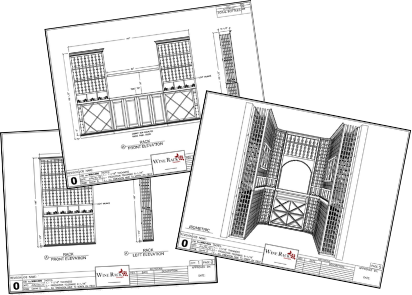
Free 2D wine cellar design