The Essential Guide to Selecting a Wine Cellar Door with Glass

*Pictures are renderings. Actual wine racks may look different
*Pictures are renderings. Actual wine racks may look different
Could your most stunning design choice be the very thing that puts your collection at risk? Many collectors dream of a transparent entryway that showcases their labels, but the choice of a wine cellar door with glass involves more than just visual appeal. It's a technical decision that impacts the longevity of every bottle you own. You want a clear view of your curation, but you don't want to see condensation or feel air leaks every time you walk by.
It's natural to feel concerned about how a transparent barrier will stand up against the rigors of climate control. This guide will show you how to balance sophisticated aesthetics with the critical thermal requirements your wine demands. While we source premium materials both locally and from international specialists to ensure performance, the focus remains on technical precision. We'll explore how to select the right glass thickness, the importance of UV-filtering layers, and how metal wine cellar doors provide the structural integrity needed for a perfect seal. You'll learn how to create a beautiful, airtight entrance that protects your investment for decades.
Key Takeaways
- Learn how Insulated Glazing Units (IGU) and Argon gas fillings create a superior thermal barrier to protect your wine's aging process.
- Discover why a pre-hung wine cellar door with glass is the most reliable way to ensure a factory-perfect, airtight seal for your collection.
- Compare the structural advantages of metal and wood frames to determine which material best supports large glass spans while resisting warping.
- Understand the critical role of automatic drop seals and UV-filtering coatings in preventing cooling unit strain and light damage.
- Explore custom design options, including sidelights and arched tops, that transform your cellar entrance into a sophisticated architectural feature.
The Role of a Wine Cellar Door with Glass in Climate Control
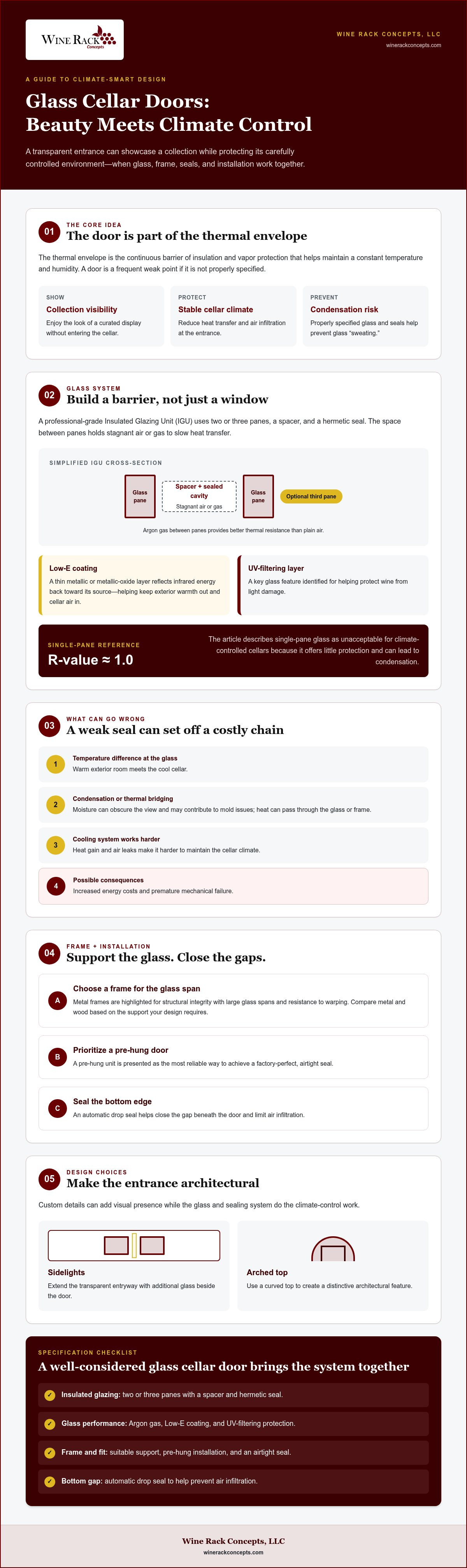
A wine cellar door with glass serves as the most critical intersection in your storage design. It acts as the primary visual and thermal transition point between your living space and the specialized environment required for aging. In professional cellar construction, we refer to the "thermal envelope." This is the continuous barrier of insulation and vapor protection that maintains a constant temperature and humidity. While walls are often heavily insulated, the door is the most frequent point of failure in this envelope if not properly specified.
There is a common misconception that glass cannot insulate as effectively as solid wood. While a single pane of glass offers little protection, modern engineering has transformed glass into a high-performance thermal shield. Choosing a glass-integrated door isn't a compromise on quality. Instead, it's a dual-purpose solution that provides maximum visibility for your collection while ensuring maximum protection for the internal climate. Our expertise in custom cellar manufacturing ensures that these doors meet the rigorous demands of serious collectors.
Why Visibility Matters for Modern Collections
Wine storage has evolved from hidden basement corners to display-centric architectural features. Today's collectors view their bottles as a curated gallery rather than just inventory. A glass door acts as a sophisticated frame for your custom wine racks, turning a functional storage room into a stunning focal point. Whether in a residential dining room or a commercial restaurant, the transparency invites guests to appreciate the curation without disturbing the delicate atmosphere inside. It allows you to enjoy the aesthetic of your collection daily.
The Challenge of Condensation and Thermal Bridging
The primary enemy of a transparent entryway is condensation, often called glass "sweating." This occurs when there is a significant temperature differential between the cool cellar and the warmer exterior room. If the glass isn't properly specified, moisture will accumulate on the surface, obscuring the view and potentially causing mold issues. High-quality seals and insulated glass are essential to prevent thermal bridging, where heat moves through the door frame or glass. Without these features, your wine cellar cooling system will overwork to compensate for the heat gain. This leads to increased energy costs and premature mechanical failure. A precision-engineered wine cellar door with glass ensures that the cooling unit maintains efficiency while keeping your vintages safe.
Technical Specifications: Low-E, Insulated, and UV-Protected Glass
Selecting a wine cellar door with glass requires a shift in perspective from standard home windows to specialized Insulated Glazing Units (IGU). These units aren't merely two pieces of glass; they are precision-engineered thermal barriers designed to maintain a specific microclimate. A professional-grade IGU consists of two or three panes of glass separated by a spacer and hermetically sealed. This construction creates a stagnant air or gas pocket that significantly slows the transfer of heat from your living area into the cooled cellar environment.
To achieve superior performance, we utilize Argon gas between the glass panes. Argon is denser than oxygen and provides much better thermal resistance than plain air. When combined with Low-Emissivity (Low-E) coatings, the door becomes a reflective shield. Low-E coatings are microscopically thin layers of metal or metallic oxide deposited on the glass surface. They reflect infrared energy (heat) back to its source, keeping the summer warmth out and the cellar's cool air in. Technical glass specifications only perform at their peak when paired with the Essential Hardware and Installation for an Airtight Seal required to prevent air infiltration.
Understanding R-Value in Glass Doors
In the context of wine storage, the R-value measures a material's resistance to heat flow. A higher R-value indicates better insulation. Single-pane glass is unacceptable for climate-controlled cellars because it offers an R-value of only about 1.0, which leads to immediate condensation and cooling system strain. Double-pane IGUs typically reach R-values between 3.0 and 5.0, while high-performance framed units can achieve R-7 to R-9. The frame material also plays a role. Metal frames provide exceptional structural support for large spans, but they must be thermally broken to prevent heat from "bridging" through the frame itself. For those looking to bring this level of energy efficiency to their home's exterior, you can visit Window Galaxy USA to learn about high-performance window replacement.
UV Filtration: Protecting Vintages from Light Strike
Light strike, or goût de lumière, is a chemical reaction that occurs when ultraviolet rays penetrate a bottle and react with riboflavin. This process produces sulfur compounds that can ruin the aroma and flavor of your most valuable vintages. Standard glass allows these harmful wavelengths to pass through easily. High-performance glass for wine cellars includes UV-filtering interlayers or coatings that block up to 99% of UV-A and UV-B radiation. While clear glass with these coatings is effective, many collectors choose tinted glass for an added layer of protection and a more dramatic, moody aesthetic. If you're unsure which glass configuration fits your space, you can request a custom design consultation to review your specific environmental needs.
Frame Materials: Choosing Between Metal and Wood
The choice of a frame material for your wine cellar door with glass is a decision that balances structural requirements with the overall design narrative of your home. While the glass provides the view, the frame provides the strength to hold heavy insulated units and the seal to maintain your environment. We focus on high-performance materials; while we prioritize domestic manufacturing, some specialized thermal-break components and precision hardware are sourced from global partners to guarantee the highest quality.
Metal Wine Cellar Doors for a Modern Aesthetic
Metal frames have surged in popularity because they allow for ultra-slim profiles that create a nearly seamless transition between rooms. These frames are typically constructed from high-grade steel or aluminum, offering a level of durability that is unmatched in high-traffic environments. Unlike other materials, metal is virtually immune to the warping that can occur when one side of the door is exposed to high humidity and the other to a dry, air-conditioned hallway. This makes them a premier choice for commercial wine cellars where visual impact and long-term reliability are equally vital. If your design features our Fusion Wine Walls, a metal-framed door provides a cohesive, contemporary look that emphasizes clean lines and transparency.
Traditional Wood Frames for Classic Elegance
For those who prefer a warmer, more established aesthetic, traditional wood frames remain a timeless option. Wood is a natural insulator, and dense hardwoods like Mahogany or Redwood provide excellent thermal resistance that complements the cellar's cooling efforts. These frames allow for deep customization, as they can be stained to perfectly match your wooden wine racks or existing cabinetry. If you've selected our Vintner series for your racking, a matching wood-framed door creates a sense of harmony and craftsmanship.
Maintenance requirements differ significantly between these two materials. Metal frames generally require only a simple wipe-down to maintain their finish. Wood frames, while beautiful, require a more stable environment to ensure the fibers don't expand or contract over time. Regardless of your choice, the frame must be robust enough to support the weight of a high-performance wine cellar door with glass without sagging, which would compromise the airtight seal.
Essential Hardware and Installation for an Airtight Seal
A high-performance wine cellar door with glass requires specialized hardware to maintain the delicate balance of your storage environment. While the glass itself provides the thermal barrier, the hardware ensures that no air escapes through the perimeter. One of the most vital components is the automatic drop seal, also known as a sweep. This mechanical device is mortised into the bottom of the door. It remains retracted while the door is moving to prevent floor damage and only drops to create a tight seal when the door is fully closed.
Precision is mandatory during the installation phase. We recommend pre-hung doors because they are assembled in a controlled factory environment. This ensures the door is perfectly square within its frame, allowing the magnetic weather stripping to make consistent contact around all three sides. This stripping functions similarly to a high-end refrigerator seal, using magnetic force to pull the gasket against the frame. This level of detail is a core part of a successful custom wine cellar design, as it prevents the cooling unit from running constantly due to minor air leaks.
The Anatomy of a High-Performance Seal
Successful installation relies on a methodical approach to three key areas:
- Jamb Depth: The frame must be specified to match the total wall thickness, including the vapor barrier and all finish materials, to ensure a seamless seal.
- Thermal Thresholds: A thermally broken threshold prevents the "bridging" of cold air from the cellar floor to the outer room, which is a common cause of condensation.
- Hinge Calibration: High-performance ball-bearing hinges must be adjusted to handle the significant weight of an IGU without sagging over time.
Security and Accessibility Features
Locking mechanisms provide the final layer of protection for high-value vintages. If you're managing a commercial space, integrating smart locks or RFID access allows for precise control over entry logs and provides keyless convenience for staff. For public-facing projects, ADA compliance is a legal necessity. This includes specific door widths and low-profile thresholds that don't obstruct mobility. We offer a range of hardware options, some of which are sourced from international specialists, to meet these specific regulatory and security needs.
Designing Your Custom Glass Entryway
Choosing a wine cellar door with glass is a creative opportunity to define the character of your storage space. The silhouette of your entryway should complement the existing architecture of your home while highlighting the bottles within. Rectangular doors provide a clean, contemporary look that fits seamlessly into modern interiors. If you prefer a more traditional or Old World feel, an arched-top door offers a sense of timeless craftsmanship. Full-glass doors maximize the view of your collection, but you can also select styles that incorporate elegant mullions or decorative metalwork to add architectural depth.
Sidelights and Transoms: Expanding the View
If your goal is to create a dramatic focal point, utilizing sidelights and transoms can expand the visual impact of your cellar. Fixed glass panels placed alongside or above the operable door transform a standard entrance into a grand glass wall. This approach is particularly effective in open-concept living areas or high-end restaurants. You must consider that increasing the glass surface area increases the heat load on your cooling system. Since glass provides less insulation than a standard wall, it's vital to ensure your refrigeration unit is sized correctly to maintain stability. Structural integrity is equally important; these massive glass spans require precise framing to ensure the door remains perfectly balanced and airtight.
From Rendering to Reality
*Pictures are renderings. Actual wine racks may look different.
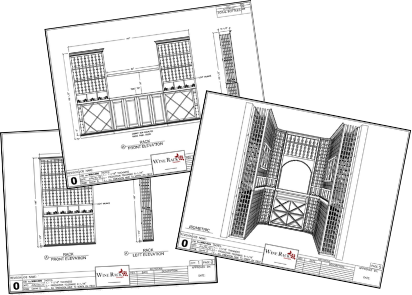
The process of building your dream cellar starts with a clear vision. We suggest using our free design service to visualize exactly how your chosen door style will look in context. While digital renderings are an essential planning tool, the success of the project relies on final field measurements. These measurements must be taken after the walls and flooring are finished to ensure a factory-perfect fit. You should also coordinate closely with your contractor regarding the weight of the door. High-performance insulated glass is significantly heavier than standard residential glass, requiring a reinforced header and a level floor to function correctly. This methodical approach ensures that the transition from a beautiful concept to a functional, professional installation is smooth and successful.
Elevating Your Collection with Professional Entryway Design
Selecting a wine cellar door with glass is the final, most impactful step in securing your collection's future. You've seen how high-performance IGUs and UV-filtering coatings prevent light strike and temperature fluctuations. By choosing between the modern durability of metal or the classic warmth of wood, you define the visual narrative of your home. It's about finding that precise balance between a beautiful showcase and a functional thermal barrier that maintains your environment.
Our approach combines American-based design and manufacturing expertise with specialized knowledge to ensure every component works in harmony. We offer specialized metal wine cellar door options that provide unmatched structural stability while integrating seamlessly with your cooling system. This comprehensive integration protects your investment while creating a stunning architectural feature. Whether you're managing a commercial inventory or a private residential cellar, the right entryway ensures your vintages age exactly as intended.
Your vision for a professional-grade display is closer than you think. Let's collaborate to build a space that honors the traditions of your collection while embracing modern design sensibilities.
Frequently Asked Questions
Do I need a special type of glass for my wine cellar door?
Yes, you must use insulated, tempered glass specifically designed for climate control. Standard single-pane glass doesn't provide the thermal resistance needed to maintain a consistent environment. Professional installations typically utilize dual-pane or triple-pane units filled with Argon gas. These units create a thermal barrier that prevents heat transfer and protects your collection from external temperature fluctuations while maintaining the necessary structural safety.
Will a glass door cause my wine cellar cooling unit to run more often?
A glass door does increase the heat load compared to a fully insulated wall, but high-performance glazing minimizes this impact. If you choose a door with a low R-value or poor seals, your cooling unit will work harder to compensate for air leaks. Using a thermally broken frame and magnetic weather stripping ensures your system operates efficiently without unnecessary mechanical strain or increased energy costs.
How do I prevent condensation from forming on my wine cellar glass?
Condensation is prevented by using double-pane insulated glass and ensuring a perfect airtight seal. Moisture forms when warm air hits a cold, non-insulated surface. Selecting a high-quality wine cellar door with glass that features a thermal break in the frame will keep the exterior pane closer to the room temperature. This specialized construction eliminates the "sweating" effect that can obscure your view and cause moisture damage.
Can I use a standard exterior glass door for my wine cellar?
Standard exterior doors aren't recommended because they lack the specific technical requirements for wine aging. While they are built for weather resistance, they often don't have the high-level UV-filtering coatings or the automatic drop seals needed to maintain 60-70% humidity. A specialized cellar door ensures that the internal microclimate remains completely stable, preventing the cork drying or oxidation issues that often occur with repurposed household doors.
What is the difference between a metal and wood glass wine cellar door?
Metal doors offer ultra-slim profiles and exceptional resistance to warping in high-humidity environments. They provide a contemporary aesthetic that pairs well with modern racking systems. Wood doors offer traditional elegance and natural insulating properties but require dense species like Mahogany to resist moisture. Both materials can support high-performance glass, but metal is the premier choice for large, high-visibility spans where structural precision is vital for a lasting seal.
Are glass wine cellar doors safe for long-term wine aging?
Glass doors are perfectly safe for long-term aging if they include the correct technical specifications. The primary goal of aging is stability. Professional-grade doors prevent the temperature spikes that could damage the chemical balance of your wine. As long as the glass blocks harmful light and the seals prevent air infiltration, your valuable vintages will age as successfully behind glass as they would behind a solid wall.
Do glass doors provide enough UV protection for wine?
Standard glass provides minimal protection, but specialized cellar doors feature Low-E coatings that block up to 99% of harmful UV rays. This protection is essential to prevent light strike, a reaction that creates off-flavors in wine. If your cellar is located in a room with significant natural light, choosing a tinted or high-UV-filter wine cellar door with glass is a critical requirement for preserving the integrity of your collection.
How much does a custom glass wine cellar door typically cost?
The cost of a custom door varies significantly based on your specific dimensions, frame material, and glass specifications. Factors like arched tops, sidelights, and specialized security hardware also influence the final investment. We recommend focusing on the long-term value of a high-performance seal. Investing in quality components prevents expensive cooling system repairs and protects the significant financial value of your entire wine collection over time.
Have an expert help today!
Free 2D wine cellar design