The Complete Guide to All-Glass Wine Enclosures: Design, Engineering, and Climate Control

*Pictures are renderings. Actual wine racks may look different
What if your most valuable vintage collection could be displayed like a piece of gallery art without risking its integrity to heat or humidity? Many enthusiasts hesitate to install an all glass wine enclosure because they fear the threat of condensation or the persistent hum of a loud cooling unit. It's understandable to prioritize the safety of your investment over pure aesthetics. However, modern engineering has finally bridged the gap between visual transparency and professional-grade climate technology.
You can create a stunning, safe, and functional glass display that maintains a stable 55-degree environment while remaining the architectural centerpiece of your home. This guide provides the technical clarity needed to combine high-end design with precise execution. We'll examine the importance of insulated glass units, the integration of quiet systems from brands like WhisperKOOL or Wine Guardian, and the use of minimalist hardware that preserves your view. From selecting American-made metal frames to choosing the right vapor barriers, you'll discover how to build a sophisticated sanctuary that protects your wine as beautifully as it displays it.
Key Takeaways
- Understand why dual-pane insulated glass units (IGUs) are essential to prevent condensation and protect your collection from heat gain.
- Learn how to design an all glass wine enclosure that functions as a sophisticated architectural focal point without compromising thermal stability.
- Explore minimalist racking options like cable systems and label-forward displays that maintain maximum visibility and a modern floating aesthetic.
- Identify the specific requirements for sizing professional cooling systems from brands like CellarPro or Wine Guardian to compensate for the thermal properties of glass walls.
- Follow a methodical planning process, starting with a professional space assessment and moving through technical specifications, to ensure a seamless installation.
Defining the All-Glass Wine Enclosure: More Than Just a Display
Traditionally, wine storage was a utilitarian necessity tucked away in a dark, damp basement. Today, the modern home treats a collection as a visual centerpiece. An all glass wine enclosure represents this shift, moving wine from a hidden corner into the heart of the living space. It's a statement of curation and architectural intent that transforms your bottles into a gallery-style feature.
Technically, these structures are much more than simple glass partitions. They're high-performance environmental chambers designed to protect a delicate investment. A professional enclosure consists of three primary elements:
- High-performance glass panels, typically dual-pane for thermal efficiency.
- Robust metal framing, often featuring American-made components for the doors and structural supports.
- Compression gaskets and sealed entry points to prevent air leakage.
Reach-In vs. Walk-In Glass Displays
Space constraints usually dictate the style of your all glass wine enclosure. Reach-in displays, or "wine walls," are popular for hallways and dining rooms because they require minimal depth. These shallow enclosures prioritize label-forward visibility and ease of access. For homeowners planning a kitchen remodeling Boston MA project, these displays offer a way to merge professional storage with high-end interior design. If you have more square footage, a full walk-in glass room provides an immersive experience. It allows you to step into a temperature-controlled environment where the bottles surround you, creating a dramatic destination for guests and a deeper sense of curation.
Designers use glass enclosures to delineate spaces within open-concept floor plans without blocking sightlines. By integrating strategic LED lighting, the enclosure becomes a "light box" feature that glows in the evening. This look pairs naturally with contemporary materials like natural stone, polished concrete, and metal wine racks. It's an effective way to bridge the gap between functional storage and high-end interior decor while keeping your collection at the perfect serving temperature.
The Engineering of Glass Wine Cellars: Preventing Condensation and Heat Gain
Building a successful all glass wine enclosure requires a deep understanding of thermal dynamics. Many homeowners fall for the "Shower Glass Myth," assuming that standard tempered glass used in bathrooms is suitable for a refrigerated environment. This is a critical mistake. Single-pane glass lacks the thermal resistance needed to maintain a consistent 55-degree environment while the rest of the home sits at 72 degrees. Without an insulating barrier, the glass will reach its dew point almost immediately, resulting in persistent fogging and water runoff.
Dual-pane Insulated Glass Units (IGUs) are the industry standard for high-end displays. These units consist of two glass panes separated by a spacer, creating a sealed gap that acts as a buffer against heat transfer. To further enhance performance, these units should include Low-E coatings to reflect radiant heat and block UV rays that can degrade wine quality over time. A thermal break is a non-conductive material integrated into the frame that prevents heat from traveling through the metal from the warm room into the cold cellar.
Thermal Breaks and Airtight Seals
Even the best glass will fail if the surrounding frame allows air to bypass the enclosure. Specialized metal doors, often featuring American-made components, must utilize architectural foam glazing and high-quality rubber weather stripping. These materials ensure that when the door closes, the seal is absolute. If air leaks occur, the cooling unit will run constantly to compensate for the lost temperature, which significantly shortens the lifespan of systems from manufacturers like CellarPro or Wine Guardian. Ensuring a precise fit during the early stages of a professional design layout prevents these mechanical failures.
Managing Humidity and Dew Point
Condensation happens when warm, moist air meets a cold surface, like the exterior of your glass enclosure. This "sweating" isn't just an aesthetic issue; it creates a breeding ground for mold and can damage surrounding drywall or flooring. By utilizing IGUs with a higher thermal resistance (R-value), you keep the exterior glass temperature above the dew point of the room. Thicker glass units provide better insulation, which is essential for preventing condensation and maintaining the 50 to 70 percent humidity levels required for cork health. A properly engineered system balances these variables to ensure the glass remains crystal clear regardless of the ambient conditions in your home.
Selecting Racking for a Glass-Enclosed Space
When you choose an all glass wine enclosure, the interior racking becomes the most influential design choice. Traditional, bulky storage can block sightlines and make a high-end display feel cramped or cluttered. Minimalist systems are preferred because they allow light to pass through the collection, emphasizing the clarity of the glass and the silhouettes of the bottles. The goal is to maximize bottle density without obstructing the visual field, ensuring your collection remains the primary focal point.
For a truly modern floating effect, Cable Wine Racks use tensioned stainless steel cables to suspend bottles in mid-air. This maximizes visibility and creates a sense of weightlessness that standard shelving cannot replicate. If you prefer a balance of textures, Fusion Wine Walls offer a sophisticated compromise for contemporary spaces. These systems combine the organic warmth of wood backer boards with the sleek strength of metal wine racks, allowing you to match the enclosure's interior to your home's existing cabinetry or architectural details.
Metal vs. Wood Racking in Glass Enclosures
Wooden wine racks are often chosen for their classic appeal and organic textures. In a glass-enclosed space, however, they can sometimes appear heavy or block the view from certain angles. Many designers opt for the sleek profiles of metal systems because they allow for a much cleaner look. Mixing these materials is a common strategy for creating a custom, high-end aesthetic that feels both rooted in tradition and thoroughly modern.
Wine Pegs and Label-Forward Display
The Wine Peg Series is a staple for glass rooms because it supports a label-forward orientation. This layout isn't just about aesthetics; it makes browsing your collection effortless since you don't have to pull bottles out to read the labels. You can customize peg depths to accommodate standard 750ml bottles or larger Magnums. By varying the spacing and layout of the pegs, you can create a curated display that highlights specific vintages while maintaining the clean, open lines essential for an all glass wine enclosure.
Climate Control Integration for Glass Enclosures
Standard home air conditioning systems are designed for human comfort, which means they prioritize lowering temperature and removing moisture from the air. This is the opposite of what a professional wine collection requires. An all glass wine enclosure acts as a significant thermal load because glass has a much lower R-value than a traditional insulated wall. You must install a dedicated Wine Cellar Cooling system that is specifically sized to handle this heat gain while maintaining a steady 55-degree environment.
Sizing a unit for a glass room is a precise calculation. It isn't just about the cubic footage; it's about the BTU capacity needed to fight the radiant heat entering through the panels. Systems from WhisperKOOL, Wine Guardian, and CellarPro are engineered for these high-demand scenarios. These units are built with heavy-duty evaporators and compressors that can run as often as necessary to keep the climate stable without drying out the air.
Self-Contained vs. Split Systems
Self-contained units are often the most straightforward to install, but they typically require a large cutout in a surrounding wall for ventilation. This can disrupt the seamless look of a modern glass display. Ductless split systems are frequently the superior choice for an all glass wine enclosure. They allow the noisy condenser to be placed outdoors or in a mechanical room, leaving only a sleek, quiet evaporator inside the space. For a completely invisible look, ducted systems can hide all mechanical components behind the ceiling, delivering cold air through discreet, minimalist vents.
The Role of Vapor Barriers
While the glass panels are the visual focus, the surrounding solid surfaces must be equally robust. Any non-glass walls, along with the ceiling and floor, must have a continuous vapor barrier and high-density insulation. This airtight envelope ensures that the cooling unit doesn't have to work overtime to maintain the critical 50 to 70 percent humidity levels. If this barrier is compromised, the cooling system may fail prematurely, and you'll likely see moisture forming on the exterior of the glass. Proper coordination during the planning phase ensures the mechanical system and the architectural glass work in perfect harmony.
Get a Professional Design for Your Glass Enclosure
Planning and Designing Your Custom Enclosure
Moving from an initial vision to a finished installation requires a methodical approach that balances aesthetics with technical necessity. The first step involves a thorough space assessment and the definition of your bottle count goals. You must decide whether the enclosure will serve as a high-capacity storage area or a curated display for select vintages. This decision dictates the footprint of your all glass wine enclosure and influences the complexity of the glass engineering required.
Once the scale is established, you'll select glass specifications and frame finishes. While the glass panels themselves are sourced for their thermal properties, many of the high-quality metal components for the doors and frames are American-made, ensuring structural durability. You might choose a minimalist matte black frame to disappear into a modern room or a brushed bronze finish to complement warmer interior palettes. Following this, you must integrate a Custom Wine Cellar cooling strategy. This step ensures that the mechanical requirements, such as power supply and drainage, are planned before any glass is cut or racking is installed.
The Importance of Professional CAD Design
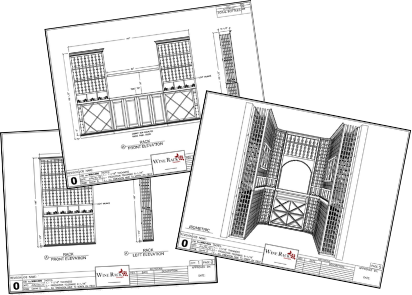
Visualizing a complex project before construction begins is the best way to prevent costly errors. Large glass panels are heavy and require precise structural support that only a technical drawing can confirm. Utilizing our Free Design Service allows you to see the exact bottle spacing and cooling unit placement in a three-dimensional layout. These CAD drawings act as the blueprint for the entire project, ensuring that every metal peg and glass seal aligns perfectly with your home's architecture.
Commercial vs. Residential Requirements
The design process often diverges depending on the setting. Commercial glass displays in restaurants or wine bars must prioritize high-traffic durability and ease of access for staff. These enclosures often require thicker glass and reinforced hinges to withstand frequent use throughout the day. In a residential collection, the focus typically shifts toward security and lifestyle integration. Modern home enclosures frequently include integrated locking mechanisms and smart monitoring systems that alert you if a door is left ajar. Regardless of the setting, your enclosure must comply with local building codes regarding glass in occupied spaces, making professional guidance an essential part of the planning phase.
Transforming Your Vision into a Technical Masterpiece
Designing an all glass wine enclosure is a sophisticated balance of architectural beauty and rigorous environmental control. Success depends on more than just aesthetics; it requires the seamless integration of high-performance insulated glass and dedicated climate technology from authorized partners like WhisperKOOL, Wine Guardian, and CellarPro. By prioritizing thermal breaks and airtight seals, you ensure your investment remains protected and stable.
Whether you are envisioning a minimalist residential display using cable racking or a bold commercial feature with Fusion Wine Walls, the process remains rooted in technical accuracy. Our expertise in residential and commercial custom cellars provides the foundation you need to move from an initial concept to a functional reality. Wine Rack Concepts, LLC acts as your helpful guide throughout every stage of the planning and installation project, ensuring your collection is showcased with the clarity it deserves.
It's time to take the first step toward transforming your space into a world-class gallery for your most cherished vintages. We look forward to helping you turn your vision of a modern, transparent sanctuary into a tangible masterpiece.
Frequently Asked Questions
Do I need insulated glass for a wine cellar enclosure?
Yes, dual-pane insulated glass is essential for any all glass wine enclosure. Single-pane glass lacks the thermal resistance needed to separate a 55-degree cellar from a 70-degree room. Using insulated units prevents the cooling system from overworking and failing prematurely. This choice also ensures that the exterior surface stays warm enough to avoid the condensation issues that commonly plague non-insulated glass partitions in refrigerated environments.
How do I prevent my glass wine cellar from sweating or fogging?
Preventing condensation requires a combination of insulated glass and airtight seals. When warm room air hits cold glass, it reaches the dew point and sweats. By using dual-pane glass with a thermal break in the frame, you keep the outer pane closer to the ambient room temperature. You must also use high-quality weather stripping on doors to prevent moist air from leaking into the space and creating fog.
Can I use a standard air conditioner for an all-glass wine display?
Standard home air conditioners are not designed for wine storage. They typically cannot reach the stable 55-degree target and they remove the humidity that corks need to stay supple. A professional all glass wine enclosure requires a dedicated system from manufacturers like CellarPro or Wine Guardian. These units are engineered to maintain a specific temperature and humidity balance that a residential comfort cooling system simply cannot provide.
What is the best racking system for a glass wine room?
Minimalist racking systems are the preferred choice for maximizing visibility. Options like the Wine Peg Series or Cable Wine Racks create a floating bottle effect that complements the transparency of the glass. If you want to blend modern and traditional styles, Fusion Wine Walls allow for a label-forward display that highlights the collection. These systems ensure that the racking doesn't block light or clutter the visual field of the enclosure.
Is UV protection necessary for glass-enclosed wine storage?
UV protection is vital for long-term wine health. Ultraviolet rays can penetrate clear glass and trigger chemical reactions that degrade the wine's flavor and aroma. Most professional glass enclosures utilize Low-E coatings on the glass panes. This specialized layer reflects radiant heat and filters out harmful UV light, ensuring your collection remains protected while still being fully visible as a sophisticated centerpiece in your home.
How much space do I need for a reach-in glass wine wall?
A functional reach-in glass wine wall typically requires a depth of 18 to 24 inches. This measurement allows for label-forward racking and enough clearance for the cooling unit's airflow. If space is limited, shallow-depth metal racks can accommodate bottles in a single-deep configuration. It's important to account for the thickness of the insulated glass and the framing when measuring your footprint to ensure a seamless fit into your layout.
Are all-glass wine enclosures energy efficient?
Glass enclosures are less efficient than traditionally insulated walls, but they can be optimized for performance. Using dual-pane glass with argon gas fills and Low-E coatings significantly improves thermal resistance. While an all-glass design places a higher demand on the cooling system, selecting a properly sized unit from brands like WhisperKOOL helps manage energy consumption. High-quality seals and architectural foam glazing are also necessary to prevent energy loss through air leaks.
Do glass wine cellars require a vapor barrier?
Yes, a continuous vapor barrier is mandatory for any climate-controlled wine space. While the glass panels act as their own barrier, all surrounding solid walls, ceilings, and floors must be properly sealed. This prevents moisture from migrating through the structure, which can cause mold growth or rot behind the drywall. Using closed-cell spray foam or a 6-mil polyethylene plastic wrap on the warm side of the insulation ensures the cellar stays airtight.
Have an expert help today!
Free 2D wine cellar design