Temperature-Controlled Wine Cellars: How to Protect Your Collection

*Pictures are renderings. Actual wine racks may look different
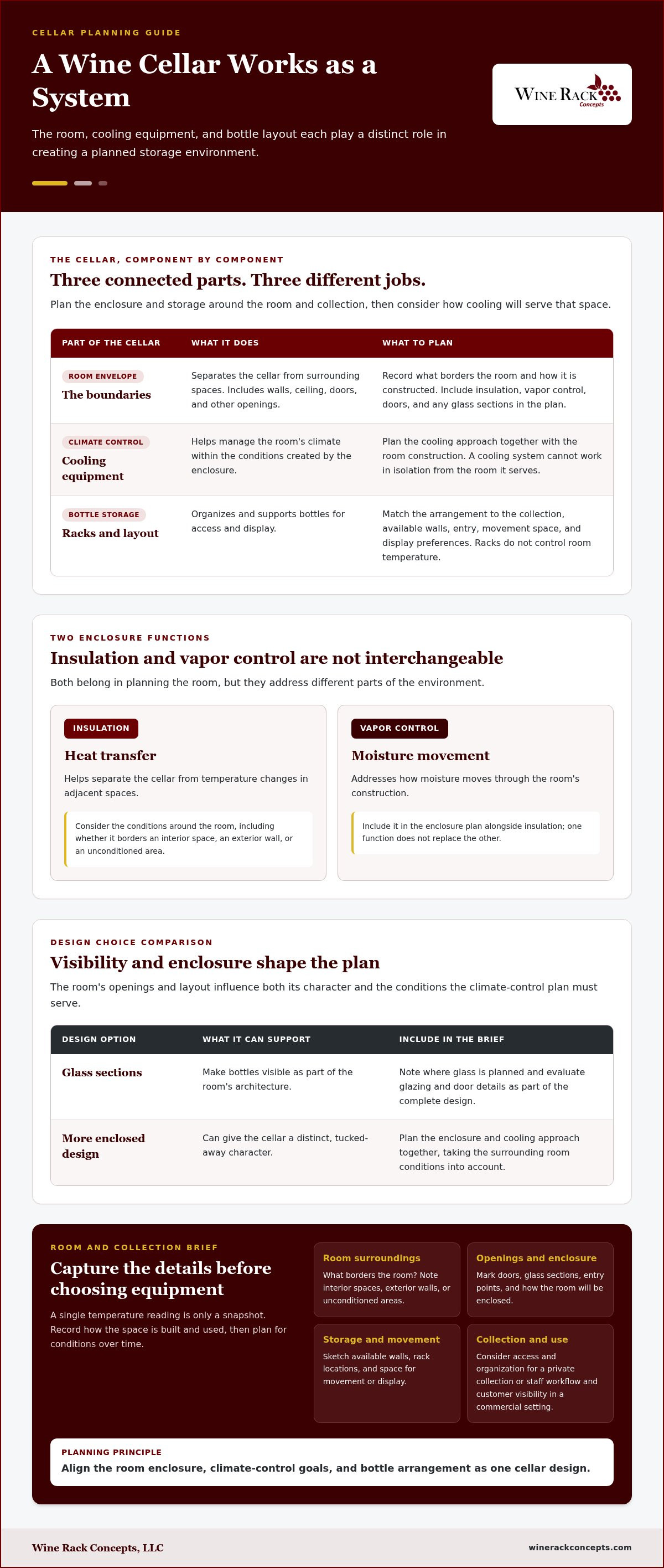
A cooling unit is only one part of what protects your wine. When planning a temperature controlled wine cellar, it is natural to focus first on refrigeration, but the room matters just as much. Insulation, vapor control, doors, and storage layout all affect how the space relates to surrounding conditions. A cooling system cannot work in isolation from the room it serves.
Plan the cellar's structure, climate-control equipment, and design together from the start. This article explains how those elements work as a coordinated system, what to consider before choosing cooling equipment, and how your collection and display preferences can shape the plan. Whether you are adapting an existing room or planning a custom cellar, use the steps below to turn your initial idea into a practical design brief.
Key Takeaways
- A temperature controlled wine cellar depends on a planned environment, not simply a cooling unit.
- Insulation, vapor control, doors, and cooling all contribute to the cellar's climate.
- Match storage access and display choices to your collection, room, and whether the space is private or commercial.
- Build a useful planning brief by recording room dimensions, openings, collection needs, and climate goals.
- Custom cellar design, wine racks, and cooling options can come together in one tailored plan.
What Makes a Wine Cellar Temperature-Controlled?
A wine cellar is a planned space designed to maintain suitable storage conditions for a collection. In a temperature controlled wine cellar, the aim is not just to cool bottles at a particular moment. The room and its climate-control equipment need to work together to support steady conditions over time.
A single temperature reading is only a snapshot. Conditions can shift as a room warms or cools, so consider how the space will perform over time rather than judging it by one reading. A decorative display can make bottles easy to admire, but appearance alone does not make it a cellar. A household refrigerator serves a different everyday purpose. This section focuses on the principles behind the space, not equipment sizing.
For a visual example of a cooling unit in a cellar project, watch this video:
What does temperature control mean for wine storage?
Temperature control means planning for a stable environment, rather than relying on a display reading or expecting a cooling unit to solve every storage concern. The room's exposure to surrounding conditions, its enclosure, and how the cooling equipment serves the space all contribute to the result. One reading cannot show how well conditions are maintained over time.
A cellar is designed to support suitable storage conditions, not to promise a specific outcome for every bottle. The general wine cellar overview describes cellars as storage spaces shaped around wine and environmental considerations. For your project, start by assessing the room and how it will be enclosed, then plan the cooling approach around those conditions.
What is included in a temperature-controlled cellar?
Think of the cellar as three connected parts: the room envelope, the cooling equipment, and the storage layout. The room envelope includes the boundaries separating the cellar from surrounding spaces, including its doors and other openings. Cooling equipment helps manage the room's climate, while racks organize and support bottles for access and display. Racks do not control the room's temperature.
A temperature-controlled cellar is an integrated storage environment in which the room, cooling system, and bottle layout are planned to work together. That applies whether the design is discreet or intended as a feature in a home or commercial setting. Start with the space and collection, then plan how climate control and storage can serve them together.
How the Cellar Room and Cooling System Work Together
A cooling system can manage the cellar's climate, but the room determines the environment it has to manage. Insulation, vapor control, doors, and other openings all shape how the cellar relates to surrounding spaces. Plan the enclosure and cooling approach together instead of selecting equipment in isolation.
For example, a room beside a warmer area of the home has walls and a ceiling separating the two spaces, as well as a door that creates an opening in that boundary. The cooling equipment then works within the conditions created by the room. If you are renovating a space or building out the enclosure, working with a comprehensive builder like Coastal Contracting can ensure the framing, insulation, and vapor barriers properly support your climate-control planning.
Why insulation and vapor control belong in the plan
Insulation helps separate the cellar from temperature changes in adjacent spaces. Vapor control addresses how moisture moves through the room's construction. These functions are related, but not interchangeable: one concerns heat transfer, while the other concerns moisture movement. Both belong in planning an enclosure that can support the environment the cooling system is intended to maintain.
Room details matter. A cellar built within an interior space may have different surrounding conditions from one bordered by an exterior wall or an unconditioned area. Record what borders the room and how it is constructed instead of assuming the same approach suits every project. The Institute of Culinary Education discusses why stable environmental conditions matter for aging wine, reinforcing the value of considering the room alongside the cooling plan.
How doors, glazing, and room layout affect the design
Include every opening and enclosure choice in the design brief. Note where doors and glass sections are planned, how people will enter the space, and which walls are available for storage. A glass enclosure can make bottles visible as part of the room's architecture; a more enclosed design can give the cellar a distinct, tucked-away character. These choices shape both the look of the space and the environment the climate-control plan must serve. Evaluate door and glazing details as part of the complete design. If your wine storage area or adjoining rooms border exterior windows, managing solar heat gain and UV light is also key; learn more about Axent Shutters Blinds & Shades LLC to explore custom shades and blinds that help regulate light and interior temperatures.
Room layout matters, too. Racks along several walls create different storage and access considerations from a layout that reserves a central area for movement or display. Sketch the available walls, openings, and circulation space early to help align the enclosure, bottle arrangement, and cooling approach.
Wine Rack Concepts offers wine cellar cooling systems, including self-contained units and dedicated cellar cooling options. Start with the room and its construction, then plan the cooling approach as part of the full design, not as a substitute for an appropriate enclosure.
If you have a room or project in mind, a custom cellar design can bring the enclosure, storage layout, and climate-control goals into one plan.
Which Cellar Priorities Matter Most for Your Collection?
Start with how you intend to use the space, not with a cooling unit. A private collector who reaches for favorite bottles often may value clear organization and easy access. A commercial setting may need a layout that supports staff workflow, customer visibility, or a curated presentation. These priorities influence the room and storage plan before equipment decisions are made.
Use this comparison to identify what matters most in your project:
| Priority | Questions to consider | Planning implication |
|---|---|---|
| Collection access | Will you retrieve bottles often, or store most of them for longer periods? | Plan the rack arrangement around the bottles you want easiest to reach. |
| Display preference | Should the collection be a visible feature or a quieter part of the room? | Let the desired presentation inform the enclosure and storage layout. |
| Available room | What are the room's dimensions, openings, and intended uses? | Balance storage, movement, and display within the actual space. |
| Storage purpose | Is the cellar for a private collection, a business, or both storage and presentation? | Shape the design around who uses the cellar and what they need to do there. |
How collection size and access shape cellar priorities
Start with the collection you have, then consider how it may change. Note which bottles you reach for regularly, which you want organized for longer-term storage, and whether you want particular labels easy to see. If you often retrieve selected bottles, plan for convenient access to them. A collection organized primarily for storage may call for a different arrangement. These choices guide rack placement, while the room's dimensions help shape the overall design.
How display goals and room use affect the plan
A visually prominent cellar can bring bottles into view as part of a home or business interior. A more discreet room can emphasize orderly storage and practical access. Residential plans often reflect a household's collection and entertaining habits; commercial plans may need to account for how staff and guests use the space. Custom wine cellar design brings storage, presentation, and room priorities into a cohesive plan.
A cooling unit alone cannot determine how bottles are organized, how the room is used, or whether the collection should be on display. Connect those decisions with the room's climate-control goals in a written brief. Before moving forward, note your access preferences, display intent, available space, and storage purpose. This gives the design a practical foundation, whether the project is a compact private collection or a space serving a broader commercial use.
Plan a Temperature-Controlled Wine Cellar With a Practical Brief
A clear brief turns an early idea into useful design information. Before considering equipment, gather details about the room, your collection, how you want bottles displayed, and what you expect climate control to support. These notes help connect the cellar's appearance and function, rather than treating storage and climate as separate decisions.
What information should you gather before design?
Work through the following sequence. Record what you know and mark anything you still need to decide:
- Document the room. Note its length, width, and height, along with the location and approximate size of doors, windows, and other openings. Describe which spaces or surfaces border the room and how you expect to use it.
- Describe the collection. Consider your current bottles, how the collection may change, and which bottles you want to reach easily. Note whether you favor organized long-term storage, frequent access, or a combination.
- Set display preferences. Decide whether the cellar should feel prominent and visible or discreet and primarily practical. Include presentation details that matter to you, such as whether labels should be easy to view.
- Share relevant room conditions. Record what you know about the space, including whether it is near an exterior area or another room with different conditions. Note existing construction details or planned changes that may affect the cellar enclosure.
- State your climate-control goals. Describe the kind of storage environment you want the design to support. Keep this at the goal level; equipment capacity requires project-specific assessment, not a guess based on a short checklist.
How to turn priorities into a coordinated plan
With the brief in hand, consider room construction, the climate-control approach, and rack layout as connected parts of the design. A prominent display, for example, may influence where bottles are arranged and how the cellar meets the surrounding room. A private storage space may put more emphasis on organized access. In either case, room details frame the climate-control discussion, while the collection and how you use it inform the storage arrangement.
A custom wine cellar plan can bring storage needs, presentation preferences, and climate goals into a design tailored to the space. Your brief does not need to solve every technical question. Its purpose is to make the project's priorities clear, so decisions about the enclosure, racks, and climate-control equipment can be considered together.
For a temperature controlled wine cellar, start with what you can observe and describe: the room, the collection, and how you want to use the space. Clear notes provide a practical starting point for a coordinated design.
Bring the Room, Racks, and Cooling Into One Cellar Design
A well-planned cellar brings the room, bottle storage, and climate-control approach together from the outset. The room sets the context, racks organize the collection, and cooling is planned in relation to the space it will serve. Treating these as connected decisions helps shape a cellar around its practical purpose and the way you want it to look.
What an integrated cellar design brings together
Start with how the room will be used, then decide how the collection should be stored and displayed. A private cellar designed for easy access may call for a different rack arrangement from a space intended to make bottles a visual feature. In either case, connect storage priorities with the enclosure and climate-control goals rather than leaving cooling to be considered separately.
Wine Rack Concepts designs and manufactures custom wine cellars and wine racks, along with wine cellar cooling options. Cooling brands offered include WhisperKOOL, Wine Guardian, and CellarPro. Wine Rack Concepts also offers storage options including the Classic, Carpenter, and Vintner series, Fusion Wine Walls, and cable and glass systems. A custom cellar design can bring the room, rack layout, and desired presentation into a tailored plan.
What to expect from a design conversation
Bring the details you have gathered: room dimensions, openings, notes about the surrounding space, and relevant construction information. Add your collection goals, how you prefer to access bottles, and whether you imagine a prominent display or a more discreet storage area. These details provide a useful starting point without requiring you to choose equipment or resolve technical questions in advance.
The process is collaborative. Your preferences and the room's characteristics help shape a plan tailored to the project, with function and appearance considered alongside climate-control needs. If your collection or intended use affects the brief, include those priorities in the design discussion. The aim is a cohesive cellar plan shaped around the project, not a one-size-fits-all arrangement.
A temperature controlled wine cellar is best approached as a complete environment. Let the room inform the cooling plan, and let your collection guide the storage layout. Considering these pieces together helps shape a design around how you want to protect, organize, and enjoy your wine.
Shape a Cellar Around the Collection You’re Building
A cellar can be more than a place to store bottles. Thoughtful planning can make it feel like a natural part of your home or business, reflecting your collection and how you want to experience it. As your plans take shape, decide which priorities matter most: an inviting place to browse, a composed display, or an organized space focused on storage.
That vision gives your temperature controlled wine cellar a purpose beyond equipment selection. It can guide the balance between practical access and presentation while keeping the climate plan connected to the room. You do not need every detail settled before you begin. A clear sense of what matters most is a useful starting point for a cellar that feels personal and considered.
Give your collection a space that reflects the care you have put into curating it. Start with your room, collection, and priorities, then bring them together in a custom cellar design.
Frequently Asked Questions
What temperature should a temperature-controlled wine cellar maintain?
A commonly cited target for long-term wine storage is about 55°F (13°C), with roughly 55°F to 59°F (13°C to 15°C) often given as a practical range. The Institute of Culinary Education discusses the value of consistent conditions for aging wine. Treat a target as a planning guide, not a guarantee; a stable environment matters more than chasing one exact reading.
Does a wine cellar need humidity control as well as temperature control?
Consider humidity alongside temperature, especially when planning long-term storage. It is a separate environmental factor, so a temperature reading alone will not describe every condition in the room. Include humidity among the goals for the cellar environment and consider the room's construction and surrounding spaces. Do not assume every cooling system controls humidity in the same way.
Can a cooling unit alone make a room suitable for wine storage?
No. A cooling unit is one part of the plan and cannot substitute for considering the room itself. An unfinished room with openings or unresolved construction details may have different planning needs from a purpose-designed enclosure. Consider how the room, its boundaries, and the cooling approach fit together before settling on a design. Equipment choice alone does not resolve those decisions.
What is the difference between a temperature-controlled wine cellar and a wine refrigerator?
A wine refrigerator is an appliance for storing bottles in a self-contained cabinet, while a cellar is a dedicated room or enclosure designed around wine storage. The right format depends on your space and how you want to use it. If you want a built-in architectural feature, a cellar design can coordinate room finishes and bottle presentation. If your needs center on appliance-style storage, a refrigerator may be a more fitting category.
Can a temperature-controlled wine cellar include a glass door?
Yes. A glass door or glass enclosure can make the collection visible as part of the surrounding space. Wine Rack Concepts offers an All Glass Wine Enclosure. Include visibility, room use, and the overall enclosure design in the project brief so the visual goal is considered alongside climate control. Glass is a design choice, not a substitute for planning the cellar environment.
How do insulation and a vapor barrier affect a wine cellar?
Insulation and vapor control are part of the room's construction and help define how the cellar is separated from surrounding spaces. They address different considerations, so they are not interchangeable. If you are converting an existing room, note its walls, ceiling, openings, and adjacent areas as design information. This context helps shape a coordinated plan for the enclosure and climate-control approach.
Can a wine cellar be designed for both bottle storage and display?
Yes. A cellar can combine organized storage with selected bottles arranged for visibility. You might want frequently chosen bottles easy to locate while featuring a smaller group as part of the room's design. Let your collection, access habits, and display preferences guide the rack layout. A tailored plan can balance those goals while accounting for the room and its intended use.
Have an expert help today!
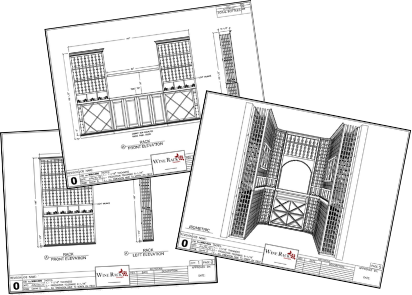
Free 2D wine cellar design