Secure Wine Storage for Collectors: How to Choose the Right System

*Pictures are renderings. Actual wine racks may look different
What protects a wine collection beyond a lock on the cellar door? Secure wine storage for collectors depends on how the entire setup works together: physical access, environmental planning, bottle handling, and an organized layout. A lock matters, but it cannot address every risk to a collection.
If you are weighing a dedicated cellar against compact racking or a display-focused installation, start by comparing the space available, how often you access bottles, and how you want to use the room. Temperature, humidity, light, and handling also belong in the plan. The right balance depends on your collection and the room, not just the number of bottles you hope to store.
This guide compares storage formats and the decisions that shape a considered design. You will learn how custom cellars, wine racks, and cooling systems can work together, and how to organize bottles with room for the collection to change. From discreet storage to a glass-enclosed display, the goal is a system that fits both your wines and the way you enjoy them.
Key Takeaways
- Plan secure wine storage for collectors around the collection, available room, and bottle-access habits, rather than relying on a lock alone.
- Coordinate cooling, room layout, and racking to support orderly storage and limit unnecessary bottle handling.
- Compare a dedicated cellar, refrigerated storage, and display-focused racking by space needs, access, and visual appeal.
- Use a collector checklist to address current storage needs and leave room for the collection to change.
- Explore how custom design can bring storage, cooling, racking, and the character of your room together.
Secure Wine Storage for Collectors Starts with Knowing What Needs Protection
Imagine a collector with a growing selection, a spare room that could become a cellar, and bottles brought out regularly for dinners. Their ideal setup may differ from someone storing a smaller collection in a compact space and accessing it less often. Start with practical details: what the collection contains, where it will be stored, and how people will move through the space.
Secure wine storage for collectors brings together environmental planning, thoughtful physical access, careful handling, and clear organization. These address different concerns. Storage conditions and bottle placement support the storage plan, while access decisions help manage who enters the area and handles bottles. A lock can limit entry, but it cannot control the environment or make a disorganized collection easier to manage. A lock secures the door; a complete storage plan considers what happens to every bottle inside.
The right balance depends on how you collect. A display-led arrangement makes bottles visible and can give a room a strong focal point. A storage-first plan may put more emphasis on orderly placement and convenient retrieval. One goal does not automatically rule out the other, but deciding which matters most helps shape the room, racking, and cooling choices.
Which collection risks should a storage plan address?
Look at the proposed room and the way you use your collection. Consider exposure to excess light, changes in room conditions, accidental knocks, and how often bottles are moved. Then review access: who enters the storage area, whether guests can reach bottles, and whether retrieving one requires shifting others. These observations help turn broad concerns into specific design decisions.
- Immediate concerns: Note current exposure, awkward access, and any risk of bottles being bumped or handled unnecessarily.
- Future needs: Think about how the collection may grow or change, and whether the organization will still make sense as new bottles are added.
Separate problems you can see now from choices that will matter as the collection changes. A room that works for your bottles today may need a different layout if the collection's size or mix shifts. Leaving flexible space in the plan can make it easier to adapt the arrangement later.
What does secure storage mean for a wine collector?
Think of security as a set of connected choices, not a single feature. Environmental planning considers the room and cooling approach; suitable racking gives bottles an organized place; controlled access reflects who uses the space; and a simple inventory helps you track what is stored and where. The Wine Cellar overview offers background on cellar types and storage considerations, while a custom wine cellar can coordinate room planning with storage needs.
Make your priorities explicit before choosing a format. If visibility is central, display-focused design may suit the room. If orderly storage and easy retrieval matter most, prioritize a layout that makes bottles straightforward to locate. A considered plan can account for both, with the collection and available space guiding the design.
How Climate, Racking, and Access Work Together to Protect a Collection
A storage system works as a whole. Room planning informs the cooling approach, rack layout determines how bottles are arranged and retrieved, and access planning shapes how people use the space. When these choices are made separately, a room can look polished yet be awkward to manage, or its storage capacity may not suit the way bottles are used.
Cellar security depends on the interaction of environment, storage, and access, not on any one feature in isolation. For collectors, that means considering the room and its cooling, bottle placement, and who can enter and move through the storage area as connected design decisions.
Why cellar conditions and cooling belong in the same plan
Consider a cooling unit alongside the room it will serve. The room's layout and construction are part of the planning picture, so choosing a cooling category without considering the space can leave important design choices disconnected. Dedicated wine cellar cooling systems and self-contained refrigeration are options to consider as part of a coordinated plan, rather than as stand-alone equipment decisions.
Wine Rack Concepts provides wine cellar cooling systems as part of a broader approach to storage. Consider where the system fits in relation to the room, rack arrangement, and access route. A clear plan shows how each element belongs in the finished cellar, without assuming that one system or layout suits every collection.
How racking and room access support careful handling
Racking turns a room into an organized storage space. A layout that groups bottles in a useful way can make them easier to locate and retrieve. Keeping access paths clear also helps avoid reaching around or moving other bottles. The right arrangement depends on the collection and on how you use the room.
A display-led layout may put visibility and presentation first. A storage-first arrangement may prioritize clear organization and direct retrieval. Some collectors want a balance, with selected bottles on view and the rest arranged for practical access. Custom wine cellar design can bring those preferences into the room plan, along with the placement of racks and cooling.
Access is personal as well as practical. A private cellar used by one collector may call for a different entry arrangement from a shared space used by family or guests. Plan who should have access, where bottles will be handled, and how people can retrieve them without disrupting the rest of the arrangement. These decisions connect controlled entry with everyday convenience.
To bring the room, racks, and cooling into one considered plan, start with the collection and the way you want to use the space. A wine cellar design plan can help translate those priorities into a coordinated layout.
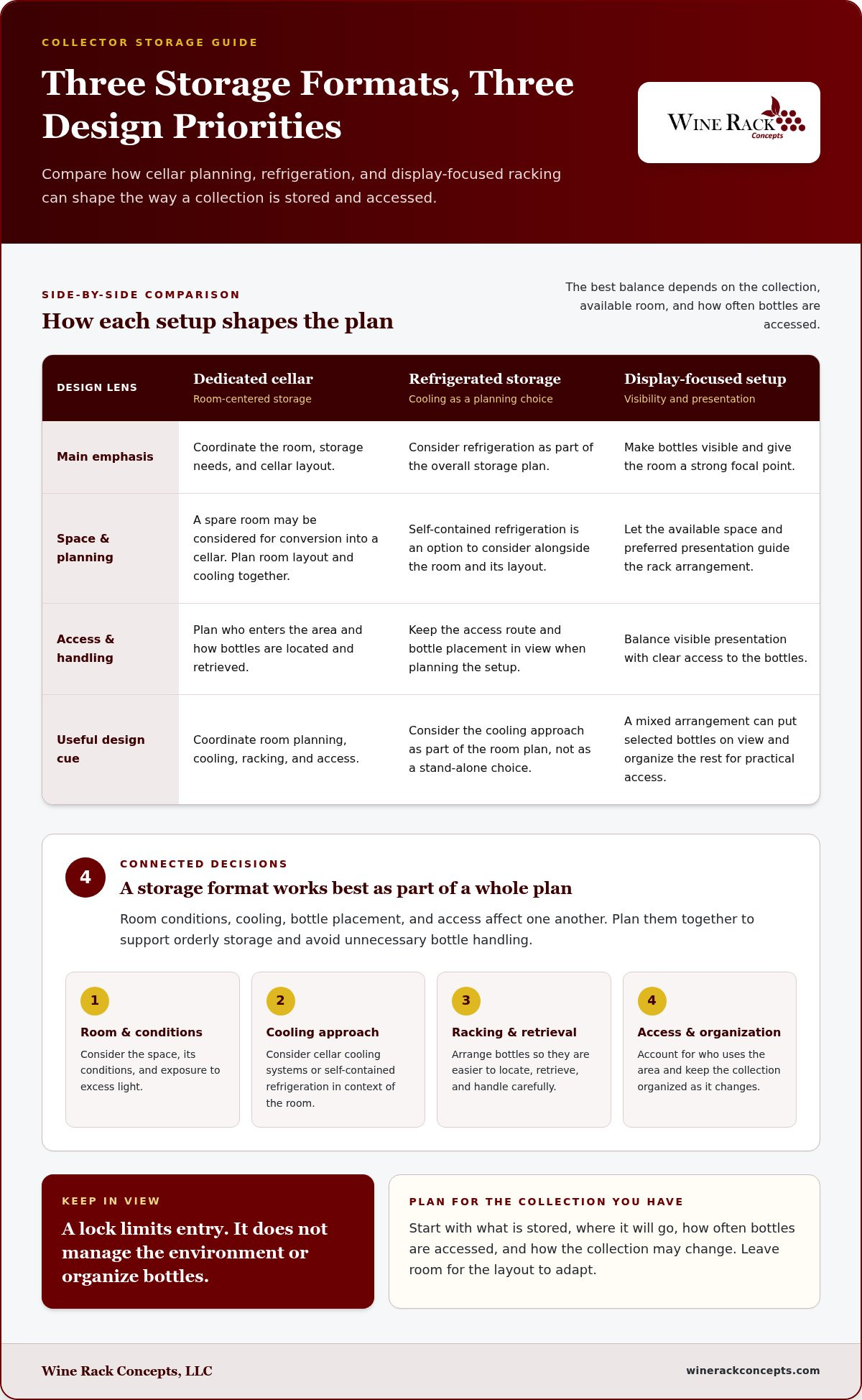
Compare Wine Cellars, Refrigerated Storage, and Display-Focused Setups
There is no single storage format that suits every collection. A dedicated cellar, refrigerated storage, and display-led wine racks each affect how bottles fit into a room and how easily you can reach them. Compare them by the space you have, the way you use your collection, and the role you want storage to play in your home.
| Setup | Space needs | Access | Display value | Planning considerations |
|---|---|---|---|---|
| Dedicated wine cellar | Uses a planned room or defined area | Can be arranged around how you enter and retrieve bottles | Can range from discreet storage to a room feature | Coordinate the room, cooling, racking, and access as a whole |
| Refrigerated storage | Requires space for a refrigeration unit and bottle storage | Depends on where the unit sits and how bottles are organized | Varies with the chosen placement and surrounding design | Consider the unit alongside the room and intended use |
| Display-focused racking | May use a wall or another defined area | Visible bottles can be straightforward to locate | Makes the collection part of the room's visual character | Balance presentation with storage organization and the collection's needs |
When a dedicated wine cellar may suit a collector
A dedicated cellar may suit a collector who wants a distinct storage space and the opportunity to plan its elements together. Racking can be organized around the collection, while cooling and access are considered in relation to the room and its surroundings. The result can be tailored to the bottles, available space, and desired character of the cellar. Custom wine cellars bring those choices into one design process.
A dedicated cellar also makes organization part of the room's design. For example, you could plan one area for bottles you reach for regularly and another for bottles you prefer to keep arranged separately. The layout can reflect your routines instead of forcing the collection into a generic arrangement.
When compact refrigeration or visible display may fit better
If a separate cellar is not practical, refrigerated storage can be planned around a smaller available area. Consider where the unit will sit, how it fits with nearby furnishings, and whether retrieving bottles will be convenient. Wine cellar cooling and racking are distinct parts of a storage plan, and how they fit depends on the room and chosen format.
Open or display-focused wine racks can make bottles part of the room's design and keep the collection in view. But visibility alone does not make a display a complete storage plan. Consider the location, organization, and intended use of the bottles, then decide whether display-led racking meets those needs or should complement another storage area.
The best choice for secure wine storage for collectors follows the collection and room, not a fixed hierarchy of formats. Weigh space, access, display preferences, and how you expect to use the bottles before settling on a setup.
Use This Collector Checklist to Choose a Secure Storage Setup
A useful plan begins with your bottles, not a rack catalogue. Work through the checklist in order, noting what the collection needs now and what may change as it grows. The aim is to turn your priorities into clear decisions about the room, access, display, racking, and cooling.
The right collector storage system is shaped by the collection, room, access habits, display preferences, and how racking and cooling work together.
Map collection needs, room constraints, and access
Before choosing a format, write down how you organize bottles, how often you retrieve them, and who uses the storage area. Then assess the available room and decide whether you want discreet storage, a visible display, or a balance. These details make later choices specific to your space and routine.
- Describe the collection. Note how you group bottles, which you access regularly, and whether you expect the collection's mix or overall size to change. Plan for future needs without assuming a standard capacity.
- Map the room. Record usable walls, entry points, and areas that need to remain clear. Consider how a rack arrangement will fit and whether the room calls for a discreet or prominent installation.
- Set access preferences. Identify who will use the space and how bottles should be reached. A collector who selects bottles often may value direct retrieval; a less frequently accessed collection may call for a different arrangement.
- Choose a display direction. Decide whether visibility is a priority, whether you prefer bottles to remain less prominent, or whether selected bottles should be featured while others are stored more discreetly.
- Coordinate the components. Consider rack style, material, room design, and cooling as connected decisions. Do not select each element in isolation; the layout should support the collection and the way you intend to use the space.
Plan the storage components as one system
Once the room and routines are clear, compare racking styles and materials for both appearance and bottle organization. For example, wooden wine racks can be considered as part of a room's design, while other rack options may suit a different visual direction. Choose a layout that makes bottles easy to locate and retrieve without crowding access routes.
Include cooling and cellar infrastructure in the same planning conversation. The room and its intended use affect how these elements fit together, so a considered design aligns them with the racking rather than treating them as afterthoughts. This integrated approach gives secure wine storage for collectors a practical foundation, with decisions tied to the collection instead of a one-size-fits-all template.
Plan a Custom Wine Storage Solution Around Your Collection
A considered wine storage design brings the collection and the room into the same conversation. Your current bottles, plans for future growth, available space, access preferences, and display goals all influence how racking and cellar infrastructure should fit together. The result can be practical and visually at home in its surroundings.
What to bring into the design conversation
You do not need every detail settled before planning begins. A clear outline of how you collect and use your space gives the design process a useful foundation. Gather notes on:
- Collection goals: Describe how you group bottles and how you expect the collection to change, without trying to fit it to a standard capacity.
- Room dimensions and layout: Note the available space, entry points, and any features that affect where storage can go.
- Access patterns: Consider who uses the area and how often bottles are retrieved. Frequent access may call for a different layout from storage visited less often.
- Display preferences: Decide whether you want a discreet cellar, a visible presentation, or a blend of the two.
These priorities help shape a design around your project, rather than asking the collection to adapt to a predetermined arrangement. They also clarify how room planning, racking, and cellar infrastructure can work together while keeping everyday use in view.
Turn a protection plan into a considered cellar design
Racking influences more than appearance. Its arrangement can organize bottles in a way that makes sense for your collection and retrieval habits. Wine Rack Concepts offers the Classic, Carpenter, and Vintner rack series, along with cable and glass systems. These options provide different design directions as you plan how the cellar should look and function.
Cooling belongs in that same plan. The room, rack layout, and cooling approach are connected design considerations, so planning how each will work in the space helps create a cohesive result. A custom wine cellar design can bring bottle organization, room use, and visual character together without treating any one element as the whole solution.
For secure wine storage for collectors, custom design offers a way to align practical priorities with the atmosphere you want the room to create. Whether your vision is a dedicated cellar or storage integrated into an existing space, begin with what you own, how you use it, and what the room can support.
Shape a Storage Plan That Grows with Your Vision
Your collection is personal, and its storage should reflect how you enjoy and care for it. As you move from ideas to a design, choose the priorities that matter most: a room that feels considered, a layout that suits your routines, or a distinctive way to make the bottles part of your home. Secure wine storage for collectors is not about following a standard template. It is about making deliberate choices that fit your collection and space.
Before beginning, picture the experience you want from the finished room. Which bottles should be easiest to reach? Should the space feel quietly integrated or make a more noticeable impression? What should remain flexible as your collection changes? Clear answers can turn broad goals into a design direction while leaving room for thoughtful decisions along the way.
A well-planned cellar can bring purpose and character to a room while giving your collection a place of its own. Start planning a custom wine cellar with Wine Rack Concepts and turn your storage priorities into a design that fits your collection.
Frequently Asked Questions
What makes wine storage secure for collectors?
Secure storage for collectors combines thoughtful room planning with practical bottle organization and appropriate access. A lock can limit entry, but it cannot manage conditions inside the room or help you keep track of bottles. Consider how the space is used, who handles the collection, and how bottles are identified. A written inventory or simple location map can make the setup easier to manage as the collection changes.
Is temperature control enough to protect a wine collection?
No. Temperature control is only one consideration; the room's humidity, light exposure, vibration, and everyday handling also matter. A cooling system, for example, does not resolve a layout that exposes bottles to bright light or makes them awkward to retrieve. Consider the full storage environment and how the collection is used. For technical condition ranges, rely on current guidance from a credible wine-storage source rather than applying a setting without context.
Can a wine wall provide secure long-term storage?
A wine wall can be part of a long-term storage plan, but its appearance alone does not establish whether the location and arrangement suit the collection. Consider where it will be installed, how the room is used, and whether bottles will be exposed to light or frequent activity. A display wall may work alongside other storage, or serve a broader role when its environmental and practical needs are part of the design.
How should collectors keep track of stored bottles?
Choose an inventory method you will update consistently, such as a spreadsheet, a dedicated app, or a written record. Useful fields can include the bottle's name, vintage, location, and whether it has been added, moved, or opened. A shelf or rack location code, for example, can help you find a bottle without searching through the collection. Keep the format simple enough to maintain as your storage arrangement evolves.
What happens if a wine cellar cooling system stops working?
If a cooling system stops, room conditions may become less predictable. Note what you observe and refer to the instructions for your specific system for appropriate operating guidance. Avoid assuming every unit has the same alerts, backup features, or recovery steps. A practical plan includes knowing how to check room conditions and where the equipment information is kept, so you can respond based on your setup rather than guesswork.
Can an existing room be planned for wine storage?
Yes, an existing room can be considered for wine storage, with its layout and conditions informing the design. When clearing out furniture or household items to repurpose a space, using self storage units Murray Bridge can provide secure off-site space while work is underway. Before choosing racking, note features such as windows, doorways, lighting, and the room's normal use. These details can shape where bottles are placed and how people move through the space. A design that accounts for the room from the outset can align storage needs with the look and function you want.
How can I balance bottle security with easy access?
Set access expectations around the people who use the space and the way you select bottles. You might keep bottles chosen often in an easy-to-reach area and arrange the rest for less frequent retrieval. Clear labels or an inventory location note can reduce unnecessary searching. Then consider how the room's entry and layout support the level of privacy you want without making everyday use inconvenient.
Have an expert help today!
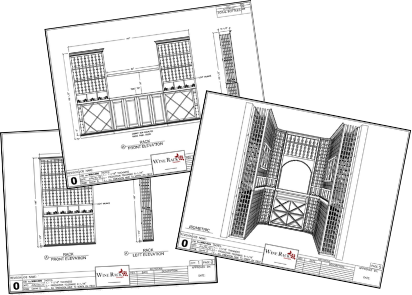
Free 2D wine cellar design