Protecting Your Wine Collection from UV Light: A Practical Guide

*Pictures are renderings. Actual wine racks may look different
Protecting a wine collection doesn’t mean hiding every bottle from view; it means managing the light around it. When protecting wine collection from UV light, collectors often wonder whether sunlight through a window or indoor lighting can affect bottles over time. Both deserve attention, but practical steps can reduce exposure while preserving the pleasure of displaying a carefully chosen selection.
Light exposure may contribute to changes in wine, and clear glass offers less protection than darker bottle glass. The solution isn’t necessarily a dark, closed-off cellar. Start by identifying where light reaches your bottles, then adjust their placement, the light source, or the room’s layout. If you’re planning a new cellar, include light exposure in decisions about racks, cooling, and display.
This guide explains how sunlight and indoor lighting may affect wine, how to limit exposure in your current space, and which design choices can balance protection with visibility. Whether your collection sits behind glass or on open display, a well-planned cellar can bring preservation and presentation into harmony.
Key Takeaways
- Protecting wine collection from UV light starts with identifying where direct sun and other bright light reach your storage space.
- Observe the room at different times of day to locate exposed shelves and decide which bottles to move first.
- Compare practical options, including changing light sources, relocating bottles, using window treatments, or choosing enclosed storage.
- Plan bottle placement and display together. Racks organize and present bottles, but they do not block UV.
- Review the storage area after making changes so your approach continues to balance bottle protection with an attractive display.
How UV Light Can Affect Wine and Its Packaging
Ultraviolet (UV) light is electromagnetic radiation beyond the violet end of the visible spectrum. You can’t see it, but sunlight contains UV, and some indoor sources can emit it too. Collectors pay attention because prolonged or intense exposure to light is one of several storage conditions that may affect wine. A brief moment in the light doesn’t inevitably spoil a bottle. Exposure depends on the source, distance, duration, and the bottle itself.
What does ultraviolet light mean in a wine-storage context?
UV-A spans wavelengths of about 315 to 400 nanometers, while UV-B spans about 280 to 315 nanometers. Sunlight contains both. Indoor lighting varies by lamp type and design, so it isn’t accurate to assume every bulb exposes bottles to the same amount of UV. Visible light is a separate part of the spectrum, though intense visible light can also be relevant to wine quality.
In practice, wavelength is only one part of the picture. Intensity, exposure time, distance from the source, and barriers such as glass all influence how much light reaches a bottle. That’s why a bottle on a sunlit shelf faces a different exposure pattern from one in a dim room. Protecting wine collection from UV light starts with understanding that exposure is a matter of degree, not an all-or-nothing event.
Why can light exposure matter to wine?
Light can interact with compounds in wine and, under some conditions, contribute to unwanted changes in aroma and flavor. Lightstruck wine is wine whose exposure to light has caused undesirable sensory changes, sometimes described as sulfurous or cabbage-like aromas. The term and fault are discussed in this overview of lightstrike in wine. Sensitivity varies, so the presence of light alone doesn’t establish that a particular bottle has been affected.
Bottle color influences how much light may pass through the glass. Clear glass generally offers less protection than green or amber glass, with amber providing stronger filtration. Color isn’t a complete shield, however. The bottle’s position and the brightness and duration of exposure still matter. A darker bottle near a bright window may receive less light than a clear one, but neither should be treated as immune to prolonged exposure.
Consider light alongside other storage conditions rather than as the sole cause of every wine fault. For a home collection, the useful question isn’t whether any light has ever reached a bottle. It’s whether bottles are repeatedly exposed to strong light over time. That measured perspective supports practical decisions without overstating the risk or assuming all wines respond identically.
Where Wine Collections Encounter UV and Other Light
Light can reach bottles from more directions than a sunbeam crossing a room. Windows, glazed doors, reflected daylight, and display fixtures each create a different exposure pattern. A shelf beside a bright window is not in the same conditions as one set back in a shaded part of the room. Check the whole storage area, not just the bottles in direct sun.
How sunlight reaches bottles through windows and doors
Direct sun is the easiest exposure to spot, but it isn’t the only one. Daylight can reflect off pale walls, floors, or nearby surfaces and brighten a rack that isn’t directly in the sun’s path. Windows and glazed doors also vary. Ordinary glass reduces some ultraviolet radiation, especially UV-B, but can allow some UV-A through. The level of filtering depends on the glazing, so don’t assume a pane provides complete UV protection. For homeowners evaluating or upgrading their residential glazing, experienced glass and window contractors like A ACME Design offer practical expertise on glass maintenance and window installations.
Look beyond the obvious window-side display. Bottles may sit near an exterior door with glass panels, on a wall that receives strong afternoon light, or in an open-plan space where sun moves across the floor. The sun’s path changes with the time of day and season. A spot that stays shaded during one visit may receive direct light at another time.
Can indoor lighting expose wine to relevant light?
Indoor sources differ in the light they emit. A fixture’s effect depends on its type, placement, brightness, and how long it stays on. Don’t assume every bulb presents the same exposure. Check whether display lights point directly at bottle labels or glass, and whether they remain on for extended periods. A fixture that illuminates the room indirectly creates a different pattern from one mounted close to the bottles.
Keep light exposure distinct from heat. Sunlight can bring warmth as well as light, but these are separate storage concerns. A bottle may receive bright light without becoming noticeably warm, while a nearby heat source can affect its surroundings without direct sunlight. Observing both helps you distinguish one issue from the other.
To map daylight, check the storage area at several points during the day rather than relying on a single glance. Note which shelves receive direct beams, which are bright from reflected light, and whether glass doors or windows create a clear path to the bottles. Repeat the observation as seasons change, especially if the collection is near a window. This simple record can guide decisions about placement and display while protecting wine collection from UV light.
If you’re planning a cellar or revising a room layout, consider how the display will relate to windows and doors from the outset. A custom wine cellar design brings bottle placement and the surrounding space into the same plan.
Comparing Practical Ways to Reduce Wine's Light Exposure
There isn’t one control that suits every collection. Switching off a display light may help in one room, while a collection beside a bright window may need a different approach. When protecting wine collection from UV light, consider the exposure each measure addresses, how it fits the room, and what visibility or convenience you may give up.
When is reducing the light source the simplest option?
If display lighting is on when no one is viewing the bottles, turning it off is an easy first adjustment. Where the layout allows, moving bottles away from direct sun can reduce exposure without changing the room. The trade-off is presentation: a prominent, label-forward display may be easier to see, while a less exposed position can make bottles harder to admire or select.
When might a window treatment or enclosed storage help?
Window treatments or glazing designed to filter UV may help where daylight is the main concern. Their performance and suitability vary, so review product specifications for stated UV filtering rather than relying on a general "UV-blocking" description. Enclosed storage can also separate bottles from direct room light, though an enclosure shouldn’t be assumed to eliminate all exposure. A custom cellar can bring storage placement and the surrounding room into one design plan, as shown in these custom wine cellar designs.
| Approach | Suitable situation | Trade-off | Evidence caveat |
|---|---|---|---|
| Switch off or reduce display lighting | Fixtures shine on bottles when the collection isn't being viewed | Less accent lighting and visibility | Light output varies by source and fixture; don't assume every bulb has the same effect |
| Relocate bottles | A shelf or rack receives direct sun or strong reflected daylight | May change the room's display or access | Placement reduces exposure only to the extent that the new position is less exposed |
| Use a window treatment or UV-filtering film | Daylight enters through a window near the collection | May alter the room's view or appearance | Filtering depends on the product, glazing, and installation; check stated performance |
| Choose enclosed storage | Bottles need separation from light in a shared or bright room | Can make the collection less immediately visible | An enclosure's materials and configuration determine how much light it reduces |
Use the table as a starting point, not a guarantee. Combining measures may make sense: relocate the most exposed bottles, manage the light source, and consider a treatment where window exposure remains. No single option should be treated as complete protection. Choose based on the room’s light paths and how you want to access and display your collection.
A Step-by-Step Plan to Protect Bottles from UV Light
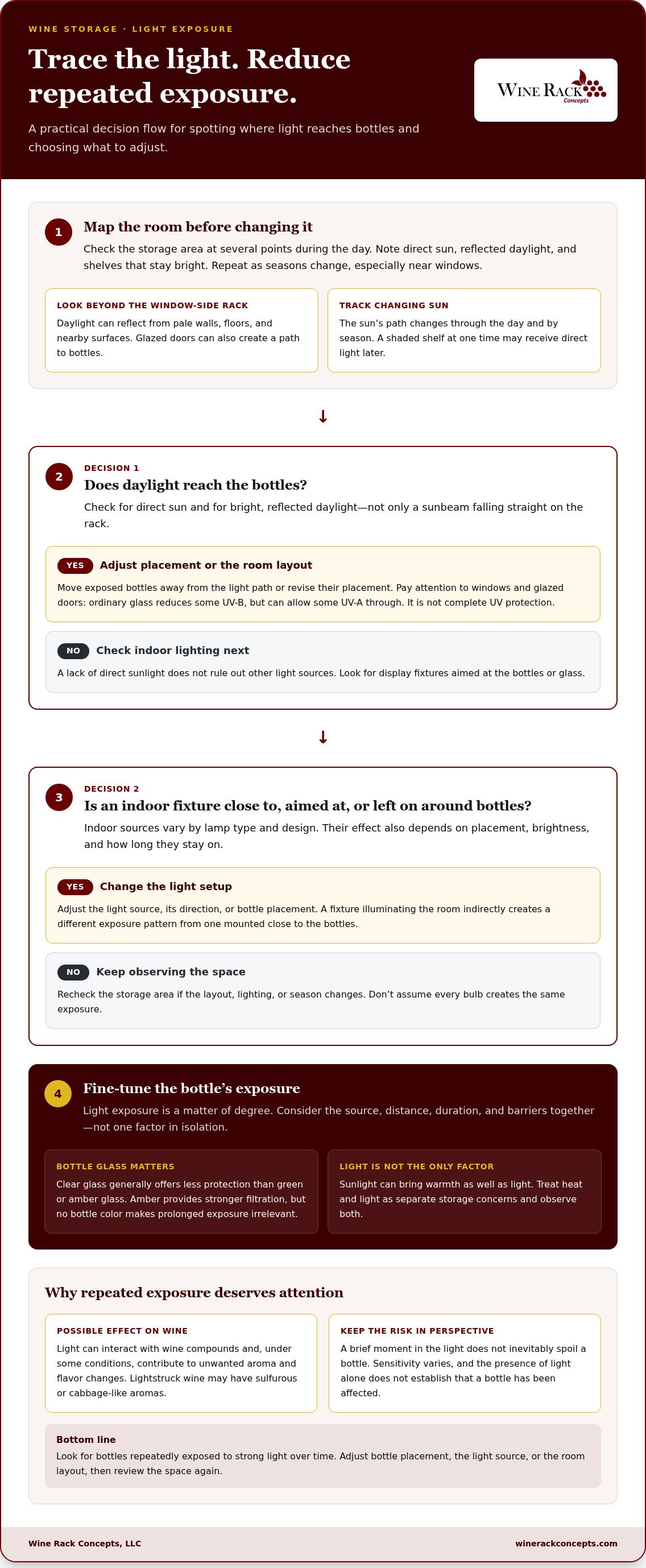
A clear plan turns a general concern into manageable choices. Start with the room as it is, then make changes in order of usefulness. Observe, reduce, and review. This sequence helps address exposure without sacrificing the way you use and enjoy your collection.
Audit the room before moving or redesigning storage
Note where bottles sit in relation to windows, glazed doors, reflective surfaces, and display fixtures. Visit the storage area at different times of day and record when direct sunlight reaches a rack or individual bottles. Include reflected daylight, even if the sunbeam doesn’t fall directly on the collection.
Keep the record practical. Note which shelves are affected, whether light appears continuously or only at certain times, and which fixtures shine toward the bottles. Don’t assign a risk threshold based on a particular number of minutes. First, understand the pattern in your own room.
Choose changes that suit the collection and the space
Once you know where exposure occurs, choose controls that fit your priorities. The right approach depends on collection size, which bottles you want to display, and how much the room can be rearranged. A small group near a bright window may be easy to relocate; a larger display may call for a broader change to the room or storage arrangement.
- Inspect exposure. Record where and when sunlight reaches bottles. Note nearby windows, glass doors, reflective surfaces, and lighting.
- Address direct sunlight first. If the room allows, move the most exposed bottles to a more shaded position. This is often simpler than redesigning the storage area.
- Select a suitable control. If relocation doesn’t suit the collection or room, consider a window treatment or enclosed storage. For a film, treatment, or glazing, review the product’s stated UV performance and remember that results depend on its specifications and installation.
- Reassess the arrangement. Observe the bottles again after making a change. Check whether sunlight still reaches them and whether the new position works for access and display.
For a new or reworked cellar, consider storage layout and light exposure alongside the room’s other requirements. Cellar cooling is a separate planning consideration, not a substitute for managing light. Explore wine cellar cooling options as part of planning the overall environment. Wine Rack Concepts, LLC offers custom wine cellars, wine racks, and cooling solutions, so the storage arrangement and cellar environment can be planned together without assuming racks themselves block UV.
Protecting wine collection from UV light is an ongoing part of storage planning, not a one-time guarantee. If seasons, furnishings, or display habits change, repeat the observation and adjust as needed.
Designing Wine Storage That Balances Protection and Display
A well-planned wine space can showcase bottles while taking their surroundings into account. The goal isn’t to hide every bottle, but to arrange storage and lighting with the room’s exposure patterns in mind. Racks organize and display a collection; their material should not be treated as a barrier to UV. Placement, light sources, and glazing are separate design considerations.
Plan bottle placement around the room's light
As you map out storage, identify walls and shelves away from direct sunlight for bottles intended for longer-term storage. A brighter, more visible area can serve as a display zone, while less-exposed positions hold the rest of the collection. This approach can suit a residential cellar, a commercial storage room, or a feature display, depending on the space and how people use it.
Display priorities matter, too. Label-forward racks can make selected bottles easy to see, while other rack positions can keep less frequently accessed bottles out of prominent display areas. Consider how lighting will fall on both zones, and whether fixtures need to be aimed differently or used only when the collection is being viewed. These choices balance presentation and practical exposure management without assuming that any rack blocks UV.
Bring light protection into a custom cellar plan
A custom cellar plan can consider the room layout, bottle placement, display goals, and glazing together. If the design includes glass, the glazing specification is relevant to light management, but no choice should be treated as a promise of complete protection. Wine Rack Concepts, LLC designs custom wine cellars around the collection and its setting.
Before settling on a layout, think through how the collection may grow, which bottles deserve a visible place, and where the room receives daylight. The same principles apply whether the space is designed for a home or a commercial setting: plan the rack arrangement and light sources as parts of the room, rather than making display decisions in isolation. This makes protecting wine collection from UV light part of a thoughtful storage plan, alongside practical needs for access and presentation.
When you’re ready to shape a cellar around your collection and room, request a custom design.
Shape a Storage Space Around Your Collection
Your collection reflects personal choices: the bottles you seek out, the stories behind them, and the way you enjoy sharing them. A storage space can reflect that character, too. Treat protecting wine collection from UV light as one consideration in a room designed to work for your collection today and adapt as it grows.
Before planning a change, decide what you want the space to make possible. Do you want a select group of bottles to take center stage, or do you value easy access across the collection? Which features of the room should remain visible? Clear priorities help shape a design that feels considered rather than simply functional.
A thoughtful plan brings your collection and its setting into focus, giving you a practical starting point for a space that feels distinctly yours.
Plan a custom wine cellar with Wine Rack Concepts, LLC to bring your storage and display goals together.
Frequently Asked Questions
Does colored wine glass protect a bottle from UV light?
Colored glass can reduce light transmission, but it doesn’t fully protect a bottle. Amber glass generally filters more light than green, while clear glass offers less shielding. The amount that reaches the wine also depends on the light source and exposure conditions. For bottles stored or displayed for extended periods, treat glass color as one helpful factor, not a substitute for managing bright or direct light around the collection.
Can LED lights damage wine in a display?
LED fixtures generally emit very little UV compared with some other light sources, but that doesn’t make every display setup identical. A bright fixture placed close to bottles and left on for long periods still creates ongoing light exposure. Consider using display lighting only while the collection is being viewed, and aim it to illuminate the space rather than concentrating light on a few bottles. Check the fixture’s specifications if UV output is a concern.
Can sunlight through a window still affect wine?
Yes. Window glass can reduce some ultraviolet radiation, but its filtering depends on the glazing, and ordinary glass shouldn’t be assumed to block all UV. A bottle near a window may also receive visible daylight, including reflected light from nearby surfaces. If sunlight enters the room, note whether it reaches the bottles at different times, then consider shifting the most exposed bottles or changing how the window is covered, such as installing protective indoor blinds or shutters from QLD Shade.
How can I protect wine bottles displayed in a bright room?
Start by choosing a display position away from direct sun, such as an interior wall or shaded area. If the room layout limits placement, reduce how long display lights stay on and consider a window treatment suited to the glazing. For a collection that must remain visible, reserve the brightest display positions for bottles you access regularly and place longer-term storage in a less exposed area.
Does a wine cellar need to be completely dark?
No. A cellar doesn’t need to be completely dark at every moment. The aim is to avoid unnecessary or sustained exposure, especially from strong direct light. A room can include practical lighting for retrieving bottles and displaying selected labels. Plan where fixtures point and how they’re used, and keep storage areas away from bright light where possible. The suitable balance depends on the room, the collection, and how you use the cellar.
Do wine labels need protection from UV light too?
Yes, labels can be affected by prolonged light exposure. Paper, inks, and adhesives may fade or change over time, although the result depends on the materials and conditions. If a bottle has a label you especially value, store it away from strong light or use an outer protective sleeve designed for bottle storage. Make sure the sleeve doesn’t obstruct cellar airflow or interfere with how the bottle is stored.
What should I do if my wine has already been exposed to sunlight?
Move the bottle out of the light and store it in a stable, shaded place. Exposure alone doesn’t prove the wine has developed a fault, and there isn’t a reliable way to reverse any changes that may have occurred. If you plan to open it, assess the aroma and taste rather than assuming it is ruined. For future storage, note where the exposure happened and adjust that position or the light source.
Have an expert help today!
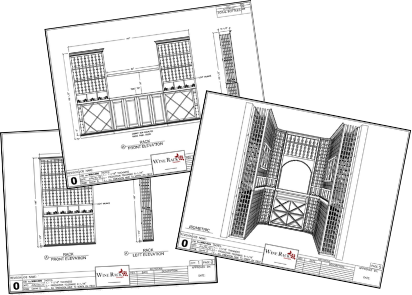
Free 2D wine cellar design