Professional Commercial Wine Cellar Design for Restaurants and Hospitality

*Pictures are renderings. Actual wine racks may look different
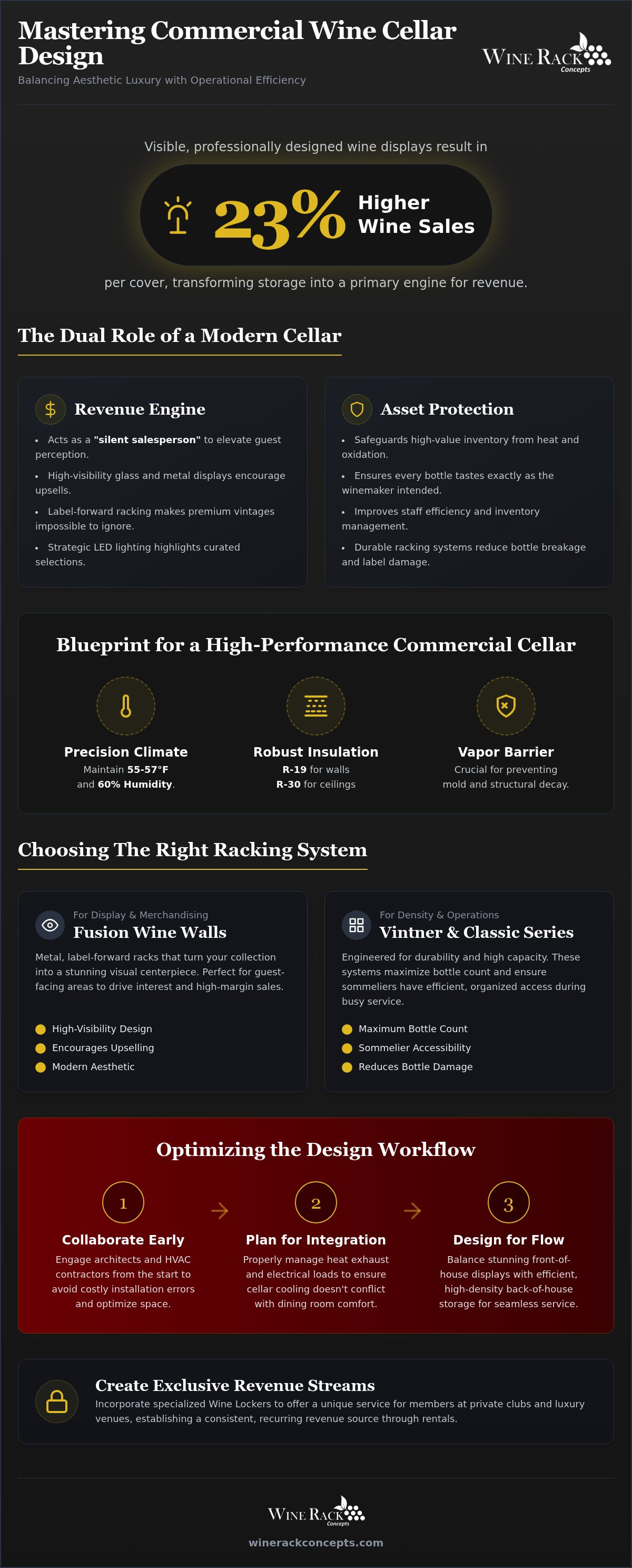
Restaurants that feature visible, professionally designed wine displays report 23% higher wine sales per cover. This statistic highlights a fundamental shift in the hospitality industry; your storage isn't just a functional necessity anymore. It's a primary engine for revenue. You likely recognize the frustration of inconsistent cooling systems that threaten your inventory or racking that simply wasn't built for the high-traffic demands of a commercial floor. It's a constant challenge to protect an expensive investment while ensuring your staff can manage stock with ease during a busy shift.
This article provides the roadmap to mastering commercial wine cellar design by balancing aesthetic luxury with strict operational efficiency. If you've been looking for a way to create a high-capacity storage solution that doubles as a merchandising masterpiece, you'll find the technical and design answers here. We'll walk through the essential components of a professional build, from selecting durable racking series like the Vintner or Fusion Wine Walls to implementing precision climate systems from trusted brands like WhisperKOOL and CellarPro. You'll discover how to transform your space into a durable, climate-controlled environment that safeguards your bottles and inspires your guests.
Key Takeaways
- Discover how professional merchandising acts as a visual anchor to significantly improve wine-to-food sales ratios in hospitality settings.
- Master the technical nuances of commercial wine cellar design to ensure your cooling systems can withstand the high-traffic demands of a restaurant environment.
- Identify the best high-density racking solutions, such as Fusion Wine Walls or the Vintner Series, to maximize bottle count and durability.
- Learn why early collaboration with architects and HVAC contractors is essential for optimizing your space and avoiding costly installation errors.
- Explore specialized options like secure Wine Lockers to create exclusive experiences and recurring revenue streams for private clubs and luxury venues.
The Strategic Role of Commercial Wine Cellars in Hospitality
A professional commercial wine cellar design serves as the architectural heartbeat of a modern dining room. It’s a silent salesperson that communicates your brand’s commitment to quality before a single cork is pulled. As mentioned previously, restaurants featuring visible wine cellars report 23% higher wine sales per cover. This increase stems from the psychological impact of seeing a curated collection, which elevates the guest's perception of the establishment. The cellar acts as a visual anchor; it transforms a simple meal into an immersive experience where the wine list is as much a part of the decor as the furniture.
Beyond the aesthetics, a cellar is a critical tool for protecting your liquid assets. Improper storage leads to significant inventory loss through oxidation or heat damage, which can devastate a restaurant's margins. Understanding the essential factors in wine cellar climate control is vital for any operator managing a high-value list. When you invest in a custom wine cellar, you aren't just building a room. You're creating a controlled environment that ensures every bottle tastes exactly as the winemaker intended, protecting your investment from environmental fluctuations.
Revenue Generation Through Merchandising
Modern hospitality design favors high-visibility, glass-enclosed displays that showcase premium labels. Using metal wine racks like the Fusion Wine Wall series allows for label-forward storage, making it easy for guests to browse from their tables. Strategic LED lighting and placement in high-traffic areas influence purchasing decisions by highlighting specific vintages or regions. A well-positioned wine wall doesn't just store bottles; it creates a dynamic backdrop that encourages upsells and premium bottle service by making the collection impossible to ignore.
Operational Efficiency and Inventory Flow
Operational success requires a balance between front-of-house display and back-of-house density. Designing for sommelier accessibility is crucial; every second saved during a busy shift contributes to better service flow. In private club environments, the addition of specialized Wine Lockers provides a unique service for members while establishing a consistent revenue stream through locker rentals. Professional racking systems, such as the Vintner or Classic Series, are engineered to reduce bottle breakage and prevent label damage. These systems ensure that inventory management remains organized and efficient even during the most demanding hours of operation, allowing your staff to focus on the guest experience rather than searching for a lost bottle.
Technical Requirements for High-Capacity Climate Control
Commercial environments present a unique challenge for climate stability. While a residential cellar might only be accessed once a day, a busy restaurant cellar door might open dozens of times during a single dinner service. This high frequency of air exchange requires a commercial wine cellar design that prioritizes rapid temperature recovery and high-duty cycles. To maintain the industry standard of 55 to 57 degrees Fahrenheit and 60% humidity, the structural envelope must be significantly more robust than a standard walk-in cooler.
Industry best practices for commercial builds recommend R-19 insulation for walls and R-30 for ceilings. Without a proper vapor barrier installed on the warm side of the insulation, condensation will inevitably form, leading to mold growth and structural decay. Integrating these specialized systems with the building's existing HVAC requires careful planning. You must manage heat exhaust and electrical loads effectively to ensure the cellar cooling doesn't conflict with the dining room's comfort levels. If you're unsure which system fits your specific floor plan, our experts can provide a tailored design assessment to help you plan the infrastructure.
Selecting Commercial Cooling Units
Selecting the right refrigeration system depends on your spatial constraints and noise requirements. Self-contained units from brands like WhisperKOOL or CellarPro are excellent for smaller footprints, but large-scale hospitality venues often benefit from split systems. These professional-grade units are designed for 24/7 operation and provide the reliability needed to protect high-value inventory. Planning for redundancy, such as dual-unit systems, ensures that a single mechanical failure doesn't result in catastrophic loss of your liquid assets.
The Cellar Envelope: Beyond the Cooling Unit
The cellar's envelope extends beyond the mechanical cooling unit to every surface of the room. High-traffic areas require durable components like American-made metal wine cellar doors, which feature commercial-grade thermal seals and dual-pane glass to prevent energy loss. If your design includes an all-glass wine enclosure, you must account for the increased heat load. Specialized UV-resistant coatings and thicker glass panes help maintain internal temperatures without overworking the cooling system. Choosing non-porous flooring, such as tile or sealed stone, ensures the space remains easy to maintain and can withstand the weight of high-density racking systems.
Choosing the Right Commercial Wine Racks for Your Space
Selecting the physical framework for your collection is a decision that impacts both the visual narrative of your brand and the operational longevity of the cellar. In a high-traffic hospitality setting, your racks must withstand constant use while maximizing every square foot of available space. While residential designs often prioritize style alone, a successful commercial wine cellar design requires a strategic choice between the timeless warmth of wood and the sleek, industrial durability of metal. This choice often dictates the flow of inventory and the ease with which your staff can access bottles during peak service hours.
Wooden Racking Series: Vintner and Carpenter
Wooden wine racks remain a preferred choice for traditional dining environments and private clubs. The Vintner Series is specifically engineered for commercial versatility; its modular components can be stacked or combined to reach high ceilings, maximizing bottle density in small footprints. If your venue requires a more bespoke, furniture-grade finish, the Carpenter Series provides a handcrafted aesthetic that feels integrated into the room's architecture. We typically utilize White Oak for these projects because its natural resistance to moisture and decay makes it ideal for the humid conditions necessary for professional storage.
Modern Metal and Hybrid Solutions
For modern venues, metal wine racks offer unparalleled visibility and a label-forward presentation that aids in merchandising. The Fusion Wine Wall series is a popular hybrid choice, blending the structural strength of metal with the aesthetic warmth of wood backboards. This system allows labels to face the guest, making it easier for patrons to identify premium vintages from across the room. If you prefer a minimalist look, the Wine Peg series creates a clean, industrial display, while Cable Wine Racks provide a "floating" effect that works exceptionally well in all-glass enclosures or as room dividers.
Safety is paramount in public spaces where guests or staff are in close proximity to the display. All wall-mounted systems must be anchored with precision to handle the significant weight of a full collection, which can reach several hundred pounds per section. High-density racking, such as double-deep configurations, allows you to store more bottles per square foot without compromising the stability of the system. Modular systems offer a cost-effective way to scale your storage as your inventory grows, while custom designs ensure a perfect fit for irregular architectural features like under-stair spaces or curved walls.
Optimizing the Design Workflow for Commercial Projects
Successful commercial wine cellar design begins long before the first bottle is placed on a rack. It requires a methodical approach that integrates your architectural vision with the technical realities of a high-traffic environment. When you involve specialists early in the planning phase, you ensure that the floor can support the immense weight of a high-density collection and that the electrical infrastructure is ready for high-duty refrigeration. This proactive coordination prevents common delays that occur when cooling requirements or structural needs are discovered mid-construction.
The Design and Consultation Phase
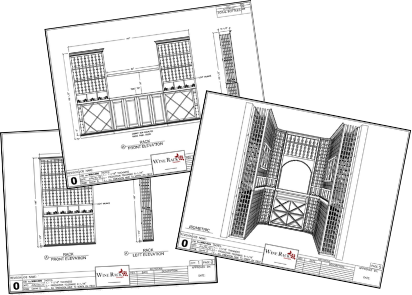
The first step involves a comprehensive space assessment where every inch is measured for maximum storage efficiency. You can utilize our free design service to transform these measurements into a detailed 3D CAD model. This visualization tool is essential for seeing how your merchandising strategy will look from the guest's perspective. It also allows you to plan for future collection growth or seasonal menu changes by identifying modular expansion zones. During this phase, we work closely with your architects to identify the necessary structural reinforcements for wall-mounted racks and coordinate the specific drainage and electrical needs for your cooling units.
Installation and Long-Term Maintenance
Professional installation in a commercial zone requires a different level of expertise than a residential project. It's vital that your racking is anchored according to local building codes to ensure guest safety in busy dining areas. Once the physical structure is complete, the focus shifts to long-term protection. We recommend setting up digital monitoring systems that provide real-time temperature and humidity alerts to your management team. Regular preventative maintenance for your wine cellar cooling systems is the final piece of the puzzle. Scheduling quarterly inspections ensures that filters are clean and refrigerant levels are optimal, which extends the life of your equipment and safeguards your inventory from sudden climate shifts.
Start your commercial design consultation today.
Custom Solutions for Professional Wine Environments
A high-performance commercial wine cellar design thrives on its ability to adapt to the specific nuances of your beverage program. While standard racking handles the bulk of a collection, many premium lists feature a diverse array of bottle shapes, from wide-base Champagne to oversized Magnums. Customizing your storage ensures these high-value assets are displayed securely and accessed without the risk of label scuffing. By tailoring the dimensions of each shelf or peg, you create a seamless environment that maximizes every available square inch of your floor plan.
Integrating secure storage solutions like Wine Lockers is an effective way for private clubs to deepen member loyalty. These lockers provide a climate-controlled sanctuary for individual collections, offering a prestigious service that also builds a reliable revenue stream through rental agreements. When planning these spaces, the use of American-made components, such as our specialized metal doors and specific peg series, provides confidence in both the durability and the project timeline. Investing in a custom wine cellar isn't just a short-term upgrade; it's a strategic commitment to the long-term equity of your business.
Specialized Commercial Features
Modern hospitality environments often require a balance of openness and security. Utilizing all-glass enclosures allows for 360-degree visibility, turning your inventory into a transparent architectural feature that captures attention from the dining room. To protect these investments, we integrate metal doors that offer thermal integrity and keyed security without obstructing the view of your premium labels. Customizing racking heights also allows us to work around existing structural constraints, such as low-profile ceilings or decorative columns, ensuring the final installation looks like a natural extension of the room's design.
The Wine Rack Concepts, LLC Advantage
With over 15 years of design and manufacturing experience, Wine Rack Concepts, LLC acts as a seasoned partner for architects and hospitality owners. We understand the high-stakes nature of commercial environments and provide a bridge between your initial vision and a professional, functional result. You have access to an extensive selection of wooden wine racks for classic aesthetics and metal wine racks for contemporary, high-visibility displays. Our consultative approach ensures that every material choice and technical specification is optimized for the durability and performance your business requires.
Elevating Your Hospitality Experience through Professional Storage
A successful commercial wine cellar design is a strategic asset that bridges the gap between operational necessity and revenue generation. It isn't just about finding a place for bottles; it's about creating a climate-controlled environment that withstands the rigors of a professional floor while captivating your patrons. By choosing components that prioritize durability and accessibility, you protect your liquid investments and enhance the overall value of your business.
Our team brings the expertise of a master craftsman to every project, having designed systems for luxury restaurants and private clubs nationwide. We offer technical specialization in WhisperKOOL, CellarPro, and Wine Guardian systems to ensure your climate control is as reliable as your service. With high-quality American-made components available, you can trust in the longevity and aesthetic harmony of your finished space.
We're ready to help you transform your vision into a professional destination that celebrates your collection and serves your business for years to come.
Frequently Asked Questions
What are the most important factors in commercial wine cellar design?
The primary factors include precision climate control, structural durability, and visual merchandising. Because restaurant cellars experience frequent door openings, the system must recover temperatures rapidly to protect inventory. A successful commercial wine cellar design also prioritizes high-density racking that can withstand the weight of a full collection while remaining accessible for staff during peak service hours to ensure smooth operational flow.
How much does it cost to build a commercial wine cellar for a restaurant?
The total investment depends on your specific spatial requirements, the complexity of the cooling system, and the choice of materials. Factors like the inclusion of all-glass enclosures or custom-built racking series will influence the final budget. While costs vary by project, investing in professional-grade components ensures long-term reliability and prevents expensive inventory loss, which provides a much higher return on investment than standard residential storage solutions.
Should I use wood or metal wine racks for a commercial display?
The choice depends on your establishment's aesthetic and the volume of inventory you need to manage. Metal racks, such as the Fusion Wine Walls or Wine Peg Series, offer a modern, label-forward look that serves as an excellent merchandising tool. Conversely, wooden racking series like the Vintner or Carpenter lines provide a classic warmth. Many professional venues utilize hybrid designs to combine the structural strength of metal with the traditional appeal of wood.
What type of cooling system is best for a high-traffic commercial wine room?
High-traffic environments typically require split systems or ducted units from specialized brands like WhisperKOOL, CellarPro, or Wine Guardian. These professional-grade systems are engineered for high-duty cycles, allowing them to maintain stable temperature and humidity even when the door is opened frequently. Unlike standard air conditioning, these units are specifically designed to preserve the integrity of the cork and the quality of the wine over long periods.
How do I maximize bottle capacity in a small commercial space?
Maximizing capacity in a limited footprint requires high-density racking solutions and vertical expansion. Using modular systems like the Vintner Series allows you to utilize every inch of wall height, while double-deep configurations can significantly increase bottle count without expanding the cellar's square footage. Strategic placement of label-forward metal racks can also help maintain visibility and accessibility even when the storage area is tightly packed with inventory.
Are glass wine cellars efficient for commercial use?
Yes, they are highly efficient if you utilize dual-paned, UV-resistant glass and proper thermal breaks. While glass offers less insulation than a traditional wall, it serves as a powerful merchandising tool that drives sales. A professional commercial wine cellar design accounts for the higher heat load by utilizing more powerful cooling units and airtight metal doors to maintain the required climate without overworking the refrigeration system.
What are the benefits of custom wine lockers for country clubs?
Wine Lockers provide a secure, personalized storage solution that encourages member engagement and generates consistent revenue through locker rentals. These specialized units allow members to store their private collections in a professional, climate-controlled environment while they enjoy the club's facilities. They act as a prestigious perk that fosters a sense of community and ownership, making the club a primary destination for their wine-related activities and private events.
How long does the design and installation process take for a commercial cellar?
The timeline varies based on the scale of the build and the level of customization required. The process follows a methodical path, beginning with a consultation and 3D CAD modeling to refine the initial vision. Once the design is finalized and the technical requirements are coordinated with your architect or contractor, the manufacturing and installation phases are scheduled. This structured approach ensures that every component is integrated correctly for long-term operational success.
Have an expert help today!
Free 2D wine cellar design