Preserving Wine Bottle Labels: Safe Ways to Save a Favorite

*Pictures are renderings. Actual wine racks may look different
What if the safest way to save a favorite wine label is not to remove it at all? Preserving wine bottle labels starts with assessing the paper, finish, and adhesive. A label that releases with moisture may react very differently from a pressure-sensitive sticker, and the wrong approach can tear or fade a keepsake.
Decide whether you want to keep the bottle, the label, or a record of its details. The bottle’s condition and your reason for saving it help determine whether to leave the label in place, attempt careful removal, or photograph it. This article compares those approaches and explains how to protect a detached label from light, moisture, and handling. Bottle storage can keep a collection orderly, but detached paper labels need their own protection.
Key Takeaways
- Decide whether the label is a keepsake, a collection record, or part of a bottle you want to display before choosing how to preserve it.
- Compare soaking and steam cautiously. The label's condition should guide whether either removal method is appropriate.
- For preserving wine bottle labels, consider attached display, careful removal, or digital documentation based on your goal and tolerance for handling risk.
- Use a steady workflow to support, dry, and store removed labels, keeping paper keepsakes separate from your bottle-storage setup.
- Plan bottle storage and display to keep your collection orderly, while treating detached labels as separate paper keepsakes.
What Does Preserving a Wine Bottle Label Involve?
Preservation means keeping an existing label legible and stable, whether it stays on the bottle or becomes a separate paper keepsake. The right choice depends on what you want to retain. A personal memento might call for a detached label and a note about the occasion. A collection record may pair the label with tasting notes or bottle details. If the bottle itself is part of the memory, preserving its label in place may be the better fit.
Labels are not all constructed alike. Paper weight, surface coatings, printing methods, and adhesive types affect how a label responds to moisture, heat, friction, or lifting. Ink may smudge, a coating may separate, or weakened paper may split. Label material and adhesive affect removal outcomes, so a method that releases one label may damage another. A general overview of the Wine label can provide background on the information and design elements a label may carry.
That distinction matters in a cellar, too. An attached label is part of a bottle display, while a removed label is a paper object that needs its own handling and storage. Wine racks and custom cellar design can help organize and present bottles, but they do not replace suitable storage for detached paper keepsakes.
Decide whether to keep the label on the bottle
Start by asking whether the bottle or the label holds the value for you. If you want to remember the wine, vintage, or occasion but do not need the bottle, removal may suit your purpose. If the bottle’s shape, provenance, or place in a collection matters, leave the label attached where possible. Keeping it in place avoids removal handling, though it remains exposed to the conditions around the bottle.
Assess the label before choosing a method
Examine the label under good light without rubbing the surface. Look for lifting edges, tears, fading, glossy or textured coatings, and moisture damage such as rippling or discoloration. Photograph the full label before attempting any work. The image gives you a reference if details become obscured or the paper changes. If its condition and construction permit, test a discreet area first. Stop if the test causes ink transfer, coating changes, or fibers to lift.
Make your decision based on the label’s present condition, not only on the importance of the memory. A fragile or already damaged label may be better left in place or photographed than removed. For a sound label, assessment helps you weigh the likely handling risks before proceeding. The goal of preserving wine bottle labels is to retain useful detail without assuming every paper and adhesive will react the same way.
How to Remove a Wine Bottle Label With Less Risk
Removing a label is a hands-on process, not a guaranteed way to get a perfect keepsake. Begin with the condition assessment from the previous section, then prepare a clean, stable work area where you can set down the bottle and support the label if it releases. Keep a soft, clean cloth nearby, and work slowly. If the label is already fragile or showing damage, avoid applying moisture or heat.
No removal method works reliably for every label. Water, steam, and heat can affect the adhesive, paper, ink, and surface finish in different ways. Choose a cautious approach, watch for changes, and stop rather than forcing a label that resists.
- Set up first. Clear the work surface and make sure the bottle is stable. Leave a clean, flat place for the label to rest if it comes away.
- Choose one approach. Consider gentle soaking only if the label appears able to tolerate moisture. Consider steam only if you can handle hot water and heated glass safely.
- Work gradually. Observe the paper and adhesive as you proceed. Avoid pulling quickly or bending the label back sharply.
- Stop at the first sign of damage. If the paper stretches, the print transfers, or layers separate, discontinue the attempt rather than switching to a harsher method.
When gentle soaking may be appropriate
Moisture can loosen some paper labels and water-responsive adhesives, so a gentle soak may be worth considering when the label and its printing appear suited to it. Monitor the bottle rather than leaving it unattended in water. Check whether an edge begins to release, but do not assume the rest will lift cleanly. Coatings may wrinkle or separate, and water-sensitive ink or paper may blur, swell, or tear.
When steam or careful lifting may be considered
Steam may soften some adhesives, but it introduces heat and burn risks. Keep your hands clear of steam and hot water, and avoid touching glass that has just been heated. If an edge releases, lift gradually without tugging. Stop if the label stretches, ink transfers, or paper layers begin separating. Avoid forceful scraping and untested solvents, which can mark the glass, damage fibers, or disturb the printing.
Let the label’s response determine your next move. If one gentle attempt does not loosen it, repeating the process with more heat, water, or force can increase the chance of damage. A label that will not release cleanly may be better left attached and documented another way. For bottles intended to remain on display, custom cellar design can help you plan an orderly presentation around the collection. Label removal remains a separate decision.
Which Wine Label Preservation Method Fits the Label?
Choose a method by weighing what you want to keep against how much handling the label can tolerate. Keeping the bottle and label together avoids removal. Taking the label off creates a paper keepsake that needs separate storage. Digital documentation limits physical handling, but records an image rather than preserving the original.
Use this comparison as a guide, not a guarantee. A label that looks sound may still respond unpredictably to moisture or lifting, and a fragile one can be damaged by careful handling.
| Approach | Label condition | Desired keepsake | Handling risk | Storage needs |
|---|---|---|---|---|
| Keep attached for display | Intact or fragile; especially useful if removal seems risky | The bottle and its label stay together | Low removal risk, though the label remains exposed to its surroundings | Organized bottle storage and careful display |
| Attempt cautious removal | Appears stable enough to handle; construction may affect results | A physical label for an album, journal, or collection record | Greater handling risk because paper, ink, or coating may change during removal | Support and protect the detached paper separately |
| Photograph or scan | Any condition, especially if the label is too delicate to handle | A visual record of the design and details | Low physical risk if the bottle is handled gently for documentation | Store the digital file with useful bottle or tasting details |
Choose between keeping, removing, and documenting
If the bottle itself matters, keeping the label attached preserves their connection for display. Consider removal only when a detached label is important to your collection and its condition appears able to withstand handling. If the risk of damage outweighs the value of having the paper in hand, take a clear photograph or scan instead. A digital copy preserves the label’s appearance, not its original material, texture, or printing.
Match the approach to label condition
Brittle, torn, or already lifting labels are especially vulnerable, so do not treat a loose edge as an invitation to peel. Glossy coatings may react differently from uncoated paper, and an adhesive that releases easily on one bottle may hold firmly on another. For a rare or especially meaningful label, preserve the bottle as it is, photograph it, and avoid testing a removal method.
Keep the decision tied to the label’s purpose: display the bottle, retain a paper memento, or make a convenient reference record. The best approach to preserving wine bottle labels respects the original and suits its condition rather than assuming every label should be removed.
How to Protect and Store a Removed Wine Label
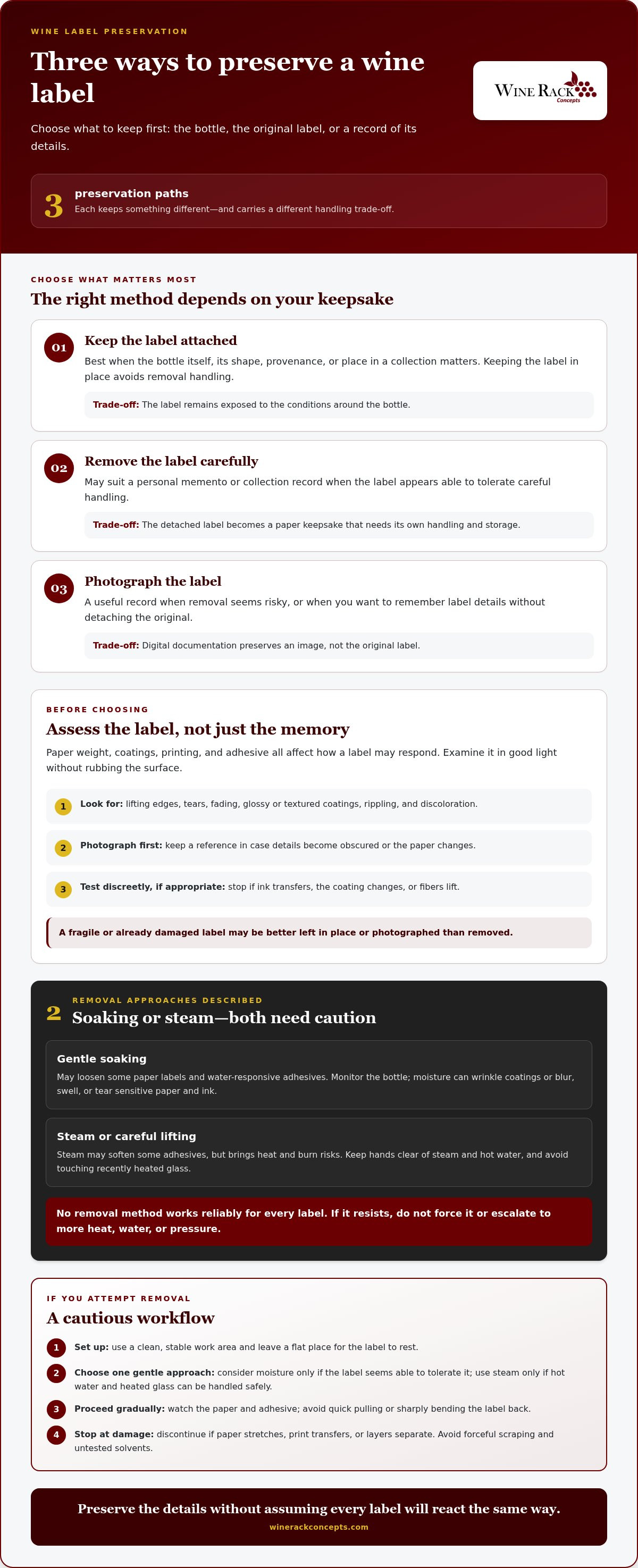
Once detached, a label is a paper keepsake rather than part of a bottle display. Let it dry and choose a separate storage place before putting it away. Light can fade printing, moisture can distort paper, pressure can leave creases, and repeated handling can wear delicate edges. A simple, consistent routine helps limit avoidable damage.
Handle and dry the label without adding damage
Support the label across its surface rather than lifting or carrying it by one corner. If it is damp, lay it flat on a clean, dry surface in a protected place and let it dry naturally. Do not rub it, stack anything on it, or press it flat while the paper is damp. These actions can transfer ink, tear softened fibers, or set wrinkles into the sheet.
Move slowly. If the label has curled or feels delicate, do not try to flatten it by force. Keep it away from food, drink, and objects that could leave marks or catch on its edges. Wait until the paper is fully dry before placing it in an enclosure. Trapping moisture can compromise the keepsake.
Create a simple keepsake storage system
Choose an archival-quality, acid-free folder, sleeve, or enclosure sized to support the label without bending it. Acid-free archival materials are intended to limit exposure to acidic materials that can contribute to paper deterioration over time. Keep adhesive surfaces away from the printed face, and do not apply tape or glue directly to the label. Store it flat or fully supported, away from direct light and damp conditions.
Keep notes alongside the label rather than writing on it. Record details such as the wine, vintage, occasion, or tasting impressions on a separate card or in a journal. Store that record with the enclosure only if it will not press against or stick to the label. This keeps useful context close without marking the original paper.
Build consistency into your system. Use a folder or album to keep labels together, and identify each entry on the enclosure or a separate insert. When retrieving a keepsake, handle the enclosure instead of repeatedly touching the paper. These habits make preserving wine bottle labels more manageable and help you find a particular memory without sorting through unprotected sheets.
A cellar can bring bottles together in an organized display, but detached labels need separate paper storage. If you are planning a cellar layout to complement your collection, explore a custom cellar design.
Prevent Label Damage While Displaying Your Wine Collection
A cellar display can make a collection easier to enjoy and manage, but bottle storage and paper conservation are separate goals. A rack supports bottles; it is not an archival enclosure for detached labels. If a label stays on its bottle, its condition remains tied to the environment and handling around that bottle. If it has been removed, protect it separately in an appropriate paper enclosure rather than attaching it to a rack or display surface.
Plan the cellar around how you want to organize and see the bottles. Grouping by producer, region, or another system that makes sense to you can help you locate a bottle without repeatedly shifting others. A custom wine cellar can be planned around your storage and display goals. The cellar can support collection organization, but it cannot guarantee that bottle labels or detached paper will be preserved.
Reduce unnecessary handling of displayed bottles
Choose an organization method you can maintain, then arrange bottles so you can identify and access them with fewer adjustments. The right bottle orientation and rack layout depend on the collection and the display you want, so consider both together rather than treating the rack as a separate decorative feature. A well-planned system makes access more deliberate and can reduce unnecessary rearranging.
Think through how you will retrieve bottles before finalizing a display. Keep frequently selected bottles easy to locate, and avoid a layout that requires moving several others to reach one. Sketch a simple map of the rack and label its sections in a way that matches your organization system. The aim is practical access as well as an attractive presentation, not a promise of label conservation.
Plan display separately from keepsake conservation
Keep detached labels in protective enclosures, stored apart from the bottle display. Do not tape them to rack surfaces or place loose paper where it may be rubbed, bent, or exposed to cellar conditions. If you want to show a label alongside a bottle, use a separate display solution that supports the paper without making the rack its storage system. Treat the bottle and the paper as two objects with distinct care needs.
A considered layout brings order to the collection and makes the bottles easier to enjoy. It also gives detached keepsakes a clear place outside the rack. That separation is central to preserving wine bottle labels: thoughtful cellar planning supports the bottles, while suitable paper storage protects removed labels. For inspiration, this custom wine cellar design guide discusses display and storage planning.
Plan a Cellar That Reflects Your Collection
A favorite label can mark a place, a person, or a particular evening. As your collection grows, consider how you want to enjoy those bottles: easy to find, arranged around a system that matters to you, or presented as part of a considered room. Preserving wine bottle labels can be part of that larger plan, while detached paper keepsakes need a protective home separate from bottle storage. Give both the collection and its stories room to be appreciated.
Wine Rack Concepts, LLC designs custom wine cellars and storage solutions for residential and commercial applications, with wine racks and climate-control options to support bottle storage and display planning. These elements can help shape an organized space around your collection, but they serve a different purpose from archival care for removed labels. A thoughtful layout can reflect how you collect, access, and enjoy your bottles.
Plan a cellar around the bottles you want to store, how you want to access them, and the display you have in mind.
With a clear plan, your bottles and the memories attached to them can each have a place.
Frequently Asked Questions
Can you preserve a wine label without removing it from the bottle?
Yes. If the bottle is part of the keepsake, leaving the label attached avoids the stress of peeling it away. Handle the bottle by its body rather than rubbing the label, and keep it where it will not be bumped or repeatedly moved. For preserving wine bottle labels still attached to bottles, a clear photo can also record small details without touching the printed surface.
Does freezing a wine bottle help remove its label?
Freezing is not a dependable label-removal method. Adhesives respond differently, and cold alone may not loosen the bond between label and glass. Moving a bottle between very different temperatures can also create condensation, which may affect paper or printing. If the label matters, do not use freezing as a shortcut. Choose an approach suited to its construction, or keep the bottle intact and make a digital record instead.
Can you laminate a wine label after removing it?
You can physically laminate a label, but it may not be the best choice for a valued original. Lamination is difficult to reverse and can permanently alter the surface, sheen, or feel. The process may also involve heat or adhesive. For a keepsake, place the label in a protective archival sleeve instead. If you want a durable display copy, laminate a scan or printout and store the original separately.
What happens if a wine label gets wet during removal?
A wet label may soften, stretch, wrinkle, or lose ink, depending on its paper and finish. Stop pulling as soon as it feels weak, and avoid wiping the printed face. If it comes free, let it rest flat on a clean surface until fully dry before enclosing it. A label that remains attached is best left undisturbed rather than repeatedly wetted in an effort to release it.
How long can a wine bottle label last in archival storage?
There is no reliable fixed lifespan for every label. Longevity depends on the paper, ink, prior damage, storage materials, and the conditions where it is kept. Archival-quality materials and protection from light, moisture, and handling can help reduce deterioration, but they cannot stop every change. Check stored labels occasionally for new discoloration, brittleness, or distortion, and keep notes or identifying marks off the original paper.
Can you scan a wine label to preserve its appearance?
Yes. A scan or clear photograph can retain a useful visual record, especially if the label is too fragile to remove. Include the whole label in the frame, keep the image evenly lit, and capture a separate close-up if small print or texture matters. Save the file with identifying details, such as the wine name and occasion. A digital record preserves the image, not the original paper or its physical qualities.
Is it safe to use a hair dryer to remove a wine bottle label?
A hair dryer may soften some pressure-sensitive adhesives, but it will not work for every label and can expose paper, ink, and glass to heat. If you try it, use low, moving airflow rather than concentrating heat in one spot, and keep your hands clear of hot glass. Stop if the label curls, its print changes, or the paper begins to separate. Do not force an edge that resists.
Have an expert help today!
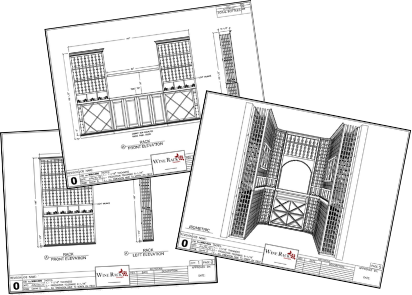
Free 2D wine cellar design