Passive vs Active Wine Cellar Cooling: The Complete Comparison for Collectors

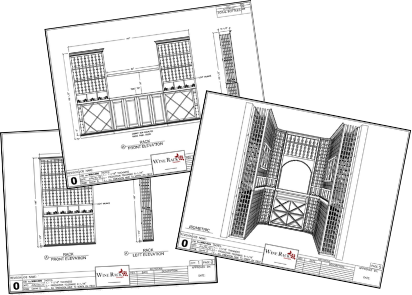
*Pictures are renderings. Actual wine racks may look different
You might assume that a sophisticated mechanical system is the only way to safeguard a premium vintage, but a properly designed room utilizing the earth's natural thermal mass can often outperform a poorly installed cooling unit. Every collector understands the anxiety that comes with a rising thermometer, especially when your investment relies on a delicate balance of temperature and humidity. Choosing between passive vs active wine cellar cooling isn't just about personal preference; it's a decision that dictates your cellar's construction, from the insulation R-values to the type of wine racks you select.
Whether you're considering the natural stability of a basement or the precision of self-contained refrigeration units, the goal remains a stable environment for long-term aging. This comparison provides the clarity you need to protect your collection against spoilage and high energy costs. We'll examine the specific vapor barrier requirements for each approach and how series like our Vintner or Fusion wine walls can be used to maximize airflow. By the end of this guide, you'll have the confidence to choose a system that fits both your home's architecture and your storage goals.
Key Takeaways
- Learn the fundamental differences of passive vs active wine cellar cooling to determine if your home's architecture can naturally support a collection or if mechanical intervention is necessary.
- Understand why a robust thermal envelope and high-quality insulation are critical even for passive storage to mitigate the risks of seasonal temperature fluctuations.
- Identify the technical requirements for active systems, including the essential role of vapor barriers and the benefits of self-contained refrigeration units for precise climate control.
- Compare the long-term financial implications of each method, balancing initial construction costs against ongoing energy consumption and the value of your wine investment.
- Discover how to optimize airflow within your cellar by selecting racking systems like the Vintner or Fusion series that complement your chosen cooling strategy.
Understanding Passive and Active Wine Cellar Cooling
The foundation of any successful wine cellar project rests on a single, pivotal decision: how you intend to manage the environment. This choice dictates every subsequent step, from the depth of your wall studs to the specific series of wine racks you install. When evaluating passive vs active wine cellar cooling, you are essentially choosing between a reliance on natural thermal mass and the precision of mechanical engineering. It is the most critical decision in the design process because it determines the long-term viability of your collection. If the environment is unstable, even the most beautiful custom wine cellar becomes a liability rather than an asset.
The Core Philosophy of Passive Wine Storage
Passive wine storage utilizes the earth's natural ability to regulate temperature. By placing a cellar underground or in a subterranean basement, you leverage the surrounding soil as a heat sink. This thermal mass absorbs fluctuations, aiming for a consistent baseline between 50°F and 60°F. However, the success of this method is heavily dependent on your local geography and the depth of the room. In cooler, temperate regions, a passive cellar can be a reliable home for wines intended for short-to-medium term consumption. It offers a low-maintenance, energy-free solution, but it lacks a way to combat seasonal temperature swings. Without mechanical intervention, a passive cellar is at the mercy of the climate, making it a risky choice for rare vintages that require decades of undisturbed aging.
The Mechanism of Active Climate Control
Active climate control provides the mechanical insurance necessary for serious collectors. By utilizing specialized self-contained refrigeration units, you can maintain the ideal "gold standard" of 55°F and 60% humidity regardless of the external weather. These systems are designed specifically for the unique demands of wine storage, which differ significantly from standard home air conditioning. Active systems require a dedicated power source and a clear path for heat exhaustion to function efficiently. Because these units work to create a micro-climate, the room must be constructed as a sealed envelope. This includes the installation of vapor barriers and high-quality metal wine cellar doors to ensure the cooling unit doesn't overwork. For those with high-value collections, active cooling provides the peace of mind that comes with total environmental control.
The Mechanics of Passive Wine Storage
Passive storage is often misunderstood as simply leaving wine in a basement. In reality, a functional passive cellar requires deliberate engineering to maintain stability. The primary challenge in the debate of passive vs active wine cellar cooling is that a passive space lacks a way to correct environmental errors. If the room gets too warm during a summer heatwave, there's no thermostat to turn. Therefore, the construction of the thermal envelope is your only defense against spoilage.
Modern homes often struggle with passive storage because they're built above ground with lightweight materials like wood and drywall. These structures lack the density to resist external heat transfer. Without the natural cooling power of the earth, an above-ground closet will quickly reach ambient room temperature, which is far too warm for any serious collection. Passive storage is a commitment to the physics of your home's location.
Location and Subterranean Benefits
A north-facing, underground corner serves as the gold standard for this type of storage. Concrete walls act as a thermal battery; they absorb the coolness of the deep soil and release it slowly into the room. This density prevents the rapid temperature spikes that cause wine to expand and contract against the cork. To reach the most stable earth temperatures, a passive cellar should ideally be located at a depth of at least five to ten feet below the surface. This depth ensures the wine is insulated from the daily fluctuations of the air above.
Passive Cellar Construction Essentials
Even without a mechanical unit, insulation remains non-negotiable. You need high R-value insulation to decouple the cellar's internal climate from the rest of the house. A vapor barrier is equally critical. It prevents moisture from migrating through the walls, which protects your home's structure and prevents the label mold that thrives in damp, stagnant environments. Without these layers, your passive cellar will likely suffer from seasonal temperature swings that can age wine prematurely.
Airflow management is the final piece of the puzzle. Stagnant air leads to uneven temperatures and potential spoilage. Using custom wine racks allows for maximum bottle-to-air contact, ensuring that the natural coolness of the room is evenly distributed across your collection. If you're planning a new build, integrating a custom wine cellar design early ensures these thermal requirements are met before the first bottle is shelved. Proper ventilation strategies, such as small intake and exhaust vents placed at opposite ends of the room, help maintain air quality without compromising the thermal seal.
Advanced Climate Control in Active Wine Cellars
Active climate control transforms a standard room into a professional environment. It provides the mechanical insurance necessary for serious collectors who prioritize precision over the variable nature of passive storage. When comparing passive vs active wine cellar cooling, the primary advantage of a mechanical system is its ability to maintain a consistent 55°F and approximately 60% humidity regardless of external conditions. This stability is achieved through a combination of thermal insulation and a critical vapor barrier. To function correctly, the vapor barrier must be installed on the warm side of the insulation. This prevents warm, moist air from penetrating the cold cellar walls, which would otherwise lead to condensation, mold, and structural rot.
Maintaining this environment requires more than just a cooling unit; it requires a sealed system. While passive cellars rely on the mass of the earth, active cellars rely on the integrity of the building envelope. Active units are engineered to maintain humidity levels that keep corks supple without encouraging mold growth. If humidity drops too low, corks can dry out and shrink, allowing oxygen to enter the bottle and ruin the wine. Regular maintenance, such as cleaning the condenser coils and ensuring the drain lines are clear, is essential to keep the system operational for years to come.
Self-Contained Refrigeration Units
Self-contained refrigeration units are the most popular choice for modern residential cellars because they offer a compact, all-in-one solution. These units are typically installed through a wall, mounting between the studs. They draw air from the cellar, cool it, and exhaust the heat into an adjacent, well-ventilated room. For this to work effectively, the exhaust room must be at least twice the size of the cellar or have its own ventilation to prevent heat buildup. These units are valued for their relative ease of installation compared to complex split systems, making them a practical choice for many homeowners.
Ensuring an Airtight Seal
The most common point of failure in an active cellar isn't the cooling unit itself but the door. Standard interior doors aren't designed to withstand the temperature differential between a 55°F cellar and a 70°F hallway. They warp, leak, and allow humidity to seep in. We recommend high-quality metal wine cellar doors equipped with professional-grade gaskets to create a true airtight seal. If the seal is compromised, the cooling unit will run constantly to combat the incoming heat. This often leads to the evaporator coils icing over, which eventually causes the compressor to burn out prematurely. A proper seal protects your mechanical investment and your wine.

Comparing the Costs, Risks, and Benefits
Passive storage is often touted as a cost-free alternative, but the true calculation of passive vs active wine cellar cooling involves a complex assessment of risk and structural requirements. While a passive cellar avoids the upfront expense of mechanical equipment, it requires significant structural investment to achieve thermal stability. In contrast, an active system demands a higher initial outlay for the cooling unit and professional installation. Industry data suggests that professional installation for split or ducted systems can range from $1,500 to $6,000, which is a significant addition to the unit's price. However, for a collector with a high-value inventory, this cost is a necessary insurance premium to protect a liquid asset.
Operational expenses represent the most significant long-term difference between the two methods. Active systems consume electricity and require eventual component replacement, whereas passive rooms are essentially maintenance-free. Yet, the risk of a single heatwave can result in the loss of a collection worth tens of thousands of dollars. During a power outage, an active cellar relies on the room's insulation to buy time, while a passive cellar remains consistent but lacks the ability to recover if the subterranean temperature eventually shifts too high. Beyond protection, an active, climate-controlled cellar is widely recognized as a luxury amenity that can positively impact property value.
Investment Protection and Collection Value
Matching your cooling strategy to the market value of your wine is a prudent financial move. Investment-grade wines, such as those from Bordeaux or Burgundy, are notoriously sensitive to temperature fluctuations. These vintages demand the precise 55°F environment that only active control can provide. If you're just beginning your journey, a well-insulated passive cellar can serve as a stepping stone. As your collection grows in both volume and value, many collectors choose to upgrade by installing self-contained refrigeration units to ensure their assets are protected against seasonal spikes.
The Environmental Impact
Passive storage is the green choice for sustainable home design because it relies on zero energy and produces no emissions. For those who opt for active cooling, modern technology has made significant strides in efficiency. The American Innovation and Manufacturing (AIM) Act is currently phasing down hydrofluorocarbons (HFCs), leading to the adoption of more environmentally friendly refrigerants like R290. By pairing these modern units with high-quality insulation and airtight metal wine cellar doors, you can minimize your carbon footprint while still preserving heritage vintages for future generations.
Designing Your Optimal Climate-Controlled Space
Designing a wine cellar requires a holistic view of the room's architecture and the intended cooling method. When evaluating passive vs active wine cellar cooling, your choice of racking material plays a surprisingly technical role. Wood racking, such as our Classic or Carpenter series, provides significant thermal mass. This density helps maintain temperature stability in passive environments. Conversely, metal systems like Fusion Wine Walls allow air to circulate freely around every bottle, which is essential for the efficiency of active cooling units. By matching your racking to your climate strategy, you ensure that your cellar doesn't just look professional but functions with peak efficiency.
Modular systems offer the best path for future growth. As your collection expands, you can add more units without disrupting the established thermal envelope. Our Vintner Series is specifically engineered for this flexibility, providing a variety of heights and depths that can be configured to fit any space. Whether you're building a compact reach-in or a sprawling custom wine cellar, the goal is to create a layout that supports consistent air temperatures from the floor to the ceiling.
Airflow and Racking Placement
Positioning wall mounted wine racks requires careful planning to avoid "dead zones" where air becomes stagnant. In active cellars, these pockets of still air can be several degrees warmer than the rest of the room, leading to uneven aging. High-density racking typically requires more powerful self-contained refrigeration units to push air through the tightly packed bottles. For a modern aesthetic that prioritizes visibility and airflow, cable and glass systems are an excellent choice; they provide the structural support needed for a large collection while offering the least resistance to mechanical cooling.
The Professional Design Process
A successful project begins with a detailed heat load calculation for active systems. This step ensures that your cooling unit is sized correctly for the room's volume, insulation levels, and the amount of glass used in the design. Once the mechanical requirements are established, you can select between the Classic, Carpenter, and Vintner series to match your home's aesthetic and structural needs. Before the first bottle is placed, verify your final checklist for long-term protection:
- Insulation: High R-value materials to decouple the room from the home's ambient temperature.
- Vapor Barrier: Installed on the warm side of the insulation to prevent moisture migration.
- Cooling Unit: A professional-grade system sized specifically for the heat load.
- Airtight Door: A high-quality metal wine cellar door with professional gaskets to seal the envelope.
Securing the Future of Your Collection
Protecting a premium wine collection requires more than just a dedicated room; it demands a precise thermal environment. We've explored how passive storage leverages the earth's natural mass while active systems provide the mechanical insurance necessary for high-value aging. Success in both methods depends on a properly sealed envelope, high-quality insulation, and a correctly installed vapor barrier. Choosing between passive vs active wine cellar cooling ultimately depends on your home's architecture and the financial value of the vintages you intend to store.
Our team specializes in bridging the gap between your vision and a professional, climate-controlled reality. We offer dedicated self-contained refrigeration units for precise control and custom American-made metal cellar doors to ensure an airtight seal. Whether you're planning a residential sanctuary or a commercial display, our expert design services help you handle these technical requirements with confidence.
Take the next step in your curation journey with the peace of mind that your investment is shielded from the elements. A well-designed cellar is both a functional tool and a beautiful display that will serve your collection and your home for decades to come.
Frequently Asked Questions
Is a passive wine cellar good enough for long-term aging?
It depends entirely on the environmental consistency of your space. If your cellar maintains a stable temperature between 50°F and 60°F year-round, it can support long-term aging. However, most passive cellars experience seasonal shifts that can stress the wine. For high-value collections requiring decades of storage, active cooling is the safer choice to ensure the absolute stability needed for a premium investment.
Does a wine cellar need a vapor barrier if it is passive?
A vapor barrier is essential even in a passive space to prevent moisture migration through the walls. Without it, humidity from the surrounding earth or adjacent rooms can seep into the cellar, potentially causing label mold or structural damage. When debating passive vs active wine cellar cooling, remember that both require a sealed envelope to protect the integrity of the storage environment and the home's structure.
How much does it cost to run an active wine cellar cooling unit?
Energy costs vary based on the unit's efficiency, the room's insulation, and your local utility rates. A well-insulated cellar with an airtight metal wine cellar door minimizes the workload on the cooling system. While we don't provide specific dollar estimates, modern units using eco-friendly refrigerants are designed to be significantly more efficient than older models, helping to keep your ongoing operational costs as low as possible.
What is the ideal temperature for a passive wine cellar?
The ideal temperature for a passive cellar is a consistent baseline between 50°F and 60°F. While 55°F is the target for active systems, passive storage relies on the earth's natural thermal mass to stay within this slightly broader range. The key is avoiding rapid fluctuations; a slow, seasonal change of a few degrees is far less harmful than daily spikes caused by poor insulation.
Can I convert a passive cellar into an active one later?
You can convert a passive cellar, but it requires verifying that the existing insulation and vapor barrier meet active cooling standards. Most passive rooms lack the R-value or the airtight seal needed for mechanical refrigeration. If you plan to upgrade, you'll likely need to install a dedicated power source, improve the wall insulation, and replace standard doors with professional-grade metal doors to prevent unit burnout.
Do I need special insulation for an active wine cellar?
Active cellars require high R-value insulation, typically ranging from R-19 to R-30 depending on your local building codes. Standard fiberglass batts are often insufficient because they don't provide a complete airtight seal. Closed-cell spray foam is frequently the preferred choice for collectors as it acts as both high-density insulation and a vapor barrier, ensuring the cooling unit doesn't have to work overtime to combat heat transfer.
What happens to my wine if the active cooling system fails?
If a system fails, the room's insulation and the thermal mass of the wine bottles will slow the temperature rise. A well-constructed cellar can maintain safe temperatures for several days. The danger lies in prolonged exposure to heat, which can cause the wine to expand and push past the cork. This is why we emphasize professional-grade self-contained refrigeration units and regular maintenance to ensure long-term reliability.
How do I manage humidity in a passive wine cellar?
Passive humidity management relies on the natural moisture levels of the subterranean environment and the use of breathable materials. If the room is too dry, you can place a decorative fountain or a pan of water on the floor to increase moisture. If it's too damp, improving ventilation or using a dehumidifier may be necessary. When comparing passive vs active wine cellar cooling, remember that active systems automate this delicate balance.
Have an expert help today!
Free 2D wine cellar design