Narrow Space Wine Storage: How to Choose the Right Solution

*Pictures are renderings. Actual wine racks may look different
The narrowest wine-storage solution isn't always the one with the smallest footprint. With narrow space wine storage, a rack that fits the wall but blocks bottle access can create as many problems as it solves. The right choice depends on the room's shape, how you use your collection, and whether display or preservation is the priority.
Width matters, but so do depth, available height, clearance for reaching bottles, and the space around doors or nearby furniture. Measure the area you can actually use, not just the room, before choosing a rack. With a little planning, a tight corner, closet, or unused wall can become practical storage rather than a crowded afterthought.
This guide compares wall-mounted, freestanding, and built-in formats to help you match a solution to your room and collection. You'll learn what to measure, how to balance bottle capacity with everyday access, and when custom wine racks or cellar cooling may suit your storage goals.
Key Takeaways
- Plan narrow space wine storage around usable width, depth, and floor area, not room dimensions alone.
- Compare freestanding, wall-mounted, and built-in formats by placement, access, display, and how they use the room.
- Balance bottle capacity with ease of reaching your collection; the densest layout may not be the most practical.
- Review heat, direct light, vibration, and everyday room use before settling on a storage location.
- A custom design can make awkward dimensions more usable while coordinating rack format, materials, and room aesthetics.
Narrow Space Wine Storage: Start with the Room and Collection
A tight alcove, short wall, or unused corner can hold a collection, but the room's overall dimensions won't show whether a storage plan will work. Narrow space wine storage depends on usable space, the bottles you own, and how you want to reach and enjoy them. Filling every available inch may increase capacity, but it can also make bottles awkward to retrieve and the room feel crowded.
A compact storage plan is designed around usable space, bottle access, and storage priorities, not simply a narrow rack placed in a small room. The rack's footprint is only one part of the decision. Consider how a wine cellar is shaped by its location and storage environment, then apply that whole-space perspective to a smaller project. Storage density, convenient access, display, and preservation should work together.
Which measurements matter before choosing a wine rack?
Measure the usable width, depth, and height of the proposed area. Note trim, baseboards, door swings, nearby furniture, and other obstructions. Also measure the clearance needed to stand, move around, and reach bottles without shifting other items. Separate fixed limits, such as a doorway or structural feature, from elements that could change as you plan the storage.
- Measure at more than one point if walls or corners aren't even.
- Mark doors, outlets, and anything that could interrupt access.
- Map the path you'll use to retrieve bottles, not just the rack's location.
How should your collection shape the plan?
Start with the number of bottles you store now, then consider whether your collection is likely to grow. A layout sized only for today's bottles may soon feel restrictive, so think about how much room future additions might need. Note any bottle shapes that may require different spacing from standard bottles; uniform slots may not suit every part of a varied collection.
Decide how you use the wine. If you browse often, prioritize visibility and easy access. If most bottles are stored for later, a less display-focused arrangement may suit the room better. A mixed layout can keep selected bottles on view while reserving other areas for storage.
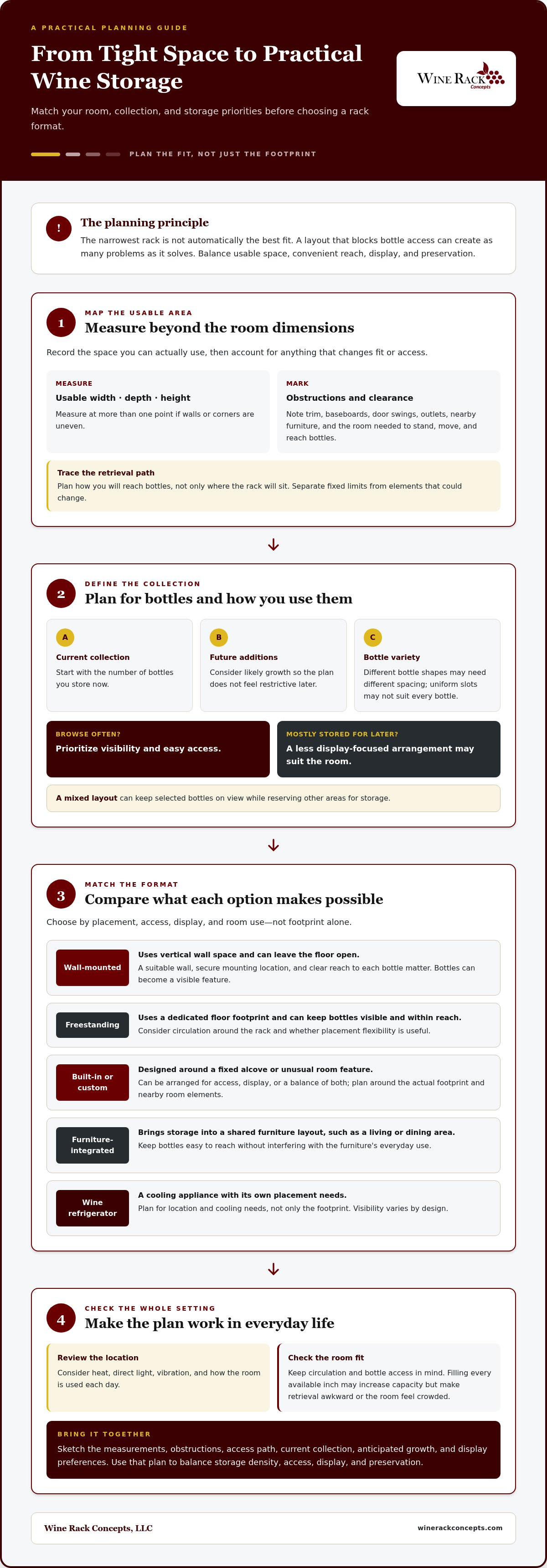
Before comparing formats, capture the plan in a simple sketch. Include measurements, obstructions, the access path, your current collection, anticipated growth, and display preferences. This gives you a practical basis for weighing options: a wall system may free floor space, while a freestanding or built-in arrangement may better suit another layout. The best fit makes the collection usable and complements the room, rather than maximizing bottle count at any cost.
Compare Wine Storage Formats for Narrow Spaces
Once you understand the room and collection, compare formats by how they use space and support daily use. A wall rack, freestanding unit, built-in arrangement, and wine refrigerator solve different problems. The best narrow space wine storage plan isn't necessarily the one with the smallest footprint; it should also match your access, display, and storage priorities.
| Format | Placement and space use | Access and display | Planning consideration |
|---|---|---|---|
| Freestanding rack | Placed on the floor; uses a dedicated footprint. | Can keep bottles visible and within reach. | Consider how its position affects circulation and whether it can be moved. |
| Wall-mounted rack | Uses vertical wall space and can leave the floor open. | Can make bottles a visible feature; access depends on placement. | Consider the wall, mounting location, and clear reach to each bottle. |
| Built-in or custom storage | Designed around a fixed alcove or unusual room feature. | Can be arranged for access, display, or a balance of both. | Plan around the actual footprint and nearby room elements. |
| Furniture-integrated storage | Incorporated into a furniture layout rather than treated as a separate rack. | Can bring bottles into a shared living or dining area. | Make sure the storage doesn't interfere with the furniture's everyday use. |
| Wine refrigerator | A separate appliance with its own placement needs. | Offers contained storage; visibility varies by design. | Plan for its location and cooling needs, not just its footprint. |
When does a wall-mounted wine rack make sense?
A wall-mounted arrangement is worth considering when floor space is limited and a suitable wall is available. It can turn unused vertical space into storage while keeping the floor open. Check the wall, bottle reach, and visual effect: a display-focused arrangement can make the collection a feature, while a less prominent placement can blend into the room. Explore a metal wine rack system for one option.
When are freestanding, built-in, or furniture-integrated options useful?
A freestanding rack can suit a space where you want placement flexibility or don't want storage attached to a wall. Built-in or custom storage can make an awkward alcove or fixed room feature more usable. Furniture-integrated storage may help when a separate rack footprint is difficult, as long as bottles remain easy to reach and the furniture still works for its primary purpose.
Material affects how the rack relates to both the room and the collection. Wooden wine racks have a different visual character from metal systems, so consider how each will look alongside the surrounding finishes. For more on environmental factors, Wine Enthusiast's wine storage tips can help you include storage conditions in the decision.
A wine refrigerator is a cooling appliance, not simply another rack format. Consider its placement and climate-control role separately from open or built-in racking. If an alcove or room feature makes the layout difficult, a custom storage design can help coordinate the footprint, access, and room aesthetic.
Choose a Narrow Wine Storage Solution by Comparing Tradeoffs
With the possible formats in view, compare them against how you live with your collection. A compact layout can hold bottles efficiently yet feel frustrating if you have to move other items to reach them. Rank each priority as essential, preferred, or flexible, then assess which format satisfies the most important needs.
Select the format that satisfies your most important constraints first. Treat this as a decision rule, not a capacity contest: a high-density arrangement isn't automatically better if bottles are hard to identify or retrieve. Your narrow space wine storage plan should support the room's purpose as well as the collection.
- Footprint: Does the format use space you can spare, or does it crowd a walkway, work surface, or furniture?
- Bottle access: Can you reach the bottles you use without shifting others or interrupting the room's normal use?
- Display preference: Should labels and bottles be a visible feature, or would a discreet arrangement suit the space better?
- Collection growth: Will the arrangement still work if you add bottles, or does it leave room for only your current selection?
- Room use: Is this a dedicated storage area, or a shared space where appearance and everyday activity matter equally?
How much capacity should you plan for?
Start with your current collection, then make a realistic allowance for additions based on your buying habits. Don't assume every bottle will fit the same way: shapes and dimensions vary, and a mix of bottles can affect spacing. Use an estimated collection size to compare concepts, not as a promise of exact capacity. Final capacity depends on the selected format and established product specifications.
How should you balance appearance and everyday access?
In a dining or living area, a display-first layout can make selected bottles part of the room's character. A storage-first plan may suit a space where a quieter appearance matters more than showing labels. If you reach for bottles often, make identification and retrieval straightforward. If access is less frequent, discreet storage may take priority. A considered custom wine cellar design can coordinate the rack arrangement and materials with the surrounding interior.
For example, a shared room used for entertaining may call for a visible, easy-to-browse section and a more discreet area for the rest of the collection. In a narrow passage or alcove, preserving clear movement may matter more than displaying every bottle. These priorities can point to different layouts even when the available footprint is similar.
Before settling on a format, write down your essential constraints and compare each candidate against them. If one option excels at display but compromises access, decide whether that tradeoff suits your routine. If another stores more bottles but makes the room awkward, reconsider the arrangement. A balanced plan supports both the pleasure of collecting and the practicalities of storage.
Plan Narrow Space Wine Storage from Measurements to Conditions
A sound plan connects the physical layout to the environment where the wine will be stored. Follow a clear sequence before settling on a rack or enclosure. A rack organizes bottles, but it doesn't by itself control temperature, humidity, light, or other conditions. Narrow space wine storage works best when placement and preservation are considered together.
- 1. Map the full space. Record usable width, depth, and height, including trim, doors, and fixed features. Note where people walk and how much room is needed to remove bottles comfortably.
- 2. Mark possible interference. Identify nearby heat sources, direct light, vibration, and routine activity. A location beside an appliance or in a busy passage may affect both the storage environment and day-to-day access.
- 3. Define the purpose. Decide whether the space is intended mainly for convenient access, visible display, or more controlled keeping. This helps determine whether open racking is suitable or an enclosure deserves consideration.
- 4. Choose a format and check the layout. Compare the rack or enclosure against the measured footprint. Recheck clearances, movement through the room, and how bottles will be reached once the storage is in place.
- 5. Review preservation needs. Consider your collection and how long you intend to store it. If the space needs controlled conditions, include cooling and the requirements of the storage area in the project plan.
What should you check before finalizing the layout?
Recheck the complete footprint at the intended location, including space to approach and use the rack. Look for features that could interrupt installation or bottle access, such as a door that opens into the area, nearby furnishings, or a wall detail that changes the visual balance. Confirm that the design fits the room's purpose, whether that's quick browsing, a display feature, or more controlled storage.
When should climate control enter the plan?
Preservation needs depend on the collection and its intended storage period. A rack can keep bottles organized, but it doesn't create a controlled environment. If the planned space needs climate control, consider wine cellar cooling options early, alongside the enclosure and layout, rather than treating cooling as an afterthought. The location and design need to work together as a complete storage solution.
For a fixed alcove, under-stair area, or other irregular footprint, enclosure planning can help align the available space with access and room design. A custom wine cellar design guide can help frame those decisions, including how the storage area relates to its surroundings. Keep the plan practical: allow for everyday movement, account for environmental influences, and choose a format that supports how you intend to store and enjoy the collection.
Create a Custom Narrow Wine Storage Plan with Wine Rack Concepts
A custom plan brings the room, collection, and design intent into one coordinated solution. Wine Rack Concepts designs and manufactures wine-storage solutions for residential and commercial settings, including custom wine cellars. For narrow space wine storage, the rack format, materials, bottle access, and available footprint can be considered together rather than as separate decisions.
What information helps shape a custom design?
Start with room measurements, photographs, and notes about fixed features such as alcoves, doorways, or unusual wall shapes. Add your current collection size, bottle variety, and whether you expect it to grow. These details help align the layout with real use, rather than an abstract bottle count.
- Describe whether you want bottles easy to browse, mainly stored, or partly displayed.
- Share the room's design direction and any preference for wood, metal, or a combination of materials.
- Point out the narrow wall, recess, or other constrained area you hope to use.
These preferences help shape a plan that feels connected to the room. Wooden and metal racks, wall systems, and cable and glass systems offer different ways to approach storage and display. A coordinated design can consider how those formats relate to the interior while keeping the collection and its access needs central.
What can a tailored plan help resolve?
An awkward footprint doesn't have to dictate a one-size-fits-all arrangement. A tailored layout can make a narrow wall or fixed alcove more useful by coordinating storage with the available area and intended bottle access. It can also balance collection capacity with appearance, whether you want the bottles to stand out or blend quietly into the room.
That balance matters in shared spaces, where storage must work alongside other activities and furnishings. For a dedicated room or a more integrated enclosure, custom wine cellar design can bring dimensions, materials, and visual details into a unified plan. The goal is a solution shaped around the project, not simply a rack chosen by its footprint.
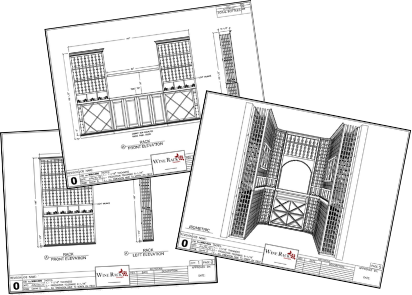
Once you have gathered measurements, images, and collection details, you have a clear foundation for planning. Wine Rack Concepts offers a free design to help translate those details into a storage concept for your space.
Shape a Storage Plan Around Your Space
Your collection deserves a place that feels intentional, not squeezed into whatever room remains. Use the priorities you've identified to turn a narrow space wine storage idea into a clear design direction: how you want to access the bottles, what you want the room to feel like, and what the space needs to accommodate over time. A thoughtful plan can make a compact area feel like a considered part of the home or business.
You don't need every design decision settled before taking the next step. Start with a simple project brief: measurements, a few photographs, and a description of how you hope to use the space. These details can bring your vision into focus and help shape a solution for the room.
With a clear direction and design support, even a challenging footprint can become a distinctive home for the collection you value. Start with your measurements and request a free wine-storage design from Wine Rack Concepts.
Frequently Asked Questions
Can wine be stored on a kitchen counter in a narrow space?
Yes, a counter can hold a small wine rack if it's clear of direct sunlight and heat from appliances such as an oven or stovetop. Think of the counter as a convenient place for bottles you plan to reach often, not automatically as a suitable long-term environment. If the counter gets warm during cooking or sits beside a sunny window, choose another location for bottles you want to preserve.
Is a wall-mounted wine rack a good choice for a small room?
It can be, especially if keeping the floor clear helps the room feel open. Before choosing one, consider the wall surface, how the rack will be secured, and whether you can reach bottles comfortably without leaning over furniture or a walkway. A rack above a counter can use otherwise idle wall space, provided bottles remain easy to handle and the display suits the room.
What is the best non-permanent wine storage for a small home?
A freestanding rack is a practical option if you want storage that doesn't need to be attached to a wall or built into the room. You can place it where it fits and reposition it as your needs change. Choose a spot away from direct sun and household heat, and make sure the rack doesn't obstruct a doorway or narrow path. For renters, check that the loaded unit sits securely on the floor.
Can a closet or alcove be used for narrow wine storage?
Yes, a closet or alcove may work if its conditions and access suit the collection. A closed door doesn't guarantee a stable environment, so consider whether the space is near a water heater, laundry equipment, or another heat source. Check that bottles can be removed without emptying the area and that the rack doesn't interfere with the door. An alcove with an awkward shape may benefit from a layout tailored to its boundaries.
Do I need a wine refrigerator for a small wine collection?
Not necessarily. The decision depends on how you use the bottles and whether you need more controlled storage conditions. A small collection intended for near-term enjoyment may have different needs from bottles you plan to keep longer. A standard kitchen refrigerator is generally too cold and dry for long-term wine storage, so don't treat it as equivalent to dedicated wine cooling. Consider the storage environment as well as collection size.
How can I make a narrow wine storage area easier to organize?
Give each part of the storage a simple purpose, such as grouping bottles by occasion, style, or when you expect to open them. Keep labels visible where possible, and use a basic inventory on your phone or a nearby shelf for bottles that are harder to see. Place frequently selected bottles in the easiest-to-reach area. This reduces unnecessary handling and makes a compact collection easier to browse.
Can a narrow wine rack accommodate bottles of different shapes?
It depends on the rack's design and the bottle mix. Bottle shapes vary, so don't assume every one will fit the same opening or spacing. Before committing to a layout, identify unusually shaped bottles in your collection and account for them in the plan. If the assortment is varied, a tailored arrangement can reserve appropriate positions for those bottles while keeping the rest of the collection orderly.
Have an expert help today!
Free 2D wine cellar design