Maximizing Space: The Complete Resource for Corner Wine Racks

*Pictures are renderings. Actual wine racks may look different
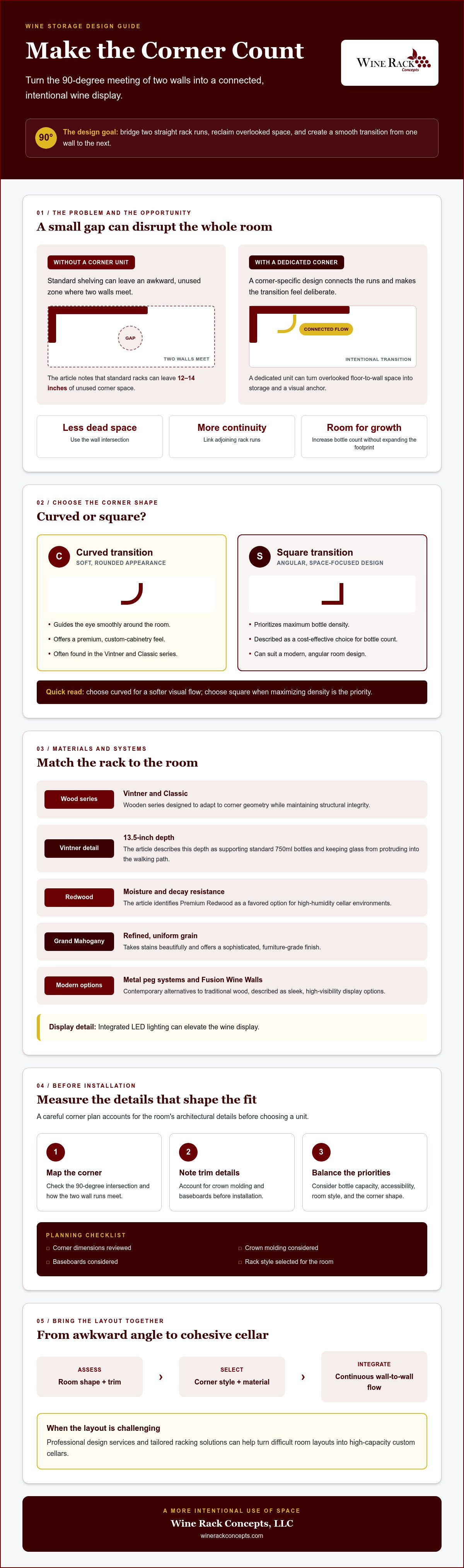
The most underutilized square footage in your home isn't the attic or the basement; it's the ninety-degree angle where two walls meet. You've likely felt the frustration of watching premium wall space go to waste because standard shelving leaves an awkward gap or creates a cluttered, disjointed look. If you're looking to bridge that divide, a high-quality corner wine rack serves as the architectural anchor that turns dead space into a high-density focal point. It's the difference between a collection that feels squeezed into a room and a professional-grade cellar that flows naturally from one wall to the next.
This guide will show you how to maximize every inch of your storage area while achieving a seamless, elegant transition between racking sections. You'll learn how specialized solutions like curved corner units or stackable kits can significantly increase your bottle count without expanding your footprint. We'll explore the technical nuances of materials like Ponderosa Pine and Grand Mahogany, and examine how specific series like the Vintner or Classic lines adapt to your unique dimensions. From choosing the right wood species to understanding how integrated LED lighting can elevate your display, you'll gain the expertise needed to plan a sophisticated, master-crafted wine storage solution.
Key Takeaways
- Learn how a corner wine rack acts as a transitional anchor to eliminate dead space and create a continuous, professional flow between two walls.
- Explore the aesthetic and structural differences between specialized wooden series like Vintner and Classic to find the right balance of durability and style.
- Discover contemporary alternatives to traditional wood, including metal peg systems and Fusion Wine Walls that offer a sleek, high-visibility display.
- Master the essential measurements for corner placements, ensuring you account for architectural details like crown molding and baseboards before installation.
- Understand how professional design services can transform challenging room layouts into high-capacity custom cellars through tailored racking solutions.
Understanding the Role of Corner Wine Racks in Storage Design
A corner wine rack is a specialized storage unit designed to utilize the 90-degree intersection of two walls while maintaining bottle accessibility. In the architecture of professional storage, these units act as the essential connective tissue of the room. Without a dedicated corner solution, homeowners often face a choppy aesthetic where two straight racks meet, leaving a visible gap or an inaccessible cluster of bottles. By integrating a corner-specific design, you ensure that the transition between walls is fluid and intentional rather than an afterthought.
When selecting the right setup, understanding Wine rack materials and types is crucial to ensuring the structure supports the weight of a full collection while matching the room's decor. Whether you're building out custom wine cellars or adding a single unit to a dining room, the corner piece sets the tone for the entire display's symmetry.
To better understand how these units are constructed and integrated into a high-end space, watch this helpful video:
Why Corners are Often Overlooked in Home Storage
Standard shelving often fails in a ninety-degree environment because it creates a dead zone where items are pushed back and forgotten. In wine storage, this leads to wasted bottle capacity and potential damage if air circulation is blocked. Standard racks can leave twelve to fourteen inches of unused space in a corner. This directly impacts your total inventory potential. A dedicated corner wine rack fills this void, balancing the room's visual weight and ensuring the cooling system can move air effectively around the bottles. It transforms a dark, dusty angle into a vibrant display area.
Curved vs. Square Corners: Aesthetic and Functional Differences
Choosing between a curved or square transition depends on your storage goals and design preference. Curved corner racks offer a premium, high-end look that guides the eye smoothly around the room. These are often found in the Vintner or Classic series, providing a custom feel that mimics professional cabinetry—a standard of woodworking excellence also seen in the handcrafted pieces from FVCreations. They use angled bottle supports to create a soft, rounded appearance. Conversely, square corner racks prioritize maximum density. They're a cost-effective choice for collectors who want to utilize every possible inch for bottle count. If your wine room has a modern, angular flow, a square unit might be the ideal fit. If you prefer a softer, traditional atmosphere, the curved transition is the superior choice for a seamless finish.
For those seeking a traditional aesthetic, wooden wine racks provide a sense of permanence and warmth. Professional series like the Vintner and Classic lines are specifically engineered to handle the unique geometry of a corner while maintaining structural integrity. The Vintner series utilizes a 13.5-inch depth to support standard 750ml bottles securely, ensuring that no part of the glass protrudes into the walking path. This depth is a critical design standard that prevents accidental bumps and provides a stable cradle for your collection.
Choosing the right wood species involves balancing functional needs with visual goals. Premium Redwood is highly favored for its natural resistance to moisture and decay; it is ideal for high-humidity cellar environments where durability is paramount. In contrast, Grand Mahogany offers a refined, uniform grain that takes stains beautifully, providing a sophisticated furniture-grade finish. These choices align with Modern Wine Cellar Design Trends, where natural textures are used to ground luxury spaces and create a cohesive architectural look.
The Vintner Series: Modular Flexibility in the Corner
This series is a specialist in verticality. If you have high ceilings, these units can be stacked to create a floor-to-ceiling library of wine that feels completely integrated. A single corner wine rack in the Vintner line can often accommodate varied bottle sizes, from standard Bordeaux to wider Champagne bottles, without requiring separate inserts. One of its standout features is the 15-degree display row integration. This allows you to showcase prized labels at an angle while keeping the corks moist through horizontal storage in the surrounding slots.
Customizing Finishes for a Bespoke Corner Look
A corner unit shouldn't look like a simple add-on; it should feel like it was built with the room. Matching your rack to existing home trim or nearby furniture is achieved through specialized stain options like Espresso, Midnight Black, or Wheat. We recommend using non-toxic, low-VOC sealants. These are essential in temperature-controlled environments because they prevent off-gassing, which can permeate corks and affect the wine's flavor profile over time. If you're unsure how a specific wood species or finish will look in your home, you can explore our free design services to visualize the final result before installation begins.
Modern Corner Solutions: Metal, Peg, and Fusion Systems
Modern design often prioritizes sleek lines and industrial materials over traditional textures. Transitioning your storage to incorporate metal wine racks allows for a more open, breathable aesthetic. This is particularly effective in a corner, where traditional wood can sometimes feel heavy or dark. By using metal supports, you maintain structural integrity while allowing light to pass through the display. This prevents the closed-in feeling common in tight architectural angles and keeps the focus entirely on your collection.
One common challenge for collectors is blending different racking styles within a single room. The corner acts as the ideal transition point for this design shift. If you have existing wooden cabinetry on one wall, you can pivot to a contemporary metal system on the next using a hybrid corner wine rack. This approach creates a deliberate design choice rather than an accidental clash. Minimalist systems like cable and glass racks further enhance this transparency. They make bottles appear as if they are floating, which is a perfect solution for small rooms where visual bulk needs to be minimized.
Minimalist Corner Displays with Wine Peg Systems
Wine peg systems are the ultimate space-savers for tight 90-degree spaces. Unlike bulkier units, these pegs are mounted directly into the wall or a dedicated backing board. This allows for a label-forward viewing experience even in a corner. You don't have to pull a bottle out to see what it is. The spacing is fully adjustable; you can set the pegs wider for magnums or champagne bottles or keep them tight for standard Bordeaux sizes. Proper installation is key. You'll need solid wall backing or studs to ensure these pegs can support the weight of multiple bottles over time.
Fusion Wine Walls for Contemporary Interiors
Fusion Wine Walls offer a hybrid solution that bridges the gap between classic and modern styles. By combining the warmth of a wood backing with the sleekness of metal bottle supports, these systems create a striking focal point in dining room corners. They are highly modular. You can choose different wood species and metal finishes to match your interior palette. For those wanting to coordinate their existing cabinetry with this new display, you can explore Cabinet Refinishing to achieve a cohesive look. Because the components come in various widths, you can scale the display to fit your specific wall dimensions perfectly. It's a professional-grade solution that offers the luxury of a custom look with the ease of modular installation.
Accurate measurements serve as the bridge between a conceptual layout and a flawless installation. When you're planning for a corner wine rack, the process begins with identifying the exact depth of the adjacent walls. Most professional-grade wooden racks require a depth of at least 13.5 inches to house bottles safely. You must also account for architectural obstructions that often go unnoticed, such as baseboards, crown molding, and light switches. If a light switch falls within your planned racking area, it will either need to be relocated or the rack must be custom-notched to allow access. Neglecting these details can result in a unit that sits unevenly or blocks essential room functions.
The "clearance rule" is another vital consideration for any functional cellar. This rule ensures that bottles can be removed from the corner unit without their necks striking the face of the adjacent racks. To calculate the potential bottle capacity of your unit, divide the total vertical inches of storage height by the standard slot height and multiply that result by the number of columns across the rack's width. This simple formula allows you to project your inventory limits accurately before purchasing any components.
Calculating Corner Dimensions and Return Space
There's a significant difference between the available wall space and the actual footprint of the racking. While you might have sixty inches of wall, the rack's footprint includes the depth it protrudes into the room. A 24-inch return is the industry standard for most professional corner units. This dimension provides enough space for a curved or square transition while allowing for high-density storage. Common measuring mistakes often involve failing to account for the thickness of the wood or the "toe kick" at the base. These small discrepancies can lead to installation delays if the rack ends up being even half an inch too wide for the designated corner.
Integrating Corners into Larger Racking Systems
In a well-designed custom wine cellar design, the corner unit acts as the anchor for the entire room. It's often best to install the corner rack first and then build the straight wall sections outward from that point. This ensures that the heights of different series, like the Vintner and Classic lines, align perfectly across the perimeter. To achieve a truly continuous and professional look, you should utilize matching molding and trim kits. These accessories hide the gaps between the top of the rack and the ceiling, creating the built-in appearance of a master-crafted library. Consistency in finish and trim is what separates a DIY project from a professional-grade wine room.
Professional Customization: Bringing Your Corner Storage to Life
Moving beyond modular kits allows you to explore the full potential of custom wine cellars. While standard units fit many needs, professional customization addresses unique architectural challenges like sloped ceilings or uneven flooring. A bespoke corner wine rack can be engineered to integrate perfectly with the surrounding room, acting as a structural centerpiece rather than a simple accessory. In commercial environments, these racks often serve as high-capacity display hubs to draw a customer’s eye. Conversely, in a residential home, the focus shifts toward creating a stable environment where bottles can rest undisturbed for years.
Positioning your collection requires a strategic balance between accessibility and preservation. You'll want your everyday bottles within easy reach at the front of the transition. Your investment-grade vintages should stay tucked into the deeper, more protected sections of the corner. This dual-purpose approach ensures your cellar is both a functional tool for entertaining and a reliable vault for your long-term curation. It turns a simple storage area into a gallery that respects the value of the wine being stored.
The Importance of Climate Control in Corner Placements
Airflow management is a critical factor that many collectors overlook. Corners can easily become "hot spots" because air tends to stagnate in 90-degree intersections. Without proper wine cellar cooling, these pockets of warm air can accelerate the aging process of your wine, potentially ruining a delicate vintage. You should place self-contained refrigeration units where they can push air across the entire face of the racking. Avoid blowing air directly into a corner where it might swirl and create turbulence without actually cooling the bottles.
- Install vapor barriers and high-grade insulation before any racking is mounted to prevent moisture buildup.
- Ensure at least a few inches of clearance behind wooden racks to allow for passive air movement.
- Coordinate the placement of cooling vents to avoid creating condensation on the wood finish or labels.
Taking the Next Step with a Free Design Service
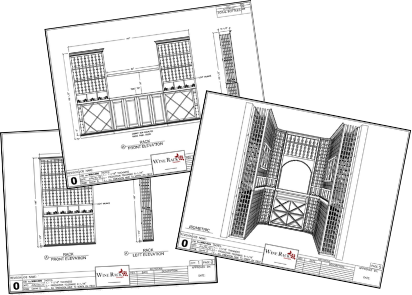
Visualizing a complex corner layout is much simpler with a professional 3D rendering. By using a free design service, you can see how different materials and series will interact before you commit to a purchase. You'll need to provide basic room dimensions and any specific bottle capacity goals you hope to reach. This consultative process saves both time and money by identifying potential installation hurdles early. It bridges the gap between your initial vision and a finished, professional-grade result that maximizes every available inch of your space.
Elevate Your Collection with Strategic Design
Transforming an underutilized area into a sophisticated display requires more than just shelving; it demands a thoughtful integration of form and function. By selecting a specialized corner wine rack, you bridge the gap between two walls and eliminate the visual clutter of disjointed storage. Whether you prefer the timeless warmth of Premium Redwood or the sleek, modern lines of a Fusion Wine Wall, the right choice ensures your bottles are protected and presented with the respect they deserve.
Professional planning resolves the common pitfalls of airflow stagnation and measurement errors. Our expert design consultants are available to help you navigate these technical nuances, from selecting the ideal series to integrating comprehensive cooling solutions. This collaborative approach turns your initial vision into a durable, master-crafted reality that scales with your growing collection.
You've curated a collection worth celebrating. Take the next step toward a cellar that reflects your dedication to the craft and enjoy the lasting pride of a perfectly transformed space.
Frequently Asked Questions
How many bottles can a standard corner wine rack hold?
Capacity depends heavily on the specific series and height of the unit. A 6.5-foot tall Vintner curved corner rack can hold 76 bottles, while smaller stackable units typically hold around 40. If you utilize full-height floor-to-ceiling displays, you can maximize density by filling space that straight racks often leave empty. Modular systems allow you to stack components to reach capacities exceeding 100 bottles in a single corner footprint.
Are curved corner racks more expensive than square ones?
Curved transitions generally carry a higher price point because they require complex woodworking and specialized angled bottle supports. Square corner racks are a more budget-friendly alternative that prioritizes storage density over a rounded aesthetic. While curved units offer a premium, seamless look for high-end cellars, square units provide a practical solution for maximizing bottle count without the added cost of custom-curved components.
Can I install a corner wine rack in a regular room without cooling?
You can certainly place a corner wine rack in a non-conditioned space like a dining room or kitchen. If you intend to store wine for long-term aging, you'll need climate control to prevent heat damage. For everyday consumption bottles, a decorative rack in a regular room works well. Just ensure it stays away from direct sunlight, heating vents, and vibrating appliances to maintain the quality of your wine.
What is the best wood type for a corner wine rack in a basement?
Premium Redwood is the superior choice for basement environments due to its natural resistance to moisture and mildew. Basements often have higher humidity levels than the rest of the home, which can cause lesser woods to warp or decay. Grand Mahogany is another excellent option if you prefer a uniform grain and plan to apply a custom stain for a more polished, furniture-grade look in your storage area.
Do corner wine racks accommodate magnum-sized bottles?
Many professional series like the Vintner line offer specialized magnum corner racks designed with wider 4.5-inch slots. Standard corner units typically fit 750ml bottles, so it's important to verify the dimensions before ordering. If you have a diverse collection, choosing a modular system allows you to integrate specific rows for larger formats alongside your standard Bordeaux and Burgundy bottles to ensure every bottle has a secure home.
How do I secure a tall corner wine rack to the wall for safety?
Safety is paramount for any floor-to-ceiling installation. You should secure your rack to the wall studs using L-brackets or specialized furniture straps to prevent tipping. Because a full corner wine rack can hold hundreds of pounds of glass and liquid, the structural connection must be solid. Always ensure the unit is perfectly level before anchoring to avoid putting unnecessary stress on the wood joints or the wall itself.
Can I mix metal and wood racks in the same corner?
Mixing materials is a popular trend that creates a sophisticated, transitional aesthetic. You can use a wooden corner unit to anchor the space and then transition to metal peg systems or Fusion Wine Walls on the adjacent walls. This approach allows you to maintain the warmth of natural wood while enjoying the sleek, label-forward visibility that modern metal racking provides for your prized vintages and modern home decor.
Is professional installation required for corner racking systems?
Professional installation isn't strictly required for modular kits, but it's highly recommended for large-scale cellar projects. Corner units are the most complex pieces to align, especially when integrating crown molding or baseboards. If you're comfortable with a level and a drill, you can manage many series yourself. For complex layouts, utilizing a free design service helps identify potential hurdles before the installation process begins.
Have an expert help today!
Free 2D wine cellar design