Large Capacity Wine Racks: How to Choose Storage That Works

*Pictures are renderings. Actual wine racks may look different
The highest-capacity rack may be the wrong choice for a growing collection. Large capacity wine racks are often compared by advertised bottle count, but that figure doesn't tell you how easily you can reach a favorite bottle or whether the layout suits the bottles you own. A dense arrangement can store more wine, yet feel less practical in daily use.
It is reasonable to want generous storage without letting a rack dominate the room. The right choice depends on how you use your collection: whether you want bottles close at hand, on display, or stored efficiently for the long term. Bottle variation matters, too. Wider bottles may take up more room than standard shapes, so a rack's stated capacity may not match your collection's usable capacity.
This guide explains how to compare rack formats by usable capacity, access, presentation, and fit. You will learn what to consider when planning around your room and when a custom-designed solution can better align storage with your collection. From traditional racking to contemporary display approaches, the goal is a layout that holds your wine securely and works in its setting.
Key Takeaways
- Use advertised bottle counts as a starting point, then consider whether the layout leaves room to store and retrieve your collection comfortably.
- Compare large capacity wine racks by storage emphasis, bottle visibility, and how each format will fit in the room.
- Account for bottle shapes and browsing habits when estimating practical capacity.
- Measure the planned area and map access paths, doors, corners, and clearances before settling on rack placement.
- A custom design can bring capacity, presentation, room dimensions, and cellar environment into one coordinated plan.
What Makes a Wine Rack Large Capacity, and What Does Capacity Really Mean?
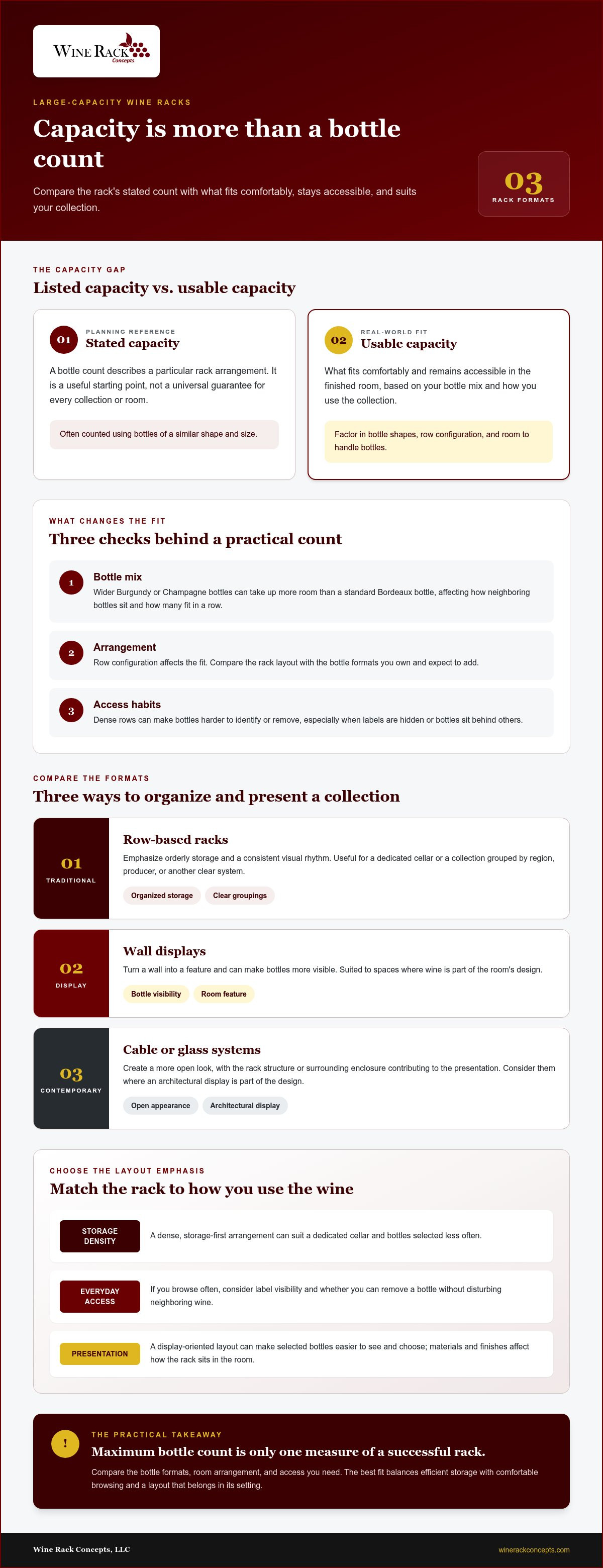
Large-capacity wine racks are designed for substantial collections, but there is no single bottle count that defines them. The right scale depends on the collection, the available room, and how the wine will be used. A compact storage area may prioritize fitting bottles into limited space. A collection-focused layout may emphasize organization, while a display-led design makes selected bottles easier to see and choose.
A listed capacity describes a particular arrangement, not every collection or room. Bottle shapes, row configuration, and the space needed to handle bottles all affect what fits in practice. For a general introduction to rack purposes and formats, Wine rack offers useful context.
For a closer look at wine storage in practice, watch this video:
How to Read a Wine Rack's Stated Capacity
Capacity figures depend on the bottle dimensions and arrangement used to count them. A count based on similarly shaped bottles may not translate directly to a mixed collection. Wider Burgundy or Champagne bottles, for example, can take up more room than a standard Bordeaux bottle. That difference can affect how neighboring bottles sit and how many fit in a row.
Stated bottle capacity is a planning reference; usable capacity is what fits comfortably and remains accessible in the finished room. Treat a listed count as a guide to the rack's intended layout, not a universal guarantee. Before settling on a design, list the bottle formats you own and the ones you expect to add. Comparing that mix with the rack configuration gives you a more useful estimate than relying on the headline number alone.
Traditional wooden wine racks can support an organized storage plan, but the configuration still needs to suit the collection and room. Check the fit as well as the stated capacity.
Storage Density Versus Everyday Access
Tightly arranged storage can make efficient use of a dedicated cellar, especially when bottles are organized for longer-term keeping and selected less often. But dense rows may make it harder to identify a particular bottle, especially when labels are hidden or bottles sit behind others. The arrangement should reflect how you manage the collection.
If you browse often, consider how you will read labels and remove a bottle without disturbing neighboring wine. A display-oriented arrangement can make chosen bottles more visible, while a storage-first plan may devote more of the available area to orderly placement. Neither approach is automatically better. Decide whether access, presentation, or storage density matters most, then use that priority to compare layouts.
Collection growth and everyday browsing are different capacity needs. Planning only for future additions can leave today's bottles awkward to reach. Optimizing only for easy selection may not serve a collection intended to grow. Large capacity wine racks work best when the layout accounts for both priorities instead of treating maximum bottle count as the only measure of success.
Which Large Capacity Wine Rack Style Fits Your Collection?
The best format depends on the role the rack should play in the room. A cellar organized around efficient bottle storage calls for a different visual approach than a dining area where the collection is part of the decor. Compare each style by how it organizes bottles, how much of the collection it puts on view, and how it fits the setting.
- Traditional row-based racks: Emphasize orderly storage and a consistent visual rhythm. They suit dedicated cellar areas and collections grouped by category or another clear system.
- Wall displays: Turn a wall into a feature and can make bottles more visible. They work well where the wine is intended to contribute to the room's design.
- Cable or glass systems: Create a contemporary, open look, with the rack structure or surrounding enclosure contributing to the presentation. They suit spaces where an architectural display is part of the design.
Traditional Racking for Organized Bottle Storage
Row-based layouts give a collection a clear structure. You might group wines by region, producer, or occasion, then use the rack's arrangement to make those groupings easy to follow. This format can bring visual order to a cellar without making every bottle a focal point. Wine Rack Concepts, LLC's Classic, Carpenter, and Vintner series offer distinct racking families to consider for a traditional approach.
Material helps set the tone. Wooden wine racks can complement a room with a warm, classic character, while the choice of wood and finish shapes the overall impression. Consider those choices as part of the room's design, rather than assuming a particular material guarantees a specific performance.
Wine Walls and Contemporary Display Systems
For a more display-forward result, the Wall Wine Rack Series and Fusion Wine Walls bring bottles into the room's visual composition. Cable and glass systems offer another contemporary direction, with a lighter, more open appearance than a traditional row layout. These formats can suit a visible area where the collection is meant to be seen, not simply stored out of view.
Metal can introduce a crisp, modern note, while glass can keep the overall look feeling open. The effect depends on the surrounding finishes, lighting, and architecture. A dining room with restrained finishes may suit a clean, minimal display; a more traditional cellar may call for racking that feels visually settled into the space. Aim for cohesion between the rack and room.
As you compare large capacity wine racks, decide what should lead: organized storage, visible bottles, or a balance of both. If you are weighing those priorities against the room itself, design planning for your wine storage can help bring the collection and setting into one considered direction.
How Bottle Mix, Browsing Habits, and Room Layout Affect Usable Capacity
A rack's layout has to work with the bottles you own and the way you move through the collection. A cellar used for long-term storage has different priorities from a dining-room display where you regularly choose wine. Room shape matters, too: a configuration that suits a broad wall may not fit a narrow alcove or an area near doors.
Bottle count alone can't describe how usable a rack will feel day to day. Practical capacity also depends on whether bottles fit comfortably, can be found without hassle, and make sense in the available space. Before choosing a configuration, map your collection categories and typical retrieval habits. This gives the design a useful starting point beyond a target count.
Plan Around the Bottles You Actually Store
Start with a simple inventory. Note how much of the collection consists of standard Bordeaux-shaped bottles, then identify larger or less common formats, such as Burgundy and Champagne bottles. As a reference, the Wine Rack Buying Behaviour Survey reports approximate diameters of 3 inches for Bordeaux, 3.3 inches for Burgundy, and 3.5 inches for Champagne bottles. Those differences can affect how tightly a rack can be arranged.
When formats vary, spacing planned around only one bottle shape may not suit the full collection. A few wider bottles can affect how neighboring bottles sit, particularly in closely arranged rows. Record which formats appear often and which are occasional. This helps distinguish everyday storage needs from special-format storage. Do not assume a rack will accommodate every shape in your inventory without considering its specific configuration.
Make the Collection Easy to Browse
Think through how you select a bottle. Do you usually know the producer or region in advance, or do you browse by label and choose in the moment? If labels need to be visible, plan their placement as part of the arrangement. If bottles are organized by category, make sure the groupings are easy to follow and that retrieving one bottle does not disrupt another section.
A display-focused area might reserve the most visible positions for bottles you enjoy sharing or selecting frequently. Less frequently accessed wine can be arranged more densely in another part of the layout, provided it remains organized and reachable. This zoning can balance presentation with practical storage without treating every bottle as equally likely to be chosen.
Finally, consider how the collection may change. You might add bottles from a particular region, bring home larger formats, or begin setting aside more wine for longer-term keeping. Note those likely shifts alongside today's inventory. This does not require assuming a rack can be expanded later. It helps ensure the initial configuration reflects the collection you expect to manage, not just the bottles currently on hand.
What to Check Before Installing Large Capacity Wine Racks
Before choosing the final placement, consider how the room will function once the rack is filled. A layout that fits on a drawing may feel crowded if it blocks a doorway, interrupts a natural path through the room, or makes bottles awkward to reach. A measured plan connects the rack footprint to the cellar environment and the way people use the space.
Measure the Space and Map the Rack Footprint
Begin with the area available for storage. Record the width and height of the intended wall or floor space, along with the ceiling height and the route used to bring materials into the room. Then mark the planned rack footprint on a sketch or directly in the space, noting doors, trim, columns, corners, outlets, and nearby furnishings that could affect placement.
Check movement, not just dimensions. Consider how doors open, where someone will stand to select a bottle, and whether an aisle or corner could become difficult to use after the rack is full. A useful planning sequence is:
- Measure: Record the storage area and ceiling height.
- Mark: Add fixed features, door swings, corners, and furnishings to a room sketch.
- Test access: Trace the route to the rack and consider how bottles will be reached and removed.
- Confirm placement: Review the layout in the room before finalizing the rack position.
This last check can reveal details a simple wall measurement misses. For example, a rack placed close to a doorway might technically fit, yet leave little comfortable room to pause and browse. Plan large capacity wine racks around the occupied space, including the access area needed to use them, rather than considering the rack footprint alone.
Consider the Cellar Environment Alongside Racking
Rack design and room conditions are connected, but they are separate planning decisions. The rack determines how bottles are arranged and accessed. The cellar environment concerns the conditions surrounding the collection and how those conditions are maintained. Selecting a cooling unit alone does not account for the room as a whole, including its enclosure, layout, and the location of doors or other openings.
Think through these elements together before final placement. A display area that opens directly into a frequently used room may create different planning considerations from a dedicated cellar. The rack's position should also make sense alongside the room's cooling approach, rather than being treated as an afterthought. Wine Rack Concepts, LLC's overview of wine cellar cooling systems can help you consider cooling as part of the broader storage plan. Any temperature target should be determined for the specific cellar and collection, rather than assumed from the rack choice.
Once measurements, access, and room conditions have been considered, a project plan can align the rack position with the space and collection.
Choosing a Large Capacity Wine Rack Design for Your Project
A successful design brings several decisions together: the bottle formats in the collection, how often you browse, what you want to display, the room's dimensions, and the environment planned for wine storage. No single factor should determine the layout. A rack that suits a dedicated cellar may feel out of place in a visible entertaining space, while a striking display may not be the best use of a room devoted to organized storage.
Start by turning those considerations into a clear design direction. Decide which bottles need easy access, what should be most visible, and how the rack should relate to the room. If the project involves the broader cellar as well as its storage, include custom wine cellar design in the planning process. Residential and commercial settings can both benefit from aligning the rack with the purpose and proportions of the space.
When a Custom-Designed Rack Is the Better Fit
A standard arrangement may be a natural fit when the space and collection are straightforward. Custom design is worth considering when a room has unusual dimensions, mixed bottle formats shape the layout, or the collection should function as a prominent visual feature. A tailored plan can coordinate the rack's placement and presentation with the surrounding room, rather than asking the space to adapt to a generic arrangement.
Not every project needs a custom solution. The deciding question is whether a ready configuration can meet your storage and access priorities while sitting comfortably in the room. If several requirements need to work together, a tailored plan can help make those trade-offs deliberate.
Turn Your Collection Goals Into a Design Brief
Before a design conversation, gather a few practical details. Approximate figures and clear preferences are useful starting points. The goal is to explain how the storage should work, not to arrive with a finished drawing.
- Collection: Share its approximate size, the mix of bottle formats, and whether you expect it to change.
- Room: Provide measurements and note doors, corners, fixed features, and the intended rack location.
- Access: Describe which bottles you select often and how you prefer to organize the collection.
- Presentation: Clarify whether you want discreet storage, a visible display, or a balance of both.
- Setting: Explain whether the project is residential or commercial and how the storage area will be used.
These details connect the design brief to real use, from retrieving a bottle to understanding how the completed rack will sit within its setting. They also give the planning process a practical starting point without assuming a particular capacity or configuration in advance.
If you are ready to shape those priorities into a project plan, start a conversation about your wine storage goals.
Make Room for the Collection Ahead
A wine storage project is an opportunity to shape how you enjoy your collection. Rather than planning only for the bottles on hand, consider what role you want the space to play: a quiet place for safekeeping, an inviting feature for sharing wine, or a balance of both. That vision can guide choices beyond the rack itself, including how the cellar feels and how naturally it fits your home or business.
With large capacity wine racks, the most satisfying result is not simply a full layout. It is a considered design that suits the collection and the space, and supports the way you use it. Wine Rack Concepts, LLC brings custom storage design to residential and commercial projects, with options spanning traditional racking and contemporary display systems.
Your collection deserves a space that feels as carefully curated as the wine itself. Start with a clear vision for how you want to store, access, and display it.
Frequently Asked Questions
How many bottles make a wine rack large capacity?
There is no universal bottle-count cutoff for a large capacity wine rack. The term describes a rack intended for a substantial collection, and what counts as substantial depends on the project. Instead of relying on a label alone, consider how much of your collection you want stored in one place and whether the room can accommodate the rack without compromising its intended use. Set a practical target based on your collection and available space.
How much space should I leave around a large wine rack?
There is no single clearance figure that works for every rack and room. Leave enough usable space for the rack's intended placement and for people to approach it, select bottles, and move through the room. Before installation, mark the proposed footprint with removable tape and walk the area as you normally would. Check how nearby doors and furnishings affect movement, and account for access once bottles are in place.
Can large capacity wine racks store different bottle shapes?
Some rack layouts can accommodate a mix of bottle shapes, but the fit depends on the design and the bottles involved. Before choosing, make a brief inventory that includes formats you store only occasionally, such as sparkling-wine bottles or large-format bottles. Share that mix during planning so the layout can account for varied dimensions. Avoid assuming every position will suit every bottle; a dedicated area for less common shapes may be more practical.
Is a large wine rack suitable for a restaurant or tasting room?
Yes, a large rack can suit a restaurant or tasting room if its placement supports both the collection and the way the space operates. A visible display near a tasting area can contribute to the room's presentation, while bottles needed for service may be better organized for staff access. Wine Rack Concepts designs storage for commercial as well as residential settings, so the intended use can inform the project layout.
What happens if my collection grows beyond the rack's capacity?
If the collection outgrows its current storage, reassess how the wine is organized before adding bottles wherever space appears. Separate bottles by how often they are accessed or by their storage role, then identify whether the room has space for another rack or needs a revised storage plan. Do not assume a rack can be expanded; future capacity depends on the design and available space. Planning for likely growth early can help guide the original project.
Do large capacity wine racks need a climate-controlled room?
A rack itself does not create a climate-controlled environment. Whether the room needs dedicated cooling depends on the storage conditions you want for the collection and the characteristics of the space. A rack in a living area and one in a purpose-designed cellar may call for different room planning. Treat the storage environment as a separate part of the project, and consider cellar cooling where maintaining appropriate conditions is a priority.
Is one large wine rack better than several smaller racks?
Neither arrangement is automatically better. One continuous rack may suit a room with a clear, uninterrupted storage area, while several smaller units can help divide a collection across walls or separate areas. Multiple racks may also make it easier to group wine by use or category. Compare the available wall and floor space, the room's visual balance, and how you want to organize access before choosing a single unit or a distributed layout.
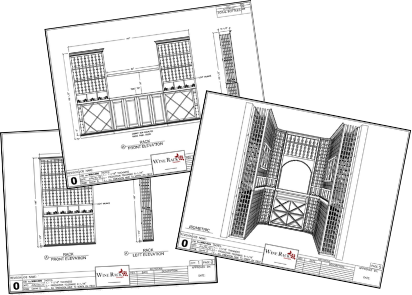
Have an expert help today!
Free 2D wine cellar design