Large Bottle Format Wine Racks: How to Choose the Right Storage

*Pictures are renderings. Actual wine racks may look different
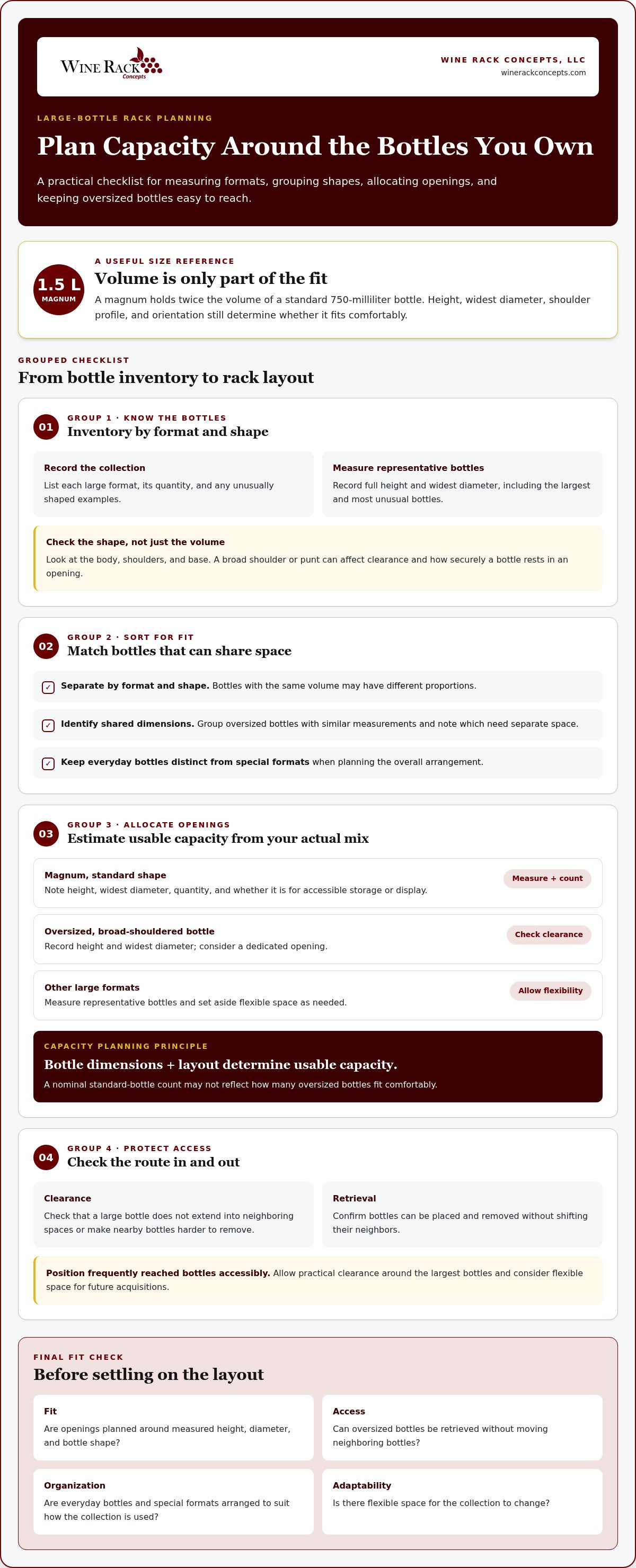
A rack sized for standard bottles can leave a prized magnum with nowhere to go. Choosing large bottle format wine racks takes more than counting openings: bottle height, diameter, length, and shoulder shape all affect fit, access, and the space left for the rest of your collection.
Oversized bottles need secure storage without making the cellar feel crowded or disorganized. A 1.5-liter magnum and a larger-format bottle can take up very different amounts of room, and bottles of the same volume may have different shapes. Planning around the bottles you own helps prevent capacity estimates from becoming a surprise once the rack is installed.
This guide compares dedicated large-bottle storage, mixed-format rack layouts, and display-focused approaches. You'll learn which measurements to record, how to estimate usable capacity, and how to coordinate storage with your room and collection priorities. Whether you're organizing a few statement bottles or planning for a growing cellar, the goal is a layout that works now and can adapt as your collection changes.
Key Takeaways
- Plan large bottle format wine racks around each bottle's height, diameter, shoulder shape, and storage orientation, not capacity alone.
- Inventory and measure your collection, then group everyday bottles separately from oversized formats that may need flexible or dedicated openings.
- Compare dedicated bays, display rows, and mixed-format layouts by fit, visibility, access, and organization.
- Map rack depth, aisles, doorways, and retrieval paths so large bottles are easy to reach without disrupting the room's layout.
- Use a custom rack plan to coordinate storage and display with your collection today and its changing priorities over time.
What Makes Large Bottle Format Wine Racks Different?
Large-format wine rack planning means sizing and arranging storage around bottles that exceed standard capacity, accounting for their dimensions, shape, and intended orientation. A magnum holds 1.5 liters, twice the volume of a standard 750-milliliter bottle, and larger formats can take up still more room. But volume alone doesn't determine whether a bottle will fit. Height, widest diameter, and shoulder profile all matter.
Bottle names and shapes can vary across wine traditions, so the same volume doesn't always mean the same proportions. For an overview of formats and their history, see Wine Bottle Sizes and History. For rack planning, the most reliable reference is the bottle itself. Design large bottle format wine racks around the collection's actual range, rather than assuming every oversized bottle shares one standard shape.
Which Bottle Measurements Matter Before You Choose a Rack?
Record measurements from representative bottles in your collection, including the largest and most unusually shaped examples. Measure each bottle's full height and widest diameter. Check the body, shoulders, and base, since a broad shoulder or punt can affect clearance and how securely a bottle rests in an opening.
Next, group bottles by both format and shape. Two bottles with the same volume may have different proportions, while several oversized bottles may share similar dimensions. This inventory gives you a more realistic basis for estimating rack capacity and identifying where flexible openings could help.
Why Standard Bottle Slots May Not Suit Every Format
A larger bottle may need more vertical or lateral clearance than a standard bottle. If it extends beyond its opening, it can encroach on neighboring spaces or make nearby bottles harder to remove. The effect depends on rack design and bottle orientation, so a standard rack isn't automatically unsuitable. Compatibility comes down to measured dimensions and layout.
Separate storage capacity from display capacity as you plan. A rack's nominal bottle count may not reflect how many oversized bottles it can hold comfortably, especially if display placement needs room for labels or clear access. Wood and metal options, including wood wine racks, can suit different cellar designs, but the openings and arrangement still need to fit the bottles. Measure first, then plan for fit, access, and presentation.
How to Plan Rack Capacity Around Magnum and Oversized Bottles
Plan around the bottles you own, not a rack's standard-bottle capacity. Start with an inventory, then account for dimensions, grouping, dedicated space, and retrieval. Usable capacity depends on bottle dimensions and layout, not simply the number of standard-bottle openings.
Build an Inventory by Format and Bottle Shape
Record the quantity of each large format and note any bottles with unusual proportions. Use your measurements to identify which bottles can share an opening size and which need separate space. A simple inventory can make planning clearer:
| Format or shape | Dimensions | Quantity | Storage preference |
|---|---|---|---|
| Magnum, standard shape | Height and widest diameter | Count owned | Accessible storage or display |
| Oversized, broad-shouldered bottle | Height and widest diameter | Count owned | Dedicated opening |
| Other large format | Measure each representative bottle | Count owned | Flexible space as needed |
Reserve Space for Fit, Retrieval, and Future Changes
Use this five-step sequence to turn your inventory into a layout:
- Inventory: List bottles by format, shape, and quantity.
- Measure: Note each representative bottle's height and widest diameter.
- Group: Separate everyday bottles from special formats and unusual shapes.
- Allocate: Set aside openings for oversized bottles, then estimate capacity from your actual mix rather than standard-bottle assumptions.
- Review access: Check that bottles can be placed and removed without shifting neighbors.
Keep frequently reached bottles in accessible positions. A large bottle that requires moving others each time is difficult to enjoy and can disrupt the arrangement. Allow practical clearance around the largest bottles, and consider leaving flexible space for future acquisitions rather than treating today's inventory as fixed. This also helps you coordinate large-format openings with the broader storage plan for a high-capacity collection.
For custom wine storage, a free design process can help translate your inventory and access priorities into a coordinated rack layout. The eCFR provides regulatory text in a separate context. Its Federal Regulations for Wine Storage link is not a rack-sizing guide.
Dedicated Storage, Display, or Mixed Racks: Which Approach Fits?
The right layout depends on how you use your collection. Dedicated bays make oversized bottles easier to group and retrieve, display rows give selected bottles visual prominence, and mixed layouts balance large-format storage with standard bottles. Compare the trade-offs before choosing large bottle format wine racks for your cellar.
| Approach | Fit flexibility | Visibility | Bottle access | Organization |
|---|---|---|---|---|
| Dedicated large-format bays | Best when openings are planned around measured formats; less adaptable if bottle shapes vary widely. | Moderate, depending on bay placement. | Good when each bottle has a clear position. | Strong format-based grouping. |
| Display rows | Depends on the display design and bottle dimensions. | High for selected bottles. | Good for featured bottles, though display placement may prioritize appearance. | Useful for highlighting a curated selection. |
| Mixed-format layout | Can combine varied openings when designed around the collection. | Adjustable, with display positions alongside storage. | Can keep frequently reached bottles accessible. | Balances formats, access, and presentation. |
When Dedicated Large-Format Storage Makes Sense
Dedicated spaces suit collections with several oversized bottles, especially when keeping formats together makes them easier to identify and retrieve. Assigning each bottle a clear position can simplify organization and reduce rearranging nearby storage. Plan the number and proportions of openings around measured bottles and their intended use, whether they're stored for easy access or set aside for a special occasion.
When a Mixed Storage and Display Layout Works Better
If oversized bottles are only part of the collection, a mixed layout can reserve accessible positions for bottles you reach often and display a select few as a focal point. Displaying every large bottle may increase visual impact, but it can use room that might otherwise serve everyday storage. A considered combination preserves both presentation and practical capacity. Custom wine cellar design can coordinate those priorities across the room.
Material choice is separate from bottle fit. Wood or metal can shape the cellar's look, but openings still need to suit the bottles and their placement. Explore wooden wine racks alongside metal wine rack options as you consider the overall aesthetic. Let bottle mix, access needs, and display goals guide a custom layout.
How Room Layout and Cellar Conditions Shape Large Bottle Storage
A rack can be sized for oversized bottles and still feel awkward if the room doesn't leave a clear route to reach them. Before settling on the layout, map doorways, aisles, planned rack depth, and the path each large bottle will follow from its position to the room exit. Include the largest bottle in your collection when planning that movement, not just the bottles you retrieve most often.
Place Large Bottles for Safe, Convenient Access
Plan for handling as well as appearance. A display position may make a bottle a focal point, but it should also leave room to reach and remove it without bumping adjacent bottles or nearby surfaces. Place bottles you access frequently where the retrieval path is direct, and reserve less accessible positions for bottles you handle less often.
Walk through the proposed layout before finalizing it. Can you approach the rack comfortably? Is there room to grasp and withdraw the largest bottle? Do open doors or nearby furnishings interrupt that path? These checks help you position large bottle format wine racks around how the room is used, while keeping display choices intentional.
Coordinate Racking with the Cellar Environment
Racking, the enclosure, and cooling belong in the same room plan. Rack placement shapes how the cellar is organized, while enclosure and cooling decisions contribute to the environment intended for storing the collection. Planning these elements together helps balance bottle access, visible display, and the room's overall design.
Start by marking where racks will sit, then consider how the rest of the cellar plan works around them. If bottles are displayed prominently, account for that placement alongside the cooling approach rather than treating the rack as an isolated feature. Wine Rack Concepts, LLC offers wine cellar cooling as part of coordinated storage planning. Explore custom wine cellar design to see how racks and room design can work together.
Keep the plan adaptable. Your collection may change, and future bottle shapes or display priorities can affect how the room functions. A considered layout gives oversized bottles a clear place without making everyday access an afterthought.
Design Large Bottle Format Wine Racks Around Your Collection
A successful rack plan starts with your collection, then brings bottle fit, everyday access, display preferences, and room constraints into one coordinated design. For large bottle format wine racks, this approach helps avoid relying on standard-bottle capacity estimates that may not reflect the space oversized bottles occupy.
What to Prepare for a Rack Design Conversation
A clear brief makes it easier to translate your collection and room into a practical storage plan. Gather:
- Bottle inventory: Counts by format, including unusual shapes or especially large bottles.
- Representative measurements: Bottle height and widest diameter, measured on examples from your collection.
- Capacity priorities: Which bottles need dedicated openings and which could share flexible storage areas.
- Access and display preferences: The bottles you reach often, those you want to showcase, and the balance you want between visibility and storage.
- Room information: Available dimensions, doorways, aisle locations, and any existing layout plans.
If you expect your collection to grow, describe flexibility as a preference rather than specifying a guaranteed future bottle count. This gives the design a useful direction without treating an uncertain forecast as a fixed requirement.
Turn Your Large-Format Collection into a Cohesive Storage Plan
Custom rack design can account for varied bottle formats and the priorities that make your collection personal. Wine Rack Concepts designs and manufactures custom wine racks and cellars, coordinating openings and layout with the room, access needs, and display goals. A plan might place frequently accessed bottles within easy reach and give selected bottles more prominent positions, while ensuring the arrangement fits the available space.
Material and rack-system choices can support the character of the room, but the design should begin with bottle dimensions and intended use. Wood, metal, cable, and glass rack systems offer different design approaches. The right configuration depends on how the collection and cellar need to work together. As your priorities change, a considered plan helps keep decisions part of a cohesive whole rather than a series of isolated adjustments.
Bring your bottle inventory and room plan into the next step. Request a free wine rack design to start shaping a storage plan around your collection.
Shape a Storage Plan That Grows with Your Collection
The right large bottle format wine racks begin with the bottles themselves: their dimensions, the space they need, and how you want to access or display them. A measured inventory helps you estimate usable capacity more realistically, while a room-aware layout makes retrieval and presentation part of the same design decision.
Wine Rack Concepts designs and manufactures custom wine racks and cellars for residential and commercial projects. Wood, metal, cable, and glass rack systems offer different ways to shape a cellar, while custom planning brings varied bottle formats and collection priorities together in one cohesive space.
With a thoughtful plan, oversized bottles can have a place that feels considered, accessible, and in keeping with the collection you're proud to curate.
Frequently Asked Questions
What is a large-format wine bottle?
A large-format wine bottle holds more than the standard 750 milliliters. A magnum is 1.5 liters, while a double magnum is 3 liters. Larger formats can vary in capacity and shape, and names may differ according to bottle style. For storage planning, the format name is a useful starting point, but the bottle's actual dimensions determine what opening it needs.
Will a standard wine rack hold magnum bottles?
Some standard racks may accommodate magnums, but fit depends on the rack's opening dimensions and the bottle's shape. Compare the magnum's height and widest diameter with the available space, including room for its shoulders and base. Also consider whether the bottle can be placed and removed without catching on adjacent openings. Don't assume compatibility based only on the rack's stated capacity or the bottle's volume.
How do I measure bottles for a wine rack?
Measure a representative bottle's full height and widest diameter, checking the body, shoulders, and base for changes in shape. Repeat this for unusual bottles and formats that appear similar but have different proportions. Record measurements alongside each bottle type and quantity. This inventory helps you plan openings around the actual collection rather than estimating fit from format names or standard-bottle assumptions.
Can large-format bottles be stored in a wine display rack?
Yes, if the display rack is designed for the bottle's dimensions and intended orientation. Check that the bottle fits without crowding neighboring positions and can be handled comfortably when you want to remove it. Display placement can make selected bottles more visible, but visibility shouldn't come at the expense of access. Measure the bottles and consider how you plan to present and use them before settling on a layout.
How much rack capacity should I plan for large-format bottles?
Estimate capacity from your bottle inventory, not from a rack's standard-bottle count. List quantities by format and shape, measure representative bottles, then assign openings based on fit and layout. Large-format bottles can use space that might otherwise serve several smaller bottles, so the usable count depends on the mix and arrangement. With large bottle format wine racks, leave room to balance today's collection with your preferred flexibility for future changes.
Should large-format bottles have dedicated rack openings?
Dedicated openings can be useful when you have several oversized bottles, varied shapes, or a preference for grouping formats together. They can make bottles easier to identify and retrieve. A mixed layout may suit a smaller number of large bottles or a collection that benefits from flexible storage. Base the choice on measured dimensions, how often you access each bottle, and whether you want some positions to serve as display space.
Do large-format wine racks need cellar cooling?
The rack itself doesn't need cooling, but the room may need a suitable wine cellar environment if you're storing bottles for the long term. A stable temperature is generally more important than choosing one exact setting; a commonly cited cellar range is 55°F to 59°F. Cooling decisions should reflect the cellar and collection as a whole, rather than the bottle format or rack alone.
Have an expert help today!
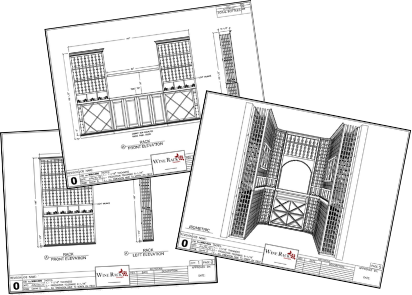
Free 2D wine cellar design