Innovative Wine Peg Rack System Examples for Modern Storage

*Pictures are renderings. Actual wine racks may look different
What if your wine collection didn't just sit in a dark corner, but instead floated across your wall like a curated gallery installation? It is a compelling vision that many enthusiasts share, yet the transition from traditional shelving to a modern wine peg rack system often brings up practical concerns. You might worry about whether a single peg can truly support the weight of a heavy bottle, or perhaps the math behind perfect spacing feels more like a chore than a creative project. It's common to feel a bit overwhelmed when choosing between different metal depths and finishes for a high-end look.
We understand that a wine cellar is both a functional necessity and a point of pride. This article will show you how to master these minimalist configurations while ensuring your bottles remain secure and beautifully organized. You'll discover inspiring layout examples, gain clarity on technical mounting requirements, and learn how to select the right materials to match your home's aesthetic. From single-bottle depths to expansive custom displays, we will provide the expert guidance needed to transform your storage into a sophisticated work of art.
Key Takeaways
- Learn how a wine peg rack system creates a label-forward display that maximizes visibility and transforms your collection into a sophisticated focal point.
- Discover how to choose between single, double, and triple bottle depths to balance high-capacity storage with the available walkway space in your home.
- Explore creative layout strategies, such as the linear grid or staggered wave, to achieve a custom look that complements modern interior design.
- Understand the critical spacing and structural requirements needed to safely support the weight of a growing collection on various wall substrates.
- See how integrating specialized cooling and custom metal doors can elevate your peg display into a professional-grade, climate-controlled environment.
Understanding the Wine Peg Rack System: Minimalist Storage Defined
A wine peg rack system represents a sophisticated departure from traditional cabinetry. Instead of heavy wooden structures that consume floor space, this modular, wall-mounted hardware solution uses precision-engineered rods to support individual bottles. It's the modern evolution of the standard wine rack, stripping away the bulk to focus on the collection itself. By mounting these pegs directly into backer boards or wall studs, you create a floating aesthetic that integrates seamlessly into contemporary architecture. Whether you're a casual collector or a serious connoisseur, the modular nature of these pegs allows for infinite growth.
Traditional storage often hides bottles in deep bins or cubbies. In contrast, the peg system prioritizes high visibility. This shift isn't just about style; it's about accessibility. You can see every bottle at a glance without disturbing the rest of the collection. The open design also promotes superior airflow around each bottle, which is vital for maintaining consistent temperatures in climate-controlled environments. Modern interiors favor this look because it transforms a functional storage area into a light, airy design element.
Anatomy of a Wine Peg
Every component of a high-quality peg serves a specific structural purpose. When designing a wine peg rack system, the choice of material often dictates the overall longevity and feel of the display. The system typically consists of a sturdy base that anchors to the wall, an elongated shaft to support the bottle's body, and protective O-rings. These O-rings are critical. They provide the necessary friction to prevent bottle slippage while acting as a buffer to avoid glass-on-metal contact. Most premium systems utilize durable materials like brushed aluminum or stainless steel, which you can find in specialized metal wine racks collections.
The Label-Forward Advantage
For many collectors, the label is as much a piece of art as the wine inside. A label-forward orientation turns your storage into a gallery. It simplifies inventory management because you don't have to pull a bottle out just to see what it is. This orientation provides a clear view of the vintage, producer, and varietal. If you're planning a large display, this configuration makes the space feel larger and more open than traditional neck-out methods. It's a functional choice that doubles as a focal point of room decor, allowing the vibrant colors and typography of your favorite bottles to take center stage.
Configuring Your Display: Peg Types and Bottle Depth Options
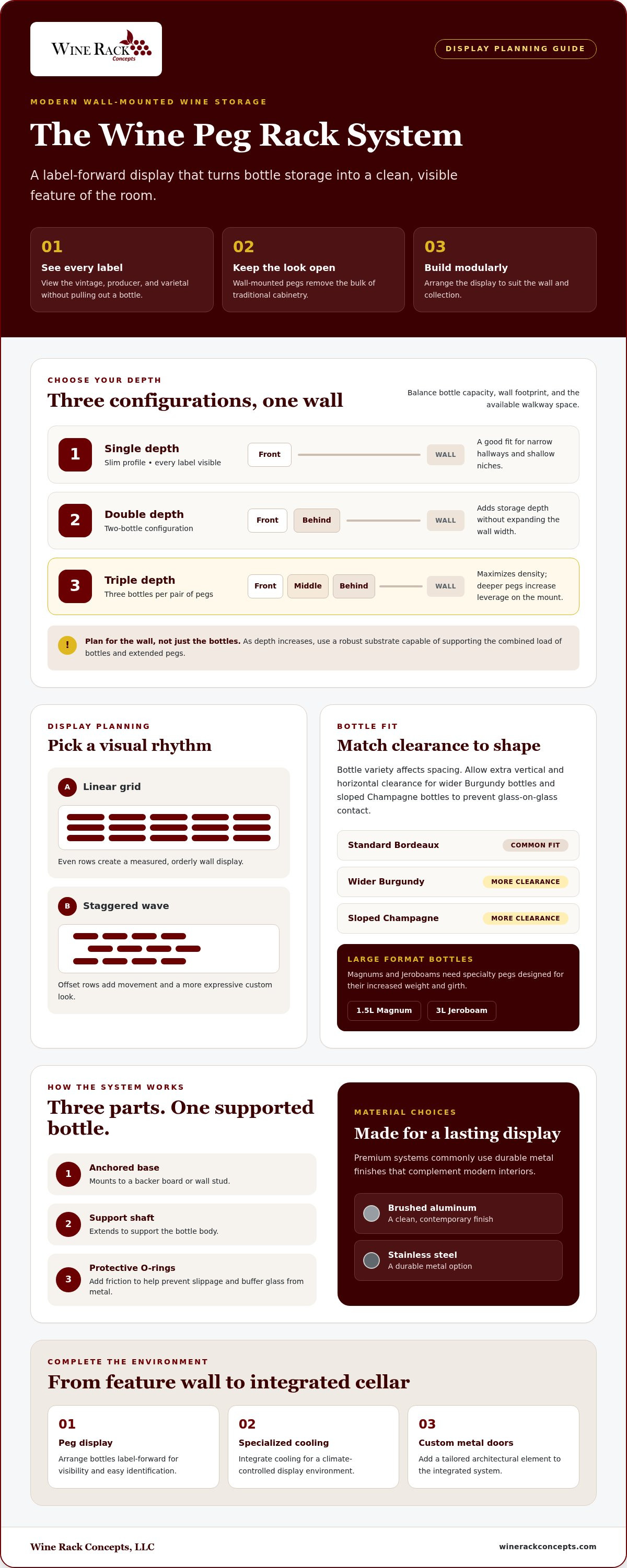
Choosing the right configuration for a wine peg rack system requires a balance between aesthetic goals and practical storage needs. The Wine Peg Series offers three distinct depth options: single, double, and triple bottle configurations. If you have a narrow hallway or a shallow niche, single-depth pegs provide a slim profile that keeps walkways clear while showcasing every label. For those with larger collections but limited wall width, double or triple depths allow you to stack bottles behind one another, significantly increasing your bottle count without expanding the footprint.
It's essential to consider the variety of your collection. While standard Bordeaux bottles fit most layouts, wider Burgundy or sloped Champagne bottles require slightly more vertical and horizontal clearance to prevent glass-on-glass contact. If your collection includes large-format bottles, specialty pegs designed for Magnums or Jeroboams are necessary. These reinforced components are engineered to handle the increased weight and girth, ensuring your 1.5L or 3L bottles remain as secure as a standard 750ml. As depth increases to triple-bottle configurations, the leverage on the mounting hardware also rises. This necessitates a robust substrate to ensure the wall can support the cumulative weight of the bottles and the extended pegs.
Single vs. Multi-Depth Pegs
Single-depth pegs are the ultimate choice for a gallery feel. They ensure that every vintage is visible, making them ideal for high-end residential kitchens or feature walls. Conversely, triple-depth pegs are the workhorses of the system. By holding three bottles per pair of pegs, they maximize density in compact cellars. You don't have to choose just one style; mixing depths can create a dynamic visual hierarchy. You might use single-depth pegs for your most prized labels and triple-depth configurations for your daily drinkers, adding texture and depth to the wall's overall design.
Material and Finish Selection
The finish you select defines the character of the space. Brushed aluminum is a versatile standard, offering a clean, contemporary look that complements almost any modern decor. If you prefer an industrial or moody aesthetic, black matte finishes provide a sophisticated contrast against lighter backer boards. For high-luxury environments, polished chrome or reflective finishes catch the light, emphasizing the floating effect of the bottles. Each finish is designed for durability, resisting the wear and tear of frequent bottle rotations. If you are unsure which configuration best suits your room's dimensions, you can utilize professional design services to visualize the final result before installation begins.
Creative Layout Examples for Modern Wine Wall Designs
A wine peg rack system provides the architectural bones for a truly custom display. Unlike rigid cabinetry, these components allow you to treat your wall like a canvas, adapting to the specific dimensions of your room. The most popular configuration is the Linear Grid. This layout relies on perfect symmetry to create a clean, organized appearance that's particularly effective in modern kitchens or dining areas. It aligns bottles in precise rows and columns, offering a sense of order that complements minimalist architecture.
If you prefer a more artistic approach, the Staggered Wave offers a compelling alternative. By offsetting the horizontal spacing of the pegs, you create a sense of movement that mimics the organic flow of wine. This layout breaks up the visual monotony of a flat wall and works exceptionally well when you have a large surface area to cover. For those dealing with restricted footprints, the High-Density Column is the preferred solution. This configuration maximizes the vertical height of narrow alcoves or converted closets, allowing you to store a significant number of bottles in a space that might otherwise go to waste.
Large feature walls often benefit from the Floating Island design. In this scenario, the peg display is centered on a prominent wall and often paired with integrated backlighting. This technique draws the eye toward the collection, making the bottles appear as though they are suspended in a glow of light. It's a sophisticated way to turn a functional storage area into the primary decorative element of a room.
Symmetrical vs. Asymmetrical Layouts
Choosing between symmetry and asymmetry depends largely on the atmosphere you want to create. Symmetrical designs offer a formal, disciplined look that's common in professional-grade cellars. They provide a sense of balance that feels stable and timeless. Conversely, asymmetrical layouts are ideal for irregular spaces, such as the area under a staircase. This organic flow allows the storage to follow the unique lines of your home's architecture. For more inspiration on how to plan these complex spaces, you can explore our guide on custom wine cellar design to see how luxury storage integrates into various floor plans.
Integrating with Fusion Wine Walls
For collectors who want to bridge the gap between classic and contemporary, integrating pegs with the Fusion series is an excellent choice. These systems combine the warmth of wooden backer boards with the sleek, industrial coolness of metal pegs. This mixed-media approach adds texture to the room and helps the wine wall feel like a built-in piece of furniture rather than just hardware. A significant benefit of this integration is the ease of installation. Because the backer boards often come with pre-calculated spacing, you don't have to worry about the complex math usually required for a wine peg rack system. It's a professional-grade result that simplifies the decision-making process for the homeowner.
Technical Specifications: Spacing, Mounting, and Structural Requirements
Every wine peg rack system relies on engineering precision to balance its minimalist look with long-term safety. If you don't get the spacing right, retrieving a bottle becomes a risky maneuver that could damage the glass or the label. For standard 750ml bottles, horizontal spacing typically requires 7 to 9 inches between peg pairs. Vertical gaps should maintain at least 4 inches of clearance. This ensures you have enough room for your hand to clear the bottle above while maintaining a tight, professional appearance. If you're storing Magnums, these measurements must increase to accommodate the larger diameter and weight of 1.5L bottles.
Consider the total load on your wall before beginning installation. A single full bottle of wine weighs approximately 3 pounds. If you plan a 100-bottle display, you're adding 300 pounds of static weight to a vertical surface. This doesn't include the weight of the hardware itself or the increased leverage exerted by triple-depth pegs. High-quality pegs are generally rated to support 3 to 5 pounds each, but that rating is only as good as the wall behind them. Without serious structural planning, the system can sag or pull away from the substrate, potentially leading to a catastrophic failure of the display.
Direct-to-stud mounting is the gold standard for security, but your design might not always align with standard 16-inch stud spacing. In these cases, you must install a structural substrate to bridge the gaps. Level installation is non-negotiable for both safety and visual alignment. Even a slight tilt is magnified across a large grid, creating a crooked appearance that ruins the "floating" aesthetic you've worked hard to achieve.
Wall Preparation and Backing
Drywall is a decorative finish, not a structural component. It simply cannot support multi-depth peg systems on its own. We recommend using 3/4-inch plywood or specialized high-density backer boards behind your finish material for maximum security. If your wall is part of a climate-controlled cellar, ensure your backing material is moisture-resistant. This prevents warping or structural degradation that can occur in high-humidity environments over time.
Step-by-Step Layout Planning
Precision starts with a laser level to mark your grid accurately before drilling a single hole. Drill pilot holes to ensure every peg sits perfectly perpendicular to the wall surface. If a peg is angled even slightly, the bottle may slide or rest unevenly on the O-rings. Once the hardware is secure, double-check that the protective O-rings are seated correctly. These rings provide the necessary friction to prevent bottle slippage while protecting the glass from metal contact.
Elevating the Aesthetic with Custom Integrated Systems
A high-end wine display is rarely a standalone feature; it's part of a broader architectural ecosystem. To truly elevate a wine peg rack system, you should consider how it interacts with the surrounding environment. Integrating your display with wine cellar cooling systems is a primary consideration for serious collectors. Because pegs allow for maximum airflow around each bottle, they're exceptionally efficient in climate-controlled spaces, helping your cooling unit maintain a consistent temperature without the obstruction of heavy cabinetry.
The visual impact of a floating collection is often framed by the entrance to the space. Using metal wine cellar doors creates a seamless transition between your living area and the cellar. This "jewelry box" effect allows guests to view the labels through expansive glass while the metal frames match the finish of your pegs. Lighting is the final layer of this aesthetic puzzle. Strategic use of LED strips hidden within backer boards or overhead spotlights can highlight the contours of the bottles, casting dramatic shadows that emphasize the minimalist design. If you're looking to update a traditional space, transitioning from wooden wine racks to metal peg sections creates a sophisticated, transitional look that respects classic materials while embracing modern lines.
The Role of Professional Design Services
Planning a complex wall layout involves more than just drilling holes. Leveraging free design services is a practical way to avoid spacing errors that could ruin the visual symmetry of your project. These services provide detailed 3D renders, allowing you to visualize how different peg finishes will look against your specific wall color and texture. You can experiment with finishes like matte black or brushed aluminum to ensure they match existing hardware in your home before you make a final purchase. It's a collaborative process that turns a vague vision into a professional installation plan.
Commercial Applications
In hospitality environments, a wine peg rack system serves as a functional, high-visibility wine list. Restaurants and wine bars use these displays to encourage bottle sales by putting their best vintages front and center for every guest to see. Because these areas experience high traffic, durability is a non-negotiable requirement. The metal components are engineered to withstand frequent handling by staff while maintaining their polished appearance. For business owners who need to balance style with strict building requirements, referencing our guide on wall mounted wine racks provides essential insights into commercial safety and structural integrity.
Transforming Your Vision into a Minimalist Masterpiece
A wine peg rack system is more than a storage solution; it's a design language that allows you to showcase your collection as functional art. By mastering the technical nuances of mounting and spacing, you can confidently create a display that's both secure and visually striking. Whether you prioritize the high-density efficiency of triple-depth configurations or the sleek symmetry of a linear grid, the versatility of the Wine Peg Series ensures your storage evolves with your collection. It's about finding that perfect balance between accessibility and aesthetic harmony.
High-quality components provide the premium durability required for heavy loads. While American-made components are available for those seeking domestic manufacturing, we also utilize globally sourced materials to ensure a wide variety of finishes and specific technical configurations. When you combine these modular pegs with professional cooling and strategic lighting, you don't just store wine; you curate an experience. Expert design support is always available to help you navigate complex layout math and structural planning, ensuring your vision translates into a professional-grade reality.
We look forward to acting as your partner in creating a space that reflects your pride of ownership. Your collection deserves a display that's as timeless as the vintages it holds.
Frequently Asked Questions
How much weight can a single wine peg hold?
Quality pegs are generally rated to support 3 to 5 pounds each when installed according to manufacturer specifications. Since a standard 750ml bottle weighs about 3 pounds, a pair of pegs easily handles the load. However, the true capacity depends on the structural integrity of the wall substrate. If you use multi-depth pegs, the increased leverage requires a reinforced backing like 3/4-inch plywood to ensure the system remains secure over time.
Can I install wine pegs directly into drywall?
Drywall alone isn't sufficient to support the weight of a wine peg rack system, especially for multi-depth configurations. While you can use anchors for light decorative purposes, most professional installations require mounting into wall studs or a structural substrate like plywood. This preparation prevents the hardware from sagging or pulling out of the wall under the heavy, static load of multiple bottles. Always prioritize structural backing to ensure long-term safety and stability.
Are wine peg systems compatible with Champagne bottles?
Yes, these systems are compatible with Champagne bottles, though you must account for their wider diameter during the planning phase. Standard spacing for Bordeaux bottles might be too narrow for the sloped shoulders and girth of sparkling wine or Burgundy bottles. If your collection includes many large-format bottles, we recommend increasing the horizontal and vertical gaps. This adjustment prevents glass-on-glass contact and allows for easy bottle retrieval without disturbing adjacent units in your display.
Do I need a professional to install a wine peg rack system?
While a skilled DIY enthusiast can install these systems, a professional ensures the precision required for a high-end look. Expert installers use laser levels to mark exact grids and possess the tools to properly reinforce wall substrates. If you're uncertain about the structural requirements or the math behind the layout, utilizing professional design services is a wise step. This ensures your wine peg rack system is perfectly level and structurally sound from the very first bottle.
How do I clean and maintain metal wine pegs?
Maintaining metal wine pegs is straightforward and requires only occasional attention. You should use a soft, lint-free cloth to wipe away dust and fingerprints from the aluminum or stainless steel surfaces. Avoid using abrasive chemicals or scouring pads that could scratch the finish. It's also important to periodically inspect the protective rubber O-rings. These rings provide the necessary friction to hold bottles securely, so replacing them if they become brittle ensures continued protection for your collection.
Can wine pegs be used in a climate-controlled cellar?
Metal wine pegs are ideal for climate-controlled cellars because they don't obstruct airflow. Their minimalist design allows cold air from your cooling unit to circulate freely around every bottle, maintaining consistent temperatures throughout the space. If you're installing them in a high-humidity environment, ensure your backer board and mounting hardware are moisture-resistant. This prevents warping or corrosion, allowing the system to remain a durable and beautiful fixture in your refrigerated space for many years.
What is the ideal spacing between wine pegs?
The ideal spacing depends on the bottle types in your collection and the desired visual density. For standard 750ml bottles, horizontal spacing is typically between 7 and 9 inches from center to center. Vertical spacing should maintain a gap of at least 4 inches to allow for comfortable hand clearance. If you plan to store Magnums, you'll need to expand these measurements. Precision is key, so using a laser level during the marking process is essential for a professional finish.
Can I mix different finishes of pegs on the same wall?
You can certainly mix different finishes to create a unique, custom aesthetic. Some designers use black matte pegs for the majority of a display while highlighting a "reserve" section with brushed aluminum or chrome. This approach adds visual texture and helps categorize your collection at a glance. If you choose to mix finishes, ensure the spacing remains consistent across the entire grid to maintain the professional, organized look that defines these sophisticated modern storage systems.
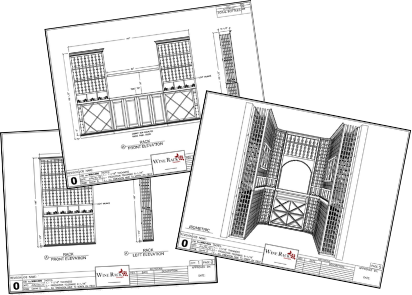
Have an expert help today!
Free 2D wine cellar design