Humidity Control for Wine Room: Protecting Corks and Labels

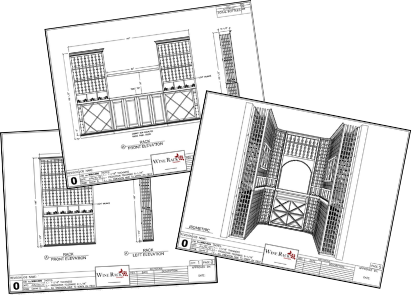
*Pictures are renderings. Actual wine racks may look different
A wine room can look pristine and still put corks and labels at risk. Aim for humidity control for a wine room in the range of 50% to 70% relative humidity, with steady conditions over time. Humidity levels that are too low or too high can affect corks, labels, and cellar materials.
Temperature often gets the attention, but humidity also matters to a collection and the room that houses it. Maintaining a suitable balance means understanding both ends: adding moisture when conditions are too dry and addressing excess moisture when readings stay high.
This guide explains how humidity affects corks, labels, and racking, what range to aim for, and how freestanding and integrated humidifiers differ. You'll also learn where to measure relative humidity and how to interpret readings, so you can make informed decisions about protecting your wine and the space around it.
Key Takeaways
- Aim for 50% to 70% relative humidity, and prioritize steady conditions over frequent swings.
- Learn how dry air can compromise cork seals, while excess moisture can affect labels, wood, and metal.
- Understand how vapor barriers, insulation, and a well-sealed cellar envelope influence humidity stability.
- Compare freestanding and integrated humidifiers to see which approach fits different cellar setups.
- Use a hygrometer and thoughtful placement to track readings and spot patterns before choosing a humidity adjustment.
Table of Contents
Why is humidity important in a wine cellar?
Humidity affects cork condition and cellar materials, while temperature and humidity together shape storage stability. A practical target is 50% to 70% relative humidity, with steady conditions and a long-term storage temperature of 55°F.
Cellar Envelope and Climate Conditions
A cellar envelope is the insulated, sealed boundary between the wine room and surrounding spaces. Vapor barriers, insulation, and sealed doors help limit unwanted moisture movement and temperature changes, making them central to stable cellar conditions.
Humidity swings of 20 percentage points or more can signal an envelope leak at a door, vapor barrier, or insulation. Repair water infiltration and leaks before relying on other humidity measures. Ventilate gently with clean, dry air, without creating a draught that disturbs the room's conditions.
A cooling system can remove moisture as it cools, but it can't raise humidity. Ordinary air conditioners may hold humidity at 30% to 40% while cooling, so a cellar that needs added moisture requires separate humidification. A dedicated wine cellar cooling system addresses cellar temperature and humidity as part of a purpose-designed environment.
High humidity can stem from water infiltration or another moisture source; low readings can reflect dry conditions or moisture removed during cooling. Room conditions and leaks in the cellar envelope can also affect readings, so monitor both temperature and humidity rather than treating a single reading as the whole picture.
Humidity Changes in Natural Cellars
A natural wine cellar relies on the building and its materials, rather than mechanical equipment alone, to shape humidity. In a natural cellar without a beaten-earth floor, gravel can be added and regularly sprinkled with water to adjust moisture. This makes the floor part of the room's humidity strategy.
Readings consistently below 50% may indicate the cellar would benefit from added moisture. A humidifier can raise humidity, while gravel in a suitable natural cellar offers another approach. Choose based on the room's construction and observed readings, not on a single short-lived change.
For sizing, room volume provides a useful starting point: freestanding humidifiers may suit cellars smaller than 500 cubic feet, while integrated humidifiers are suggested for spaces of 500 to 2000+ cubic feet or cellars connected to HVAC systems. The cellar's envelope and existing cooling setup also matter.
To reduce condensation and mold risk, fix leaks and water infiltration first, then avoid overshooting the 50% to 70% humidity range. If readings remain above 70%, look for a moisture source; gentle ventilation with clean, dry air can help without creating a draught.
Effects of low and high humidity on corks, labels, and racking
Humidity affects more than a cellar's appearance: it can influence cork seals, bottle labels, and racking materials. The effects depend on whether the air stays too dry or too damp over time.
Low Humidity and Cork Condition
Persistently low humidity may dry corks and compromise their seal, increasing the risk of wine exposure to oxygen. Below 50% relative humidity, corks may dry out, allowing wine to seep and oxygen to enter. Very dry conditions can cause corks to shrink and lose their seal, putting the bottle's contents and the collection at risk.
A sound cork helps limit oxygen exposure and supports slow aging. Think of it as a wine guardian: if the cork dries out and no longer seals properly, oxygen can enter and contribute to wine degradation. Bottles stored on their sides keep wine in contact with the cork, but that doesn't eliminate the risk of persistently dry cellar air.
Excess Moisture and Cellar Materials
Excess moisture creates a different set of concerns for labels, glue, and racking. Above 70% relative humidity, mold may develop on racking and label edges, while labels and adhesive can be damaged. Wood can become stained, and metal fittings may corrode or pit, affecting both the finish and function of cellar features.
Between 70% and 80%, wine itself can remain unharmed, while packaging may develop mold and metal may corrode. Above 80%, labels can be destroyed and persistent mold may develop on corks and labels. That distinction matters: a damp-looking label or affected rack doesn't necessarily mean the wine has been harmed.
Inspect the collection and surrounding materials together. Look for retracted corks, wine seepage, lifting label edges, mold on packaging, or changes to wood and metal. These signs can help distinguish dry-air effects from excess moisture, while a humidity reading shows whether room conditions may explain what you see.
Respond to patterns rather than one affected bottle. If labels show mold while corks remain intact, assess moisture around the racks and room materials. If corks appear dry and wine has seeped, consider whether low humidity has persisted. Stable conditions help protect both bottle seals and cellar finishes.
For collections displayed alongside custom racking, custom wine cellar design can bring storage layout and material choices into the planning conversation.
Ideal relative humidity for wine storage
A practical target for wine storage is 50% to 70% relative humidity, with a narrower aim of 65% and a tolerance of ±5%. These figures provide a useful reference when evaluating cellar conditions. Planning humidity control for wine room storage starts with understanding how readings compare with that range.
Humidity Levels for Bottle Storage
Relative humidity describes moisture in the air compared with the maximum moisture air can hold at its temperature. For a wine cellar, 50% to 70% RH is a commonly cited target range, while 60% to 70% RH is another typical storage range. A 65% RH target with ±5% tolerance sits within both ranges.
Recommendations can differ, so use one range consistently rather than switching targets after every reading. A cellar holding 62% RH steadily may provide more stable conditions than one averaging 60% while fluctuating between 45% and 75%. That distinction makes the pattern over time more useful than a single number.
For bottle storage, interpret the humidity level alongside the cellar's overall conditions. A reading near 65% RH fits the stated target, while repeated readings below 50% or above 70% fall outside the practical range. A brief change doesn't describe the room's usual environment; a pattern helps show whether conditions are stable.
Humidity's Role in Wine Storage
Humidity contributes to the conditions surrounding every bottle in storage. Steady relative humidity supports a consistent cellar environment, while large swings can signal changing room conditions. Pair humidity readings with temperature observations to see whether the wine storage environment remains steady.
Use a simple comparison when reviewing readings: record humidity at the same location and note how it changes. For example, a cellar that stays close to 62% RH presents a different pattern from one moving between 45% and 75%, even if their averages appear similar. Consistency gives each reading context.
Keep the target clear. Use 50% to 70% RH as the broad range, with 65% RH and ±5% as a focused benchmark. If readings repeatedly sit near either edge, review the trend rather than adjusting the room based on one measurement. For humidity control for wine room conditions, prioritize consistency over chasing small fluctuations.
Different wine-storage recommendations may use different ranges, so avoid treating every published figure as interchangeable. The 50% to 70% range and 65% target provide a practical basis for comparing cellar readings. Note relative humidity alongside temperature, then assess whether both remain steady over time as part of humidity control for wine room storage.
Freestanding and integrated humidifier types
Wine cellar humidifiers add moisture when cooling or dry surroundings leave relative humidity below the desired range. The choice between freestanding and integrated equipment depends on cellar volume, the existing cooling arrangement, and how moisture will be supplied.
Freestanding humidifiers
A freestanding humidifier operates as a separate appliance within the cellar. It can suit a smaller space, particularly one below 500 cubic feet, where a dedicated integrated system may be unnecessary. Its independent placement can make it easier to add humidification to an existing room without changing the cooling equipment.
Plan for hands-on upkeep. Freestanding wine-storage humidifiers typically need refilling every 1-2 weeks, depending on usage and cellar size. Place the unit on a flat surface near an air intake or ventilation point, not directly beside stored bottles. That position helps moisture enter the room's airflow without concentrating it next to the collection.
Ultrasonic models are one option, but water quality can affect how they operate. Some users report that these models may not last without reverse-osmosis water. Follow the equipment's water requirements and watch for mineral deposits, which can affect consistent output. A humidifier should adjust the room gradually rather than create a localized damp spot.
Integrated humidifiers
An integrated humidifier connects with cellar cooling equipment, coordinating moisture addition with the room's climate system. This approach may fit larger cellars of 500-2000+ cubic feet or rooms connected to HVAC. Some integrated units connect to a direct water line and refill automatically, reducing the manual refilling associated with freestanding equipment.
Controls can respond to a humidity set point: a built-in humidifier switches on when cellar humidity falls below that point and switches off once it is reached. This automatic cycle can help maintain more consistent relative humidity. The cooling system itself removes moisture while cooling, so humidification and cooling perform different functions.
Compare the practical demands before choosing. A freestanding unit needs a suitable location, reservoir refills, and access for cleaning. An integrated unit must be compatible with the cellar's cooling arrangement and may require a water connection. Cellar volume, water access, airflow, and the readings you want to maintain all inform the choice.
Maintenance remains important for either setup. Inspect a wine cellar humidifier monthly for mineral buildup, mold, or a clogged water line. Clean or replace drip pads every 3-6 months, especially with hard water, and arrange annual inspection and service for humidifiers, particularly integrated units. Regular upkeep helps the equipment deliver moisture as intended.
Humidity measurement and reading placement
A hygrometer measures relative humidity on a scale from 0% to 100%. For wine storage, compare its readings with the ideal humidity range of 50% to 70%, rather than treating one display reading as a complete picture. The instrument shows moisture at its location, so placement and repeated observations both matter.
Choose a representative spot near the stored bottles, away from a humidifier's direct output, an exterior door, or a cooling-air discharge. Nearby conditions can produce readings that differ from the cellar's overall environment. If the room has distinct zones, take a reading in each, such as near the entrance and farther inside, and note where each measurement came from.
Log humidity for a week before deciding whether to add a humidifier. Record the date, time, relative humidity, and temperature with each measurement. Keep the hygrometer in the same location for your main record, then take separate readings elsewhere if investigating a suspected difference. A written log helps distinguish a sustained pattern from a temporary change after opening the door.
Use the log to assess both level and stability. For example, repeated readings below 50% suggest a different concern from a cellar that stays within the 50% to 70% range. A sustained reading above 70% also deserves attention. Compare observations across the week before adjusting equipment, since a single low or high number doesn't show whether the condition persists.
For a larger cellar, compare readings from the warmest and coolest areas rather than relying on a single central point. One reported wine room measured 47% in its warmest area and 50% in its coolest area, illustrating how location can change the result. Mark each measurement point on a simple room sketch; this makes repeated checks easier to compare and can reveal a consistent zone difference.
Read the hygrometer alongside visible conditions, not instead of them. If a display rises while a nearby wall feels damp, note both details and inspect for a moisture source. If readings fall after cooling begins, record the timing and temperature. These paired observations help explain whether a change relates to airflow, room location, or cooling activity.
Keep your measurement routine consistent: use the same instrument and main position, and log readings for a week. This gives you a clearer basis for deciding whether to adjust humidity or investigate uneven cellar conditions.
Wine Rack Concepts: Wine Cellar Cooling
Wine Rack Concepts, LLC offers Wine Cellar Cooling for spaces that need a dedicated approach to temperature management. If humidity readings stay outside your target range or cooling equipment affects moisture levels, consider the cellar's design and climate-control setup together.
For a new cellar or substantial redesign, Wine Rack Concepts, LLC also offers Custom Wine Cellar solutions. Planning the room and cooling system together can account for your collection, available space, and storage layout. A Wall Wine Rack Series or Classic Series can also be part of the storage plan.
If you're planning a cellar or reassessing its cooling needs, contact Wine Rack Concepts, LLC to discuss your project.
Shape a cellar that grows with your collection
A wine room is part of how you enjoy and care for a collection, not simply a place to store bottles. As your collection or display priorities change, revisit how the room's layout and climate strategy work together. Thoughtful humidity control for a wine room can help you plan for the space as it is now and how you want to use it next.
Wine Rack Concepts, LLC offers Wine Racks, Wine Cellar Cooling, and Custom Wine Cellar solutions. These offerings support planning that treats bottle storage, room design, and climate-control needs as connected decisions.
If you're ready to explore a wine room project, start a conversation about your design.
A well-planned space can make your collection a pleasure to keep and share.
Frequently Asked Questions
How Does Humidity Affect Wine Bottles?
Humidity can affect a bottle's cork and label, even when the wine remains untouched. Prolonged dry conditions can weaken cork contact, while damp air may encourage mold or loosen label adhesive. During a cellar check, compare the hygrometer reading with visible signs, such as a retracted cork or curling label. These observations help identify which bottles and storage areas need closer attention.
How often do I need to refill the humidifier?
A freestanding wine-storage humidifier typically needs refilling every 1-2 weeks, depending on use and cellar size. Check its reservoir regularly, since the actual interval changes with how much moisture the room needs. Integrated humidifiers connected to a direct water line refill automatically, so they don't follow the same manual refill routine. Include water supply and upkeep in your choice of equipment.
How to ensure optimal humidity for your wine?
Use a hygrometer and keep a record of humidity and temperature readings for a week before changing equipment settings. Measure from the same representative location each time, then note unusual readings or visible moisture nearby. Compare the pattern with the 50% to 70% relative humidity target. This approach helps distinguish a persistent condition from a brief change after opening the cellar door.
What Is a Moisture Absorber?
A moisture absorber is a passive product that draws excess water vapor from the air using salt crystals or mineral salts. Unlike an electric dehumidifier, it needs no power and produces no operating noise or vibration. It can absorb moisture, but it won't add humidity when a cellar is too dry. Consider this difference when choosing equipment for the room's specific conditions.
What Is an Air Dehumidifier?
An air dehumidifier removes moisture from indoor air to lower relative humidity. In a wine cellar, this is useful when readings stay too high, but the cause of excess moisture still matters. A cooling unit also removes moisture as it cools, though it can't raise humidity. Consider these different functions when assessing equipment and the room's climate-control setup.
What Is the Best Solution to Dehumidify a Wine Cellar?
The right response depends on why the cellar is damp. Fix leaks and water infiltration first, then address sustained humidity above 75% with dehumidification. Gentle ventilation with clean, dry air can support the room, but avoid creating a draught. If cooling equipment is already running, remember that cooling also removes moisture. Track readings after addressing the moisture source to understand whether conditions are changing.
What Other Factors Are Linked to Humidity?
Temperature, cooling equipment, and the cellar envelope all relate to humidity readings. A cooling unit removes moisture as it lowers temperature, while a leak around a door, insulation, or vapor barrier can contribute to changing conditions. Record temperature alongside relative humidity, and note whether readings change after cooling starts. This comparison can help explain patterns that a humidity reading alone doesn't show.
What is the ideal humidity range for a wine room?
A practical target for a wine room is 50% to 70% relative humidity. Some storage guidance uses 60% to 70%, while a 65% target with a tolerance of ±5% fits within the broader range. Prioritize a consistent pattern rather than reacting to one isolated measurement. Keep humidity records beside temperature readings to assess how the cellar performs over time.
Have an expert help today!
Free 2D wine cellar design