How to Secure Your Wine Collection: A Practical Guide

*Pictures are renderings. Actual wine racks may look different
Knowing how to secure a wine collection means looking beyond a cellar door or lock. A useful plan accounts for storage conditions, access, handling, and records, so you can protect bottle condition and keep track of what you own. Start by identifying the risks in your current setup, then address the ones most likely to affect your collection.
Temperature changes, excess light, accidental damage, and incomplete records can all complicate collection care. A coordinated approach makes these concerns easier to manage. This guide explains how to assess your storage, choose an arrangement that suits your space, maintain an inventory, and reduce preventable risks.
Whether your bottles are in a dedicated cellar or a smaller home storage area, the goal is the same: make bottles easy to locate and handle, maintain appropriate conditions, and set clear boundaries around access. Planned racking, room design, cooling, and documentation each play a part.
Key Takeaways
- Start by assessing your collection, its current storage, who can access it, and its exposure to changing conditions.
- Learn how to secure a wine collection with coordinated storage, climate oversight, access control, and useful records.
- Compare cellars, enclosed rooms, wine refrigerators, and open displays by how they support access, visibility, and organization.
- Build an inventory that captures bottle details, purchase information, and provenance when available, then update it as your collection changes.
- See how planned racking, room design, and cooling options can work together to support orderly, long-term storage.
How to Secure a Wine Collection: Start by Identifying What Needs Protection
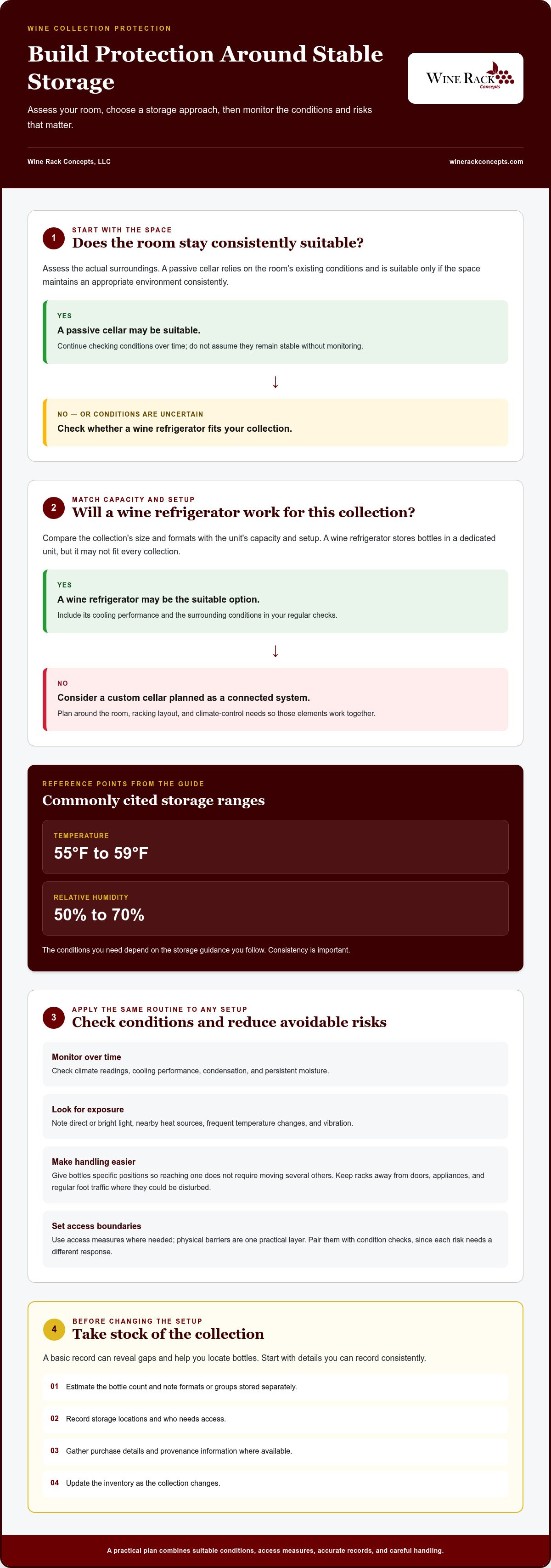
Protecting wine takes more than a lock. A practical plan combines suitable storage conditions, physical access measures, accurate records, and careful handling. The right priorities depend on what you own and where you keep it. A small group of bottles in a wine refrigerator has different needs from a larger collection spread across several rooms.
First, separate risks to bottle condition from risks of loss or disorganization. Temperature changes, unsuitable humidity, and light can affect storage over time. A dropped bottle or unauthorized access can cause immediate loss or damage, while an incomplete inventory can make it difficult to locate a bottle or document what you own. Assessing both types of risk helps you focus on the most useful improvements.
For a broader look at wine storage and the role of cellar conditions, see this overview of how wine can be properly stored.
For a closer look at collecting and organizing wine, watch this video:
Which risks can affect a wine collection at home?
Some storage problems develop gradually. Repeated temperature fluctuations, excessive light, or unsuitable humidity can undermine storage conditions over time. The effect depends on the room and the collection's needs. Other risks are immediate: a bottle can be knocked over, or someone can access the collection without permission. Vibration and clutter can also make bottles harder to handle safely. Assess the actual surroundings rather than relying on a generic checklist.
How to take stock before choosing security measures
Make a baseline record before investing in changes. Estimate the bottle count, note formats and storage locations, and gather purchase details and provenance information where available. A complete inventory can take time, so start with the details you can record consistently. Even a basic record can reveal where your current system has gaps.
- How many bottles do you have, and are any formats or groups stored separately?
- How often is the collection accessed, and who needs access?
- What climate-control equipment is in place, and are there noticeable changes in room conditions?
- Do direct or bright light sources reach the bottles? Are shelves exposed to bumps, clutter, or frequent movement?
- Could you identify a bottle or locate its purchase details in your current records?
Use your answers to rank priorities. Address clear storage concerns first, define access boundaries where needed, and fill the most important recordkeeping gaps. If bottles are spread across several locations or the space no longer suits the collection, custom wine storage solutions can bring racking, room planning, and cooling considerations together.
Build Reliable Wine Collection Protection Around Stable Storage Conditions
Protective wine storage means maintaining appropriate, consistent conditions while limiting exposure to light and physical disturbance. Commonly cited ranges are 55°F to 59°F for temperature and 50% to 70% relative humidity. The conditions you need depend on the storage guidance you follow, but consistency is important. Avoid placing bottles where outdoor weather, heating, or everyday room use causes frequent swings.
Choose a monitoring routine, not just a storage location. Check climate readings over time, watch for changes in cooling performance, and look for condensation or persistent moisture. Note direct light, nearby heat sources, and anything that could shake or knock the bottles. If you need dedicated climate control, include wine cellar cooling in the overall storage plan rather than treating it as a separate afterthought.
Compare a passive cellar, wine refrigerator, and custom wine cellar
A passive cellar relies on the room's existing conditions, so it is suitable only if the space maintains an appropriate environment consistently. A wine refrigerator contains bottles in a dedicated unit, but its capacity and setup may not fit every collection. A custom cellar is planned around the room, racking layout, and climate-control needs, allowing those elements to work together. Compare the collection's size and formats with the space and conditions available before choosing.
Reduce exposure to light, vibration, and avoidable temperature changes
Keep bottles away from direct light and locations with frequent temperature changes. Assign bottles to specific positions so you do not have to move several wines to reach one at the back. Handle bottles deliberately, and avoid placing racks where doors, appliances, or regular foot traffic can disturb them. Check cooling equipment and room conditions as part of your routine rather than assuming the system is working as intended because it is switched on.
Climate protection is only one layer. Access boundaries can help limit who reaches the collection; InVintory also discusses physical barriers as a practical security measure. Pair access controls with checks for stable conditions, light exposure, and moisture, since each calls for a different response.
If you are planning a dedicated storage space, a wine cellar design resource can help you think through how the room, racking, and cooling should work together. A well-considered setup makes it easier to maintain conditions and retrieve bottles without unnecessary movement.
Compare Physical Security Measures for Different Wine Collection Setups
The right security arrangement should fit your collection and the way you use your home. A dedicated cellar can bring storage and access into one planned space. A refrigerator or open display may be more suitable for a smaller selection that you reach often. Compare how each setup handles access, visibility, and environmental oversight before deciding how to secure a wine collection.
| Storage setup | Access control | Visibility | Environmental oversight | Inventory ease |
|---|---|---|---|---|
| Dedicated cellar | A separate entrance can help define who enters. | Can be designed for display or discreet storage. | Room planning can coordinate storage and cooling. | Organized racking can make bottle locations easier to track. |
| Enclosed room | A door creates a clear boundary for access. | Contents are less exposed to shared living areas. | Conditions depend on the room and any cooling equipment. | Purposeful shelving can support orderly records. |
| Wine refrigerator | Contained storage keeps bottles together; access depends on placement and use. | Bottles may be visible through the door or less exposed, depending on the unit. | Provides a contained environment; monitor its operation. | Works best when capacity and bottle formats suit the collection. |
| Open display storage | Usually shares access with the surrounding room. | Bottles remain on view. | Room conditions directly affect storage. | Visible placement can help identify bottles, though records still matter. |
Match the setup to the space and collection
A dedicated cellar is worth considering when the collection needs coordinated racking and climate-control planning. An enclosed room creates a distinct storage boundary, which can be useful when household members or guests use nearby spaces. A wine refrigerator offers contained storage if its capacity and bottle formats match your collection. Open display keeps bottles accessible, but provides less separation from activity and changing conditions in the room.
These options are not interchangeable. Compare collection size, room layout, environmental oversight, and who needs routine access. Planned wine racks and cellar design can coordinate bottle placement with access and climate-control considerations.
Keep access practical and handling deliberate
Limit access to people who need it, then make the storage routine easy to follow. Return each bottle to its assigned place, update records when the collection changes, and keep pathways clear. Clear access helps you retrieve a bottle without knocking nearby racks or repeatedly shifting other wines.
Cameras may document activity, but they do not replace controlled access or appropriate storage conditions. Treat security as good stewardship, not a barrier to enjoying the collection. A thoughtful setup makes it easier to see what is on hand, handle bottles carefully, and maintain reasonable boundaries without complicating everyday use.
Create a Wine Inventory and a Repeatable Collection-Protection Routine
A useful inventory links each bottle's details to its storage location. It can help you notice what is missing, find a wine without unnecessary handling, and keep purchase or provenance records together. Make the process simple enough to maintain as bottles come and go. That repeatable recordkeeping is an important part of how to secure a wine collection.
Build the inventory in manageable steps
- Record each bottle. Capture the producer, wine, vintage, bottle format, and quantity. If you have several bottles of the same wine, record the number clearly.
- Add supporting details. Note the purchase date and source, receipt or other documentation, provenance when available, and any visible condition concerns. Keep estimates distinct from documented purchase details; an informal value note is not a formal appraisal or a guaranteed market value.
- Assign a storage location. Use a consistent system, such as room, rack, and position, so each entry points to a specific place. Purposeful wooden wine racks can support orderly placement and make bottle identification easier.
- Keep records accessible and protected. A spreadsheet or collection app can make information searchable. Back up digital records and keep a copy separate from the bottles, so the inventory remains available if the storage area or device is inaccessible.
- Review and update. Choose a review rhythm that suits how often you access the collection and how complex its storage is. Update records after purchases, gifts, openings, transfers, or observed damage.
Make details consistent and reviews useful
Use the same naming conventions and date format throughout. Enter producers and wine names consistently rather than switching between abbreviations and full names. Include the storage location, and keep receipts, provenance information, and condition notes with the relevant record where possible. Consistent entries are easier to search and compare later.
Pair each inventory review with a brief look around the storage area. Check that bottles remain in their assigned places, note visible changes, and observe whether climate-control equipment appears to be operating as expected. Record notable changes with the date and a factual description, such as a bottle moved to another rack or visible moisture near the storage area. This creates a useful history without turning routine notes into unsupported conclusions.
Keep the system proportional to the collection. A smaller collection may need only a straightforward record and occasional updates; a larger collection spread across locations benefits from more precise location labels and a reliable backup. The aim is not perfect paperwork. It is a clear, repeatable record of what you own and where it is stored.
Plan a Wine Cellar That Supports Long-Term Collection Security
A well-planned cellar brings several protective layers into one environment: suitable storage conditions, orderly bottle placement, controlled access, and room for inventory and regular checks. Not every collection needs a custom project. Choose an arrangement that reflects what you own, how you use it, and the space available. Coordinating these factors is central to how to secure a wine collection over time.
Racking, room layout, and cooling options work best when considered together. Organized racks can make bottles easier to identify and retrieve. Thoughtful room planning can keep pathways clear and account for access and equipment. If you are considering an integrated storage environment, custom wine cellar design can bring these needs into a single plan.
What to include in a wine cellar design brief
Before planning a dedicated space, write down the details that will shape the layout. A concise brief connects storage requirements with daily use, rather than treating each decision in isolation.
- Collection: Approximate bottle count, formats, storage priorities, and anticipated growth.
- Space: The available room and any features that affect how bottles, racks, or equipment can be arranged.
- Use and display: Which wines should be easy to see or reach, and how often you or others access the collection.
- Conditions: Climate-control considerations, existing equipment, and the conditions you want the space to maintain.
- Routine: How you will locate bottles, update inventory, inspect the space, and reach equipment for maintenance.
These notes help shape a custom wine cellar around the collection's organization and access needs.
When a purpose-designed storage system makes sense
If separate racks and cooling equipment are becoming difficult to organize, a coordinated design can help make better use of the available space. Rack layout can support bottle identification and straightforward access, while room planning considers how storage, climate control, and movement through the space fit together. For a smaller collection with suitable existing storage, a simpler arrangement may be enough. Let the collection's needs guide the decision.
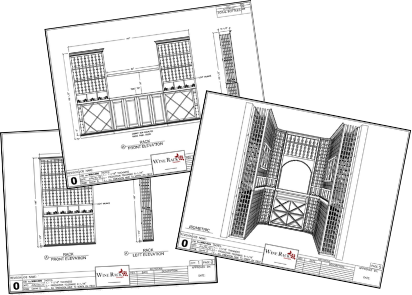
Once you have assessed the space and priorities, you can start a free wine cellar design with a clearer picture of how storage, access, and ongoing care should work together.
Build a Protection Plan That Grows With Your Collection
A thoughtful approach to how to secure a wine collection starts with understanding what you own and where vulnerabilities may lie. Stable storage conditions, practical access boundaries, careful handling, and a current inventory each contribute to a more complete plan. Together, these habits help protect bottle condition while making it easier to locate and account for your wines.
If your current setup no longer fits the collection, coordinated racks, room planning, and cooling can support more orderly storage. Wine Rack Concepts, LLC designs and manufactures custom wine cellars and wine racks, with wine cellar cooling options for residential and commercial storage. The right arrangement depends on your collection, available space, and how you use it.
With a clear plan and a routine you can maintain, protecting your collection can feel like a natural part of enjoying and curating it.
Frequently Asked Questions
How can I secure a wine collection at home?
Combine suitable storage conditions, controlled access, careful handling, and an inventory you keep current. Start by checking where bottles are stored, who can reach them, and whether the space is exposed to changing temperatures, direct light, moisture, or physical knocks. Use organized racking to make bottles easier to locate, and update records after purchases, openings, or moves. The right steps depend on your collection and home.
What is the safest way to store a valuable wine collection?
Store valuable wine in a stable environment with limited light and physical disturbance, and choose a setup that suits the collection's size and bottle formats. Commonly cited cellar guidance places ideal temperature around 55°F to 59°F and relative humidity between 50% and 70%; consistency is especially important. Monitor conditions over time, and keep an accurate inventory with purchase and provenance details where available.
Should I keep a wine inventory for insurance purposes?
Yes. An inventory helps document what you own and may be useful if you need to discuss a loss or damage under your policy. Record the producer, wine, vintage, format, quantity, purchase details, provenance when available, and storage location. Keep receipts and supporting records, back up digital files, and store a copy separately from the bottles. Review your policy documents to understand what coverage and documentation it requires.
Can a wine cellar protect bottles from theft and damage?
A cellar can support protection by bringing storage, access, and room planning together, but it cannot guarantee that bottles will not be stolen or damaged. A separate door can define access, while organized racks and clear pathways help reduce unnecessary handling. Climate control can support stable conditions when suited to the space. Pair these design choices with an inventory and routine checks; each addresses a different part of collection care.
Do I need a wine cellar cooling system to protect my collection?
Not necessarily. Whether you need dedicated cooling depends on the room's ability to maintain appropriate, stable conditions and on your collection's storage needs. A passive space may be suitable if its environment remains consistent, while other rooms may need a cooling option designed for wine storage. Monitor conditions over time, and consider the room, collection size, and storage arrangement together before deciding on equipment.
How should I document the value and provenance of my wine?
Keep purchase receipts, seller or source details, dates, provenance records, and clear bottle descriptions alongside your inventory. Include producer, wine name, vintage, format, quantity, and storage location; add factual condition notes when useful. If you record estimated values, label them as estimates and retain the basis and date. Do not present an informal estimate as a formal appraisal or guaranteed market value. Back up records and keep copies apart from the collection.
How can I transport a wine collection safely?
Plan the move to limit temperature extremes, direct sunlight, vibration, and unnecessary handling. Use packaging that supports and separates bottles, secure cases so they cannot shift, and have the route and destination ready before moving the collection. Track which bottles are in each container and update their storage locations after arrival. Handle bottles carefully, then let the new storage environment stabilize before returning them to their planned positions.
Have an expert help today!
Free 2D wine cellar design