How to Maintain a Wine Cellar Cooling Unit for Peak Performance

*Pictures are renderings. Actual wine racks may look different
What if the very system meant to protect your vintage collection is actually the primary threat to its longevity? You've likely invested significant resources into curating a selection of fine wines, and you understand that precise climate control is the heart of any proper cellar. It's common to feel a sense of unease when high energy bills or unexpected humidity spikes suggest your equipment is struggling. If you notice a slight increase in noise or a subtle shift in temperature, it's often the first sign that your storage environment is losing its vital balance.
Learning how to maintain a wine cellar cooling unit is the most effective way to prevent catastrophic failures and ensure your bottles age exactly as the winemaker intended. This guide provides a clear path to preserving your system through proactive steps and proper environmental controls. We'll cover a practical maintenance schedule, clarify when it's time to involve a professional specialist, and share methods to reduce the daily workload on your cooling unit. By the end, you'll have the knowledge to protect both your investment and the structural integrity of your cellar space.
Key Takeaways
- Understand why standard HVAC systems fail where specialized wine cellar cooling units succeed in maintaining the delicate 55-58°F temperature range.
- Discover the specific monthly and annual steps for how to maintain a wine cellar cooling unit to ensure consistent performance and longevity.
- Learn how a properly installed vapor barrier and insulation act as armor, reducing the mechanical strain on your cooling system.
- Identify how to optimize airflow around high-density racking, such as the Vintner Series, to prevent common cooling obstructions.
- Explore long-term strategies, including backup power solutions, to protect your collection during unexpected utility interruptions.
The Fundamentals of Wine Cellar Climate Control
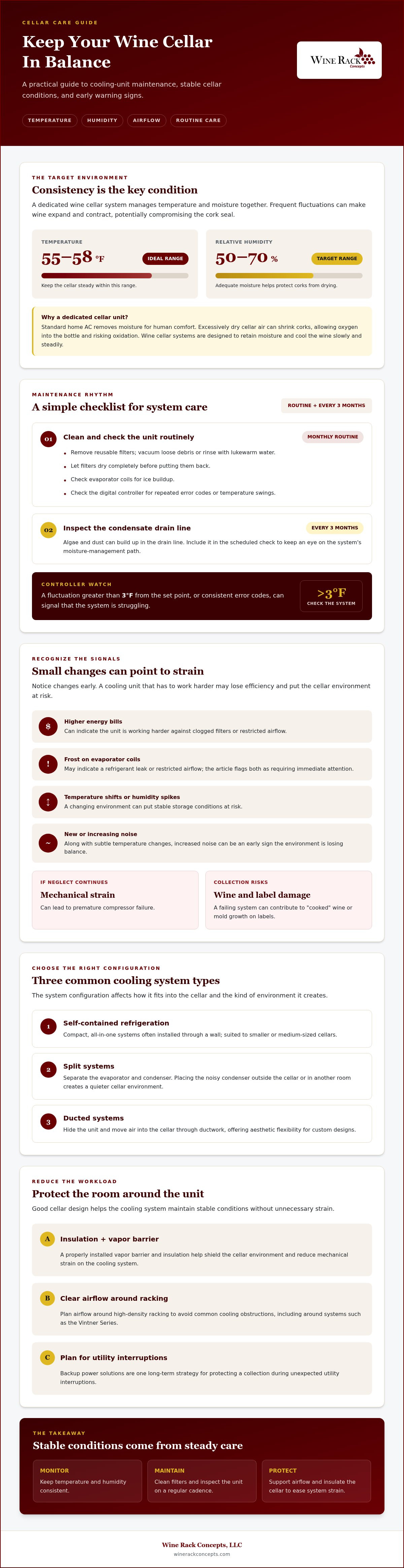
A wine cellar is more than a room with racks; it is a living ecosystem designed to protect a liquid investment. While many people think of cooling as a simple matter of temperature, a dedicated wine cellar cooling unit serves a much more complex purpose than a standard residential air conditioner. It acts as the heart of your storage space, regulating the delicate balance required for aging. To achieve peak results, your cellar should ideally remain between 55-58°F with a relative humidity level of 50-70%. While these numbers are the industry benchmark, consistency is actually the most critical factor. Frequent fluctuations cause the wine to expand and contract within the bottle, which can eventually compromise the seal of the cork. Understanding these basics is the first step in learning how to maintain a wine cellar cooling unit for the long term.
The type of system you choose dictates your maintenance approach and how the unit interacts with your space. You will typically encounter three main configurations:
- Self-Contained Refrigeration Units: These are compact, all-in-one systems often installed through a wall, making them ideal for smaller or medium-sized cellars.
- Split Systems: These separate the evaporator from the condenser. By placing the noisy condenser outside or in a different room, you create a quieter environment for your collection.
- Ducted Systems: These offer the most aesthetic flexibility by hiding the unit entirely and using ductwork to move air into the cellar, which is perfect for high-end custom designs.
Why Standard Air Conditioning Isn't Enough
Standard home AC units are designed to remove moisture from the air to keep humans comfortable. In a wine cellar, this humidity stripping is a disaster. If the air becomes too dry, corks can shrink and allow oxygen to enter the bottle, leading to oxidation. Specialized cooling units are engineered to maintain moisture while cooling the thermal mass of the wine slowly and steadily. Unlike a bedroom that needs to cool down in minutes, a cellar requires a gentle, constant approach to manage the liquid's temperature without shocking the vintage. This specialized design is why understanding how to maintain a wine cellar cooling unit is so different from standard home appliance care.
The Cost of Neglecting Maintenance
If you overlook routine care, the consequences extend far beyond a broken machine. High energy bills often signal that a unit is working too hard to overcome clogged filters or restricted airflow. Over time, this mechanical strain leads to premature compressor failure. Even worse, a failing system can lead to "cooked" wine or mold growth on labels due to poor humidity control. Proactive care prevents these expensive setbacks and ensures your collection remains pristine. If you suspect your current setup is struggling, it may be time to contact our design team for a cellar audit to evaluate your total environment.
A Comprehensive Wine Cellar Cooling Unit Maintenance Checklist
A structured approach to equipment care ensures your system breathes easily and operates at peak efficiency. While the cooling unit is a robust piece of machinery, it relies on a specific cadence of attention to prevent the mechanical fatigue that leads to failure. Establishing a routine doesn't just save money on repairs; it provides the peace of mind that your collection remains in a stable environment. Understanding how to maintain a wine cellar cooling unit involves looking beyond the digital display and inspecting the physical components that handle the heat exchange and moisture management.
Monthly and Quarterly Tasks for Homeowners
Your primary defense against system strain is a clean intake. If you notice a film of dust on the unit, it's likely that the internal filters are also restricted. For most systems, you should slide out the reusable filters and vacuum away loose debris or rinse them with lukewarm water. Ensure they are completely dry before sliding them back into place. During this time, check the evaporator coils for any signs of ice buildup. Frost on the coils often indicates a refrigerant leak or restricted airflow, both of which require immediate attention. Finally, glance at your digital controller. If you see consistent error codes or fluctuations greater than three degrees from your set point, it's a signal that the system is struggling to keep up with the heat load.
Beyond the filters, you should inspect the condensate drain line every three months. Algae and dust can create a sludge that blocks this line, leading to water backups and potential mold growth within the cellar walls. A quick visual check ensures the line is clear and draining freely. You should also verify that the vibration pads under the unit remain intact. These pads prevent the unit from shifting and keep the operation quiet, which is essential for maintaining the serene atmosphere of a luxury cellar.
Annual Deep Cleaning and Inspection
Once a year, your cooling system requires a more thorough evaluation to address wear and tear that isn't visible during monthly checks. This includes cleaning the drain pan with a mild antimicrobial solution to prevent bacterial growth. You should also inspect the evaporator and condenser coils for any bent fins or deep-seated dirt. If the coils are dirty, the unit cannot shed heat effectively, which forces the compressor to run longer cycles and increases your energy bills.
Electrical safety is equally important. Inspect all visible wiring and connections for signs of wear, brittleness, or corrosion. For through-wall self-contained refrigeration units, check the integrity of the wall seal. If the caulking or gasket has degraded, warm air will leak into the cellar, creating a constant battle for your cooling unit. If these tasks feel outside your comfort zone, you can speak with a specialist to schedule a professional audit of your cellar’s mechanical health.
The Role of Wine Cellar Insulation and Vapor Barrier in System Longevity
Your cooling unit is a precision instrument, but its performance is dictated by the room's structural integrity. Think of the cellar envelope as the armor that shields your mechanical system from the outside environment. If the walls are poorly insulated or the vapor barrier is missing, the unit must work overtime to combat heat gain and moisture infiltration. This constant operation often leads to short cycling, where the compressor turns on and off too frequently. This behavior is a primary cause of mechanical fatigue. When you consider how to maintain a wine cellar cooling unit, you must view the room and the machine as a single, integrated system rather than isolated parts.
Understanding Vapor Barrier Placement
A vapor barrier's primary job is to prevent warm, moist air from reaching the cool surfaces of your cellar walls. For optimal protection, this barrier must be installed on the warm side of the insulation. If it's placed incorrectly, condensation can form inside the wall cavity, leading to hidden mold growth and structural decay. This moisture also creates ghost humidity issues. Your cooling unit will detect high moisture levels and run constantly to remove them, even if the air inside the cellar feels correct. This unnecessary strain significantly shortens the lifespan of the evaporator and compressor components.
High-Performance Insulation Standards
Choosing the right materials is essential for long-term efficiency. Closed-cell spray foam is often the preferred choice because it acts as both insulation and a vapor barrier in one application. If you prefer rigid board insulation, you must ensure all seams are taped and sealed to maintain an airtight environment. Generally, interior walls require a minimum of R-13 insulation, while exterior walls facing the sun may need R-19 or higher to maintain stability. For a deeper look at these technical requirements, our Custom Wine Cellar Design guide offers a comprehensive breakdown of structural standards.
The final piece of the envelope is the entryway. Metal wine cellar doors provide superior durability because they don't warp or expand like wood can in high-humidity environments. When paired with high-quality weather stripping, these doors create an airtight seal that keeps the cold air in and the mechanical workload down. Maintaining this seal is a vital part of how to maintain a wine cellar cooling unit because it prevents the unit from fighting a losing battle against outside air. If your unit seems to be running without a break, it might be time to contact our design team for a cellar audit to identify where your envelope might be failing.
Troubleshooting Performance Issues and Airflow Obstructions
Even with a perfect maintenance schedule, physical obstructions can cripple your system's efficiency. Restricted airflow is the primary reason cooling units fail to reach their set points. When air cannot circulate freely, the unit works harder, leading to the mechanical strain we discussed earlier. A common issue is the "recirculation" phenomenon. This occurs when cold air leaving the supply vent is immediately pulled back into the intake before it can cool the rest of the room. This tricks the thermostat into thinking the cellar is cold, while the bottles on the far side of the room continue to warm. Understanding these spatial dynamics is a vital part of how to maintain a wine cellar cooling unit and ensure its longevity.
Watch for warning signs that indicate your system is under duress. Loud clanking or grinding noises often point to a failing fan motor or loose internal components. If the unit runs constantly without cycling off, it's either losing refrigerant or fighting a significant heat leak in the cellar envelope. Water dripping from the chassis usually suggests a clogged drain line or an evaporator coil that has frozen over due to poor airflow. Addressing these symptoms early prevents a total system collapse.
Optimizing Airflow Around Your Racking
High-density storage solutions, such as the Vintner Series, require careful placement to avoid blocking vents. If you're using a Fusion Wine Wall or metal wine racks, you should maintain a clear path between the racks and the cooling unit's intake. In larger cellars, you might encounter "dead zones" where air becomes stagnant and temperature pockets form. You can fix this by adjusting the louvers on your supply vents or ensuring that the bottle display doesn't sit directly in front of the return air path. This ensures that every bottle, from the floor to the ceiling, stays within the target temperature range.
When to DIY vs. When to Call a Pro
Some issues are easy to resolve on your own. A simple "reset" of the digital controller can often clear minor software glitches or temporary sensor errors. However, identifying refrigerant leaks requires a licensed technician with specialized tools. These leaks are often signaled by an oily residue near the coils or a unit that blows warm air despite a clean filter. If your unit runs perfectly but the temperature never drops below 65°F, it's possible the system is undersized for your specific heat load. Learning how to maintain a wine cellar cooling unit also means knowing when a machine has reached the end of its functional life.
Protecting Your Investment with Long-Term Care Strategies
Investing in a high-quality climate control system is a commitment to the future of your wine collection. While the mechanical components are designed for durability, their effective lifespan typically ranges from 10 to 15 years. This duration depends heavily on the environment they serve and the consistency of your care. When you master how to maintain a wine cellar cooling unit, you aren't just extending the life of a machine; you're ensuring the chemical stability of every bottle in your racks. Stable environments are further supported by professional-grade infrastructure. For instance, the materials used in our Carpenter or Classic series racking provide a significant thermal mass that helps absorb minor temperature fluctuations, reducing the frequency of your unit's cooling cycles.
Integrating Smart Monitoring
Modern technology has simplified the way collectors oversee their cellar's health. Wi-Fi enabled thermostats and hygrometers allow you to monitor conditions from your smartphone, providing real-time data regardless of your location. These systems are invaluable for identifying seasonal performance trends. If you notice the unit running longer during summer months, you can proactively adjust your maintenance schedule. Setting high-temperature alarms provides an immediate alert if the system fails or if a door is left ajar. This early warning system is a vital layer of protection for those with high-value investments.
Beyond monitoring, consider the necessity of a backup power supply. Utility interruptions can lead to rapid temperature spikes, especially in smaller cellars with less insulation. A dedicated uninterruptible power supply or a home generator ensures your cooling unit continues to protect your collection during a blackout. This is a critical component of a long-term care strategy that moves beyond simple cleaning and into comprehensive risk management.
Planning for Future Upgrades
As your collection grows, your cooling needs will likely evolve. A self-contained refrigeration unit that served a modest cellar might struggle if you expand the space or increase the bottle density. You should periodically audit your cellar's thermal load to ensure your equipment isn't being pushed beyond its design limits. If you find your current system is constantly running or failing to hit target temperatures, it may be time to transition to a more powerful split or ducted system. These upgrades offer greater cooling capacity and often provide quieter operation, allowing your cellar to scale alongside your passion for curation.
If you're ready to upgrade your cellar's climate control or need a professional assessment of your current setup, contact our design experts for a consultation. Our team can help you navigate the technical requirements of a system replacement to ensure your next unit is perfectly matched to your environment.
Ensuring a Legacy of Fine Aging
Your wine cellar is a sanctuary for your most valued vintages, and its success relies on the harmony between mechanical precision and structural integrity. By prioritizing a consistent maintenance schedule and optimizing airflow around your racking, you create the stable conditions necessary for complex aging. We've explored how the interaction between your cooling unit and the cellar envelope acts as a shield against the outside world. Learning how to maintain a wine cellar cooling unit isn't just a technical chore; it's a fundamental part of the curation process that protects your investment from the risks of heat and humidity.
Our specialized knowledge in self-contained and split refrigeration systems ensures that your climate control integrates perfectly with our custom racking series. We focus on providing professional-grade infrastructure for both residential and commercial cellars, acting as a bridge between your vision and a functional reality.
Taking these proactive steps today ensures that every bottle you open in the future is exactly as the winemaker intended. You have the tools to transform your storage space into a professional-grade environment that respects the traditions of the craft. Proper care is the key.
Frequently Asked Questions
How often should I clean the filters on my wine cellar cooling unit?
Monthly inspections are the best practice for most residential systems to ensure peak performance. If your cellar is located in a high-dust area or near a laundry room, you might need to check them every two weeks. Clean filters allow the compressor to run efficiently without overworking. Neglecting this simple step is the leading cause of airflow restrictions. You can usually vacuum or rinse reusable filters, but always ensure they're dry before reinstalling them.
Why is my wine cellar cooling unit running all the time?
Constant operation usually signals that the unit is struggling to reach its set point due to poor insulation or a compromised vapor barrier. If warm air is leaking into the space, the machine must work without a break to compensate. Other culprits include dirty condenser coils or an undersized unit for the room's volume. Checking the seals on your metal wine cellar doors is a great first step in troubleshooting these persistent cycles.
Do I really need a vapor barrier if my cellar is in the basement?
Yes, a vapor barrier is essential even in a basement environment. Basements often have higher natural humidity, and without a barrier on the warm side of the insulation, moisture will migrate toward the cool cellar air. This leads to condensation within the wall cavity, which causes mold and structural rot. A proper barrier ensures that the cooling system only manages the humidity inside the room rather than fighting the entire house's moisture.
What is the difference between a self-contained and a split cooling system?
Self-contained refrigeration units are all-in-one systems that typically install through a wall, similar to a window AC but specialized for wine. Split systems separate the evaporator and the condenser, allowing the noisy mechanical parts to be placed outdoors or in a separate utility room. Split systems are often preferred for luxury custom cellars because they offer a quieter environment and more flexible installation options for large collections and diverse architectural layouts.
Can I use a regular room air conditioner for my wine cellar?
Regular air conditioners are unsuitable because they are designed to remove humidity to keep people comfortable. Wine requires a higher humidity level, typically 50-70%, to prevent corks from drying out. A standard AC will strip the moisture from the air, eventually ruining your wine's seal. Specialized cooling units are engineered to maintain both the precise 55-58°F temperature and the necessary moisture levels for long-term aging without shocking the liquid.
Why is water dripping from my wine cellar cooling unit?
Water dripping from the chassis is often a sign of a clogged condensate drain line or an evaporator coil that has frozen over. When dust or algae builds up in the drain pan, the excess moisture has nowhere to go but out of the unit. This often happens if you don't know how to maintain a wine cellar cooling unit through quarterly inspections. A clear drain line ensures that moisture is removed from the space safely.
How long do wine cellar cooling units typically last?
A high-quality cooling unit should last between 10 and 15 years with consistent care. The actual lifespan depends heavily on the initial installation quality and how well you keep the filters and coils clean. Units that are forced to work in poorly insulated rooms or high-heat environments will likely fail much sooner. Regular maintenance is the most effective way to protect your mechanical investment and ensure your wine ages gracefully over the coming decades.
What is the best temperature and humidity for a residential wine cellar?
The ideal environment for aging wine is a consistent 55-58°F with 50-70% relative humidity. While some collectors prefer slightly different settings, the stability of these numbers is what truly protects the cork and the liquid inside. Fluctuations are the enemy of fine wine. Using a specialized system simplifies how to maintain a wine cellar cooling unit to achieve these cavern-like conditions, ensuring your collection matures perfectly over many years of storage.
Have an expert help today!
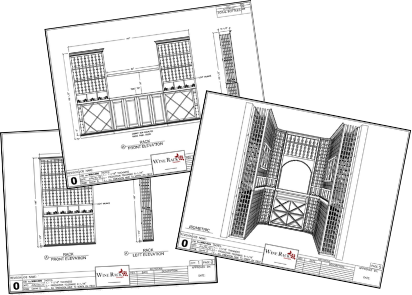
Free 2D wine cellar design