How Tall is a Wine Bottle? The Complete Dimension and Racking Guide

*Pictures are renderings. Actual wine racks may look different
Imagine spending thousands on a custom mahogany cellar only to realize your favorite Rieslings are too tall for the vertical spacing. It's a frustrating moment that often stems from one overlooked detail during the planning phase. You likely understand that wine storage is about more than just aesthetics; it's about the technical precision of the fit. Determining exactly how tall is a wine bottle is the first step in ensuring your collection remains protected and accessible.
This guide will show you the standard heights across every major varietal, from standard Bordeaux to elongated Alsatian flutes, so you can design your storage with absolute certainty. We'll explore the height ranges of different bottle types and provide a blueprint for spacing racks like our Vintner or Wall Wine Rack series to maximize every inch of your vertical space. Whether you're planning a small reach-in or a grand custom enclosure, understanding these dimensions turns a guessing game into a professional-grade project. You'll gain the confidence to start your custom cellar with a clear roadmap for both traditional and modern storage configurations.
Key Takeaways
- Identify the industry benchmarks for 750ml bottles and why standard shapes often vary from the 12-inch norm based on the specific wine varietal.
- Learn to calculate the essential vertical clearance and "finger gap" required to ensure your collection fits safely within Vintner or Classic series racks.
- Discover why understanding exactly how tall is a wine bottle is the foundation for eliminating wasted vertical space and maximizing your cellar's storage capacity.
- Gain a step-by-step blueprint for auditing your collection to balance standard racking with custom solutions for oversized or elongated bottles.
- Explore how modern storage options like Fusion Wine Walls provide the flexibility needed to display diverse bottle heights with a professional, cohesive aesthetic.
Understanding Standard Wine Bottle Dimensions
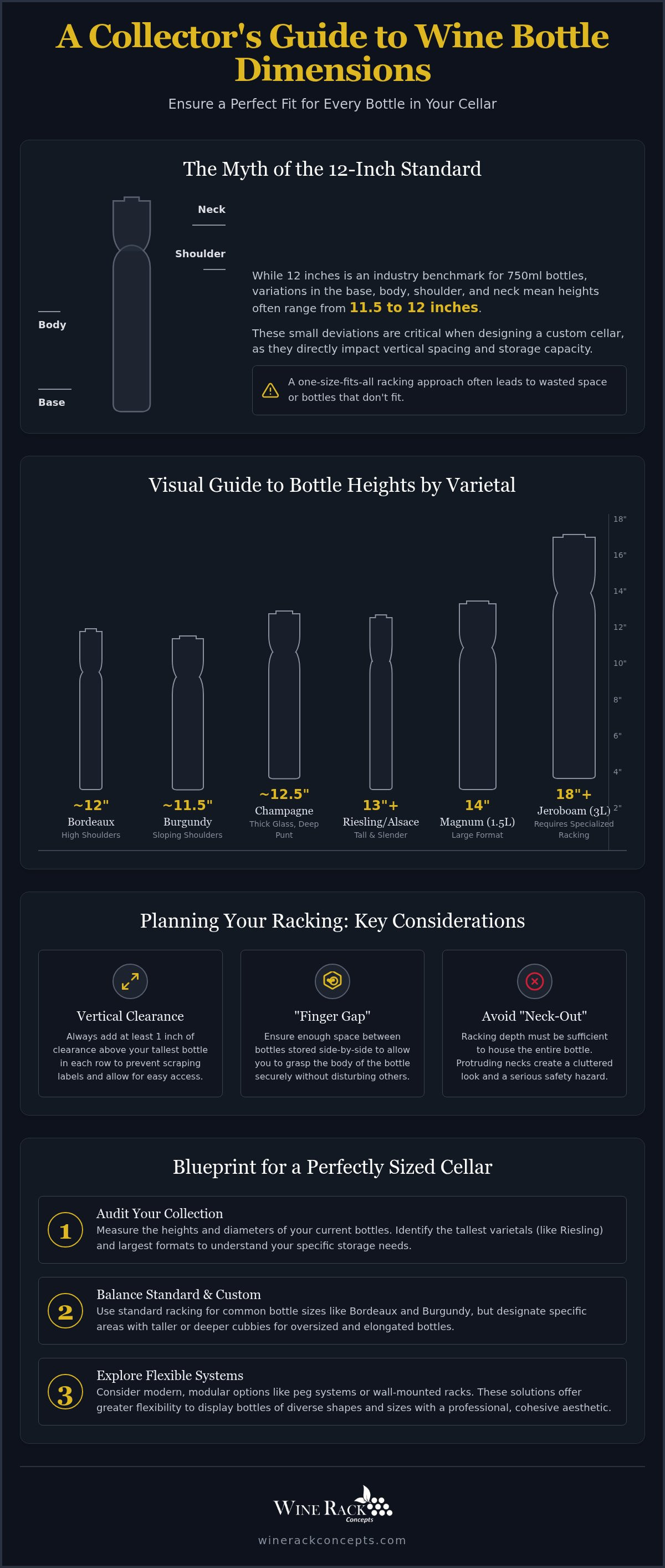
The 750ml wine bottle is the universal standard for collectors, but its physical dimensions are rarely identical from one producer to the next. While you might expect a uniform height for a set volume, the glass industry prioritizes varietal tradition and aesthetic appeal over absolute consistency. This is why 12 inches became the unofficial industry benchmark; it provides a safe upper limit for commercial shipping and retail shelving. However, when you're designing a professional storage space, these small deviations in height become critical.
The anatomy of a bottle is divided into four primary components: the base, the body, the shoulder, and the neck. The base often includes a "punt," an indentation that can vary in depth, effectively raising the total height of the bottle without adding a single milliliter of liquid. The body and shoulder shapes dictate where the bottle rests on a rack, while the neck length is the most significant variable in determining how tall is a wine bottle.
The 12-Inch Rule and Its Exceptions
Most enthusiasts categorize their collection by style, which directly influences the Standard wine bottle sizes they encounter. Bordeaux bottles typically feature high shoulders and a height right at the 12-inch mark. In contrast, Burgundy and Pinot Noir bottles often have sloping shoulders and slightly shorter profiles. The standard 750ml bottle height is 11.5 to 12 inches. Factors like glass thickness and punt depth can add fractions of an inch, making it vital to account for these outliers when selecting wooden wine racks for a diverse collection.
Why Bottle Height Matters for Collectors
If you don't account for height during the design phase, you risk "neck-out" storage. This occurs when a bottle is too tall for a shallow racking system, causing the neck to protrude into the aisle. Not only does this look cluttered, but it also creates a safety hazard in high-traffic areas. Height also dictates the total vertical footprint of a wine wall. If you're stacking multiple rows, an extra half-inch per bottle can quickly eat up your available vertical space. This is where our free design service becomes invaluable, as it helps you calculate the precise clearance needed for every bottle in your inventory.
Variations by Varietal: Why Shape Dictates Height
While the 12-inch benchmark serves as a helpful baseline, the specific varietal in the bottle often dictates its final profile. Traditional glassblowing regions developed distinct shapes that remain standard today, affecting exactly how tall is a wine bottle in your collection. Bordeaux bottles are the most recognizable, maintaining a straight-sided body and high shoulders that generally hit that 12-inch mark. In contrast, Burgundy and Pinot Noir bottles favor a wider base and sloping shoulders. These are often slightly shorter than Bordeaux bottles but require more horizontal width in a rack.
Sparkling wines and Champagne introduce another layer of complexity. Because these bottles must withstand significant internal pressure, the glass is significantly thicker and the punt is deeper. This structural necessity often pushes the height to 12.5 inches. Understanding Common bottle volumes helps you realize that while the liquid remains 750ml, the physical glass can vary by nearly an inch depending on the wine's origin. This variation is why a one-size-fits-all approach to racking often leads to wasted space or crowded displays.
The Tallest Bottles in Your Collection
The most challenging shape for standard racking is the Alsace or Riesling bottle, often called a 'Hock' bottle. These are slender, elegant, and exceptionally tall, frequently exceeding 13 inches. If you don't plan for these elongated necks, they'll protrude significantly from standard-depth racking. Many collectors choose to place these on top rows or in custom-height bins to maintain label visibility and prevent accidental bumps. This placement preserves the aesthetic of the cellar while ensuring the most fragile necks aren't exposed to high-traffic areas.
Large Format Dimensions: Magnums and Beyond
Planning for large formats requires a shift in both vertical and horizontal thinking. A Magnum (1.5L) isn't just twice the volume; it's physically much larger, with height averages ranging from 13.5 to 14 inches. When you move into Jeroboams or Double Magnums, the heights can exceed 18 inches. Specialized racking is mandatory for these oversized bottles to ensure they're cradled securely without wasting vertical space. If you're unsure how to integrate these varied sizes into a cohesive layout, our free design service can provide a blueprint that accounts for every bottle in your inventory, ensuring a perfect fit for your current and future collection.
How Bottle Height Impacts Wine Rack Design
Understanding exactly how tall is a wine bottle represents only the first step in creating a functional cellar. The second, and arguably more critical step, is determining the vertical clearance required to store and retrieve that bottle without damage. A common mistake in DIY racking is building to the exact height of the bottle, which leaves no room for the human hand. We recommend a "finger gap" of at least one to one and a half inches above the bottle. This space ensures you can securely grip the neck without scraping the label of the bottle above it.
Cramped racking does more than just make retrieval difficult. It creates a high risk of label abrasion, which can significantly decrease the resale value of rare vintages. Forcing a bottle into a tight space also puts unnecessary structural stress on the racking components, potentially leading to warping over time. When you standardize your rack heights, you're looking for a balance that accommodates the majority of your collection while providing specialized zones for the taller outliers mentioned in previous sections.
Vertical Spacing and Dead Space Management
Efficiency in a wine cellar is measured by how well you manage dead space. In high-density storage, every fraction of an inch counts toward your total bottle capacity. If you're utilizing wooden wine racks, you have the choice between fixed tier heights or adjustable configurations. Fixed racking provides a clean, uniform look, but it requires precise planning. If your collection consists mostly of standard Bordeaux bottles, a vertical opening of 3.75 to 4 inches per tier is often the sweet spot. This allows for the bottle's diameter and the necessary clearance for accessibility without wasting vertical real estate.
Depth vs. Height: The 3D Storage Equation
While the vertical height is paramount for stacking, the depth of the rack is what provides ultimate protection. A standard 12-inch bottle shouldn't sit flush with the edge of the rack. To protect the cork and prevent accidental bumps, we recommend a rack depth of approximately 13.5 inches. This ensures the bottle is fully cradled within the wood or metal structure. Our Wall Wine Rack series takes a different approach by using a minimalist, label-forward design. These systems handle various bottle heights with ease because they focus on horizontal support, allowing the bottle's length to extend naturally without the constraints of a traditional vertical box.
Planning Your Cellar: Sizing for a Diverse Collection
A successful cellar design begins with an honest inventory. You'll need to categorize your bottles not just by region, but by physical dimensions. If you primarily collect California Cabernets, your racking needs will differ significantly from someone focusing on German Rieslings or large-format Italian reds. Determining exactly how tall is a wine bottle across your various labels allows you to establish a ratio of standard to oversized storage. This ratio prevents the common mistake of over-investing in standard 750ml slots that won't accommodate your full collection.
Next, calculate your total vertical capacity. Measure your ceiling height and subtract at least 12 to 18 inches for the cooling unit's air intake and discharge. Divide the remaining space by the height of your chosen racking tiers. This calculation reveals how many rows you can safely stack while leaving enough room for proper circulation. Don't forget that heat rises; the top rows will always be slightly warmer than the bottom, so plan your storage based on which wines are for long-term aging versus immediate consumption. Factoring in these heights early ensures that your cooling system isn't blocked by oversized bottles placed too close to the vents.
Airflow and Climate Control Considerations
Bottle density plays a massive role in the efficiency of your wine cellar cooling system. If you pack bottles too tightly, you create pockets of stagnant air that lead to uneven temperatures. Taller bottles can block the path of forced air, forcing the cooling unit to work harder to maintain the set point. Strategic spacing between rows helps distribute cold air evenly, protecting the integrity of your wine. Proper insulation and vapor barriers are also essential, especially in tall storage areas where temperature stratification is more likely to occur.
The Modular Advantage for Growing Collections
Adapting to a changing collection is much easier when you utilize modular systems like the Vintner Series. These racks allow you to mix and match different heights to create a custom look that evolves with your tastes. If you start collecting more Magnums later, you can swap out standard sections for larger format racking without tearing out the entire cellar. This flexibility is a core component of a successful custom wine cellar design. It allows you to build a professional-grade space that respects both the traditions of wine storage and the practical needs of a modern collector.
Professional Storage Solutions for Every Bottle Size
Selecting the right storage system requires moving beyond the technical data of individual measurements and looking at the total cellar environment. If you've spent time researching how tall is a wine bottle, you're likely aware that a standard grid won't always suffice for a diverse collection. Our Carpenter and Classic series are designed to bridge this gap, offering the structural integrity of traditional woodworking with the flexibility to adapt to non-standard heights. These series provide a timeless look while ensuring that even your tallest bottles have a dedicated, secure home. For collectors who prefer a contemporary edge, Fusion Wine Walls offer a minimalist approach to vertical displays. These systems prioritize the bottle's silhouette, making them an excellent choice for showing off the varied heights and shapes of a modern inventory.
The precision of your racking is only as good as the materials used. We utilize American-made components in many of our systems to ensure that every dimension is exact and every finish is durable. This level of craftsmanship is essential when you're dealing with the tight tolerances of a high-density cellar. Transitioning from a basic bottle count to a professional design plan allows you to see how these different series work together. It turns a collection of measurements into a cohesive, functional space that respects the value of the items being stored.
Tailoring Racks to Your Specific Collection
Consider a case study of a collector with a Riesling-heavy or Magnum-focused inventory. In these instances, a standard 12-inch vertical opening would result in constant frustration. By investing in custom wine racks, you can specify the exact clearance needed for elongated necks or wider bodies. Our Wine Peg Series provides even more versatility, as the pegs offer nearly infinite height flexibility on the mounting panel. This allows you to stagger bottles of different lengths, creating a dynamic visual flow while ensuring that no neck is ever left exposed to accidental damage.
Start Your Project with Professional Guidance
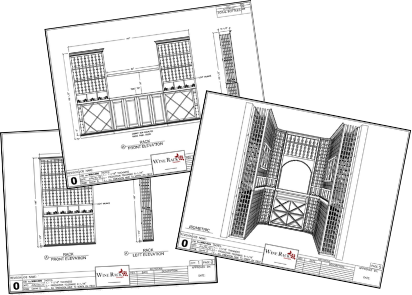
The most effective way to avoid dimension-related mistakes is to start with a professional CAD design. This step is vital because it accounts for factors that are often overlooked, such as the thickness of the racking material and the exact placement of cooling vents. When you understand how tall is a wine bottle in the context of your specific space, you can plan for the necessary "finger gap" and airflow requirements discussed earlier. This proactive approach eliminates the stress of wondering if your bottles will fit and replaces it with the confidence of a master craftsman.
Designing Your Future Cellar with Precision
Transitioning from a casual collection to a professional-grade cellar requires a shift in perspective. You've learned that while the industry benchmark is 12 inches, the true answer to how tall is a wine bottle depends on regional traditions and varietal shapes. From the elongated necks of Riesling flutes to the robust profiles of Magnums, these dimensions dictate everything from vertical spacing to airflow efficiency. By accounting for the necessary clearance and choosing versatile series like Vintner or Carpenter, you ensure your investment protects your collection for years to come.
Our team is ready to help you navigate these technical nuances using durable American-made components and expert design consultations for any bottle collection. We specialize in custom solutions for both residential and commercial spaces, bridging the gap between your initial vision and a finished masterpiece.
It's time to transform your storage into a curated display you can take pride in. With the right planning and professional guidance, your cellar will be as functional as it is beautiful.
Frequently Asked Questions
How tall is a standard 750ml wine bottle?
A standard 750ml wine bottle typically stands between 11.5 and 12 inches tall. This dimension is the industry benchmark for Bordeaux-style bottles, which feature high shoulders and straight sides. While volume remains constant, the physical glass height can vary slightly based on the producer's chosen glass thickness or the depth of the base punt. Understanding these measurements is vital when planning the vertical layout of your storage project.
Will a Magnum bottle fit in a standard wine rack?
Most standard wine racks are designed for 750ml bottles and won't accommodate a 1.5L Magnum. Magnums generally average between 13.5 and 14 inches in height and have a significantly wider diameter. To store these larger formats securely, you'll need specialized racking like our Vintner Magnum series or custom bins that provide the necessary horizontal and vertical clearance for the oversized glass and heavier weight.
Are Champagne bottles taller than regular wine bottles?
Yes, Champagne bottles are typically taller and wider than standard still wine bottles. Most sparkling wine bottles measure approximately 12.5 inches in height. This extra size is a result of the thicker glass required to withstand internal carbonation pressure. When you're calculating how tall is a wine bottle for your sparkling collection, ensure your racking provides at least 13 inches of vertical clearance to prevent accidental label damage.
How much vertical space should I leave between wine rack rows?
You should leave at least 3.75 to 4 inches of vertical space for the bottle opening, plus an additional 1 to 1.5 inches for a finger gap. This extra room allows you to grasp the bottle neck safely without scraping the labels of the bottles stored above. In high-density designs, minimizing this gap can increase capacity, but it often makes bottle retrieval more difficult and increases the risk of structural stress.
What is the tallest type of wine bottle I might need to store?
The Alsace or Riesling bottle, often referred to as a Hock bottle, is usually the tallest standard bottle in a collection. These slender, elegant bottles frequently exceed 13 inches in height. Because of their elongated necks, they often require top-row placement or custom-depth racking to ensure the neck doesn't protrude into your cellar aisle. Planning for these outliers early prevents safety hazards in high-traffic residential or commercial storage areas.
Does the height of a wine bottle affect how it should be stored?
Bottle height directly impacts the required depth of your racking and the placement of your cooling system. If a bottle is exceptionally tall, it may require a 13.5-inch deep rack to ensure the cork and neck are fully protected from bumps. Additionally, tall bottles shouldn't be placed directly in front of cooling unit discharge vents, as they can block airflow and lead to uneven temperature distribution throughout your cellar.
How do I measure my wine bottles for custom racking?
Measure your bottles from the flat base to the very top of the capsule using a standard ruler or tape measure. It's also helpful to measure the diameter at the widest point of the body and the height of the shoulder. For custom projects, we recommend measuring your tallest and widest bottles first. This data allows our design team to create a blueprint that maximizes capacity while ensuring every unique varietal fits perfectly.
Can I store different bottle heights in the same wine rack?
You can certainly store different heights in the same system by utilizing modular series like Vintner or our versatile Wine Peg Series. These options allow for staggered heights or adjustable spacing that adapts to your current inventory. When you ask how tall is a wine bottle for a mixed collection, the answer is often a range. Using a professional design plan ensures that your standard and oversized bottles coexist in a cohesive display.
Have an expert help today!
Free 2D wine cellar design