Hospitality Wine Display Solutions: A Buyer''s Guide

*Pictures are renderings. Actual wine racks may look different
The most eye-catching hospitality wine display solutions can still be the wrong choice if they slow service or leave bottles without appropriate storage. A striking feature should do more than draw guests in: it should suit the wine program and work smoothly for the team behind the scenes.
Choosing among display formats can feel complex when visibility, wine care, capacity, and staff access all matter. The right fit depends on your venue, the wines you serve, and how often staff need to retrieve and replenish bottles. This guide compares options, from wall-mounted racks to glass-enclosed features, and explains when cooling and storage planning should be part of the design. You’ll also consider traffic flow, active wine selections, and replenishment needs so your display supports both the guest experience and daily service. By the end, you’ll have a clearer sense of which format fits your operation and what details to gather for a productive design conversation.
Key Takeaways
- Start with the guest experience and service flow to clarify what the display needs to do in your venue.
- Compare wood and metal racks, wall displays, cable systems, glass enclosures, and wine pegs by visibility, access, space use, and storage role.
- Plan hospitality wine display solutions around both presentation and wine care, distinguishing bottles for active service from inventory needing a dedicated storage environment.
- Build a project brief with venue goals, layout dimensions, collection details, bottle formats, reference images, and service-flow notes.
- Ask potential design partners how they coordinate display options, cooling needs, staff access, and project scope before moving forward.
Why Hospitality Wine Display Solutions Shape the Guest Experience
A guest-facing wine display has a different job from storage designed mainly for back-of-house use. It may invite guests to explore a list, frame a dining room, or help staff present featured bottles. In each case, the display should fit the service model as well as the room. A visually striking feature that blocks a route or makes bottles awkward to retrieve can complicate the experience it was meant to improve.
Plan hospitality wine display solutions around three practical questions: What should guests see? Which bottles must staff reach quickly? Where will wine be stored when it isn't part of the active display? Answering these early helps distinguish presentation goals from collection capacity and wine-care needs.
For a visual example of a restaurant wine cellar, watch this video:
What should a hospitality wine display accomplish?
Decide whether the display is primarily a merchandising feature, a selection aid, a focal point, or a combination. A dining room feature might make labels visible and reinforce the atmosphere; a display near a service point might prioritize staff access and replenishment. Consider how guests encounter the wine and whether staff select bottles in view of guests or retrieve them elsewhere. These details shape placement, visibility, and the balance between display and working storage.
Which venue details shape the design brief?
Start with the floor plan. Mark guest circulation, service points, available wall and floor space, and the routes staff need to keep clear. Then describe the wine program, including bottle types and formats, wines that turn over quickly, and how the selection may change. A restaurant with a frequently updated list may need a different arrangement from a lounge featuring a curated collection. Avoid planning around a fixed bottle count alone: the active selection and access pattern matter, too.
Wine Rack Concepts, LLC designs custom wine cellars and storage solutions for commercial settings, with options that can be considered alongside presentation, bottle capacity, and staff access. For broader project considerations, see this commercial wine cellar guide. A display doesn't establish suitable storage conditions by appearance alone. Review the principles of proper wine storage conditions as you determine whether bottles for active service need a separate storage environment.
Takeaway: The strongest display balances guest-facing presentation with easy staff access and appropriate wine care.
Compare Hospitality Wine Display Formats for Your Space
The right format depends on the room, collection, and job the display needs to do. A wall feature may make labels easy to browse without taking up floor space, while a glass enclosure can turn a larger collection into a focal point. Compare options by how guests see the bottles, how staff reach them, and whether the display is intended for presentation, storage, or both.
| Format | Visibility | Access | Space use | Storage role and coordination |
|---|---|---|---|---|
| Wood racks | Can create a warm, furniture-like presentation | Depends on the arrangement and placement | Can be planned for wall or cellar layouts | Coordinate the finish with the interior and the collection's storage needs |
| Metal racks | Often provide a clean, defined bottle display | Plan around the way staff select and replenish bottles | May suit wall-based or larger installations | Consider how the rack integrates with surrounding materials |
| Wall displays | Keep bottles visible at eye level or along a feature wall | Placement can support browsing or staff selection | Use vertical space | Confirm wall conditions and how the display relates to storage |
| Cable systems | Offer an open visual presentation | Plan bottle selection and replenishment access | Can keep the display visually light | Coordinate the layout with the room and installation requirements |
| Glass enclosures | Make the collection a prominent room feature | Access depends on enclosure and service layout | Require space for the enclosure itself | Coordinate display design with storage and cooling plans |
| Wine pegs | Can present bottles individually as part of a designed arrangement | Consider how staff will handle and replace displayed bottles | Can be arranged across a wall or feature | Plan spacing and composition around the chosen location |
When do wall, cable, or glass displays make sense?
Wall displays can make bottles easy to see while using vertical space, which may suit a compact dining area or a defined feature wall. Cable systems and glass enclosures offer an open presentation, but weigh the visual effect against practical details. Before settling on a design, confirm the proposed wall or floor location, circulation around the display, and installation requirements.
How do wood, metal, and wine peg systems differ?
Wood can complement interiors with natural finishes, while metal may suit a more contemporary setting. Wine pegs allow bottles to be arranged as individual visual elements. Consider each format alongside the venue's furnishings and the way staff need to access bottles. Appearance alone doesn't determine storage capacity or suitability. Explore wood wine rack options and metal wine rack options as you compare materials. For the broader service context, staff knowledge also matters; the Society of Wine Educators outlines hospitality beverage training.
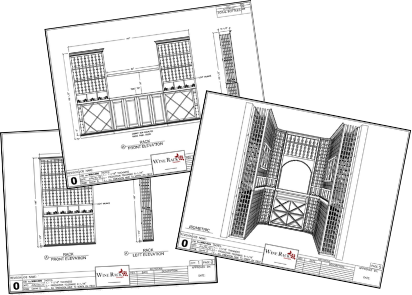
For another planning perspective, consult a guide to designing a commercial wine display wall. Once you have shortlisted formats, a free wine display design service can help you consider how presentation, bottle arrangement, and the space work together.
Will a Striking Wine Display Protect Wine and Support Service?
A polished display can make a collection part of the guest experience, but appearance alone doesn't establish that bottles are being stored appropriately. Wine presentation and climate-controlled storage are related design considerations, but they aren't the same thing. A bottle on view may be ready for service, while reserve inventory may need a dedicated storage environment suited to the project.
Start by separating wines intended for active service from bottles held as inventory. The display might feature selected labels near the dining room or bar, while other bottles are kept in an enclosed cellar or separate storage area. That distinction helps determine which parts of the project should prioritize visibility and quick access, and which should address wine-care conditions. Climate requirements depend on the collection, room, and design, so have qualified professionals assess them rather than assuming an open display provides suitable storage.
When should display and climate control be planned together?
Plan them together if the design includes an enclosed cellar, a display integrated with a cooled space, or a separate storage area. Room conditions, enclosure details, and the relationship between the display and storage can affect cooling-system planning. An open feature may serve a presentation role without being intended for long-term storage. Discuss the room and project requirements with a qualified professional, and review wine cellar cooling solutions as part of that conversation.
Wine Rack Concepts, LLC offers wine cellar cooling alongside custom wine cellar and storage solutions, making coordination between the display concept and cooling needs a useful part of the design brief. Clarify which bottles will be stored where, how the spaces connect, and what conditions the project needs to support before finalizing the layout.
How can the design support staff and guests?
Map the route a bottle takes, from storage to selection, replenishment, and service. Then consider how guests will see the display without it obstructing circulation, service stations, or staff movement. A bottle that is easy to admire but difficult to retrieve may not suit a busy service point. For guidance on the service sequence itself, the International Hotel School outlines professional wine service standards.
- More visibility: A prominent display can make the wine program part of the room, but may require careful placement to preserve clear routes.
- Faster staff access: Placing selected bottles near service can simplify retrieval, while the wider inventory may need separate storage.
- Integrated enclosure: Combining display and storage can create a cohesive feature, but requires early coordination of layout and cooling needs.
No single format suits every venue. Match the balance of visibility, access, and wine care to your service pattern, room, and collection.
Plan a Hospitality Wine Display: A Practical Buyer Checklist
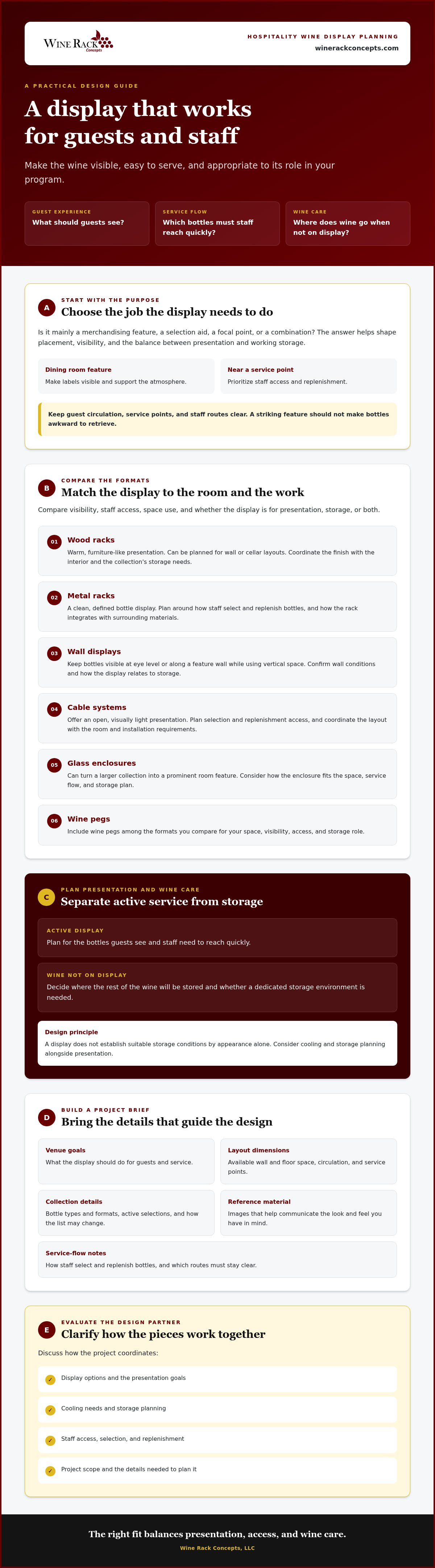
A clear brief helps turn a design idea into a display that fits the venue, wine program, and service routine. Before discussing hospitality wine display solutions, gather the details below. They help a design partner understand what the space needs to accomplish and which questions require input from other professionals.
- Set the venue goals. Decide whether the display should showcase featured bottles, support guest selection, create a focal point, or combine these roles. Note who will interact with it and what a successful result should make easier.
- Document the location and layout. Record the proposed display area and available width, height, and depth. Include nearby service stations, guest routes, doors, and staff circulation. Reference images or a simple floor plan can make the context clearer.
- Describe the wine program. Share the types of wine on the list, bottle formats, the bottles staff need to reach most often, and how the selection may change. Explain whether the display is for active service, reserve inventory, or both.
- Identify presentation preferences. Gather reference images and note preferred materials, finishes, and how visible you want bottles and labels to be. Separate essential requirements from details that are simply nice to have. If a wall is the main feature, a commercial display wall planning guide can help you frame the layout discussion.
- Clarify storage and cooling needs. Identify whether the project includes an enclosed cellar, an open display, or a separate storage area. Note which inventory needs a dedicated environment, then raise cooling questions early so they can be coordinated with the design.
- Flag project dependencies. Ask the appropriate project professionals to review structural support, electrical access, and enclosure requirements. Confirm who is responsible for assessing each item; don't assume a display concept alone resolves building or technical requirements. For a cellar-focused project, consult a custom wine cellar design guide as a related planning resource.
Keep service-flow notes specific. For example, indicate where staff will collect bottles, where replenishment will happen, and whether guest movement passes close to the display. These details can reveal conflicts before the layout is finalized. A custom design can help coordinate presentation, bottle capacity, and staff access, while the final approach should reflect the actual room and wine program.
With dimensions, images, bottle-format details, and operational notes in hand, you're better prepared to discuss suitable options and open questions with a design partner.
Choose a Hospitality Wine Display Partner and Move Forward
A hospitality display project brings together visual design, bottle storage, staff access, and sometimes climate control. A useful design partner should be able to discuss how those elements relate, explain options that fit your brief, and make clear what is and isn't included in the proposed scope. The goal isn't simply to select an attractive rack. It's to understand how each choice supports the venue and wine program.
What should buyers ask a design partner?
Use your project brief to guide the conversation. Ask how the design process accounts for guest visibility, staff routes, replenishment, and the distinction between bottles on display and wine in storage. Then clarify the practical details:
- Design approach: How will the proposed layout respond to the room, collection, and service pattern?
- Product options: Which rack or display formats could suit the project, and what are the trade-offs between them?
- Cooling coordination: If the project includes temperature-controlled storage, how will the display design and cooling decisions be considered together?
- Project scope: Which products and project elements are included in the proposal, and which require other professionals?
- Installation responsibilities: Who will confirm structural and electrical requirements, and who is responsible for professional installation?
Clear answers help you compare proposals on more than appearance. They also reveal whether roles and dependencies have been discussed before the project moves forward.
How can a custom design process reduce uncertainty?
Sharing the venue layout, display location, collection details, and service goals gives a designer useful context for developing relevant options. Wine Rack Concepts, LLC designs and manufactures custom wine cellars and storage solutions for residential and commercial settings. Its offerings include Fusion Wine Walls, cable and glass systems, wood and metal racks, and wine cellar cooling equipment. Which elements fit depends on the project; not every product is made in America.
Before agreeing to a scope, confirm how the proposed design addresses bottle access, presentation, storage needs, and any cooling coordination. If an element depends on a separate contractor or project professional, clarify that responsibility directly. A well-defined brief and scope make it easier to evaluate whether the proposed hospitality wine display solutions suit your space and way of serving wine.
If you're ready to share your project details and explore design guidance, start with the free design service.
Shape a Wine Display That Works for Your Venue
The strongest hospitality wine display solutions bring presentation, bottle access, and appropriate storage into one considered plan. Choose a format based on the room and service model, then distinguish bottles for active service from inventory that needs a dedicated storage environment. A clear brief with dimensions, collection details, and staff-flow notes gives a design conversation a practical starting point.
Wine Rack Concepts, LLC provides custom wine cellar design and storage solutions for commercial applications. Options include multiple rack series, Fusion Wine Walls, cable and glass systems, and cooling equipment. Selected components are American-made; not all products are made in America. Sharing your venue goals and project details can help clarify which options may suit your space and wine program.
With a thoughtful plan, your wine display can welcome guests and support the team that brings the collection to the table.
Frequently Asked Questions
What are hospitality wine display solutions?
Hospitality wine display solutions are racks, walls, or enclosures designed to present wine in restaurants, hotels, bars, and other guest-facing settings. They can help guests browse selections, highlight featured bottles, or create a visual focal point. The format should also reflect staff access and replenishment needs. Some displays serve primarily for presentation, while separate storage or a cellar supports inventory requiring planned wine-care conditions.
How do I choose a wine display for a restaurant or hotel?
Choose a display by matching the venue layout and wine program with how guests and staff will use it. Consider whether bottles should be visible from dining areas, easy for staff to retrieve, or arranged as a room feature. Measure available wall and floor space, note service routes, and describe the collection and how it may change. Then compare formats for visibility, access, storage role, and design fit.
Can a wine display also provide climate-controlled storage?
Yes, a wine display can be coordinated with climate-controlled storage if the project includes a suitable enclosure and cooling system. A rack or open display alone doesn't establish appropriate storage conditions. First identify which bottles are for active service and which need a dedicated storage environment. Room conditions, enclosure details, and the collection all matter, so have qualified professionals assess the climate-control requirements for the specific project.
What is the difference between a wine display and a wine cellar?
A wine display is generally planned to make bottles visible and support selection or presentation. A wine cellar is designed as a storage environment and may include racking, an enclosure, and wine cellar cooling. The roles can overlap in an integrated project, but they aren't interchangeable by default. Clarify whether the priority is guest-facing display, wine storage, or both, then plan the layout and climate needs accordingly.
Should hospitality wine displays include a cooling system?
Not necessarily. Cooling is relevant when the project includes wine that needs a dedicated, temperature-controlled storage environment, but a display intended for presentation or active service may have a different role. Decide which bottles will be stored in the display and whether inventory will be held elsewhere. If the design includes an enclosed cellar or cooled storage area, coordinate the display layout and cooling plan with qualified professionals.
What information should I prepare for a wine display design consultation?
Prepare the display location and dimensions, a floor plan or reference images, details about the wine program and bottle formats, and notes on staff access, service routes, and replenishment. Describe the look you want and separate must-haves from preferences. Also identify whether the project includes a cellar or cooling, and list questions about structural support, electrical access, and installation responsibilities for the appropriate professionals to review.
Have an expert help today!
Free 2D wine cellar design