High-Density Wine Storage: Maximize Capacity Without Losing Access

*Pictures are renderings. Actual wine racks may look different
What if the best way to fit more wine into your room isn't simply to add another row of racks? High density wine storage works when capacity and access are planned together. To make every inch count, plan how you will identify, retrieve, and return bottles, not just how many racks will fit.
Start with the room and the collection, not a headline bottle count. Ceiling height, wall dimensions, door swings, bottle formats, display preferences, and access routes all affect practical capacity. Allow for future growth as well: a layout designed only for today's collection may feel cramped as your holdings change.
This article explains how rack style, bottle placement, and access paths shape usable capacity. It also covers what to gather before planning a custom system, including room measurements, collection details, and cooling considerations. With those details in hand, you can plan a custom wine cellar that balances efficient storage with organization and presentation.
Key Takeaways
- Measure the room and map access routes to estimate usable bottle capacity, not just a theoretical rack count.
- Choose individual-bottle storage, grouped storage, and display zones according to how you organize and reach for wine.
- Plan high density wine storage around your bottle formats and likely collection growth.
- Balance dense storage with convenient retrieval areas so maximizing capacity does not make everyday access harder.
- Coordinate rack styles, room dimensions, display preferences, and cooling when planning a custom cellar.
What Is High-Density Wine Storage, and When Does It Make Sense?
High-density wine storage fits more bottles within a fixed footprint. The goal is not simply to maximize the number of bottles on paper. A useful layout lets you identify, reach, and return bottles without making the room difficult to move through. Capacity estimates matter only when they account for your collection and how you use the space.
Room dimensions, wall height, doorways, and circulation all affect practical capacity. Bottle formats and display preferences matter, too. A compact residential cellar may need to balance reserve storage with convenient access, while a larger collection may benefit from separating long-term storage from bottles you reach for often. A wine cellar needs to suit its purpose and environment, not just its bottle count.
For a visual example of a large collection, watch this wine cellar tour and notice how storage and organization work together.
How Is High-Density Storage Different From Standard Wine Racking?
Standard racking may prioritize presentation, easy identification, or a familiar arrangement. A denser plan gives more attention to space efficiency while still accounting for those priorities. The tradeoff is practical: if a bottle is obscured, difficult to reach, or blocked by another, the theoretical capacity may be greater than the amount you can use conveniently. Room shape and collection habits determine the right balance.
Which Collections Benefit From a Denser Layout?
A denser layout can suit collectors who want substantial reserve storage and do not need every bottle prominently displayed. It can also help in residential cellars with limited space, or in commercial collections where storage and presentation serve different purposes; for large-scale facilities requiring industrial warehouse racking, read more. Frequent access calls for easy-to-reach zones, while a collection with varied bottle shapes needs a layout that accounts for those formats.
Density is a planning goal, not a single rack style or guaranteed bottle count. A thoughtful custom wine cellar design can coordinate the room, collection, access, and display preferences so the capacity is genuinely useful. Next, consider how rack layout and bottle placement affect the use of your available space.
How Rack Layout and Bottle Placement Increase Usable Capacity
Capacity depends on more than how much racking fits against a wall. Floor area, ceiling height, room shape, and the path between racks determine whether you can store and retrieve bottles comfortably. A narrow room, for example, may make good use of wall height while preserving a clear route through the space. An awkward corner or a door that swings into the storage area calls for a different arrangement.
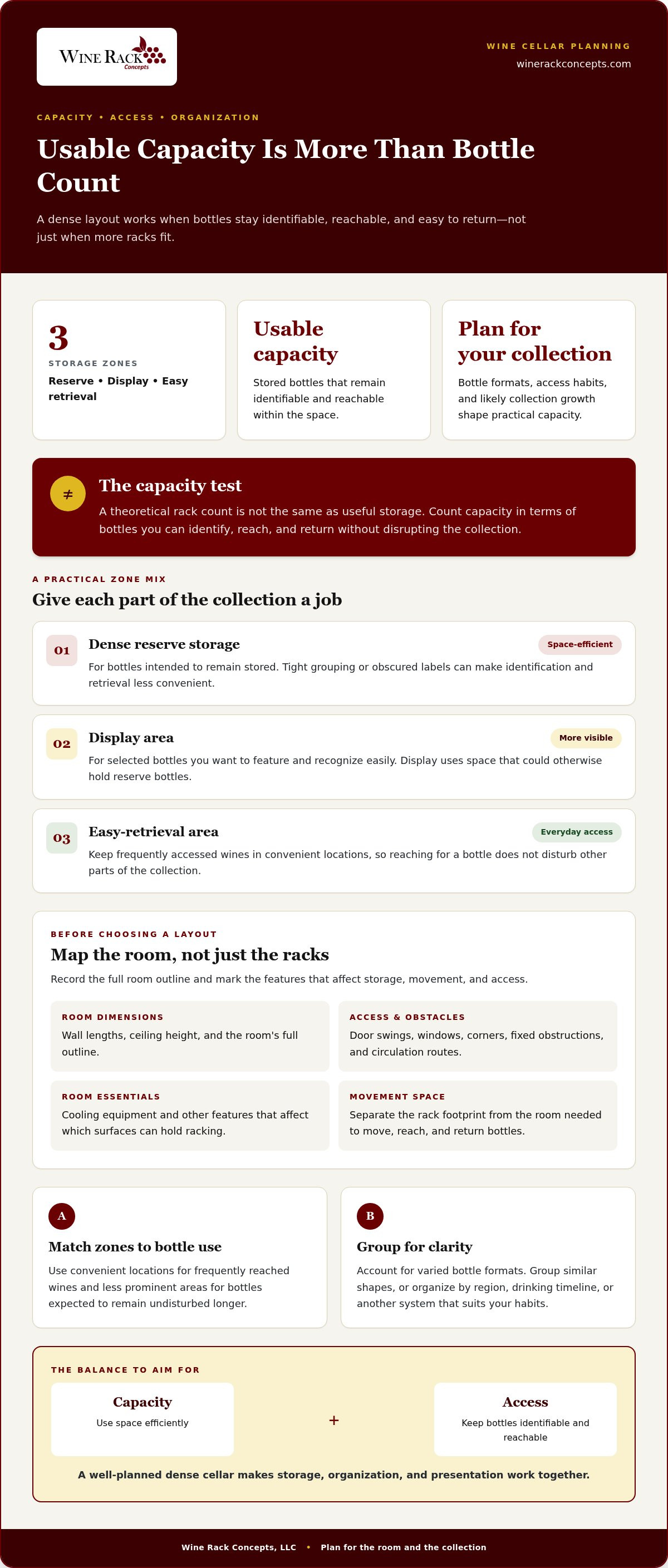
Usable capacity is the number of stored bottles that remain identifiable and reachable within the space. This measure makes a dense layout useful rather than simply impressive on paper.
What Room Measurements Matter Before Choosing a Layout?
Measure the room's full outline, not just its longest wall. Record wall lengths and ceiling height, then mark door swings, windows, corners, and fixed obstructions. Note where cooling equipment and other essential features sit, since they affect which surfaces can hold racking. Finally, distinguish the rack footprint from the space needed to move around, reach bottles, and return them to storage.
How Should Rack Zones Reflect Bottle Types and Use?
Bottle formats can take up different amounts of space, so a layout based on one standard shape may not fit a varied collection as expected. Grouping similar formats can make the layout easier to plan and the bottles easier to identify. You can also organize by region, drinking timeline, or another system that suits your habits.
Plan distinct zones. Individual-bottle storage can support quick identification and retrieval. Grouped storage keeps related wines together. Display areas give selected bottles greater visibility, but should be planned separately from dense reserve storage. Keep frequently accessed wines in convenient locations and use less prominent areas for bottles you expect to leave undisturbed longer.
- Individual bottles: Useful when you want to locate a specific wine quickly.
- Grouped bottles: Helpful for organizing by format or collection category.
- Display zones: Best for bottles you want to feature, with their capacity counted separately from reserve storage.
These priorities can work together. A custom plan can coordinate wall wine racks, other rack styles, and display features with the room's dimensions and your collection habits. To turn your measurements and bottle groupings into a layout, explore wine cellar design options.
Does High-Density Wine Storage Sacrifice Access or Collection Care?
It can, if the plan treats bottle count as the only measure of success. High density wine storage should let you locate and retrieve bottles without shifting a carefully arranged row or disturbing other parts of the collection. Plan for access and identification alongside capacity, and consider suitable cellar conditions as part of the room design.
Different zones can serve different purposes. This comparison highlights the tradeoffs:
| Storage zone | Advantages | Tradeoffs |
|---|---|---|
| Dense reserve storage | Uses available space efficiently for bottles intended to remain stored. | Can make identification and retrieval less convenient if bottles are tightly grouped or labels are obscured. |
| Display area | Keeps selected bottles visible and can make them easier to recognize. | Uses space for presentation that could otherwise hold reserve bottles. |
| Easy-retrieval area | Makes frequently accessed wines simpler to reach and return. | Requires deliberate room in the layout rather than assigning every area to maximum density. |
How Can You Keep Bottles Easy to Identify and Retrieve?
Choose an organization system you can maintain, then use it consistently. You might group wines by region, format, drinking timeline, or another approach that reflects how you think about your collection. Clear zones and a matching inventory record help connect each bottle's location to its details. If labels face away from view, a written location system becomes especially useful.
Place bottles you reach for often in convenient locations, and keep long-term reserves in areas you access less frequently. A display zone can make selected wines easier to identify, while dense storage elsewhere accommodates more of the collection. The aim is not to make every bottle equally prominent, but to make each one findable when you need it.
What Does Dense Storage Mean for Cellar Conditions?
Racking is only one part of the cellar plan. Room conditions and cooling belong in the design too, particularly when storage is integrated into a living space or arranged around fixed room features. Dense placement alone does not ensure suitable storage conditions. Those depend on the cellar as a whole.
Coordinate the storage layout with the room and its cooling approach instead of treating them as separate decisions. For more detail on climate control, see this guide to wine cellar cooling systems.
How to Plan High-Density Wine Storage for Your Space
A useful plan starts with information about both the room and the collection. Before comparing rack configurations, record what you own, how you use it, and what the space needs to accommodate. This turns high density wine storage from a bottle-count goal into a layout based on real storage and access needs.
What Information Should You Gather Before Designing?
Start with a collection audit and a measured room sketch. Include practical details that can change where storage fits:
- Collection: Record the current bottle count, likely growth, bottle formats, and how often you access different wines.
- Room: Note wall dimensions, ceiling height, openings, door swings, fixed obstructions, and the location of cooling equipment.
- Use: Describe whether the space is residential or commercial, and whether it should prioritize display, reserve storage, or everyday function.
Separate wines you reach for often from long-term reserves. Record any varied bottle formats, too. A layout based on just one bottle shape may not reflect the space your collection needs.
How Do You Turn the Collection Plan Into a Layout?
Use the information you gathered to make decisions in sequence. This planning path keeps capacity, access, and presentation in view:
- 1. Set priorities. Decide whether storage capacity, quick retrieval, display, or a balance of these matters most.
- 2. Mark room constraints. Map openings, fixed features, equipment, and the routes needed to move through the space.
- 3. Assign zones. Reserve convenient locations for frequently accessed bottles, display areas for selected wines, and less prominent storage for reserves.
- 4. Match zones to the collection. Group bottles by format or by a system you can maintain, such as region or drinking timeline.
- 5. Allow for growth. Consider how your holdings may change and whether new formats or categories could affect the layout.
- 6. Review the plan. Check that bottles remain identifiable and reachable, access routes are clear, and the planned capacity suits the room.
Rack materials and visual style are design choices, not guarantees of capacity. Wood or metal should be considered alongside the room, collection, and preferred presentation. Wine Rack Concepts designs custom wine cellars that bring these factors together. Commercial spaces can also balance staff access, display, and reserve storage according to how the collection is used.
Custom High-Density Wine Storage: Bring Capacity and Design Together
A successful cellar plan treats high-density wine storage as one part of a complete room design. Racking needs to work with the room dimensions, collection habits, preferred balance of storage and display, and cooling approach. Coordinating these elements makes capacity practical, rather than choosing a rack configuration first and trying to fit the rest of the room around it.
Which Design Choices Shape a High-Density Cellar?
Rack style should suit the space and how you want to use it. A collector focused on reserve storage may need a different arrangement from someone who wants selected bottles prominently displayed. Wine Rack Concepts offers the Classic, Carpenter, and Vintner rack series, as well as wall systems, Fusion Wine Walls, cable racks, and glass systems. These options support different storage and presentation approaches, but no style guarantees a particular bottle count.
The final configuration should reflect the specific room and collection. Bottle formats, access routes, display areas, and room features all inform how the elements come together. A custom cellar brings these choices into one cohesive plan for residential or commercial spaces.
When Should Cooling Be Part of the Storage Plan?
Include cooling in the planning conversation when you want a temperature-controlled cellar environment. Equipment and storage share the same room, so their placement and the overall layout should be considered together. This lets the design account for cooling alongside racking, circulation, and the collection, rather than treating equipment as an afterthought.
Wine Rack Concepts offers wine cellar cooling options alongside custom storage and cellar design. Explore the wine cellar cooling systems page for more information. Considering the room, collection, racking, and cooling together can help make efficient use of available space while maintaining an organized, considered presentation.
Plan a Cellar That Makes Every Bottle Count
The right high density wine storage plan is measured by more than the number of bottles a room can hold. Capacity becomes practical when bottles stay identifiable, access routes remain clear, and the layout reflects how you use your collection. Room dimensions, bottle formats, display preferences, and plans for future growth all help shape a design that works beyond a theoretical count.
Custom planning brings these decisions together. Wine Rack Concepts designs and manufactures wine cellars for residential and commercial projects, with a range of rack systems, display approaches, and cellar cooling options. The design can be tailored to your space and collection, balancing efficient storage with the experience you want from the room.
A considered plan can make better use of your cellar's footprint while keeping the collection organized and welcoming. Start planning a wine cellar tailored to your space and collection.
Frequently Asked Questions
What is high-density wine storage?
High-density wine storage fits more bottles within a fixed footprint while keeping the collection practical to use. Theoretical capacity may not account for access routes, bottle variety, or whether labels can be identified. Usable capacity reflects the bottles you can locate and retrieve in the actual room. Rack layout, room dimensions, collection habits, and bottle formats all affect what works in practice.
How can I maximize wine bottle storage in a small cellar?
Start by measuring the room, including wall lengths, ceiling height, openings, obstructions, and equipment locations. Consider using available wall height while preserving clear routes for moving through the cellar and retrieving bottles. Divide storage into zones for reserves, frequently accessed wines, and display. Then plan around your bottle formats and collection habits. A project-specific design can balance compact storage with usable access instead of relying on a generic capacity estimate.
Does high-density wine racking make bottles harder to access?
It can if the layout prioritizes bottle count without accounting for identification and retrieval. Clear zones, a consistent inventory method, and thoughtful bottle grouping can make a dense arrangement easier to manage. Keep frequently accessed wines in convenient locations, and plan a separate display area for bottles you want visible. Reserve storage can use less prominent spaces. The aim is efficient capacity without making every retrieval a disruption.
Can high-density wine racks store different bottle sizes?
Yes. A storage plan can account for different bottle formats, but it should reflect the collection rather than assume every bottle is identical. Record the formats you own and consider how to group them or place them in suitable rack zones. A collection with varied shapes may need a different layout from one made up mostly of similar bottles. The final configuration should suit the actual bottles and room.
What is the difference between high-density wine storage and display storage?
High-density storage focuses on fitting reserve bottles efficiently within the available space. Display storage gives selected bottles greater visibility and can make them easier to recognize, but dedicates room to presentation. Convenient locations suit wines you access often, while reserve areas can be less prominent. A cellar can combine both, with display capacity planned separately from dense storage.
Do I need a wine cellar cooling system for high-density storage?
Cooling decisions depend on the room, its conditions, and your cellar goals. Racking density alone does not determine whether a cooling system is appropriate, but cooling should be considered alongside the storage layout when planning a temperature-controlled cellar. Equipment placement and room design need to work together. For more detail on available approaches, explore the wine cellar cooling guide.
How do I plan a high-density wine cellar?
Begin by measuring the room and recording openings, obstructions, and fixed features. Inventory your collection, including current bottle count, likely growth, bottle formats, and how often you access different wines. Next, assign zones for reserves, display, and easy retrieval. Review movement through the room and check that bottles remain identifiable and reachable. Coordinate the rack configuration with the space, collection habits, and cooling plan to shape a practical design.
Have an expert help today!
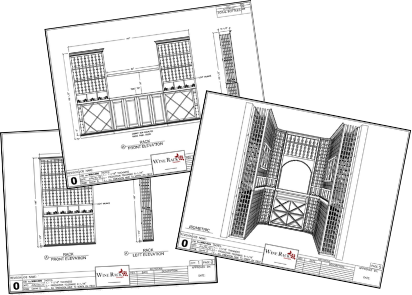
Free 2D wine cellar design