Double Deep Wine Racking: Capacity, Access, and Design

*Pictures are renderings. Actual wine racks may look different
More bottles per square foot can mean less convenient storage. Double deep wine racking places bottles in two rows, helping a limited cellar footprint hold more, but the rear row can be harder to identify and retrieve. The added capacity is most useful when the room has enough depth and your storage plan accounts for how often you reach for each bottle.
If you’re considering a denser layout, weigh the space you save against the extra effort of accessing bottles at the back. The right balance depends on your collection, room dimensions, and whether you prioritize practical storage, visibility, or display.
This guide explains how double-deep storage differs from single-depth racking and what to check before choosing a configuration. You’ll compare capacity and access, plan for different bottle shapes and sizes, and identify the measurements and clearances to confirm before settling on a layout. These details can help you choose storage that supports collection growth without making the cellar harder to use.
Key Takeaways
- Double deep wine racking places bottles in two positions, so assess whether the added storage suits your room and collection habits.
- Measure finished wall dimensions and account for obstacles, door swings, aisle access, and cellar finishes before choosing rack depth.
- Compare capacity with visibility and retrieval needs. Reserve less-accessible spaces for bottles you don’t need to identify often.
- Inventory bottle shapes and sizes to determine whether one rack layout can accommodate your collection or whether you need dedicated sections.
- Coordinate rack selection with room circulation and cellar cooling requirements, then confirm fit and specifications for the chosen configuration.
What Is Double Deep Wine Racking, and How Does It Use Cellar Space?
When a cellar’s footprint is fixed, using more of its depth can be an alternative to extending the rack across a wall. Double deep wine racking arranges two bottle positions one behind the other. This can increase storage density, but the rear bottle may be harder to see and retrieve. Added capacity isn’t automatically more convenient.
The rack supports and access method depend on the system. Treat the two-row arrangement as a planning concept, then confirm how a specific configuration is built and whether it suits your bottles and room. A general wine rack overview provides background. For your cellar, the key question is how the rack’s depth affects access and movement through the space.
This video shows selective and drive-in warehouse racking. It offers a visual example of dense storage, but it does not establish how a particular wine rack system is built or accessed:
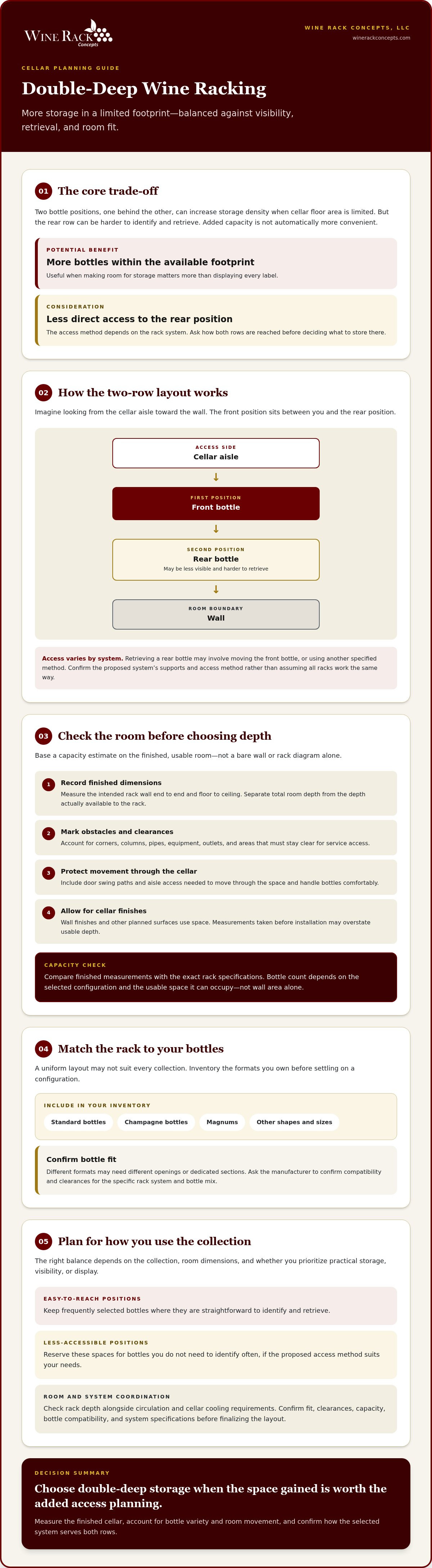
How double-deep bottle storage is arranged
Picture the rack from the side, looking toward the wall:
Cellar aisle → [Front bottle] → [Rear bottle] → Wall
The front position occupies the route to the bottle behind it. Depending on the system, retrieving a rear bottle may mean moving the front bottle first, or using another specified method. Don’t assume all racks use the same supports or access method. Before choosing where to store bottles you want to locate quickly, ask how the proposed system handles both rows.
Where double deep wine racking may make sense
This layout may suit a residential cellar where preserving floor area matters more than displaying every label, or a commercial storage room where organized reserve capacity is a priority. Neither setting guarantees a good fit. Consider who will access the bottles, how often, and whether you can keep frequently selected bottles in easier-to-reach positions.
Capacity is theoretical until it is checked against the room and collection. Rack design, bottle shapes and sizes, and usable dimensions all affect how many bottles fit. Measure the finished space, not just the bare wall. Finishes, obstacles, door swings, and aisle access can reduce the depth available for racking. A custom wine cellar plan can coordinate rack depth with circulation and cooling requirements. Confirm dimensions, clearances, capacity, and bottle fit for the selected system before finalizing the layout.
Which Measurements and Bottle Details Determine Double-Deep Rack Fit?
A useful capacity estimate starts with the finished room, not bare framing or a rack diagram. With double deep wine racking, a small difference between total wall depth and usable depth can affect both fit and access. Record the dimensions of the completed space, then compare them with the specifications for the proposed rack.
Measure usable space before estimating bottle capacity
Measure the intended rack wall from end to end and floor to ceiling. Note corners, columns, pipes, equipment, outlets, and areas that must remain clear for service access. Include doors and their swing paths, along with the aisle space needed to move through the cellar and handle bottles comfortably.
Separate the room’s total depth from the depth available to the rack. Wall finishes and other planned surfaces take up space, so a measurement made before installation may overstate the usable dimension. Give the designer your finished measurements and ask them to check clearances against the exact rack specifications. Don’t estimate bottle count from wall area alone. Capacity depends on the selected configuration and the space it can occupy.
Check bottle formats and everyday retrieval needs
Make a simple inventory before choosing a uniform layout. Note standard bottles as well as larger or differently shaped formats, such as Champagne bottles or magnums. Their dimensions may call for different openings or dedicated sections. Ask the manufacturer to confirm clearances and compatibility for the specific rack system and bottle mix. A general capacity figure is not a promise for your cellar. Usable dimensions and configuration determine the final count.
Mark the bottles you expect to reach often. Place them in front-access zones where possible, and organize reserve bottles in positions where retrieval takes more effort. For broader planning considerations, see this custom wine racks guide. The Académie du Vin Library also discusses storing a large wine collection, a useful reminder to plan around the collection rather than a bottle-count target alone.
Before finalizing the layout, share your measurements and inventory through a wine cellar design request. A design review can help coordinate rack depth, bottle fit, and room access. Confirm exact specifications for the system you are considering.
Double Deep vs. Single-Depth Wine Racking: Is the Capacity Tradeoff Worth It?
The right layout isn’t simply the one that holds the most bottles. Single-depth racking keeps each bottle in a direct-access position, while double-deep storage places one bottle behind another. The extra row can make better use of available room depth, but it may reduce visibility and add a step when you need a rear bottle. The value depends on how you organize and use your collection.
When single-depth racks make more practical sense
If you rotate bottles often, easy identification and retrieval may matter more than fitting extra positions into the same area. Single-depth storage can also suit label-forward display or special bottles you want to see at a glance. It doesn’t always take more room overall, so compare actual wall length, available depth, aisle space, and circulation before deciding.
When double-deep storage earns its place
Double depth may be useful for reserve bottles that you access less often, especially if you can keep rear positions organized and identifiable. If you lose track of a bottle’s location, added capacity can become frustrating rather than practical. Consider how you’ll track the back row and whether the system’s access method fits your routine. For a larger-scale project, the high-capacity commercial cellar guide offers broader planning context.
A hybrid layout can balance storage density with convenient access. For example, use single-depth positions for bottles you select regularly or want to display, and double-deep sections for reserves. This approach may work in a residential cellar or a commercial storage area, but neither setting makes double depth an automatic choice. Let the collection, room dimensions, and retrieval patterns guide the plan.
Compare the options by asking:
- Footprint: Does using more room depth help preserve floor area or aisle access?
- Visibility: Do you need to identify each bottle without moving another?
- Organization: Can you reliably locate bottles stored in rear positions?
- Use: Which bottles are opened or handled often, and which can remain in reserve?
There’s no universal capacity percentage that makes one configuration the better choice. Double deep wine racking is useful when the added storage is accessible enough for your routine and the room still functions comfortably. To compare rack depth with your collection needs, you can submit a wine cellar design request.
How to Plan Double-Deep Wine Racking Around Your Collection
Start with the bottles and how you use them, then plan around the room and rack. This sequence helps ensure double deep wine racking supports your collection instead of forcing it into a layout that’s difficult to navigate.
Build a bottle inventory and access map
Record your approximate collection size, bottle formats, and how you expect the collection to grow. Then sort bottles by use: which do you reach for often, which deserve display, and which can be stored as reserves? This helps assign convenient positions to bottles you want to identify and retrieve without extra handling.
Next, sketch a simple plan view of the cellar. Mark walls, doors, obstacles, rack locations, and the paths you’ll use to reach each storage zone. Show where front-row bottles may need to be moved to reach bottles behind them. The drawing doesn’t need to be architectural. It should make circulation and retrieval clear before the layout is finalized.
Confirm the rack plan before selecting materials
With the room and collection mapped, ask a qualified design professional to validate the dimensions and proposed configuration. Confirm rack depth, bottle clearances, and fit for the formats in your inventory. Also check whether the intended double-deep arrangement is available in the selected system. Don’t base the final bottle count on a general estimate. It depends on the specific design and usable space.
Choose materials after reviewing the layout requirements and the look of the cellar. Compare wooden wine racks with metal rack options in relation to the room’s design and storage needs. Verify that the selected material and system support the proposed configuration. A custom plan can coordinate these choices with the room instead of treating the rack as a separate decision.
Before approval, review the plan against your inventory, access zones, room measurements, and collection-growth expectations. Check that frequently selected bottles have a workable retrieval path and reserve storage is clearly organized. Resolve fit questions before finalizing materials and configuration.
Design a Double-Deep Wine Cellar That Balances Storage and Access
A well-planned cellar makes room for a growing collection while staying comfortable to use. Double-deep racking can add storage positions, but the full design still needs to account for bottle visibility, retrieval paths, organization, and room circulation. Treat the rack as one part of the cellar plan, not a capacity decision made in isolation.
Coordinate racking with the cellar environment
Consider how rack placement relates to doors, walkways, display areas, and the routes you use through the room. A dense layout may suit reserve storage, while a more visible area can keep selected bottles easy to identify. Plan an arrangement where storage priorities don’t obstruct everyday access or the overall experience of the space.
Plan cooling alongside the racking rather than treating it as a later addition. Rack depth and placement need to fit the cellar layout, and the cooling approach should be considered as part of the whole environment. Explore wine cellar cooling options as you review the complete plan, and confirm system requirements with the appropriate design professional. Avoid choosing a configuration based on assumptions about performance or temperature needs.
Turn the layout into a design conversation
Bring useful information to the discussion: finished room measurements, a bottle inventory, access priorities, and inspiration images that show the look you have in mind. These details can help determine whether double-deep storage belongs throughout the cellar or only in selected zones. Ask which rack configurations and material options are available for your project, and how the proposed arrangement will support both storage and retrieval.
Custom design provides a way to review dimensions and priorities before settling on a layout. It can help align the racking with the room and collection, but confirm the exact fit and available configuration for the system being considered. A review can also surface tradeoffs while there is still room to adjust the plan.
With capacity, access, display, and circulation considered together, double deep wine racking can become part of a cellar designed around the collection rather than a standalone storage choice. If you’re ready to discuss the space and your priorities, submit a design request.
Plan a Cellar That Grows With Your Collection
The best storage plan balances bottle capacity with visibility, organization, and comfortable movement through the room. Double deep wine racking can make use of available depth, but its value depends on whether you can identify and retrieve rear-row bottles with ease. Single-depth or hybrid zones may better suit bottles you reach for often.
Before choosing a layout, match finished room measurements to rack specifications and consider your bottle formats and access habits. Confirm the configuration’s fit and capacity for your collection rather than relying on a general estimate. These checks turn storage goals into a practical plan.
Wine Rack Concepts, LLC designs and manufactures custom wine cellars and storage solutions. Its product range includes the Classic, Carpenter, and Vintner series, Wall Wine Rack series, Fusion Wine Walls, and cable and glass systems. A design review can help you discuss rack depth, room layout, and collection priorities without assuming one configuration suits every cellar.
With thoughtful planning, your cellar can support collection growth while keeping the bottles you value within reach.
Frequently Asked Questions About Double-Deep Wine Racking
What is double deep wine racking?
Double deep wine racking stores bottles in two positions, one behind the other, using room depth for an additional row. The front bottle can affect access to the one behind it, although rack construction and retrieval methods vary. Before choosing a configuration, confirm how both rows are supported and accessed, and check that its dimensions and clearances suit your room and bottle formats.
Does double-deep wine racking hold more bottles than single-depth racking?
It can provide more bottle positions along a rack face by adding a rear row, but final capacity depends on the design, usable room dimensions, and bottle mix. A larger theoretical count isn’t always more useful if rear bottles are difficult to identify or retrieve. Compare the actual configuration with your collection and access habits instead of relying on a universal capacity estimate or percentage.
Are bottles at the back of a double-deep wine rack difficult to access?
They can take more effort to reach because a front bottle may block the path. How access works depends on the rack system, so ask whether front bottles must be moved and how rear positions are organized. When practical, reserve the back for bottles you access less often and keep frequently selected bottles within easier reach. This can make the added storage more manageable in everyday use.
How much space do I need for double-deep wine racking?
Allow for the rack’s depth, cellar finishes, obstacles, doors, and enough aisle space to reach and handle bottles. As an initial planning reference, two bottles stored one behind the other may require about 26 inches of rack depth, but this isn’t a universal specification. Measure the finished room and confirm exact dimensions and clearances for the selected configuration before estimating capacity or finalizing a layout.
Can double-deep wine racks hold different bottle sizes?
Some configurations may accommodate a mix, but bottle fit depends on the rack’s openings, supports, and specified clearances. Standard 750 ml bottles may fit differently from broader Champagne bottles or magnums. Inventory your formats before choosing a layout, then ask the manufacturer to confirm compatibility for the specific system. Dedicated sections or varied rack openings may be needed. Don’t assume every bottle will fit a uniform position.
Is double-deep racking a good choice for a small wine cellar?
It may help a small cellar use available depth for storage, particularly for reserve bottles, but it can also make rear-row access and movement through the room more challenging. Measure usable depth after finishes and account for doors and aisles before deciding. A mixed layout may work better if you want both reserve capacity and convenient access to frequently selected bottles. Suitability depends on the room and your routine.
How do I choose between wood and metal double-deep wine racking?
Start with the cellar’s visual direction, collection needs, and the dimensions required for the planned layout. Wine Rack Concepts, LLC offers wooden and metal wine rack categories, but don’t assume a particular double-deep configuration is available in both materials. Confirm system-specific bottle fit, clearances, and configuration options before choosing. Comparing material samples or design references can also help you decide how the racks will complement the room.
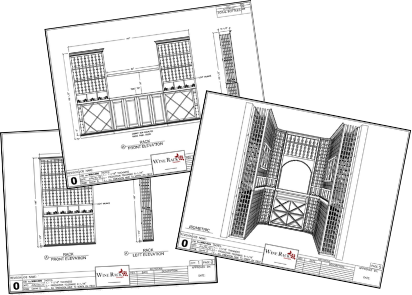
Have an expert help today!
Free 2D wine cellar design