Custom Wine Cellar Racking: Design a Storage System Around Your Collection

*Pictures are renderings. Actual wine racks may look different
The most impressive wine wall may not be the right place to start. Successful custom wine cellar racking begins with the bottles and the room, then shapes the display around them. If you’re weighing capacity against easy access or wondering whether a design can accommodate larger bottle formats, work through those practical details before choosing finishes and visual flourishes.
Your collection, available space, and storage habits all influence the right layout. A system designed for everyday access may look different from one that prioritizes long-term storage or label-forward display. Racking sets the cellar’s structure and style, but the room’s conditions matter too.
This guide explains how to plan a layout around your space and collection, compare common racking formats and materials, and gather useful details before requesting a design. You’ll also see how cooling fits into the broader cellar plan, so the finished space can balance thoughtful presentation with the needs of your wine.
Key Takeaways
- Start your custom wine cellar racking plan with your collection and how you want to store, access, and present each bottle.
- Measure the room and note fixed features such as doors, corners, and openings before settling on a layout.
- Compare traditional rack series, wine pegs, and cable or glass systems according to your storage and display priorities.
- Gather details about bottle formats, access needs, intended use, and preferred appearance before requesting a design.
- Consider cellar cooling alongside the racking plan, since storage conditions are part of creating a functional wine cellar.
What Custom Wine Cellar Racking Should Do for Your Collection
Custom wine cellar racking is a storage system planned around the room, the bottles in a collection, and how the cellar will be used. Instead of choosing a generic capacity first, consider where racks can go, which bottles you want to store or display, and how people will reach them. A useful layout brings those needs together without treating them as interchangeable.
Bottle storage, presentation, and retrieval are connected, but each influences the plan differently. A wine rack holds bottles; a custom arrangement also considers how the collection fits the room and how its owner wants to interact with it.
For a practical look at cellar racking, watch this video from Oregon Makers:
Start with the bottles you own and expect to collect
Begin with a realistic inventory, then think about how your collection may grow. A plan based only on today’s bottle count can leave little room for future additions, while an arbitrary capacity target may use space you don’t need. Note the bottle shapes and formats in your collection because they can affect rack configuration. Ask how the proposed design will accommodate them rather than assuming every bottle fits in the same way.
Identify bottles you want to see or reach easily, such as those you open often or choose for special occasions. This helps you decide where display and convenience matter most.
Balance storage, display, and everyday access
High-density storage focuses on making practical use of the available rack area. A display-forward arrangement puts more emphasis on how bottles look in the room. Neither priority is automatically right for every collection. Bottles you access frequently may be more convenient in an easy-to-reach position, while those kept primarily for longer-term storage may have different placement priorities.
As you compare options, decide which bottles should be prominent and which can be stored more discreetly. For a broader overview of rack design, materials, and storage considerations, explore The Definitive Guide to Custom Wine Racks: Design, Materials, and Professional Storage. These choices give a designer a clearer starting point for shaping custom wine cellar racking around your collection.
How Custom Wine Cellar Racking Fits the Room and Cellar Layout
A strong layout starts with the room, not a rack style. Measure the space, map fixed features, set storage priorities, then consider where each rack might work. This sequence helps identify usable areas and spots where a preferred configuration could conflict with doors, access routes, or equipment.
Measure the room before choosing a configuration
Record the length of each wall and the ceiling height. Note doorways and their swing, corners, windows, openings, posts, and any visible obstruction that could affect placement. A simple dimensioned sketch, supported by photographs, gives a designer a useful starting point for an initial conversation. Include features that may not be clear in a photo, such as a change in wall depth.
Then consider how people will enter, move through, and use the cellar. Filling every available wall may reduce convenient access to bottles or make part of the room difficult to use. Walkways and retrieval needs affect usable storage, so review them alongside capacity rather than relying on a generic clearance figure. Confirm specific dimensions for the room and project.
Plan racking alongside climate control
Racking stores and presents bottles; cellar cooling equipment manages the room’s conditions. They serve different purposes, but their locations need to be considered together. Identify where cooling equipment may be placed and whether the proposed rack layout will preserve access to it. For background on wine storage conditions, consult the Washington State University Viticulture & Enology Extension. Wine Rack Concepts, LLC also offers wine cellar cooling solutions as a complementary part of cellar planning.
Once you have measurements and room notes, compare possible rack placements with your storage priorities. If a wall has an opening or an unusual corner, document it rather than assuming a standard configuration will fit. The design discussion can then account for the room’s actual shape and intended use.
Keep planning distinct from construction decisions. Your sketch and photos help communicate the layout, but they don’t establish building conditions or project-specific installation requirements. Ask a qualified project professional to assess construction details outside the scope of rack planning. With those inputs clarified, discussing your cellar design can help translate the room and collection needs into a considered custom wine cellar racking plan.
Compare Custom Wine Cellar Racking Styles for Storage and Display
Racking style affects how a cellar organizes bottles and how the collection looks in the room. Traditional rack series can support a more structured storage plan, while wine pegs, cable racks, glass elements, and wine walls can create a more visually open display. Treat these as broad design directions, then check current product details to see how a particular system suits your collection and space.
Traditional wine rack series and bottle organization
Wine Rack Concepts, LLC offers the Classic, Carpenter, and Vintner series as traditional rack families. The series names alone don’t establish which configuration, dimensions, materials, or bottle capacity will suit a project. Compare current product information and discuss how each option supports your collection and preferred appearance before selecting a series. For another perspective on material choices, review available metal wine rack options alongside wooden designs.
Display-led systems, wine pegs, and glass elements
Cable racks, glass systems, wine pegs, and Fusion Wine Walls offer contemporary ways to make bottles part of a room’s visual design. If seeing labels is a priority, ask how the proposed arrangement will orient and present those bottles. An open display can make selected bottles more prominent, while a more structured layout may better suit a plan focused on organized storage. The right balance depends on your priorities, not a single style rule.
For more context on technical and design considerations, AEC Daily offers material on wine cellar design and construction. You can also explore the related guide Modern Wine Wall Displays for Contemporary Interiors for further inspiration. Use these references to compare visual directions while keeping the final choice grounded in the room, collection, and current product specifications.
Build a Custom Wine Cellar Racking Brief Before You Request a Design
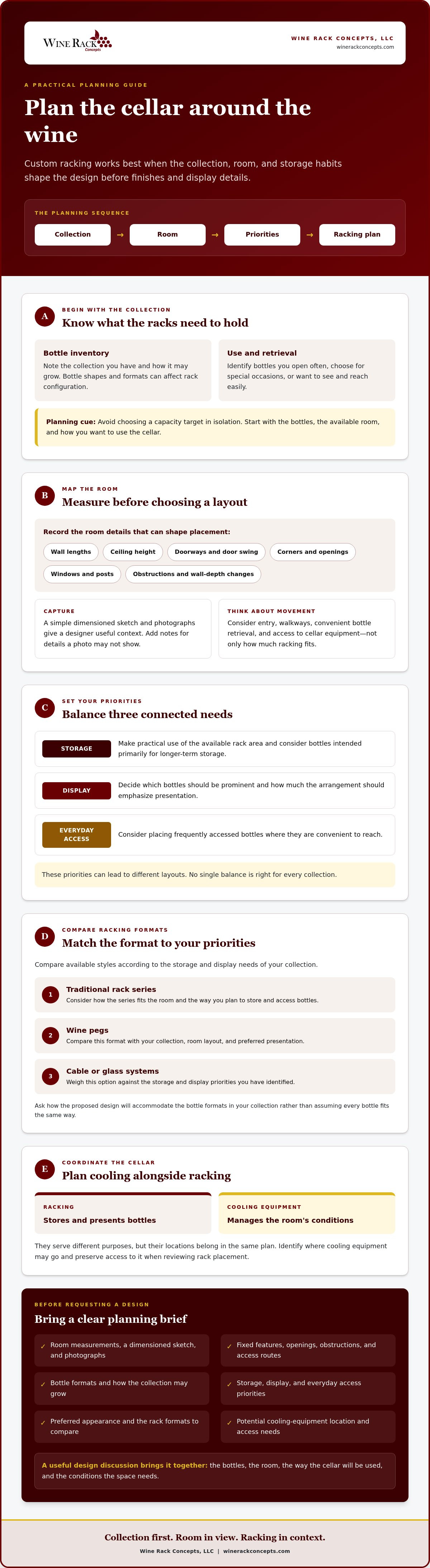
A clear brief helps turn ideas about custom wine cellar racking into a plan that can be reviewed against your collection and room. You don’t need a finished layout. Gather practical details and explain what matters most so the design conversation can focus on relevant configurations rather than guesswork.
Information to gather for a useful first conversation
Before reaching out, pull together notes on your bottles, space, and priorities. Include:
- Collection: Your current bottle count, expected growth, and any unusual bottle shapes or formats to consider.
- Room: Wall and ceiling measurements, photographs, and notes on doors, door swings, corners, openings, and other fixed features.
- Access: How you move through the room and which bottles you want easiest to reach.
- Display: Whether you want selected bottles or labels to stand out, or prefer a more discreet, storage-focused look.
- Style: Your preferred visual direction, such as traditional racks or a contemporary display, plus examples that help communicate your taste.
- Use: Whether the cellar is for a household or a commercial setting, and how people will use it.
The intended use can shift the priorities. A household may focus on personal organization and convenient access to bottles opened regularly. A commercial setting may need to consider how staff or guests view and retrieve bottles. Neither calls for one universal layout. Describe who will use the cellar and the experience you want it to support.
Turn priorities into a practical rack plan
A brief makes it easier to discuss how rack placement and configuration might serve your priorities. For example, identifying bottles you want to display helps distinguish presentation needs from general storage. Mention expected collection growth, too, so the plan can account for future additions. Confirm product fit, dimensions, bottle compatibility, and other project details during design rather than assuming them from a general description.
Wine Rack Concepts, LLC works with residential and commercial clients on wine storage and cellar solutions. Sharing your notes with a specialist can help translate your collection and room requirements into a considered plan. Learn more about custom wine cellar design.
Bring Your Custom Wine Cellar Racking Plan to Life
A considered racking plan takes shape in stages: assess your collection and how it may grow, document the room, compare visual styles, and discuss how the pieces might work together. Each step gives the design conversation useful context. You don’t need to arrive with every detail decided; a clear sense of your priorities is a strong starting point.
Wine Rack Concepts, LLC specializes in custom wine cellars and wine storage systems for residential and commercial applications. Options include traditional rack families such as the Classic, Carpenter, and Vintner series, along with contemporary display systems. These are options to discuss, not automatic recommendations. The right configuration depends on your room, collection, and intended use.
What to expect when discussing a custom racking project
An initial design discussion is a chance to explain what you want the cellar to do. Share room details, collection needs, and preferences for storage, display, and access. Ask how proposed configurations would accommodate the bottle formats you own and support your intended use of the space. Confirm product fit and project-specific details as you review options, rather than relying on assumptions about capacity or dimensions.
If cellar conditions are part of your project, raise cooling as a complementary planning consideration. Racking and cooling serve different functions, but both may influence decisions about the room. A discussion can help clarify which details need attention as you shape the overall plan.
Take the next step with a design request
Before submitting a request, gather the information that best describes your project: room measurements and photographs, an estimate of your current collection and future needs, unusual bottle formats, and your preferred appearance. Note which bottles you want to access easily and whether the cellar will serve a household or a commercial setting. These details communicate your goals without requiring you to settle on a final layout in advance.
With those essentials in hand, share the scope of your project and request design guidance from Wine Rack Concepts, LLC. A clear brief makes it easier to discuss how custom wine cellar racking could reflect both your collection and the space.
Shape a Cellar Around the Collection You Love
A thoughtful cellar plan starts with the bottles and the room, not a capacity target or a particular look. Take stock of your collection, note the room’s fixed features, and consider how you want to store, display, and access your wine. Then compare racking styles with those priorities, confirming product fit and project details as the design develops.
Custom wine cellar racking can bring practical storage and personal style together. Wine Rack Concepts specializes in custom wine cellars and wine storage solutions, with options that include traditional rack series, wine walls, cable and glass systems, and complementary cooling. A design discussion can help connect those options with your collection and intended use.
With your measurements, collection goals, and preferred appearance in hand, you have a strong foundation for the conversation. Take the next step with a clear brief and shape a cellar around your collection.
Frequently Asked Questions
What is custom wine cellar racking?
Custom wine cellar racking is a storage layout planned around a cellar’s dimensions, wine collection, and intended use. It can bring together bottle storage, presentation, and convenient retrieval, though those goals may call for different choices within the same room. Rather than starting with a generic capacity target, consider what you own, how your collection may grow, and how you want to use and view the cellar.
How do I plan wine racking for a custom cellar?
Start by estimating your current collection and likely growth, then measure the room and note doors, openings, corners, and other fixed features. Decide whether storage, display, easy access, or a balance matters most. Then consider rack placement and compare formats against those priorities. A dimensioned sketch and photographs can help communicate the space, while project-specific measurements and product fit should be confirmed during design.
Can custom wine racks accommodate different bottle shapes?
They may be planned with different bottle formats in mind, but fit depends on the rack configuration and the bottles in your collection. Flag unusual shapes or formats before a design is finalized, and share details or measurements if available. Don’t assume a rack designed around standard bottles will suit every bottle you own. Ask the designer to confirm which formats a proposed configuration is intended to accommodate.
What is the difference between wine storage racks and display racks?
Storage-focused racks prioritize organized placement and practical use of the available space. Display-forward racks give more attention to how bottles appear, which may make selected wines or their labels more visible. These purposes can overlap, but they aren’t identical: a prominent presentation may not maximize storage density, and a compact arrangement may not showcase every bottle. Consider which wines you want to see and reach easily.
Which custom wine cellar racking style is right for my collection?
The right style depends on your room, collection, and preferred balance of storage and presentation. Traditional options include the Classic, Carpenter, and Vintner series. Wine pegs, cable racks, glass systems, and Fusion Wine Walls offer other design directions. Compare current product details rather than assuming a series has a particular capacity, material, or bottle fit. Share your priorities with a designer to discuss suitable configurations.
Does wine cellar racking need to be planned with cooling?
Plan the two together because they serve separate purposes. Racking stores and presents bottles, while cellar cooling equipment manages the cellar environment. Consider equipment location and access as you plan rack placement, so the layout accounts for both. Cooling isn’t a racking feature, but it is a complementary part of cellar planning. Confirm project-specific requirements with the appropriate design or cooling professional.
What information should I provide when requesting a custom wine cellar design?
Share your current bottle count, expected collection growth, and any unusual bottle formats. Include room measurements, photographs, and notes on doors, openings, corners, and other fixed features. Describe whether storage, display, or convenient access matters most, along with your preferred look and how the cellar will be used. These details give Wine Rack Concepts, a specialist in custom cellars and wine storage, a helpful starting point for discussing your project.
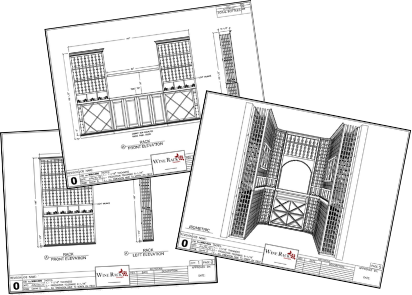
Have an expert help today!
Free 2D wine cellar design