Custom Wine Cellar Design: The Essential Guide to Luxury Storage

*Pictures are renderings. Actual wine racks may look different
What if the very room designed to showcase your finest vintages is actually the greatest threat to their longevity? You've spent years curating a collection that reflects your personal taste, and it's natural to want a display that matches that level of sophistication. Mastering custom wine cellar design requires more than just picking a style; it's about creating a controlled environment where luxury materials and engineering meet. If you've felt overwhelmed by technical choices like vapor barriers or the nuances of climate control, you're not alone.
This guide provides a clear roadmap for your project, exploring everything from the classic Vintner Series to modern Fusion Wine Walls. Today's premium cellars rely on a global supply chain, utilizing high-quality components sourced from international manufacturers to ensure both durability and aesthetic harmony. We'll show you how to balance high-end aesthetics with technical preservation to protect your investment. From selecting metal wine cellar doors to installing self-contained refrigeration units, you'll gain the peace of mind that comes from a professional, well-planned storage solution. Whether you prefer a traditional wood finish or a contemporary glass display, the goal remains the same: a stunning space that performs as well as it looks.
Key Takeaways
- Understand the critical role of climate control, specifically maintaining 55°F and 60% humidity to ensure long-term preservation.
- Discover how a successful custom wine cellar design integrates architectural beauty with invisible infrastructure like vapor barriers.
- Evaluate the aesthetic differences between traditional wooden racking and modern metal systems that utilize a global supply chain for quality materials.
- Learn to scale your storage project effectively by assessing space requirements and bottle capacity for future collection growth.
- Identify why professional-grade components like self-contained refrigeration units and metal doors are essential for high-performance storage.
The Fundamentals of Custom Wine Cellar Design
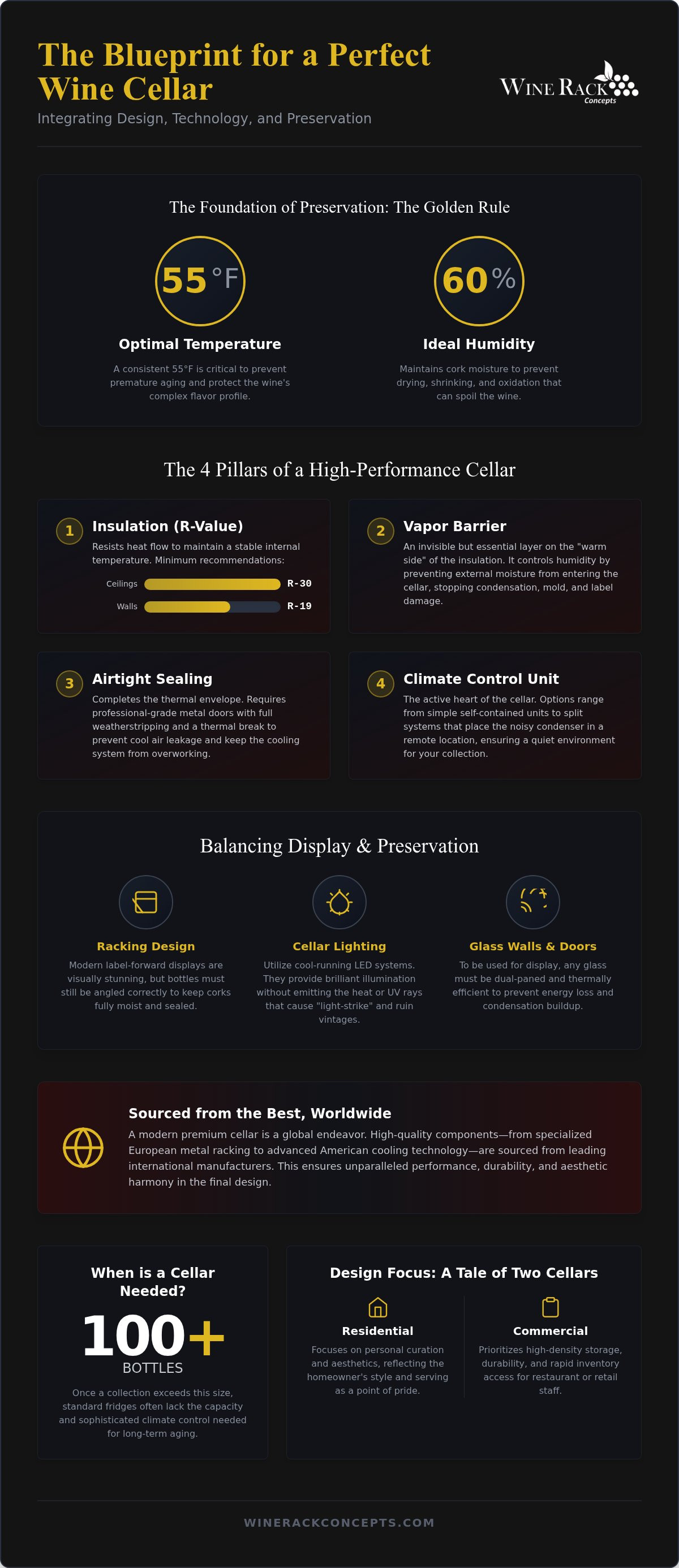
A custom wine cellar design is far more than a simple storage room; it's a precisely engineered environment built to protect your investment. While a standard closet might hold boxes, a professional cellar maintains the specific temperature and humidity levels required for long-term maturation. In recent years, we've seen a significant shift in how these spaces are integrated into the home. They've moved from hidden basement corners to becoming central architectural features that prioritize visibility and style. This evolution means that modern cellars must function as both a high-performance laboratory for wine and a stunning gallery for guests.
If your collection has grown beyond 100 bottles, specialized storage becomes a necessity rather than a luxury. Standard wine fridges often lack the capacity or the sophisticated climate zones needed for a diverse portfolio of reds, whites, and sparkling wines. Achieving the right balance requires a dual approach. You must combine active cooling systems, like self-contained refrigeration units, with passive insulation strategies such as high-grade vapor barriers. This synergy ensures that your cooling unit doesn't work harder than it needs to, which extends the life of the equipment and protects your wine from temperature fluctuations.
Preservation vs. Display: Finding the Balance
Designing for aesthetics shouldn't compromise the health of your wine. Racking angles play a vital role here. While label-forward displays in our Fusion Wine Walls look stunning, the bottles must still maintain a position that keeps the corks moist. Lighting is another critical factor. We utilize LED systems because they provide a brilliant glow without emitting the heat or UV rays that can "light-strike" and ruin a vintage. If you choose to incorporate glass walls, it's essential to use dual-paned, thermally efficient glass to prevent condensation and maintain the internal climate.
Residential vs. Commercial Design Requirements
The goals of a cellar often depend on its location. Residential designs focus on personal curation and how the space reflects the homeowner's style. It's a place for pride of ownership. In contrast, commercial environments prioritize high-density storage and rapid inventory access for staff. These projects often benefit from a mix of domestic and international components. While some metal wine cellar doors are manufactured in the United States, many specialized racking components and cooling technologies are sourced through a global supply chain to provide the best performance at scale. Resources like "The Definitive Guide to Custom Wine Racks" help define these distinctions, ensuring you don't over-engineer a home cellar or under-equip a high-traffic restaurant space. Using a mix of series, such as the Vintner or Carpenter series, allows for a design that adapts to the specific bottle turnover and display needs of the environment.
Critical Infrastructure: Climate Control and Preservation
The success of a custom wine cellar design depends on the "Golden Rule" of preservation: maintaining a consistent 55°F and 60% relative humidity. These specific parameters prevent the premature aging of your wine and keep corks from drying out. Achieving this environment requires more than just a powerful cooling unit. It demands a holistic approach to room construction where insulation and airtight seals work in tandem. If the thermal envelope is compromised, your cooling system will cycle too frequently, leading to temperature spikes and potential mechanical failure.
Insulation is measured by its R-value, which indicates its resistance to heat flow. For a professional-grade cellar, interior walls typically require a minimum of R-13 to R-19 insulation, while ceilings should aim for R-30. This heavy insulation keeps the cold air in and the warm air out. Additionally, every entry point must be secured. Metal wine cellar doors are preferred for their durability and ability to hold a tight seal, provided they are equipped with commercial-grade weatherstripping and a dual-paned thermal break.
Selecting a Wine Cellar Cooling System
Choosing the right equipment depends on the size of your space and your tolerance for noise. Self-contained refrigeration units are popular for smaller, enclosed rooms because they are relatively easy to install. If you want to eliminate compressor noise within the cellar or adjacent living areas, split systems are the better choice. These systems allow you to place the condenser in a remote location or even outdoors. When selecting a unit, a precise BTU calculation is essential. This calculation accounts for the room's dimensions, the R-value of your insulation, and the ambient temperature of surrounding rooms. While some units are assembled in the United States, high-performance cooling technology often utilizes a global supply chain, drawing on international engineering to achieve the precision required for luxury storage.
The Importance of Vapor Barriers and Airtight Seals
Vapor barriers are the most critical invisible component of any cellar. They prevent moisture from migrating through the walls, which can lead to condensation and mold growth behind your racking. Closed-cell spray foam is the gold standard for modern construction because it functions as both high-density insulation and a vapor barrier. If you use traditional fiberglass batts, a 6-mil poly barrier must be installed on the warm side of the wall. Without these protections, the humidity inside your cellar will constantly fight against the dry air outside. To ensure your technical specifications are met, it helps to consult with a specialist who can review your room's architectural plans before construction begins.
Aesthetics and Materials: Wood, Metal, and Global Sourcing
Choosing the right materials for your custom wine cellar design is a decision that balances visual impact with long-term structural integrity. Because a cellar is a high-humidity environment, every component must be resilient enough to withstand constant moisture without warping or degrading. While the aesthetic choice between warm wood and sleek metal often defines the room's personality, the quality of these materials is what ensures the safety of your collection. It's a reality of the modern luxury market that high-end manufacturing is a global endeavor. To provide the most durable and visually stunning options, we utilize a worldwide supply chain. This means sourcing specialized hardware, premium alloys, and seasoned woods from international partners who meet our strict standards for performance and craft.
Whether you are drawn to the traditional feel of a subterranean vault or the clean lines of a modern gallery, the materials you select must perform under pressure. Wood offers a classic, organic warmth, while metal provides a minimalist backdrop that lets the labels take center stage. Both options require careful consideration of their origin and treatment to ensure they don't introduce off-gassing or structural weaknesses into your climate-controlled space.
Wooden Racking Series: Classic to Contemporary
For those who appreciate the heritage of wine storage, wooden racking remains the gold standard. Our Vintner and Carpenter series offer modular flexibility, allowing you to create a tailored look that fits your specific room dimensions. The Classic series typically utilizes redwood or mahogany, species known for their natural resistance to rot and decay in humid conditions. When it comes to finishing, natural wood is often the safest choice for air quality; however, if you prefer a specific aesthetic, we offer stains that are specifically formulated to remain stable in a cellar environment. These components are often sourced from international forests where sustainable harvesting and precision milling provide the consistency required for high-density storage.
Modern Metal and Glass Innovations
If your home features a more contemporary aesthetic, modern metal systems offer an innovative way to showcase your bottles. Fusion Wine Walls are a popular choice because they combine wood backer boards with metal pegs, bridging the gap between traditional and modern styles. For a truly "floating" look, cable and glass wine racks maximize visibility and light, turning your collection into a transparent focal point. The Wine Peg series offers a minimalist approach, perfect for small feature walls or high-impact displays. These metal systems often rely on precision-engineered components manufactured in specialized facilities worldwide, ensuring that every peg and cable can support the weight of your finest vintages without fail.
Step-by-Step Planning for Your Wine Storage Project
A successful custom wine cellar design follows a methodical, five-phase process that bridges the gap between architectural vision and technical reality. Professional planning ensures that your investment is protected by a climate-controlled environment that functions as intended from the first day of operation. This journey begins with a realistic assessment of your available space and ends with the precise commissioning of cooling equipment. Because high-end cellar components are often part of a global supply chain, understanding the lead times and sourcing for specialized materials is a critical part of the initial timeline.
The planning stages are as follows:
- Phase 1: Assessing the footprint, whether it is a small closet, a basement, or a new construction project.
- Phase 2: Determining current bottle capacity and forecasting future collection growth.
- Phase 3: Selecting the specific climate control technology required for the room's BTU load.
- Phase 4: Finalizing the racking layout and material finishes, such as wood or metal.
- Phase 5: Professional installation and the final commissioning of the cooling system.
Space Assessment and Layout Optimization
Repurposing existing areas of a home requires creative engineering to overcome structural limitations. Turning a standard closet into a wine cellar is a popular choice for urban residences, though these small footprints require compact cooling units and efficient air circulation. Under-stair wine storage is another excellent way to maximize awkward architectural voids, provided the racking is custom-fitted to the sloped ceiling. To prevent wasted space in the corners of a room, we utilize specialized corner wine rack configurations. These units allow for a continuous flow of bottles along the perimeter, ensuring that every square inch of the footprint contributes to your storage goals.
Calculating Capacity and Growth
Determining your bottle count is about more than just your current inventory. It's a strategic decision based on your buying habits and how long you intend to age your wine. Most collectors find that their collection grows steadily over time. We recommend planning for at least 25% more capacity than you currently require. You must also consider the physical diversity of your collection. Standard individual racking is ideal for 750ml bottles, but a well-rounded custom wine cellar design should also include dedicated space for magnums and champagne bottles. For those focusing on high-density displays, "The Ultimate Guide to Wall Mounted Wine Racks" provides insights into how vertical storage can increase capacity without expanding the room's footprint. While individual bottle racking offers the best visibility, incorporating bulk storage bins is often more efficient for case purchases and long-term aging.
Request a custom cellar design consultation
Once the layout and capacity are finalized, the focus shifts to technical execution. This involves sourcing the right cooling technology and finalizing material choices. As we've noted, premium cellar components like metal wine cellar doors and specialized racking are often sourced from international manufacturers to ensure the highest standards of durability. The final phase is the installation and commissioning process, where we verify that the airtight seals and refrigeration units are performing at their peak efficiency.
Selecting Professional Components for a High-Performance Cellar
Professional-grade components are the foundation of a high-performance cellar. While consumer wine fridges are suitable for temporary holding, they cannot replicate the integrated climate control of a full-scale custom wine cellar design. A successful project requires that every element functions as a single, cohesive system. If one component fails to meet the required specifications, the entire thermal envelope is compromised. This puts your investment at risk. When the racking, cooling, and doors are designed together, they minimize vibration and maintain the precise atmospheric conditions your wine deserves.
Our approach to sourcing is grounded in the reality of the modern global marketplace. We understand that manufacturing is an international endeavor. While we prioritize American-made components when they offer the best technical performance, we also source specialized hardware and cooling technologies from around the world. This inclusive perspective allows us to select materials based on their durability and precision. It's a reality that high-quality products often cross borders before they reach your home. This ensures you receive an accurate portrayal of the origins of various products, acknowledging that manufacturing is a diverse, worldwide process.
The Role of Specialist Manufacturers
General contractors often possess broad building expertise, yet they frequently require specialized support for wine cellar engineering. Specialist manufacturers provide the technical precision necessary to calculate thermal loads and select appropriate materials. Metal wine cellar door manufacturing, for example, requires extreme accuracy to ensure that seals remain airtight even under constant thermal stress. If you're working with a builder, bringing in a specialist ensures that the cooling units are sized correctly for your specific room volume and insulation type. This collaborative approach prevents common errors that lead to condensation or mechanical failure.
Long-Term Maintenance and Reliability
Reliability is built through both quality components and proactive monitoring. High-performance cellars often include remote monitoring systems that track temperature and humidity in real time. These systems alert you to power outages or humidity drops before they impact your collection. Serviceability is another key consideration for long-term ownership. Self-contained refrigeration units offer straightforward maintenance, while split systems require a more methodical approach to service due to their remote compressors. By selecting professional-grade equipment, you ensure that your cellar remains a stable environment for decades. Regular inspections of the seals on your metal wine cellar doors will further protect the system's efficiency and longevity.
Start your custom wine cellar design with Wine Rack Concepts
Transforming Your Vision into a Professional Reality
Achieving a successful custom wine cellar design requires a commitment to both high-end aesthetics and technical precision. By prioritizing critical infrastructure like vapor barriers and specialized climate control, you ensure your collection matures in a stable environment. Whether you choose the modular flexibility of the Vintner and Carpenter racking series or the sleek lines of modern metal systems, your material choices should reflect a realistic understanding of the global supply chain. High-performance components are often sourced internationally to provide the durability required for luxury storage.
We provide nationwide design and equipment shipping to help you navigate each phase of the project with confidence. From initial space assessment to the final commissioning of your refrigeration unit, having an expert partner simplifies complex decisions. You can move forward knowing that your storage solution is engineered for both beauty and long-term protection. Your collection deserves a home that is as enduring as the vintages it holds.
Design your dream wine cellar with our expert team
Frequently Asked Questions
How much does it cost to build a custom wine cellar in 2026?
The total cost of a project depends on your specific requirements for bottle capacity, material choices, and the complexity of the cooling system. While we don't provide fixed pricing due to the bespoke nature of these rooms, variables such as square footage and the choice between wood or metal racking will influence your budget. A comprehensive custom wine cellar design typically accounts for both structural modifications and the selection of specialized equipment, often structured through Product Sales and Project-Based Construction Fees.
Can I build a wine cellar in my basement without a cooling unit?
A dedicated cooling unit is necessary for any cellar intended for long-term aging and investment protection. While basements are naturally cooler than upper floors, they rarely maintain the consistent 55°F required to prevent premature wine development. Without active climate control, seasonal temperature shifts can damage corks and cause wine spoilage. Relying on passive cooling is generally insufficient for high-value collections.
What is the best wood for custom wine racks in a humid cellar?
Redwood and Mahogany are the preferred choices for humid environments because of their natural resistance to rot and warping. These woods are featured in our Classic and Vintner series and are often sourced through a global supply chain to ensure the highest quality grain. Using these durable materials prevents the wood from degrading in the 60% relative humidity required for professional wine preservation.
How do I calculate the cooling requirements (BTU) for my wine room?
Calculating BTU requirements involves assessing the room's total cubic volume, the R-value of your insulation, and the temperature of the surrounding areas. You must also account for glass walls or doors, which have lower thermal resistance than insulated walls. We recommend working with a specialist to ensure your self-contained or split refrigeration unit is sized correctly for your specific thermal load and bottle count.
Is a vapor barrier really necessary for an indoor wine cellar?
A vapor barrier is absolutely essential to prevent moisture from migrating through the walls and causing structural damage. In a climate-controlled room, the temperature difference between the cellar and the rest of the home creates a dew point where condensation can form. Installing a 6-mil poly barrier or using closed-cell spray foam protects your home from mold and ensures the cooling system operates efficiently.
What is the difference between a wine cellar and a wine fridge?
A wine cellar is an engineered, walk-in room designed for high-capacity storage and precise humidity management, whereas a wine fridge is a standalone appliance with limited space. Cellars offer greater modular flexibility through series like the Carpenter or Vintner racks. They also provide a more stable environment for aging large collections that exceed the capacity and performance of consumer-grade appliances.
How long does the custom wine cellar design and installation process take?
The timeline for a project varies based on the complexity of the layout and the lead times for specialized components. Custom metal doors and specific racking series may involve international manufacturing schedules, which can influence the overall duration. Generally, the custom wine cellar design process moves from an initial consultation into construction and installation over several weeks to ensure every detail meets professional standards.
Do I need a special door for a climate-controlled wine room?
You must use a specialized door equipped with a thermal break and professional-grade weatherstripping to maintain an airtight seal. Standard interior or exterior doors often lack the insulation properties required to keep the cold air contained. Our metal wine cellar doors are engineered specifically for this purpose, preventing the cooling unit from overworking and ensuring the internal environment remains stable for your vintages.
Have an expert help today!
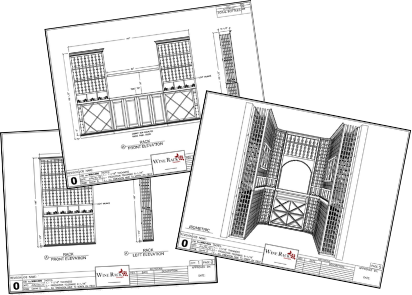
Free 2D wine cellar design