Create a Stable, Custom Layout with Narrow Depth Wine Racking

*Pictures are renderings. Actual wine racks may look different
A compact wine wall is a design problem, not a compromise. Plan narrow depth wine racking around the room's usable depth, standard 750-milliliter bottles, and modular sections sized to the available wall. This gives you a practical way to estimate capacity while shaping a stable, considered layout.
It's easy to focus on how many bottles a rack can hold, but bottle size, spacing, and module arrangement all affect usable capacity. This guide explains how to estimate capacity, plan a layout for a compact space, and assemble a rack with stability in mind. You'll also learn how narrow-depth and standard-depth options differ, so you can plan around your room and collection.
Key Takeaways
- Estimate capacity by accounting for bottle shape and the space each opening needs, not just the rack's outside dimensions.
- Choose a modular arrangement that fits the wall while leaving room for the way you access and organize your collection.
- Match rack material and maintenance needs to the room and the look you want to preserve over time.
- Build stability into the layout by considering its base, support, and connection to the surrounding structure.
- Compare compact and standard-depth options against the space available and the storage your collection calls for.
Table of Contents
Bottle capacity
Yes, narrow racks can suit wine cellars and temperature-controlled storage when their layout fits the bottles and available space. Capacity depends on the rack's dimensions, bottle shapes, and the number of openings suited to each format.
Capacity and Rack Dimensions
Rack dimensions determine how many bottle openings fit across its width and height. That matters because a compact footprint can still provide useful storage when the openings are arranged efficiently. Wine refrigerator capacity commonly uses a standard 750-milliliter Bordeaux-style bottle as its reference. Treat that figure as a planning baseline, not a promise that every bottle will fit.
Estimate capacity by counting the openings designed for your collection, rather than dividing room dimensions by a bottle measurement. A slim, shallow-depth wine cooler may hold around 20 bottles, while larger shallow-depth models can hold 50 bottles or more. Those cooler figures describe appliances, not every rack. For wine racks, the actual capacity comes from the layout and the formats each opening accepts.
Count bottles that need wider or taller spaces separately. If your collection includes standard Bordeaux bottles and Champagne, for example, assigning every opening to the standard format can overstate usable capacity. Record the bottle types first, then match each group to suitable rack openings.
Fit for Larger Bottle Shapes
Champagne, Burgundy, magnum, and other sparkling wine bottles can differ from the Bordeaux shape used for capacity estimates. Their wider bodies or longer profiles may need more clearance than a standard bottle. This distinction matters because a rack can have enough openings on paper yet hold fewer bottles from a mixed-format collection.
Opening width is a practical starting point. Wine rack openings of at least 3.75 inches are recommended for easier loading and label legibility. That measurement supports access, but it does not guarantee fit for every large-format bottle. Check the bottle's widest point and length against its intended opening when planning the layout.
Magnums need more space than standard bottles, so reserve suitable openings rather than counting each as a standard-bottle position. Use the same approach for Champagne and sparkling wine. Grouping less-common shapes can keep standard bottles organized and make larger bottles easier to identify and retrieve.
Narrow and Standard Rack Depths
Narrow and standard depths describe how far a rack or cooler extends into the room. Shallow built-in wine coolers typically range from 15 to 20 inches deep, while standard built-in coolers are around 24 inches deep. The difference matters in compact spaces, where depth affects access and the available walking area.
Rack depth should suit the bottles it stores, not just the available wall space. A shallower rack can work well for standard-format bottles when each opening supports secure placement. Larger or unusually shaped bottles may need more clearance, changing the usable capacity.
When comparing options, distinguish appliance measurements from rack measurements. A cooler's depth doesn't automatically determine the rack depth needed inside a cellar. Consider bottle formats, opening dimensions, and the room's usable depth together. This gives a more realistic capacity estimate than relying on a headline bottle count.
How many bottles can a wine rack hold?
A wine rack holds as many bottles as it has usable openings for the formats in your collection. Count each compatible opening, then account for spaces reserved for bottles that need different dimensions.
Count usable openings, not just rack sections
A rack's capacity is the number of openings that fit the bottles you plan to store. One modular section may accommodate standard bottles, while a neighboring section can have a different layout. Count openings by format instead of treating every position as interchangeable.
For example, if your collection includes standard bottles and wider Champagne bottles, count their spaces separately. Advertised capacity may be based on one bottle shape. Practical capacity depends on whether each opening suits the bottles you own.
Sketch the rack by section and label each opening for its intended bottle type. This gives you a useful count before you settle on the overall layout. It also makes it easier to adjust the design for a collection with multiple formats.
Material options and their role
Wood, metal, and acrylic are common wine rack materials, and white oak is one wood option. Material affects the rack's appearance and how it fits the room's design. Capacity, however, depends on the arrangement and dimensions of the bottle openings, not the material alone.
For a warm, furniture-like look, consider how a wooden rack's finish relates to nearby cabinetry or shelving. White oak offers a natural wood appearance, while metal may suit a different visual scheme. Cable wine racks provide another distinct design approach. In each case, assess the opening layout separately from the material.
Match the material to the setting as well as the visual plan. A cellar, dining area, and display wall each have different surroundings. For example, a rack beside painted cabinetry may call for a different finish than one set against a stone wall.
Maintenance and capacity over time
Care depends on the rack's material and its surroundings. Keep a wooden rack free from spills and dust, and clean it with a method suited to its finish. For metal, use a gentle approach that won't scratch the visible surface. Don't assume every material needs the same care.
During routine organization, look for loose connections, visible wear, or openings blocked by stored items. Remove bottles before cleaning behind them, then return each bottle to its assigned opening. This simple sequence helps preserve access to the rack's usable capacity.
If you want a layout that accounts for bottle formats, room dimensions, and material choices together, explore a custom wine rack layout suited to your space.
Modular and customizable rack layouts
A modular layout combines separate rack sections into a coordinated arrangement. It lets a compact wall serve storage and display needs without treating every space as identical.
Start with the room's fixed features, such as a doorway, window, or built-in cabinet. A narrow wall beside a doorway, for example, may suit a vertical arrangement, while a broad, uninterrupted wall can accommodate sections side by side. Mapping these features first helps you plan around the room rather than force the room around a standard rack.
Next, give each section a purpose. A central area might display bottles with distinctive labels, while adjacent sections keep everyday selections accessible. In a dining room, display bottles near the table for easy viewing and store less frequently chosen bottles elsewhere to keep the arrangement orderly.
Modular planning also creates visual rhythm. Repeat sections across a wall for a consistent look, or vary the arrangement around a feature such as a stone accent wall. The modules should still read as one composition. Aligning edges and planning transitions carefully can make separate pieces feel designed together.
Plan for the collection to change. Leaving room for another section can help the layout adapt as your bottle choices shift, without requiring a complete redesign. A collector who starts with mostly everyday bottles, for example, might later want a dedicated display area for special selections. Flexible planning makes that easier to accommodate.
Access matters as much as appearance. Place frequently selected bottles within comfortable reach, and avoid locating a display section behind furniture or within a door's swing. In a compact tasting area, the rack should allow easy browsing without obstructing movement between the table and entrance.
Before finalizing the plan, review the entire wall. Note outlets, trim, corners, and nearby cabinetry, then decide how each module relates to those features. A corner, for instance, may need a visual transition rather than a crowded continuation. This review brings storage, display, and room circulation together in a coherent arrangement.
Modularity works best when each section has a clear role and the full layout feels balanced. A coordinated plan can combine accessible storage with purposeful display while responding to the room's architecture. The result is a compact wine wall that feels considered, not assembled from unrelated pieces.
Rack stability and assembly
A stable wine rack starts with a suitable location, level support, and correctly assembled connections. In a compact room, even a small uneven area can affect how a narrow rack sits, so assess the floor and wall before placing bottles. A loaded rack is harder to move than an empty one. Plan its position and assembly sequence in advance.
Start by reviewing the assembly instructions and identifying each panel, support, and fastener. Assemble the frame in the specified order, keeping parts aligned as you tighten the connections. If a joint sits crooked, pause and correct its position before continuing. For a modular rack, complete and inspect one section before connecting the next.
Placement matters, too. Set a floor-standing rack on a firm, level surface, not a loose rug or uneven threshold. Wine racks placed directly on the floor should have at least two inches of ground clearance. This helps separate the rack from floor-level dust and makes cleaning underneath easier.
Wall-mounted layouts require a different approach from freestanding racks. Identify the wall surface and follow the rack maker's directions for the mounting hardware. Keep the rack level as you position it. Check a long display along its full span, not just at one end, to ensure the sections line up consistently.
Load the rack only after assembly is complete and you've reviewed its connections. Add bottles gradually, placing them in their intended openings rather than loading one side first. For a modular layout with sections on both sides, distribute bottles across the arrangement as you fill it. This makes movement or misalignment easier to spot while the rack is still accessible.
Leave enough room to reach each bottle without pushing against neighboring sections. In a narrow passage, test access with surrounding doors and furniture in their usual positions. A rack that blocks a door's swing or requires you to pull bottles past an adjacent surface can be awkward to use, even if the frame is assembled correctly.
As your collection grows, check the rack's condition during regular organization. Look for shifted connections, uneven sections, and bottles pressing against neighboring openings. If you add a module, assemble and align it according to its instructions before loading bottles. These checks help keep storage orderly and make changes easier to manage.
How do narrow-depth wine racks compare with standard-depth racks?
The main difference is how much room the storage extends into the space. For context, shallow built-in wine coolers typically measure 15 to 20 inches deep, while standard built-in coolers measure around 24 inches. These figures describe coolers, not a universal depth for wine racks, so compare actual rack dimensions with the room and intended bottle formats.
A shallower footprint can suit a compact room, narrow passage, or wall where deeper storage would obstruct movement. For example, a rack beside a dining area may preserve more usable floor space than a deeper unit. Standard-depth storage may make more sense when the room can accommodate it and the rack design calls for greater depth.
Depth alone doesn't determine usable capacity. The rack's height and width, opening arrangement, and stored bottles all affect the final count. A compact rack designed for standard Bordeaux-style bottles may use its footprint efficiently, while wider Champagne or Burgundy shapes can require different openings. Compare the layout and bottle fit, not just the outside measurement.
Consider access as well as wall dimensions. A deep rack in a tight walkway can make it harder to pass or retrieve bottles. A narrow layout may keep the path clearer, but its openings still need to allow convenient loading and removal. Measure with nearby doors and furniture in their usual positions, then consider how a bottle moves from rack to table.
Cooler selection involves a separate consideration. Wine coolers need adequate air circulation to dissipate heat effectively. A rack and a cooling appliance serve different purposes, so don't assume the rack's depth determines how a cooler should fit or operate. If a compact cellar includes both, account for each item's dimensions and placement in the overall plan, comparing unit specs through resources like Rosehill Wine Cellars to see how various brands accommodate space constraints.
Choose standard depth when the room can accommodate the footprint and your layout benefits from it. Choose a narrower arrangement when preserving floor space is a priority. For either option, record the wall area, intended bottle types, access path, and nearby obstacles before settling on a configuration. This helps distinguish a genuine space-saving choice from one that simply shifts the constraint to bottle fit or access.
Wine Rack Concepts
Wine Rack Concepts, LLC helps bring compact wine storage plans together through wine racks and custom wine cellar design. When a narrow wall, mixed bottle collection, or room layout makes standard configurations difficult, a tailored plan can align rack dimensions, bottle access, and display. Wine Cellar Cooling can also be part of the broader plan when the space needs temperature-controlled storage. The right next step depends on your room and collection: consider the available wall area, bottle formats, and how you want to use the space. For a coordinated approach to storage and design, contact Wine Rack Concepts, LLC to discuss your project.
Shape a wine wall around your collection
Your next step is to turn the room and collection into an intentional layout. Decide how the space should function day to day: do you want bottles within easy reach, a composed display, or both? A well-planned narrow depth wine racking design can make a compact area feel purposeful and reflect the character of your collection.
Wine Rack Concepts, LLC brings these decisions together through wine racks, Wine Cellar Cooling, and custom wine cellar design. This broader perspective is useful when storage needs to work with the room, rather than sit apart from it. The goal is a considered plan that connects the rack, bottle access, and the way you want to use the space.
Share your design goals and explore a direction that suits your home and collection.
A thoughtful plan is a strong starting point for a wine space you'll enjoy shaping and using.
Frequently Asked Questions
Designing a Custom Compact Wine Storage Solution?
Yes, a compact wine storage plan can be shaped around the room, collection, and intended use. Start by identifying the available wall area, nearby doors or furniture, and whether you want to store, display, or both. Then group the collection by bottle format and access needs. This gives a designer practical information for planning a layout that fits the space without treating every bottle position as identical.
What is considered narrow-depth wine racking?
Narrow-depth wine racking describes storage designed to project less from the wall than a deeper rack, helping preserve usable floor space. There's no universal depth that defines every narrow rack. The right measurement depends on the rack design, bottle fit, and room layout. Compare the rack's stated depth with the available space, including trim, nearby furniture, and the clearance needed to reach bottles comfortably.
What are the standard dimensions of narrow-depth wine racks?
There is no single standard dimension for all narrow-depth racks. Wine Rack Concepts, LLC lists these depths for its wood rack series: Wall Wine Rack Series, 12 inches; Classic Series, 12 ¼ inches; Carpenter Series, 13 ¼ inches; and Vintner Series, 13 ½ inches. These are specific product-series measurements, not a universal definition. Compare the selected rack's full dimensions with the intended wall and room layout.
How many wine bottles fit in a narrow-depth wine rack?
Capacity depends on the rack's opening layout and the bottle formats assigned to it. To estimate usable capacity, inventory your collection, then map each bottle group to compatible openings. A section intended for wider bottles may have fewer positions than one designed for a single standard shape. Treat stated capacity as a guide, and consider how future purchases could change the mix.
What bottle sizes fit in narrow-depth wine racking?
Fit depends on each bottle's physical shape and dimensions, not just its volume. Standard 750-milliliter Bordeaux bottles are a common rack reference, but Champagne, Burgundy, sparkling wine, and magnums can have different proportions. For an unusual bottle, use a sample from that format to assess the opening before finalizing the layout. This is especially useful if a collection includes bottles from different producers with varied glass shapes.
What materials and styles are available for shallow wine racks?
Wine rack options include wood, metal, acrylic, and cable-based designs. Wooden styles include the Wall Wine Rack, Classic, Carpenter, and Vintner series; metal choices include Wine Peg and Fusion Wine Walls. Cable and glass systems offer another visual approach. Consider how each material relates to the room's finishes, then choose a style that balances bottle storage and display.
How do you measure and install a narrow-depth wine rack?
Measure the intended wall area, including its width, height, and usable depth. Note obstacles such as baseboards, outlets, cabinetry, and door swings, as each can affect placement. Before installation, compare your measurements with the rack specifications and follow its assembly instructions. Assemble and align sections before loading bottles, then check that the rack remains level and accessible in the room's everyday arrangement.
What are the weight limits and safety requirements for wall-mounted wine racks?
Weight limits vary by rack design, mounting hardware, and wall construction. Follow the rack's stated load capacity and installation instructions, and match the fasteners to the wall and rack requirements. Include bottle weight when considering the total load. During installation, keep the rack level and distribute bottles across its intended openings. Recheck the mounting points if the rack shifts or feels unstable.
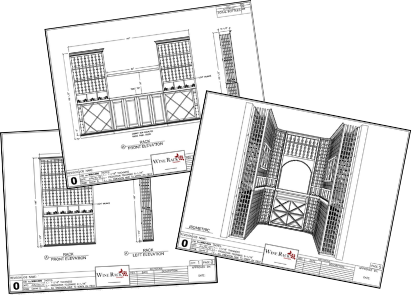
Have an expert help today!
Free 2D wine cellar design