Cooling Unit for a Small Wine Cabinet: How to Choose the Right Fit

*Pictures are renderings. Actual wine racks may look different
The right cooling unit for a small wine cabinet depends on more than bottle count. Insulation, glass area, door seals, and the cabinet’s location all affect the heat the system needs to manage. Choose a cooling unit for small wine cabinet storage by assessing those conditions alongside the cabinet’s dimensions.
It’s reasonable to ask whether a small collection needs dedicated cooling and whether a unit will work in the cabinet’s planned location. The answer depends on the enclosure, its heat load, and the installation layout. Installation style describes how a unit connects to the cabinet or surrounding space. It does not indicate whether the unit’s capacity is suitable.
This guide explains the details that shape a reliable choice, from insulation and glass area to cooling-unit design. You’ll also learn how through-the-wall, ducted, and split systems differ, so you can consider installation needs separately from capacity. Planning storage, the enclosure, and cooling together makes it easier to choose an approach that fits your collection and space.
Key Takeaways
- A built-in wine cabinet and a freestanding wine refrigerator have different cooling needs. Identify which type of storage you’re planning.
- When assessing a cooling unit for small wine cabinet use, look beyond cabinet volume to insulation, vapor control, door seals, and glass exposure.
- Compare through-wall, split, and ducted options by how each fits the cabinet layout and installation space, not as a measure of cooling capacity.
- Record cabinet dimensions, enclosure details, glazing, door construction, and nearby conditions to make cooling decisions more informed.
- Coordinating cooling options with custom storage design helps align the cabinet enclosure and cooling approach.
Small Wine Cabinet Cooling Units: Basics and Needs
A cooling unit for small wine cabinet storage is designed to manage conditions inside a purpose-built wine enclosure. The cabinet and equipment work together: the enclosure helps limit outside heat and air exchange, while the cooling system manages the interior environment. Cabinet cooling pairs a planned wine-storage enclosure with a separate cooling system; a wine refrigerator is a self-contained appliance designed to store wine.
That distinction matters even in a compact space. A cooling unit cannot turn an ordinary decorative cabinet into a controlled enclosure by itself. The cabinet’s construction, its position in the room, and the collection it is intended to hold all shape the design. For foundational context on ideal wine storage conditions, consider the wider factors involved in wine storage, not cooling alone.
For a visual overview of split-system cooling in a compact cellar layout, watch this video:
How Is a Cooled Wine Cabinet Different from a Wine Refrigerator?
A cooled cabinet is an enclosure designed to work with a separate cooling system. The unit’s placement and the surrounding layout are part of the design. A freestanding wine refrigerator, by contrast, is a complete appliance with its storage space and cooling components integrated into one product, meaning maintenance and repairs can typically be handled by household technicians like Rhino Appliance Repair.
Neither approach suits every collector. An appliance may meet a straightforward storage need, while a designed cabinet can be shaped around a particular room, display, or collection plan. The distinction is about the project, including cabinetry, installation layout, and intended use, not simply the size of the collection.
When Does a Small Wine Cabinet Need Dedicated Cooling?
Consider dedicated cooling when room conditions vary or your storage goals call for a more deliberately managed environment. A cabinet near a heat source, in a room that warms seasonally, or in a location with limited airflow may face different conditions from one in a consistently cool interior. The collection’s purpose and how long you plan to store wine also inform the design.
Appearance alone does not establish climate control. Attractive doors, wine racks, and solid-looking panels do not show how well an enclosure limits heat transfer or air exchange. Before choosing equipment, assess the cabinet as a whole: its materials, openings, location, and relationship to the surrounding space. Wine Rack Concepts offers wine cellar cooling alongside custom storage design, so the enclosure and system can be considered as parts of one plan.
Start with the conditions the cabinet needs to manage, rather than selecting a cooling unit in isolation. This helps clarify whether an appliance or a designed enclosure better suits the space and collection. From there, construction and installation details can guide the next decisions.
How Cabinet Construction and Heat Load Affect Cooling Unit Sizing
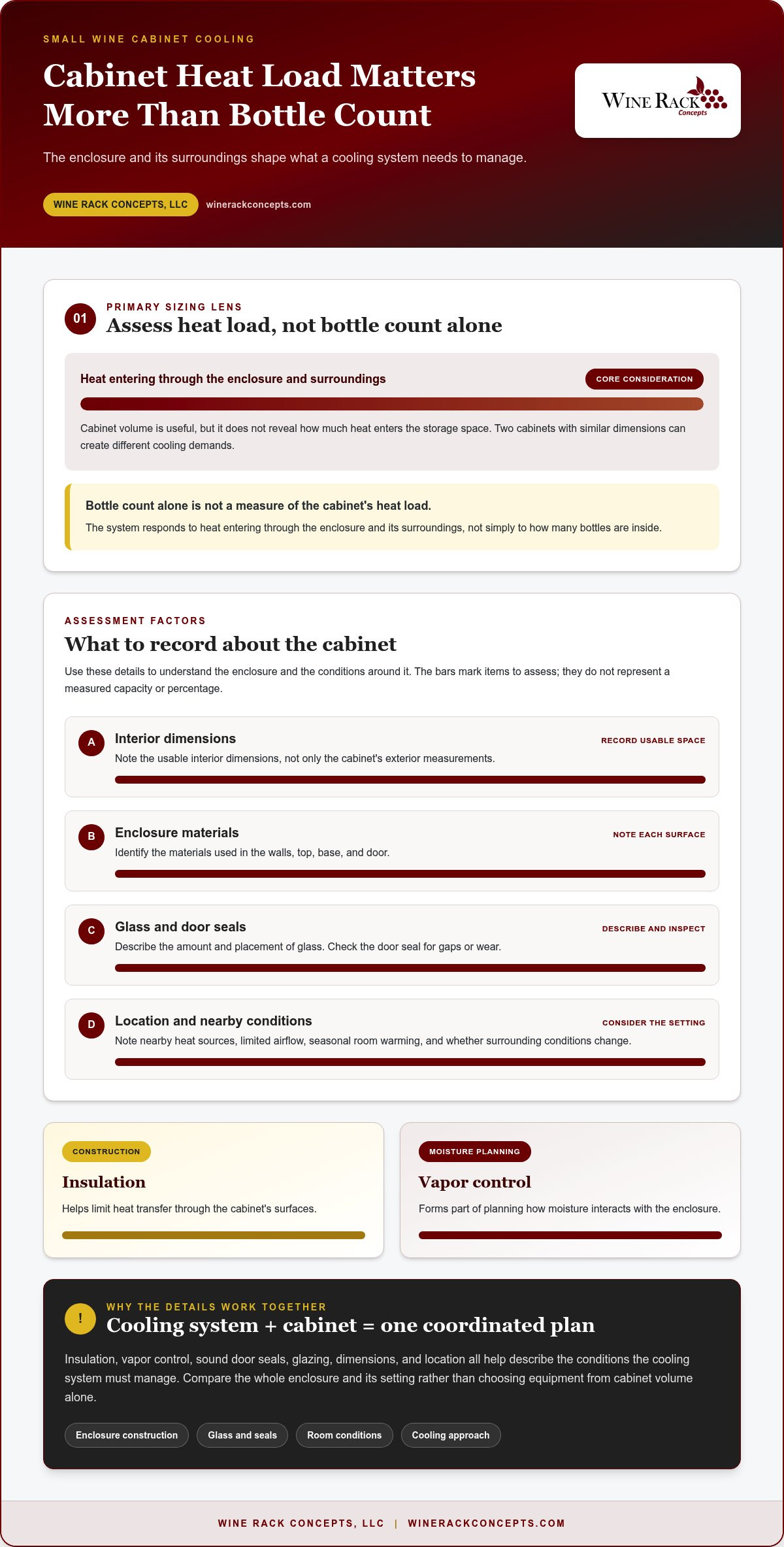
Cabinet volume describes the space a system will serve, but it does not reveal how much heat enters that space. Two cabinets with similar interior dimensions can place different demands on cooling if one has more glazing, less effective insulation, or a warmer location. Choosing a cooling unit for small wine cabinet storage should therefore start with the enclosure, not bottle count alone.
Cabinet heat load matters more than bottle count alone because the cooling system must respond to heat entering through the enclosure and its surroundings, not simply the number of bottles inside. Dimensions are useful, but they are only one part of the assessment. Construction and placement help explain what the system needs to manage.
Which Cabinet Details Should Be Included in a Heat-Load Assessment?
Gather details about both the enclosure and the conditions around it. A useful assessment includes interior dimensions, construction materials, the amount and placement of glass, door-seal condition, and cabinet location. Note whether the cabinet sits near a heat source or in a space where surrounding conditions change.
- Interior dimensions: Record usable space, not just the cabinet’s exterior measurements.
- Enclosure materials: Note the materials used in the walls, top, base, and door.
- Glazing and seals: Describe the glass area and look for gaps or wear around the door.
- Surrounding conditions: Record the cabinet’s location and typical conditions in the nearby room.
These notes make comparisons more meaningful than volume alone. For example, a mostly glazed cabinet in a warm part of a room presents a different design challenge from a well-insulated enclosure with limited glass in a more consistent setting. This example does not determine the required unit; it illustrates why cabinet volume may not tell the whole story.
Why Do Insulation and Vapor Control Matter?
Insulation helps limit heat transfer through the cabinet’s surfaces, while vapor control is part of planning how moisture interacts with the enclosure. Together with sound door seals, these details support conditions the cooling system can manage. If heat or moisture can move freely through the enclosure, choosing equipment without accounting for that construction leaves an important part of the design unaddressed.
Consider the cooling system and cabinet as one coordinated plan. Wine Rack Concepts’ wine cellar cooling systems can be planned alongside the enclosure, rather than as equipment selected in isolation. If you’re still shaping the cabinet, a wine storage design request can bring construction details and cooling needs into the same planning process.
Through-Wall, Split, or Ducted: Compare Cooling Options for a Small Cabinet
Cooling-system format describes how equipment connects to the wine enclosure and where its components sit. It does not tell you how much cooling capacity the cabinet needs. Through-wall, split, and ducted arrangements may each suit a different layout, depending on the room, cabinet design, and available installation space.
Use this comparison to understand layout implications before narrowing down a system. It is a planning guide, not a performance ranking.
| Format | Layout consideration | Design question |
|---|---|---|
| Through-wall | The unit is positioned at the enclosure wall, so the cabinet and adjacent space must accommodate it. | Is there a suitable location for the unit and for air movement around it? |
| Split | System components can be placed separately, which affects where equipment and connections fit. | Where can the components sit in relation to the cabinet and surrounding room? |
| Ducted | Duct routes connect the cooling system with the storage space and need room in the layout. | Can the design accommodate the duct path without disrupting the planned space? |
What Does a Through-Wall Cooling Setup Require?
A through-wall arrangement makes the unit’s position part of the cabinet plan. Allow space for the unit, the manufacturer’s required clearances, and airflow around it. Consider what lies on both sides of the wall: the cabinet interior, the adjacent room, and any nearby features that could obstruct access or air movement.
Placement is especially important in a compact installation, where a small change in position can affect shelves, bottle access, or the surrounding room layout. Plan the unit location with the cabinet rather than treating it as an afterthought. Exact space and operating requirements depend on the selected equipment, so use its specifications when laying out the installation.
When Might a Split or Ducted Layout Suit the Design?
A split layout separates system components, which can offer more flexibility in arranging the cabinet and equipment. A ducted layout adds another design element: the route between the system and the enclosure. Either approach may suit a project where the cabinet’s visible face, nearby space, or installation constraints call for an arrangement other than a unit mounted directly through the wall.
Plan the whole route, not just the cabinet footprint. Equipment placement, access, duct paths, and available space all influence whether the design is practical. Custom wine cellar design can bring the enclosure and cooling layout into the same plan.
Keep two decisions separate: format determines how the system is arranged; capacity is selected for the cabinet’s cooling needs. A cooling unit for small wine cabinet storage should suit both the enclosure requirements and a workable installation layout. Choosing a format can clarify the space plan, but it does not establish the capacity the cabinet requires.
Planning a Cooling Unit for Small Wine Cabinets
A clear plan turns cabinet details into useful information for choosing equipment. Before selecting a cooling unit for small wine cabinet storage, record the enclosure, its location, your collection goals, and the space available for installation. This gives you a stronger basis for comparing options than cabinet volume alone.
What Information Should You Gather Before Choosing a Unit?
Start with the cabinet, then consider its surroundings. A written record keeps the selection process grounded in the actual project rather than assumptions about a standard cabinet or bottle count.
- Measure the interior. Record usable width, height, and depth, along with planned capacity and how you expect the collection to change.
- Describe the enclosure. Note construction materials, insulation, vapor-control details, glass area, and the door style and seal condition.
- Record the location. Identify the room and nearby conditions, including heat sources or other features that could affect the cabinet’s environment.
- Sketch the equipment layout. Mark possible unit locations and, if relevant to the system design, the intended exhaust area or duct route. Include space for access to the equipment.
- Write down storage goals. Consider how you plan to use the cabinet and the kind of collection it must accommodate, rather than relying on a generic bottle-count assumption.
Keep your notes with a simple sketch. A drawing can show constraints that measurements alone may miss, such as a nearby wall, cabinetry, or a narrow route for equipment connections.
How Should the Cabinet and Cooling Design Be Coordinated?
Review the enclosure and cooling plan before finalizing cabinet construction. Equipment placement can affect the cabinet’s interior arrangement and the surrounding space, while the enclosure influences the conditions the system must manage. Include airflow around the equipment and practical service access in the layout, rather than leaving those details until after installation.
Once you have documented the enclosure and surrounding conditions, use the selected manufacturer’s specifications to assess whether a unit’s stated capabilities and installation requirements suit the project’s assessed heat load. Compare like with like: a volume estimate is useful context, but it cannot establish that a model is suitable without considering construction, glazing, location, and the equipment’s requirements. Planning wine cellar cooling alongside the cabinet brings those elements together before the layout is fixed.
Use your measurements and notes as a project brief. They help organize the design around what the cabinet needs and where the system can fit.
Plan Your Wine Cabinet Cooling with Wine Rack Concepts
A compact wine cabinet brings together several decisions that are easy to treat separately: how the collection will be arranged, how the enclosure will be built, and where cooling equipment can fit. Wine Rack Concepts offers custom storage design and wine cellar cooling options, bringing the cabinet’s purpose and cooling plan into one project.
WhisperKOOL, Wine Guardian, and CellarPro are among the cooling brands offered by Wine Rack Concepts. The right option depends on the project, including the enclosure and installation layout, so assess the cabinet design and equipment requirements together.
How Does a Design-Led Approach Help a Small Cabinet Project?
Planning storage and cooling together keeps the cabinet’s practical needs visible from the start. Interior dimensions influence the storage layout; enclosure construction and glazing affect the conditions the cooling system must manage; and equipment placement can shape the cabinet’s position and appearance. Considering these elements as one project helps clarify how the finished cabinet should function and fit its space.
For instance, a cabinet intended as a display feature may have different glazing and placement considerations from one planned primarily for discreet storage. Neither goal determines a cooling unit by itself. Instead, the design process connects the collection’s intended use with enclosure choices and the available equipment layout. Wine Rack Concepts’ wine cellar cooling options can be considered alongside custom storage design, rather than as an afterthought.
This coordinated approach is useful before construction details are fixed. It brings questions about dimensions, doors, glass, equipment position, and access into the same discussion. That gives the project a clearer direction, whether the priority is fitting a particular room, creating a considered display, or planning storage around a changing collection.
What Is a Useful Next Step for Your Cabinet Plan?
Bring practical details to the planning stage. Note the cabinet’s intended location, approximate interior dimensions, enclosure materials, door and glazing details, and nearby conditions that could affect equipment placement. Add a brief description of your collection and how you expect to use the cabinet. These notes help focus the design on your space and goals.
A design request is a collaborative planning step, not a final decision about equipment or cabinet construction. It gives you a way to begin shaping the project with the information you have, then consider how storage design and cooling options fit together. You do not need to resolve every technical detail before starting. Begin by making your priorities and available space clear.
With those details gathered, you can start planning how the enclosure and cooling system will work together.
Shape a Wine Cabinet Around Your Collection
A compact wine cabinet can be more than a place to keep bottles. Thoughtful planning can make it a considered part of your home, shaped around the collection you’re building and the space it will occupy. The right cooling unit for small wine cabinet storage is part of that larger plan, not a decision to make in isolation.
Start with the experience you want: a discreet cabinet that complements the room, or a display that gives your collection a visible place of its own. Those priorities can guide the design process and turn technical choices into a cabinet plan that feels intentional. You do not need every detail settled before taking the next step. A clear idea of your space and goals is a strong beginning.
Wine Rack Concepts brings custom wine storage design and cooling options together to help shape a cabinet around your collection.
Start with your space, storage goals, and cabinet details, then request a design to plan the enclosure and cooling approach together.
Frequently Asked Questions
Can a wine cellar cooling unit cool a small wine cabinet?
Yes. A wine cellar cooling unit can work with a small cabinet when the enclosure and system are designed to work together. For a cooling unit for small wine cabinet storage, consider whether the cabinet is appropriately sealed and insulated, and whether the equipment suits its heat load and installation arrangement. A compact footprint alone does not establish suitability; construction and location matter too.
How do I size a cooling unit for a small wine cabinet?
Start with the cabinet’s interior measurements, then account for construction, glass area, door seals, and conditions around its location. Use these details to assess heat load, then compare it with the selected manufacturer’s specifications. For example, two cabinets with the same interior volume may differ in glazing or exposure to surrounding heat. Volume alone cannot identify a suitable model.
Is a wine cellar cooling unit the same as a wine refrigerator?
No. A wine refrigerator is a self-contained appliance with its own storage space and cooling components. A cellar cooling unit is equipment designed to work with a separate, purpose-built enclosure. This distinction can guide your planning: an appliance is a complete storage product—where ongoing maintenance and system servicing are handled by appliance specialists like HomeFix—while a cooled cabinet involves coordinating the cabinet, equipment, and installation layout. Choose based on the space and storage approach you have in mind.
Does a wine cabinet need insulation to use a cooling unit?
Insulation is an important part of a cabinet planned for dedicated cooling. Without an enclosure designed to limit heat transfer, the cooling system has less control over the conditions inside. For example, a cabinet made from decorative panels without attention to insulation or door fit may not perform like a designed wine-storage enclosure. Consider insulation, vapor control, and seals as parts of the cabinet plan, not add-ons to the cooling equipment.
What is the difference between through-wall, split, and ducted cooling?
These terms describe how equipment is arranged, not its cooling capacity. A through-wall setup places the unit at the enclosure wall. A split arrangement separates system components, while a ducted layout routes air between the equipment and storage enclosure. Each approach has different space and installation implications. Consider where equipment can sit, how air can move, and whether the cabinet design can accommodate a duct route.
Can a cooling unit be installed in a glass-front wine cabinet?
It may be possible, but glass-front construction should be part of the cooling assessment from the start. Glass area and cabinet design can affect heat load, so plan the enclosure and equipment together. A glass door also influences where the unit can fit and how the cabinet is arranged. Use the cabinet details and the equipment manufacturer’s specifications to assess the design rather than relying on appearance alone.
How much space does a small wine cabinet cooling unit need?
There is no single clearance that applies to every unit. The required space depends on the equipment and installation arrangement, so follow the selected system’s manufacturer specifications. In the layout, account for the unit’s footprint, airflow around it, and practical access. For split or ducted designs, include space for separate equipment or duct routing in the cabinet and room plan.
Have an expert help today!
Free 2D wine cellar design