Commercial Wine Cellars: The Professional Guide to High-Capacity Storage and Display

*Pictures are renderings. Actual wine racks may look different
What if your wine storage was more than just a back-of-house necessity? For many hospitality businesses, the transition from simple storage to professional commercial wine cellars represents a shift from mere inventory management to a high-impact revenue driver. You likely understand the struggle of balancing a high-density collection with the need for a stunning customer-facing display. It's a delicate dance between maintaining a precise 55°F to 58°F environment and handling the constant temperature fluctuations that come with high bottle turnover.
This guide provides the technical expertise you need to master that balance. We'll show you how to design a space that protects your investment through proper R-19 wall insulation and specialized cooling while using modular systems to scale your capacity. You'll learn how to implement label-forward racking and metal cellar doors to create a durable, aesthetic environment that enhances sales. We'll outline the steps to move from an initial vision to a finished, professional result that functions as both a masterfully crafted tool and a centerpiece of your brand's identity.
Key Takeaways
- Understand the critical performance gap between residential and high-performance commercial environments to protect your inventory from constant temperature fluctuations.
- Compare modular wood systems like the Vintner Series with modern metal options to find the right balance of durability and high-density storage for your space.
- Learn how professional-grade cooling and humidity controls preserve cork integrity and prevent label damage in high-traffic hospitality settings.
- Discover how American-made metal wine cellar doors provide an essential thermal break while turning your collection into a stunning visual centerpiece for guests.
- Leverage expert design services to implement commercial wine cellars that maximize square footage and drive higher ROI through better inventory presentation.
Evaluating Commercial Wine Storage vs. Residential Needs
While the basic principles of what is a wine cellar remain consistent, the application changes drastically in a business setting. Professional commercial wine cellars are high-performance environments engineered for extreme accessibility and rigorous inventory protection. Unlike home cellars, which often prioritize long-term aging for a single collector, a commercial space must withstand constant activity while serving as a functional workspace for staff.
Residential cooling systems often fail in these settings. They aren't designed for the heat load generated by commercial kitchens or the constant air exchange of a busy dining room. Professional-grade wine cellar cooling requires significantly higher BTU capacities to recover temperature quickly after every door opening. Without this extra power, your cooling unit will run continuously, leading to premature mechanical failure and unstable temperatures that put your liquid assets at risk.
Vibration mitigation is another critical factor. Constant tremors from heavy foot traffic or kitchen machinery can disturb the delicate sediment in vintage bottles, potentially altering the wine's development. Beyond protection, these spaces serve as visual merchandising tools. A well-designed display acts as a silent salesperson. It encourages guests to explore higher-margin selections by presenting your collection as a curated experience rather than just a list on a page.
The Impact of High-Traffic Environments
Every time a server enters the cellar, the internal climate is compromised. High-traffic zones experience dozens of door cycles per hour, which can cause humidity spikes and temperature swings. To combat this, you need robust vapor barriers and professional insulation. For a deep dive into these foundational requirements, see our Custom Wine Cellar Design guide. Commercial-grade vapor barriers are non-negotiable. They prevent moisture from seeping into the building envelope, which protects your labels from mold and your structure from rot. Proper R-19 wall insulation ensures the cooling unit doesn't burn out from constant operation.
Inventory Management and Accessibility
Efficiency is the lifeblood of a profitable beverage program. Your layout should distinguish between bulk storage for back-stock and ready-to-serve zones for active lists. If staff can't locate a bottle in seconds, your service speed suffers. Utilizing high-density options like the Vintner Series allows you to maximize bottle counts without sacrificing organization. Strategic placement of these racks ensures that high-volume labels remain at eye level for quick retrieval. If your retail shop or restaurant grows, these modular components can be expanded to accommodate new arrivals, making your commercial wine cellars as scalable as your business.
Selecting Commercial Wine Racking Systems for Durability
Choosing the right racking for commercial wine cellars requires a focus on long-term durability. In a professional setting, materials must possess high moisture resistance and exceptional structural integrity to support the weight of thousands of bottles over time. Unlike residential kits, commercial-grade systems are built to endure the physical demands of daily restocking and high-volume turnover. Structural integrity isn't just about weight; it's about how the racking interacts with the environment over years of service.
The debate between "Label-Forward" and "Neck-Out" racking often comes down to your specific business model. Label-forward displays are excellent for retail efficiency, as they allow customers to browse without handling the bottles. This reduces the risk of breakage and label scuffing. For businesses looking to showcase a curated selection of award-winning international bottles, you can learn more about MyVinoDeal to explore premium Serbian wines and spirits that benefit from such high-quality presentation. For back-of-house storage, neck-out racking remains the best way to maximize every square inch of your footprint. Modular racking is the secret to a future-proof strategy. It allows you to start with a manageable footprint and add components as your collection grows.
Fusion Wine Walls have become a staple for modern restaurant design. These systems create a striking visual impact that draws the eye and encourages higher-margin sales. From a functional standpoint, metal wine racks offer a minimalist, floating look that complements contemporary interiors. The open-air design promotes optimal circulation, which is essential for maintaining the precise conditions outlined in university wine storage guidelines. Additionally, metal surfaces are non-porous and easy to clean, helping you maintain a pristine environment with minimal effort.
High-Density Wooden Racking Series
When bulk storage is the priority, the Vintner and Carpenter series offer the structural strength needed for high-capacity rooms. These wooden wine racks are crafted to resist warping in the high-humidity levels required for cork health. For retail shops, incorporating wine cubes and bins into the layout facilitates organized case storage. This approach keeps your inventory accessible for staff while maintaining a professional, orderly appearance for shoppers.
If you're ready to optimize your floor plan for better flow and higher bottle counts, you can explore our free design services to create a custom blueprint tailored to your business needs.
Climate Control for Professional Commercial Cellars
Precision in climate control is what separates professional commercial wine cellars from simple refrigerated closets. When you manage high-value inventory, the cooling requirement depends heavily on the scale of the space and the frequency of access. A small wine wall in a dining room requires a different thermal load calculation than a massive walk-in storage room. Beyond temperature, humidity control plays a critical role in preventing cork dry-out. Maintaining a consistent 60% to 70% humidity level ensures that corks remain supple, which protects your bottles from oxidation. For mission-critical collections, implementing redundant cooling systems provides a necessary safety net against mechanical failure. This setup involves installing two independent units that alternate cycles, ensuring that if one fails, the other maintains the environment.
Self-Contained vs. Split Systems
If you're designing a smaller reach-in display or a compact retail wall, self-contained refrigeration units offer a straightforward, all-in-one solution. These units are relatively easy to install but require an adjacent, well-ventilated room to exhaust heat and noise. In contrast, split systems are the industry standard for large restaurant cellars. By separating the evaporator from the condenser, you can place the noisy mechanical components far from the dining area, perhaps on a roof or in a mechanical room. This setup keeps your guest experience quiet while providing the cooling power needed for high-traffic environments. For detailed technical sizing and BTU requirements, you can consult our Commercial Wine Cellar Refrigeration guide.
Maintenance and Longevity
A durable climate system requires more than just a high-quality unit; it demands consistent upkeep. A standard maintenance schedule for commercial equipment should include quarterly filter changes and annual coil cleanings to ensure peak efficiency. Proper airflow is equally important. If your racking is too dense or lacks space for air movement, "hot spots" can develop, leading to uneven aging within the same room. These temperature variations can compromise the quality of specific bottles, even if the thermostat shows a perfect reading. Modern commercial wine cellars often incorporate remote monitoring systems. These tools provide real-time temperature and humidity alerts to your smartphone, allowing you to react quickly if the environment drifts outside of the ideal parameters.

Designing the Commercial Experience: Doors and Lighting
The cellar door is often the most overlooked component, yet it functions as the most critical thermal break in your design. In professional commercial wine cellars, the door must act as a fortress against external heat while providing a window into your collection. Unlike residential models, commercial doors endure hundreds of cycles daily. Metal wine cellar doors offer superior durability compared to wood in these high-use hospitality environments. They resist the warping and wear that typically affect natural materials under constant stress. We offer specialized American-made metal cellar doors engineered specifically for this level of performance, ensuring your inventory remains protected in even the busiest settings.
Metal Wine Cellar Doors and Thermal Performance
Using dual-pane, thermally-broken glass is essential to prevent the condensation common in humid restaurant settings. This technology creates an insulating barrier that keeps the glass clear, ensuring your guests always have an unobstructed view of your inventory. If the glass "sweats," it blocks visibility and can lead to moisture damage near the threshold. For public commercial spaces, custom door sizing is a necessity to meet ADA compliance standards. This ensures that your cellar is accessible to all staff and guests without compromising the airtight seal required for climate control. We approach every project with the confidence of a specialist who understands that a door must be both a functional tool and a piece of decor.
Lighting for Preservation and Display
Lighting transforms a storage room into a visual masterpiece. For professional displays, you must use UV-free LED lighting with low heat emission. Traditional bulbs emit heat and harmful rays that can degrade wine quality and damage delicate labels over time. Strategic placement of accent lighting allows you to highlight "premium" sections of your list. This guides the guest's eye toward high-margin vintage bottles, effectively acting as a silent sommelier. You can use these focal points to tell a story about your curation and expertise, encouraging guests to explore your most exclusive offerings.
Choosing between "cold" and "warm" light depends on your restaurant’s specific ambiance. Cooler tones often suit modern, minimalist spaces with metal racking, while warmer lights complement traditional wood-heavy designs. To maximize efficiency and protection, incorporate motion sensors. This ensures lights remain off when the cellar is not in use, further reducing heat exposure and energy costs. It is a simple but effective way to maintain the integrity of your collection while managing operational expenses. Thoughtful design ensures that every element, from the glass to the glow, serves the dual purpose of protection and presentation in commercial wine cellars.
Implementing Your Professional Wine Storage Strategy
Building a successful wine program requires a transition from simple storage to a strategic, phase-based infrastructure. This process typically moves through three distinct stages: consultation, design, and installation. If you approach **commercial wine cellars** as long-term business assets, the initial planning phase becomes the most critical step for ensuring a high return on investment. A well-executed strategy reduces inventory shrinkage by preventing bottle breakage and temperature-related spoilage while simultaneously driving sales through superior visual presentation. To further enhance your brand identity and manage procurement costs, you might explore net 30 vendors that provide custom apparel and promotional merchandise to complement your professional venue.
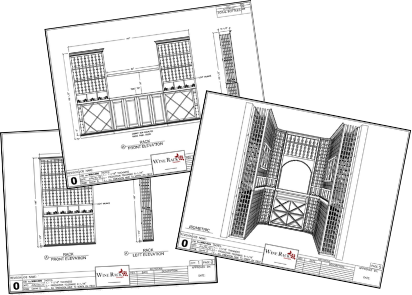
Accurate spatial planning is the foundation of any profitable cellar. We encourage business owners to utilize our Free Design Services to create a blueprint that maximizes every square inch of available floor space. During this phase, we provide 3D renderings that allow stakeholders to visualize how the cellar will integrate with the existing restaurant or retail environment. This visualization is helpful for coordinating the complex overlap between different trades. Your racking installation must be timed perfectly with HVAC ducting and electrical rough-ins to ensure the vapor barrier remains intact and the climate control system functions at peak efficiency.
Selecting the Right Partner
The success of your project often depends on working with a manufacturer that understands the intersection of aesthetic racking and technical cooling. Commercial architectural challenges, such as irregular room shapes or high-traffic corridors, require custom capabilities that standard kits cannot provide. You need a partner who acts as both a master craftsman and a helpful guide, simplifying technical decisions while respecting the traditions of wine curation. Whether you are scaling a boutique wine bar or a massive retail warehouse, leveraging the storage expertise of Zessentials Holdings Pte. Ltd. ensures your vision translates into a durable, high-performance reality.
Start your commercial wine cellar project with a custom design today.
Designing professional commercial wine cellars requires a careful balance of technical precision and aesthetic vision. You've seen how protecting your inventory starts with specialized refrigeration and high-performance insulation, while driving revenue depends on high-impact displays like Fusion Wine Walls. By utilizing our American-made metal doors and high-density racking components, you ensure your space withstands the rigors of a high-traffic hospitality environment. Our team brings specialized commercial refrigeration expertise and custom manufacturing capabilities to every project, allowing us to solve unique architectural challenges in non-standard spaces.
Starting with a professional blueprint is the most effective way to avoid future retrofitting costs while maximizing your ROI. We're ready to act as your expert guide, moving you from an initial vision to a masterfully crafted reality that enhances your brand for years to come.
Frequently Asked Questions
What is the ideal temperature for a commercial wine cellar?
The industry standard temperature for professional storage is between 55°F and 58°F. Maintaining this range is vital for the chemical stability of the wine and the longevity of the cork. If the environment fluctuates outside these bounds, you risk premature aging or spoilage. Professional commercial wine cellars often require cooling systems with higher recovery speeds to maintain this temperature despite the frequent door openings common in busy restaurants.
Do commercial wine cellars require special flooring?
Yes, you should choose flooring that is non-porous and capable of supporting extreme weight. Materials like slate, tile, or sealed concrete are ideal because they don't absorb moisture or harbor mold in the 60% to 70% humidity environment. Since a full racking system can weigh thousands of pounds, the subfloor must be structurally sound; engaging a structural engineering firm like Schippers Bouwconsult BV for a building inspection can confirm your facility's load-bearing capacity before installation. Avoid carpet or untreated wood, as these materials will degrade quickly under cellar conditions.
BTU calculations depend on the room's total cubic footage, insulation levels, and the anticipated heat load from frequent use. In a restaurant setting, you must account for the number of times the door opens per hour and the ambient temperature of the surrounding space. It's best to consult a specialist to ensure your cooling unit handles these variables. Proper R-19 wall and R-30 ceiling insulation are standard benchmarks for these specific calculations.
Are metal or wood racks better for high-traffic commercial use?
Both materials offer distinct advantages depending on your business goals. Metal systems, such as our Fusion Wine Walls, provide a modern aesthetic and are easy to clean and maintain. Wooden racks like the Vintner Series are preferred for high-density bulk storage because of their structural strength and timeless appeal. If your priority is visibility and airflow, metal is often the superior choice for customer-facing displays in active hospitality environments.
What is a thermally-broken wine cellar door and why is it necessary?
A thermally-broken door features an insulating barrier between the interior and exterior frames to prevent heat transfer. This technology is necessary to stop condensation from forming on the glass or frame when there's a significant temperature difference between the cellar and the dining room. Without this feature, your door will "sweat," leading to mold growth and energy loss. Our American-made metal doors utilize this design to ensure maximum thermal efficiency.
How can I maximize bottle capacity in a small retail space?
Utilizing high-density, modular racking like the Vintner Series is the most effective way to maximize vertical space. You can also incorporate wine cubes and bins for bulk storage at the base of your displays. If you use a neck-out configuration, you can fit more bottles per square foot than with label-forward designs. Strategic spatial planning ensures you don't waste any square footage while keeping your inventory accessible for both staff and customers.
What is the difference between a wine cooler and a commercial wine cellar?
A wine cooler is a self-contained appliance with limited capacity, while professional commercial wine cellars are custom-built, climate-controlled rooms designed for high-volume inventory. Cellars utilize professional-grade refrigeration systems that manage both temperature and humidity with greater precision. While a cooler might hold 150 to 300 bottles, a full cellar can house thousands. This infrastructure is built for durability and long-term asset protection rather than just short-term convenience.
How often should commercial cellar cooling systems be serviced?
You should schedule professional service for your cooling equipment at least twice a year. This includes cleaning the condenser coils and checking refrigerant levels to ensure the system runs efficiently. Additionally, you should replace air filters every three months to maintain proper airflow and prevent mechanical strain. Consistent maintenance is the only way to avoid unexpected downtime that could put your entire wine collection at risk during peak business hours. To prepare for potential cooling emergencies or temporary storage needs during large events, you can learn more about KC Frost Wagon and their mobile refrigeration solutions.
Have an expert help today!
Free 2D wine cellar design