Commercial vs. Residential Wine Racks: The Professional Comparison Guide

*Pictures are renderings. Actual wine racks may look different
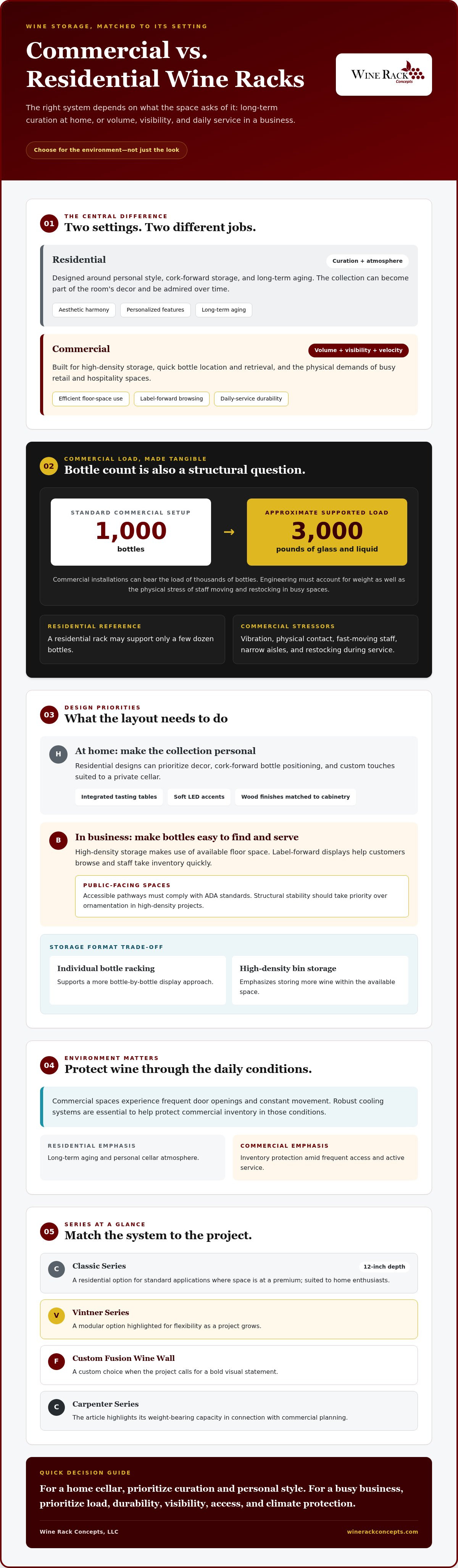
A wine rack that elegantly cradles a private collection at home can quickly become a structural liability in a bustling restaurant environment. It's a common frustration to see a beautiful display and wonder why the price gap shifts so dramatically between home and business models. You want a system that protects your investment without overspending on features you don't need. Understanding the nuances of commercial vs residential wine racks is the first step toward a cellar that performs as well as it looks.
Whether you're curious about the weight-bearing capacity of the American-made components in our Carpenter Series or the safety requirements for public-facing displays, we're here to help. This guide highlights the critical differences in durability, capacity, and design to help you choose the perfect system for your specific space. We'll examine how to optimize for high-volume turnover versus long-term aging. You'll gain a clear understanding of when to prioritize the modular flexibility of the Vintner Series and when a custom Fusion Wine Wall is the right choice for making a bold statement.
Key Takeaways
- Understand why commercial systems prioritize visibility and quick access while residential racks focus on long-term aging and personal style.
- Learn to identify the structural requirements needed for high-traffic environments, ensuring your racking choice can handle the weight of 1000+ bottle installations.
- Discover how to balance aesthetics and volume by comparing individual bottle racking with high-density bin storage in the context of commercial vs residential wine racks.
- Identify the environmental factors, such as frequent door openings, that make robust cooling systems essential for protecting commercial inventory.
- Find the right fit for your project by reviewing specialized options like the modular Vintner Series for growth or the Classic Series for home enthusiasts.
Understanding the Core Differences Between Commercial and Residential Wine Storage
*Pictures are renderings. Actual wine racks may look different
Choosing between commercial vs residential wine racks involves more than just picking a style that fits your room. It's about aligning the hardware with the operational demands of the space. Residential racking is typically a choice of passion; it's optimized for long-term aging and personal aesthetics. In contrast, commercial racking is a business tool designed for high-density storage, extreme durability, and maximum visibility. This distinction is vital because the wrong choice can impact everything from insurance coverage to safety compliance in public areas.
If you install residential-grade racks in a commercial restaurant, you may face significant liability risks. Commercial racks are engineered to handle the vibrations and physical stress of a busy dining room. Insurance providers often look for these professional-grade specifications when assessing risk for high-value inventory. Selecting the right series ensures that your investment remains protected under the most demanding conditions.
Residential Goals: Curation and Atmosphere
A private wine cellar serves as a sanctuary for a collection. The goal here is curation. You want a design that offers aesthetic harmony with your existing decor. Residential systems often prioritize cork-forward storage. This keeps the cork moist during years of undisturbed aging. We often integrate personalized features into custom wine cellars, such as:
- Integrated tasting tables for hosting guests and private tastings.
- Soft LED accents that highlight specific vintages without damaging the wine.
- Premium wood finishes that match your home's existing cabinetry and millwork.
In these environments, the collection is meant to be admired slowly. The storage system acts as a piece of decor that respects the tradition of the hobby while protecting the bottle's integrity over decades.
Commercial Goals: Volume, Visibility, and Velocity
In a retail or hospitality setting, the priorities shift toward volume and velocity. Commercial spaces require high-density storage to maximize every available square inch of expensive floor space. Staff must be able to locate and retrieve bottles in seconds. Label-forward displays are the industry standard for this reason. They allow customers to browse and staff to inventory with ease. Safety is also a non-negotiable factor. Public-facing storage must comply with ADA (Americans with Disabilities Act) standards to ensure accessible pathways. Using racks with American-made components ensures the structural integrity needed to withstand the constant movement of a high-traffic environment. These systems are built for the grind of daily service, ensuring that your display remains as sturdy on its thousandth day as it was on its first.
Structural Integrity and Material Selection for High-Traffic Environments
Weight is the silent enemy of wine storage. While a residential rack might only support a few dozen bottles, a commercial installation often bears the load of thousands, requiring specialized engineering to prevent sagging or structural collapse. A standard 1,000-bottle commercial setup must safely support approximately 3,000 pounds of glass and liquid. This isn't just about static weight; it's about the "bump factor" created by staff moving quickly through narrow aisles or restocking during a dinner rush. Using American-made components ensures that every joint and support beam meets a consistent standard of strength, reducing the risk of failure over time. If you are planning a high-density project, commercial wine cellar design principles dictate that structural stability must take precedence over pure ornamentation.
Wooden Racking Series: From Classic to Vintner
When comparing commercial vs residential wine racks, the depth of the unit is a critical safety feature. The Classic Series offers a 12-inch depth that works beautifully for standard residential applications where space is at a premium. If you move into a commercial setting, the Vintner Series provides a 13.5-inch depth. This extra inch ensures that bottles sit deeper in the rack, offering added protection in busy aisles where staff or customers might accidentally brush against the display. For the largest installations, the Carpenter Series utilizes heavy-duty construction techniques to manage the extreme pressures of a 1,500-plus bottle cellar.
The Role of Metal and Wire Systems
Durability takes many forms. While wooden wine racks provide a traditional warmth, metal wine racks are often the preferred choice for modern front-of-house displays. Wire systems are particularly effective for back-of-house storage because they promote maximum airflow and are easy to sanitize. If you choose a metal system, consider the finish; powder-coated options tend to resist the scratches and scuffs common in high-traffic environments better than raw finishes. Maintaining these systems is straightforward, usually requiring only a damp cloth to keep the display looking pristine.
Material Longevity in Temperature-Controlled Rooms
High-humidity environments are necessary for wine preservation, but they can be brutal on inferior materials. Using rot-resistant species like Redwood or Mahogany ensures the wood won't warp or develop mold over time. These woods contain natural tannins that protect them in damp conditions, making them ideal for long-term storage. Ultimately, the grade of the material used in construction is the primary factor that determines whether a rack will last five years or fifty. If you're unsure which material suits your environment, designing a high-capacity system with an expert can clarify these technical requirements.
Strategic Design: Maximizing Capacity and Label Visibility
Strategic design acts as the bridge between a beautiful collection and a functional storage system. When evaluating commercial vs residential wine racks, the primary design conflict often pits high-density storage against individual bottle visibility. In a home setting, individual bottle racking allows for a curated view of every vintage. Conversely, commercial environments rely on high-density bin storage to hold large quantities of the same SKU. This balance is where custom wine cellar design becomes essential, allowing you to blend these two approaches based on your specific inventory needs.
For restaurants, the "reach and pull" ergonomics are paramount. Staff shouldn't have to struggle to identify a bottle during a busy service. Integrating a "Display Row" at eye level provides a label-forward view for guests and staff, while individual or bin storage above and below maintains the volume. This setup ensures that the most popular selections are always within easy reach, reducing the time spent searching for a specific vintage. It also accommodates diverse bottle sizes, such as Magnums and Champagne, which are often overlooked in standard residential setups.
Commercial Inventory Management
Efficient management in a high-volume cellar requires a system that can grow with the business. Modular systems like the Vintner Series are ideal because they allow for easy expansion as the wine list evolves. Many professional designs also integrate case storage beneath the display racks. This keeps bulk inventory organized and accessible without cluttering the main display area. Clear signage and logical organization are the final pieces of the puzzle, ensuring that even new staff members can navigate a 1,000-plus bottle collection with confidence. These systems prioritize operational efficiency, ensuring that inventory turnover remains smooth and profitable.
Residential Display Aesthetics
In the home, the goal often shifts toward creating a visual focal point. Modern systems like Fusion Wine Walls or Cable and Glass Wine Racks offer a minimalist look that showcases bottles as art. While a commercial space might pack bottles tightly to maximize square footage, residential designs benefit from "breathing room." This allows the architecture of the racking to stand out. Utilizing custom wine storage solutions allows enthusiasts to transform awkward home spaces, such as under-stairs areas or narrow hallways, into sophisticated cellars. These personalized touches ensure the storage reflects your unique style while maintaining the technical requirements for wine health.
Climate Control and Environmental Factors in Commercial vs. Home Settings
Temperature stability is the heartbeat of any cellar. While the hardware for commercial vs residential wine racks differs in depth and strength, the environmental systems supporting them must be tailored to the specific traffic patterns of the space. Residential cellars often remain closed for days or weeks; this allows for a steady, passive environment. Commercial displays face the constant challenge of "thermal gain." Every time a staff member opens a cellar door during a dinner rush, cold air escapes and warm, humid air enters. This necessitates a much more robust approach to wine cellar cooling than a standard home installation requires.
To combat these fluctuations, commercial wine cellar refrigeration systems are engineered for high-duty cycles. These units don't just cool the air. They maintain the specific humidity levels required to keep corks from drying out in high-traffic zones. Proper insulation and vapor barriers are non-negotiable in both settings to prevent condensation from forming behind the racks. In commercial towers or glass-enclosed displays, metal wine cellar doors provide a superior seal compared to traditional wood, ensuring the refrigerated zone remains airtight and efficient.
Self-Contained vs. Split Cooling Systems
The choice of cooling hardware often depends on the scale and location of the project. Self-contained refrigeration units are excellent for smaller home closets or cabinets because they're compact and relatively easy to install. Large-scale restaurant displays usually require split systems. These systems allow the noisy, heat-producing condenser to be located in a remote area, such as a rooftop or mechanical room, keeping the dining environment quiet. High-traffic glass wine walls typically demand cooling systems with significantly higher BTU ratings to counteract the constant thermal exchange occurring during service hours.
Managing Light Exposure and Vibration
Environmental control extends beyond temperature. For residential collections intended for long-term aging, UV protection is a priority. Excessive light can "cook" wine or damage the labels over time. In commercial settings, vibration is a more pressing concern. Constant movement from heavy foot traffic or the hum of nearby kitchen equipment can agitate the sediment in fine wines. Using thick glass doors and dampened mounting systems helps balance the need for visibility with the necessity of a stable, vibration-free environment.
Selecting the Ideal Racking Series for Your Specific Application
The Vintner Series stands as our most versatile option, often called the "Gold Standard" for modular growth. If you're a business owner starting with a 500-bottle list but planning to reach 1,500, these stacking modules allow for seamless expansion. For home enthusiasts, the Classic Series provides an ideal entry point. It offers the same level of craftsmanship in a more compact footprint, perfect for personal collections that don't require high-density turnover.
If your goal is a bold, contemporary statement, Fusion Wine Walls offer a striking departure from traditional wood. These systems utilize metal and acrylic to create a "floating" bottle effect that thrives in modern restaurant lobbies or upscale bars. Navigating the choices between commercial vs residential wine racks becomes much simpler when you start with a free design consultation. This step ensures the series you choose aligns with both your aesthetic vision and your technical requirements.
Hybrid Solutions: When Residential Meets Commercial
Design trends are increasingly blurring the lines between these two categories. High-end residential "show cellars" often incorporate commercial-grade durability to handle the weight of large collections. Conversely, boutique wine bars frequently borrow residential design flair, such as warm wood finishes and tasting nooks, to create a welcoming atmosphere. Mixing materials, like combining our wooden Vintner modules with metal Wall Wine Rack Series accents, creates a layered, professional look that works in almost any setting. These systems, built with American-made components, ensure that your hybrid space remains structurally sound regardless of its primary use.
Final Checklist for Your Project
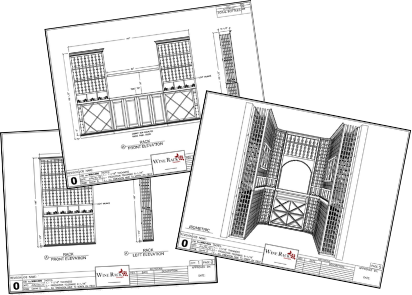
Before finalizing your order, it's vital to assess your total bottle count and anticipated future growth. A cellar that's full on day one leaves no room for new acquisitions or seasonal rotations. You should also verify your floor's load capacity; as discussed, a 1,000-bottle system is a significant structural commitment. Measuring your available space accurately is the final hurdle. We recommend consulting with a commercial wine cellars expert to review final CAD drawings. These technical blueprints confirm that every rack, cooling unit, and door fits perfectly, turning your initial inspiration into a functional reality.
Building Your Ideal Wine Storage Solution
Choosing between commercial vs residential wine racks is a strategic decision that impacts the longevity of your collection and the operational efficiency of your space. We've explored how commercial systems like the Vintner Series prioritize high-density turnover and structural resilience, while residential options focus on personalized aesthetics and long-term bottle health. Whether you require a robust cooling system for a high-traffic restaurant or a custom display for your home, the right hardware ensures your wine remains protected in an ideal environment.
At Wine Rack Concepts, we bring over a decade of specialized expertise to every project we undertake. Our reliance on American-made components and master craftsmanship provides the peace of mind that your cellar is built to endure. We provide comprehensive design-to-installation support to guide you through every technical detail, from initial CAD drawings to the final cooling setup.
We look forward to helping you transform your vision into a professional storage reality that you can take pride in for years to come. Your collection deserves a home that balances sophisticated design with uncompromising performance.
Frequently Asked Questions
Is it okay to use residential wine racks in a restaurant or retail store?
While it's physically possible, it isn't recommended for high-volume environments. Residential racks are designed for lower traffic and slower inventory turnover. In a restaurant, staff interact with the racks constantly, and the weight of a commercial-scale collection can exceed the load limits of standard residential units. Choosing the right hardware in the commercial vs residential wine racks debate ensures your display remains safe and structurally sound under heavy daily use.
What makes a wine rack "commercial grade" compared to standard options?
Commercial-grade racks feature increased depth, typically 13.5 inches, to protect bottles from accidental bumps in busy aisles. These systems often utilize American-made components and thicker wood or metal supports to manage the immense weight of 1,000-plus bottle installations. While residential series focus on aesthetic harmony with home decor, commercial units prioritize high-density storage and label visibility to assist staff with quick inventory management and bottle retrieval during busy service hours.
How does high foot traffic affect wine cellar design in commercial spaces?
High foot traffic requires a design that balances safety with operational speed. Aisles must be wide enough for staff to move quickly, often meeting ADA standards for accessibility. Designers also consider the "reach and pull" ergonomics, placing high-turnover bottles at eye level in display rows. Vibration mitigation is another factor; commercial floors experience more movement, so racks must be anchored securely to prevent sediment agitation in fine vintages.
Do commercial wine racks need special permits or compliance checks?
Public-facing wine storage must often comply with local building codes and the Americans with Disabilities Act. This includes maintaining specific aisle widths and ensuring that the racking doesn't obstruct fire exits or safety equipment. Professional CAD drawings help ensure your layout respects these requirements. Structural anchoring is also critical in certain regions to meet seismic safety standards for high-density, floor-to-ceiling installations in commercial buildings where public safety is a primary concern.
Can I install commercial-grade wine racks in my home cellar?
Yes, many homeowners choose commercial-grade series like the Vintner or Carpenter for their "show cellars." If you have a large collection or want a professional aesthetic, these heavy-duty systems provide exceptional durability and a sophisticated look. Using commercial hardware in a residential setting allows for greater bottle density and a sense of permanence. It's an excellent choice if you enjoy hosting large tastings or plan to grow your collection significantly over time.
What are the best materials for high-density commercial wine storage?
Rot-resistant woods like Redwood and Mahogany are ideal for high-humidity environments because they resist warping and mold. For modern displays, powder-coated metal racks offer a sleek look and superior resistance to scuffs and scratches. Back-of-house storage often utilizes wire racking because it promotes maximum airflow and is easy to sanitize. Selecting high-quality materials ensures the longevity of your investment, keeping the racking structurally consistent even under the stress of constant restocking and high turnover.
How do cooling requirements differ between home and business wine rooms?
Business environments require more robust cooling systems due to frequent door openings and higher heat loads from nearby kitchens. While a self-contained unit might suffice for a home closet, commercial spaces often need split systems with higher BTU capacities. These professional systems are designed for high-duty cycles, maintaining stable temperatures and humidity levels despite the constant thermal gain that occurs when staff retrieve bottles for customers throughout a busy dinner shift.
Are modular wine rack systems suitable for both home and business use?
Modular systems are the most versatile choice for both settings because they allow for scalable growth. The Vintner Series, for instance, uses stacking modules that work just as well in a small home cellar as they do in a sprawling restaurant display. This flexibility is a key advantage when comparing commercial vs residential wine racks. You can start with a foundational layout and add more units as your inventory grows without needing a complete redesign.
Have an expert help today!
Free 2D wine cellar design