Climate-Controlled Wine Walls: A Practical Buying Guide

*Pictures are renderings. Actual wine racks may look different
A climate controlled wine wall puts bottles on display, but its success depends on more than attractive racking. The enclosure, cooling approach, and architectural details need to work together so the finished display suits both your collection and the room around it. Planning these elements together helps you make practical decisions before settling on a look.
Choosing between an open-feeling wine wall and a more enclosed design comes down to your space, storage needs, and display priorities. Glass can make a collection easy to see, but it also makes enclosure and cooling decisions part of the design. This guide walks through the choices that shape a cohesive wine wall, including enclosure, cooling, racks, and finishes. You’ll come away with a useful project brief and a clearer sense of how custom design can bring display and climate control into one plan.
Key Takeaways
- A climate controlled wine wall works best when its display, enclosure, and cooling are planned as a connected system.
- Compare open and enclosed designs by how they balance bottle presentation, access, and cooling integration.
- Start with your collection and room, then clarify display priorities before choosing an enclosure and cooling approach.
- Record the available dimensions and room constraints to make design decisions more specific.
- A custom design can coordinate racking, glass or cable elements, and cellar cooling around your project priorities.
What Makes a Climate-Controlled Wine Wall Different from a Decorative Display?
A decorative wine display gives bottles a visible place in the room. A climate controlled wine wall goes further by bringing bottle presentation, an enclosure, and cooling together as a planned storage environment. Attractive racking alone doesn't create controlled storage. The enclosure and cooling approach need to suit the room and the intended use of the wall.
"A display wall showcases bottles; climate-controlled wine storage combines presentation with an enclosure and cooling planned around the collection." That distinction helps you define the project's purpose before choosing finishes or rack styles. For background on the role of temperature and humidity in storage, see this overview of wine cellar climate control.
This video demonstrates one through-the-wall cooling installation. It features a specific system, while the broader planning principles in this guide apply to wine-wall design generally.
When a Wine Wall Suits the Project Better Than a Standalone Cabinet
A wine wall can suit a project where storage is meant to feel connected to the architecture, such as along a dining-room wall or between living areas. Racking and an enclosure can be coordinated with the room's finishes and sightlines, making the collection part of the interior rather than a separate furnishing.
A standalone cabinet has a more self-contained character. It may be a better fit when you want a distinct storage piece rather than an architectural feature. Neither format is automatically the right choice. Consider how prominently you want bottles displayed, how the storage should relate to nearby furniture, and whether an integrated appearance is central to the room's design.
Why Glass Display Needs a Whole-System Design
Glass can make a collection easy to see and give the display a clean, open presence. Full glass doors, for example, can provide a clear view while keeping bottles within an enclosure. That visibility also brings practical details into focus: how the doors open, where people approach the display, and how the rack arrangement supports bottle access.
Think of glazing, enclosure details, racking, and cooling as connected design choices. The glass shapes the overall form of the wine wall, the racking determines how bottles sit within that view, and the cooling approach needs to be planned for the enclosed space. Choosing each element in isolation can leave the design visually disjointed or make it less convenient to use. Planning them together gives the display and storage a coherent purpose.
Wine Rack Concepts designs custom wine cellars and provides racking and cooling solutions for residential and commercial projects. Once you’ve outlined your collection and room priorities, a free design consultation can help turn those preferences into a tailored plan.
How Climate Control, Enclosure, and Wine-Wall Cooling Work Together
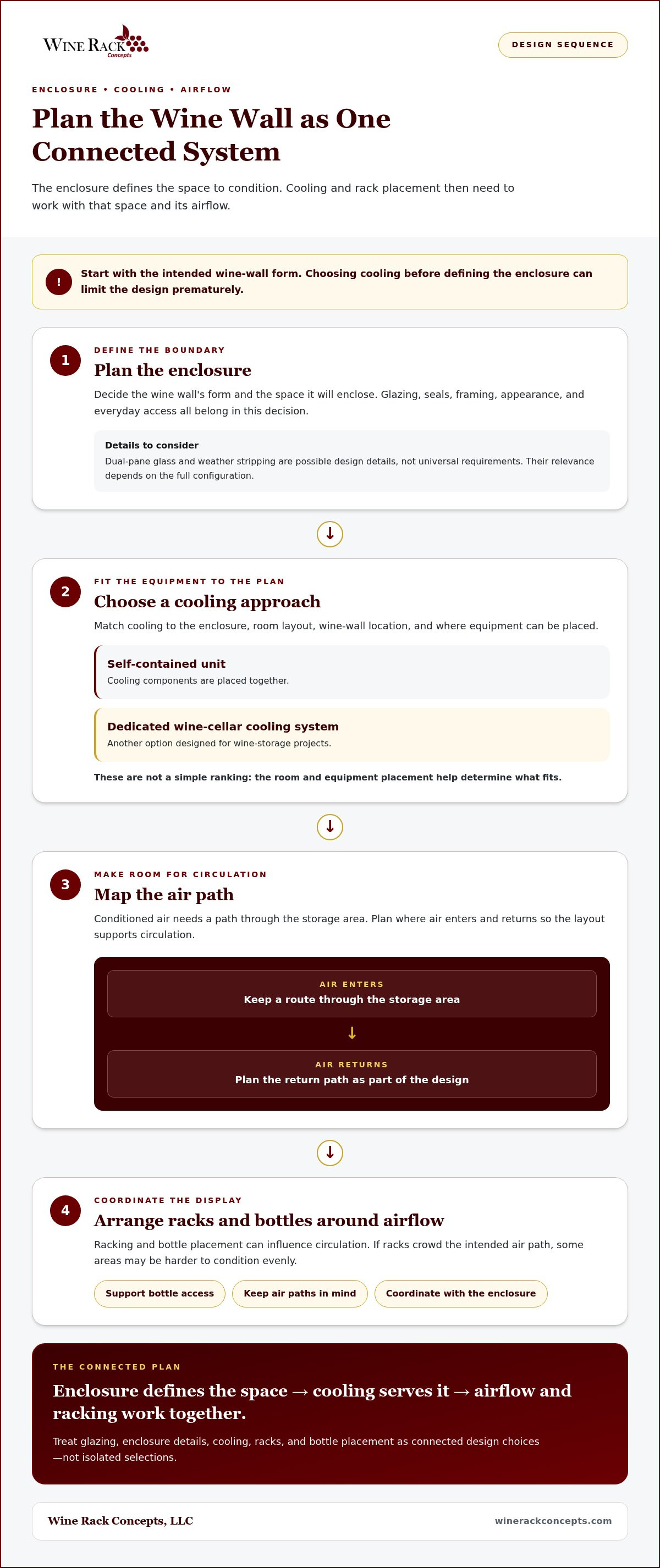
A climate controlled wine wall depends on the relationship between its enclosure and cooling approach. The enclosure defines the space being conditioned, while the cooling system supplies and circulates conditioned air within it. Racking and bottle placement also affect how air can move through the storage area. Treating these elements as one design problem helps align the room’s appearance, access, and storage needs.
Cooling selection should follow the wine wall’s enclosure, room layout, and airflow needs, because each configuration creates different design considerations. Choosing a cooling unit before defining the enclosure can limit the design prematurely. Start with the intended form of the wine wall, then plan where the equipment can go and how air can reach the enclosed storage area.
What the Enclosure Contributes to Climate-Controlled Storage
Glazing, seals, and enclosure construction help define the boundary between the storage environment and the surrounding room. A well-considered enclosure gives the cooling plan a specific space to serve. Its details can affect how that space is maintained, as well as the display's appearance and everyday access.
Some wine-wall designs use dual-pane glass and weather stripping as part of their enclosure approach. These are possible design details, not universal requirements. Their relevance depends on the full configuration. Evaluate glazing, door seals, framing, and cooling together rather than as separate selections. A detail chosen for appearance can affect the enclosure, while enclosure decisions can shape the cooling plan.
Cooling Approaches to Consider for a Wine Wall
Self-contained units place the cooling components together. Dedicated wine-cellar cooling systems are another option designed for wine-storage projects. These approaches aren't a simple ranking: room layout, the location of the wine wall, and equipment placement all help determine what fits the design. Planning around the actual room keeps equipment from becoming an afterthought.
Airflow matters, too. Conditioned air needs a path through the storage area, and the arrangement of racks and bottles can influence circulation. If racking crowds the intended air path, some areas may be harder to condition evenly. Plan where air enters and returns, and arrange the racks and enclosure so they support rather than obstruct circulation. This is a design consideration, not a substitute for selecting equipment suited to the project.
Wine Rack Concepts provides wine cellar cooling options alongside custom wine-cellar design and racking. A free design consultation can help connect your enclosure, room layout, and cooling needs in one plan.
Compare Wine-Wall Designs by Display, Access, and Cooling Integration
Choosing a wine-wall design means balancing what you want to see with how the storage should function. A more open presentation can make the collection a focal point, while an enclosure gives the cooling plan a defined space to serve. Room layout, bottle access, and equipment placement influence the finished design, so consider them together.
Use this comparison to identify your priorities. These are design considerations, not rules about which configuration will suit every collection or room.
| Design priority | More open presentation | More enclosed presentation |
|---|---|---|
| Display | Racking remains prominent and bottles are visually connected to the room. | Glass can frame the collection while keeping it within a defined enclosure. |
| Access | Consider how people approach the racks and reach bottles in the room. | Plan door placement and opening paths so access feels natural in the available space. |
| Cooling integration | Decide how cooling will relate to the display and its surrounding area. | Coordinate the enclosure and cooling approach as parts of one storage design. |
Open Wine Display Versus an Enclosed Wine Wall
An open arrangement can suit a project where the racks themselves are intended to be part of the room's visual composition. It offers direct sightlines, but a decorative display alone isn't the same as planned, climate-controlled storage. If controlled storage is a priority, plan the enclosure and cooling strategy alongside the open look you want.
A glass wall offers another balance. Glass doors can preserve a clear view of the bottles while defining an enclosed display. Door placement can also shape access around the room's circulation. Think about the view from the main seating or dining area, where visitors will stand, and which bottles you want easiest to reach. Those answers can guide the relationship between glazing, racks, and entry points.
Visible Versus Discreet Cooling Integration
Cooling equipment can be visible or placed to draw less attention. A flush grille is one possible visual approach, while a layout that keeps equipment distinct from the display may suit another room. The right choice depends on the room's architecture and where the equipment can be placed. Different cooling systems have different installation requirements, so plan placement as part of the overall composition.
Compare sightlines and practical access together. A discreet arrangement still needs a considered equipment location, and a visible element can be coordinated with the design. The goal is a climate controlled wine wall where presentation and cooling work with the room rather than compete with it. Include wine cellar cooling options in that comparison. Once you have identified your priorities, a free design consultation can help bring display, access, and cooling into a cohesive project plan.
Plan Your Climate-Controlled Wine Wall Around These Project Decisions
A clear brief makes it easier to shape a wine-wall design around both the collection and the room. Before choosing racks or finishes, separate what your bottles need from how you want them presented. Then gather the practical details that will shape the layout.
"Before design begins, organize your collection needs, room dimensions, display priorities, enclosure preferences, and cooling considerations." Use this sequence to prepare:
- Describe the collection. Note the kinds of bottles you store, how the collection may grow, and whether you want labels or bottle shapes to stand out. Keep storage needs distinct from display preferences.
- Record the room. Identify the proposed wall location and write down the available width, height, and depth. Note nearby doors, walkways, furniture, and other features that could affect access or layout.
- Set display priorities. Decide how visible you want the bottles to be and how you expect to access them. Consider whether the wall should draw attention or sit quietly within the room.
- Choose an enclosure direction. Consider whether an open presentation or a glass-enclosed design better reflects your priorities. Treat this as a planning choice that will inform the cooling discussion.
- Coordinate cooling. Include equipment placement and the intended storage environment in the design brief. Plan the enclosure, rack arrangement, and cooling approach with the room in mind.
Start With Your Collection and the Room
Begin with the collection you have, then think about how it could change. A collection you want to browse by label may call for a different presentation than one you prefer to keep less prominent. Measure the proposed location and record room constraints, including access routes and nearby architectural features. These details give a project-specific design a practical starting point.
Set Priorities for Racking, Enclosure, and Cooling
Rank what matters most: an expressive display, easy bottle access, a more discreet appearance, or equipment that recedes from view. Then consider how rack material supports the room's character. Wood can bring a classic, warm note, while metal can contribute a more contemporary visual direction. Explore wooden wine rack options as one way to consider material and finish alongside the enclosure and cooling plan.
Bring your notes into the design conversation. A climate controlled wine wall is easier to plan when its intended use and setting are clear, even if some choices are still open. You don't need a finished drawing. A measured location, a description of your collection, and a short list of priorities are useful starting points.
Bring Your Climate-Controlled Wine Wall Vision Into a Custom Design
Once you’ve clarified what you want the wall to do and how it should fit the room, turn those preferences into a coordinated project brief. Wine Rack Concepts designs and manufactures custom wine cellars and storage solutions, bringing racking and cooling into the same project conversation. For broader context on this approach, explore the company’s custom wine cellar design.
You don’t need every decision settled before beginning. Start with a clear picture of your collection, the location, and the look you’re hoping to achieve. From there, a design conversation can help shape a tailored direction for the wine wall.
What to Bring to a Wine-Wall Design Conversation
Gather the information that best explains your project. Room dimensions and photos of the proposed location show the available space and how the wall relates to its surroundings. Include views from different angles if they reveal nearby doors, furniture, walkways, or finishes that matter to the design.
Collection details are useful, too. Describe the bottles you plan to store, any anticipated changes to the collection, and whether you prefer bottles to be easy to see or more discreetly presented. Add inspiration images that capture qualities you like, such as a glass enclosure, a particular rack material, or a clean-lined display. These references communicate a visual direction without requiring a finished design in advance.
It can also help to write down your priorities in plain language: "show the labels," "keep the display visually quiet," or "make bottle access straightforward." A concise brief gives the design discussion a practical starting point and helps distinguish essential needs from features you’re still considering.
Move From Inspiration to a Coordinated Plan
A polished wine wall is shaped by choices that affect one another. Racking influences how bottles are arranged and seen; the enclosure defines the display’s relationship to the room; cooling is planned around the storage environment and its layout. Bringing these elements into one design conversation helps avoid treating them as separate decisions that only meet at the end.
That coordination matters whether your vision is a glass-fronted focal point or a more understated installation. The right direction depends on your space, collection, and presentation preferences, not a universal template. Wine Rack Concepts designs and manufactures custom storage solutions for residential and commercial settings.
If you’ve noted the room dimensions, collection needs, and the look you’re after, you have a strong foundation for the next conversation. Share your wine-wall vision and explore a tailored design direction at your own pace.
Give Your Wine Wall a Clear Direction
A thoughtfully planned climate controlled wine wall can reflect how you enjoy and curate your collection. You don't need to settle every finish or technical detail at the outset. Identify the feeling and purpose you want the finished space to convey, then use that as a guide as the design takes shape.
Picture the experience beyond the display itself. Will the wall be part of gatherings, a quiet feature to appreciate as you move through the room, or a place that reflects a particular chapter of your collecting? A clear point of view can guide choices and keep the finished design connected to the way you live with your wine.
You can begin with a broad idea rather than a complete plan. A design conversation gives you room to develop that vision, consider options, and shape a distinctive feature at a comfortable pace. The result should feel considered, personal, and at home in its surroundings.
Your collection deserves a setting that feels like it belongs to you. Take the next step when you're ready.
Frequently Asked Questions
What is the difference between a climate-controlled wine wall and a wine cabinet?
A wine cabinet is generally a self-contained piece, while a wine wall is planned in relation to the room's design. Either may be part of a climate-controlled storage plan, but the choices around presentation and integration differ. A cabinet may suit a room where wine storage should read as separate furniture, while a wall may suit a design that gives the collection a more prominent architectural role.
Can a climate-controlled wine wall be added to an existing room?
It may be possible, depending on the room's dimensions, layout, and cooling requirements. In an existing space, look beyond the wall itself: windows, built-in cabinetry, nearby doors, and established room features may affect how the design fits. Document those conditions alongside the usable dimensions. This gives the design conversation a realistic picture of the room, rather than treating the wine wall as a rack added after other decisions are complete.
Does glass affect climate control in a wine wall?
Yes, glass is part of the enclosure and should be considered as part of the storage design. Glass alone doesn't establish the conditions needed for wine storage. Enclosure construction and the cooling approach also matter. Some glass-enclosure examples use insulated glazing and weather stripping, but those details aren't universal. Include any preferred appearance early in planning so it can be considered with the full design.
Can a wine wall be designed for a small space?
A wine wall can be considered for different room layouts, including compact ones, but the available area shapes the design. Start by identifying the wall space that can actually be used, then consider what needs to remain clear for doors, circulation, or nearby furnishings. Decide whether every bottle needs to be visible or whether the display can focus on selected bottles. These choices help tailor the layout without assuming a standard configuration.
How is cooling integrated into a wine wall?
Cooling is planned around the enclosure and the room, with options that include self-contained refrigeration units and dedicated wine-cellar cooling systems. One project might favor equipment that is visually integrated, while another layout may call for a different placement. The choice depends on the configuration, not just the appearance of the unit. Include equipment location in the design brief so it can be considered alongside the wall's overall composition.
Should I choose a wine wall or a wine cellar?
Choose based on the role you want storage to play in your space. A wine wall can make bottles part of a room's visual experience, while a wine cellar describes a dedicated storage environment. If you want a display feature in a dining or living area, a wall may align with that goal. If your priority is a separate wine-storage space, consider a cellar. Neither is automatically right for every project.
What information should I prepare before planning a wine wall?
Bring the proposed location's measurements, a general description of your collection, and examples of designs you like. Add notes about what matters most, such as seeing labels, reaching particular bottles easily, or keeping cooling equipment unobtrusive. Mark room features that could affect the layout on a simple sketch or photo. Separating essential needs from optional preferences helps make the first design discussion more focused and useful.
Ready to plan a wine wall around your collection and room? Start your free design consultation with Wine Rack Concepts.
Have an expert help today!
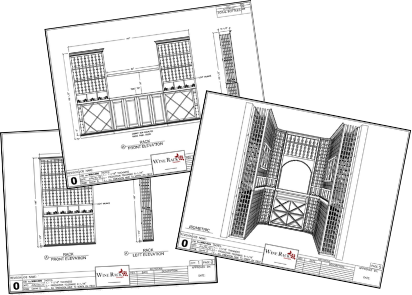
Free 2D wine cellar design