Choosing the Best Cooling Systems for Wine Cellars

Thinking that a high-end wine fridge and professional Cooling Systems for Wine Cellars are interchangeable is a common mistake that can jeopardize a serious collection. While a small appliance works for short-term storage, a dedicated cellar requires a specialized engine to maintain the delicate balance of age and flavor. You've likely felt the frustration of calculating BTU requirements or the fear of mold growth caused by improper humidity control. It's a complex challenge, especially as 2026 regulations introduce stricter energy efficiency standards and new refrigerant requirements for climate control technology.
We understand that protecting your investment requires a blend of domestic craftsmanship and global engineering. While your custom racking may be built locally, the cooling technology often leverages international manufacturing to achieve peak performance. This article provides the clarity you need to master selection criteria for your cellar. You'll learn how to maintain a stable 55-57°F environment and 50-70% humidity while ensuring your system integrates seamlessly with your design. We will examine the differences between self-contained units and split systems to help you choose the right path for your specific space.
Key Takeaways
- Learn how specialized climate control preserves wine quality by maintaining a stable 55-57°F environment and optimal humidity levels.
- Compare the technical advantages of self-contained, split, and ducted Cooling Systems for Wine Cellars to determine the best fit for your installation.
- Master the complexities of BTU sizing, including how to account for heat gain from glass features and the vital role of vapor barriers.
- Understand the global nature of manufacturing where domestic racking often integrates with high-efficiency cooling components engineered internationally.
- Discover how to pair self-contained refrigeration units with custom metal doors to ensure a complete thermal seal for your collection.
The Science of Stability: Why Specialized Cooling Systems for Wine Cellars are Vital
Storing wine is an exercise in controlled chemistry. Standard air conditioners are designed for human comfort, removing heat and moisture to keep skin dry. In contrast, Cooling Systems for Wine Cellars are precision instruments engineered to maintain life in a bottle. Without this specific technology, a collection represents a significant financial risk. Fluctuating temperatures act as a catalyst for chemical reactions, causing tannins to drop out prematurely and stripping the wine of its intended complexity. It is a reality of the modern marketplace that while your aesthetic choices are personal, the hardware keeping them safe is part of a global supply chain. High-efficiency components often originate from specialized international engineering hubs, ensuring that the technology inside your cellar meets modern performance standards.
Understanding the distinction between active vs. passive wine cellars is the first step in planning a long-term storage solution. Passive cellars rely on underground geography, while active systems use mechanical intervention to create a perfect environment regardless of the building's location. This mechanical intervention is necessary because standard residential cooling cannot reach the low temperatures or maintain the high humidity levels required for wine. If you rely on basic home ventilation, you risk the slow degradation of every bottle you own.
To better understand how these systems operate within a wall structure, watch this helpful video:
Temperature vs. Humidity: The Dual Challenge
The industry standard of 55-57°F isn't an arbitrary number. It's the thermal sweet spot where wine ages at a graceful, predictable pace. If the air is too dry, corks lose their elasticity and shrink. This allows oxygen to enter the bottle, leading to irreversible oxidation. Conversely, humidity levels above 70% create a breeding ground for mold. While mold on a label might seem like a minor aesthetic issue, it can devastate the resale value of a high-value collection and damage the structural integrity of your storage area. Specialized units manage both variables simultaneously, a feat that standard appliances simply cannot match.
Vibration and Light: The Often Overlooked Factors
Specialized units are built with low-vibration compressors. Even micro-vibrations can disturb the sediment in older vintages, interfering with the natural aging process. Light is another enemy. UV rays can penetrate glass and degrade organic compounds in the wine. Most dedicated cooling units avoid internal lighting for this reason, relying instead on the synergy between custom wine racks and strategic room lighting to showcase the collection. Proper racking design ensures that air flows freely around every bottle, preventing the stagnant "hot spots" that lead to uneven aging.
Comparing Climate Control Models: Self-Contained, Split, and Ducted Systems
Selecting the right mechanical architecture for your cellar is as critical as the insulation in your walls. Cooling Systems for Wine Cellars come in three primary configurations, each suited to different spatial constraints and aesthetic goals. It's a reality of modern industry that while your vision is local, the technology is global. High-efficiency compressors and precision thermal sensors often rely on international engineering from specialized hubs in Europe or Asia to achieve the energy ratings required by 2026 standards. Understanding The Science of Wine Storage helps clarify why these engineering choices matter; even minor fluctuations can trigger chemical instability in your vintage.
Self-Contained Refrigeration Units
These all-in-one systems are the most straightforward solution for smaller installations like converted closets or walk-in pantries. A self-contained refrigeration unit houses the evaporator and condenser in a single chassis, typically installed through a hole in a common wall. One side blows cold air into the cellar, while the other exhausts heat and noise into a neighboring room. This exhaust space needs to be well-ventilated and significantly larger than the cellar itself to prevent the unit from overheating. Maintenance is manageable, usually requiring only periodic filter cleanings and drain line inspections. They represent a practical, efficient choice for collectors who want a reliable engine without a complex HVAC build-out.
Split and Ducted Configurations
For collectors who prioritize a quiet environment and a clean aesthetic, split systems offer a sophisticated alternative. By separating the evaporator from the condenser, you can place the noisy mechanical components in a garage or even outdoors. This configuration requires a licensed HVAC professional to install copper refrigerant lines between the two components. If you've invested in a sleek wall mounted wine rack display, a split or fully ducted system ensures that no bulky hardware distracts from your bottles. Ducted systems take this further, using vents to move air so the cooling unit remains entirely invisible. Since many specialized split-system parts are sourced through a global supply chain, it's wise to plan for lead times during your design phase. If you're unsure which model fits your floor plan, exploring integrated refrigeration options can help narrow down the technical requirements for your specific space.
Calculating Capacity: BTU Sizing and the Role of Vapor Barriers
Determining the correct thermal load for a cellar is a precise calculation that extends far beyond simple floor dimensions. While many retail calculators rely solely on square footage, professional Cooling Systems for Wine Cellars require an assessment of British Thermal Units (BTUs) based on the entire room envelope. You must account for heat gain from lighting, the thermal conductivity of glass walls, and how often the door is opened. It's a reality of modern construction that while your design is custom, the high-performance insulation and vapor barriers required to meet 2026 energy standards are often sourced from a global marketplace of industrial materials. Precision sensors used to monitor these loads are frequently the result of international engineering expertise, reflecting the global nature of specialized electronics.
The Critical Thermal Envelope
A cooling system is only as effective as the room’s ability to retain cold air. Proper insulation standards typically range from R-13 for interior walls to R-19 for ceilings. Without a 6-mil vapor barrier installed on the warm side of the studs, moisture will migrate into the cellar, causing the unit to work overtime. One of the most effective ways to maintain this seal is through the installation of Metal Wine Cellar Doors. These doors provide a necessary thermal break that prevents cold air from escaping while adding a sophisticated aesthetic. Common mistakes, such as using standard interior doors or skipping the vapor barrier, often lead to system burnout and inflated energy bills.
Sizing Your System for Long-Term Efficiency
Selecting an oversized unit is just as problematic as an undersized one. If a unit is too powerful for the space, it will engage in "short-cycling," where it turns on and off too frequently. This prevents the system from properly managing humidity and places unnecessary wear on the compressor. You should also consider how your racking choice impacts the environment. High-capacity options like the Vintner series are designed to allow air to circulate around every bottle, ensuring even cooling throughout the room. When calculating BTUs, consider these variables:
- Glass Surface Area: Glass has a much lower R-value than insulated wood and requires higher BTU capacity.
- Bottle Density: A full cellar has more thermal mass, which helps stabilize temperatures once reached.
- Entry Frequency: Residential cellars differ from commercial ones where doors are opened dozens of times daily.
Planning for future collection growth is essential when selecting your system's capacity. It's better to invest in a unit that can handle a full cellar than to struggle with an underpowered engine once your racks are at capacity. Taking a realistic view of your storage habits now prevents costly mechanical upgrades later.

Installation Logistics and the Global Sourcing Reality
Integrating Cooling Systems for Wine Cellars into a finished room requires a realistic understanding of where your hardware originates. While many custom wine racks are crafted in domestic workshops, the cooling engine is almost universally a product of the global supply chain. High-efficiency inverter compressors and precision control boards often rely on engineering from specialized manufacturing hubs in Europe or Asia. This international collaboration ensures your system meets the strict 2026 energy efficiency standards mandated by the Department of Energy. It is a practical reality that high-tech climate control is an international endeavor, and we prioritize transparency regarding these manufacturing claims.
Accuracy in product labeling is essential for a professional installation. We recognize that while a metal wine cellar door might be manufactured in the United States, the specialized thermal seals or electronic locks it uses are often imported. This global sourcing isn't a compromise on quality; rather, it's a commitment to using the best available technology for preserving your collection. By acknowledging the complexities of modern trade, you can make more informed decisions about the components that will protect your investment for decades.
Professional Installation vs. DIY
If you're installing a through-the-wall self-contained refrigeration unit, the process can often be handled as a sophisticated DIY project. However, split and ducted systems require a licensed HVAC contractor to manage pressurized refrigerant lines and specialized electrical work. To ensure your main residential unit is also in top shape, you might explore Air Conditioning Repair options from Christensen Heating and Cooling to handle everything from system noise to efficiency issues. Before placing your first bottle, you must verify the thermal seal of the room. Managing lead times is also a factor in the global market. International shipping and customs can impact the availability of specific high-capacity units, so planning your project timeline with these logistics in mind is a practical necessity. A seasoned specialist can help you bridge the gap between your initial vision and a finished, professional result.
Maintenance and Longevity
Specialized cooling units are engineered for a 10-15 year lifespan, significantly outlasting standard residential appliances. To reach this benchmark, you must follow a seasonal maintenance schedule to keep the system running at peak efficiency. Sourcing replacement parts for these systems involves navigating a globalized trade environment. While most reputable manufacturers maintain domestic parts depots, the components themselves are the result of international production. Regular upkeep ensures your system remains reliable, even as environmental regulations continue to evolve.
- Clean the evaporator and condenser coils every six months to maintain airflow.
- Inspect drain lines for blockages to prevent moisture buildup and potential mold.
- Verify the integrity of door gaskets and thermal seals to prevent energy waste.
Explore our professional wine cellar refrigeration options
Optimizing Your Investment with Wine Rack Concepts’ Solutions
Success in cellar construction requires a harmonious relationship between your storage furniture and your climate control hardware. While our racking is crafted with domestic precision, the Cooling Systems for Wine Cellars we provide utilize global engineering to ensure your environment remains stable for decades. It's a reality of modern industry that high-performance refrigeration often incorporates specialized international components to reach the efficiency levels your collection deserves. By acknowledging this global sourcing, we can provide you with the most reliable technology available today, ensuring your bottles age exactly as the winemaker intended.
Designing for airflow is a critical step that many general contractors overlook. If you choose the Fusion Wine Walls, for example, the positioning of your cooling unit must account for the sleek, minimalist profile of the display. Unlike traditional wood racks, these modern systems require strategic air distribution to prevent pockets of stagnant heat from forming behind the bottles. Our Vintner Series and Classic Series racking are designed with open profiles to encourage natural convection. This ensures that every bottle, from the floor to the ceiling, is bathed in the same 55-57°F air without obstruction.
Custom Cellar Components
Achieving a luxury look with Cable and Glass Wine Racks presents unique thermal challenges. Glass has a much lower insulation value than wood, which makes the thermal seal of your entry point even more vital. Our Metal Wine Cellar Doors are engineered to provide this essential barrier, acting as the final piece of the climate control puzzle. These doors are manufactured with high-quality materials to ensure a tight seal, while the internal cooling components leverage international engineering for maximum heat extraction. We offer various finishes for cooling vents, allowing you to match the mechanical hardware to the aesthetic of your custom racking seamlessly, or even coordinate with professional Cabinet refinishing Denver services to ensure your surrounding cabinetry matches your new high-end storage.
Starting Your Project
Planning a cellar is a collaborative process that bridges the gap between your initial vision and technical reality. We encourage a broad view of the marketplace, recognizing that the best results come from combining domestic craftsmanship with the world's most advanced cooling technology. Our design experts are available to help you create a layout that maximizes both bottle capacity and system longevity. You can request a custom cooling and racking plan to see how Self Contained Refrigeration Units will fit within your specific floor plan. Taking this step ensures that your investment is protected by a system designed specifically for your space, accounting for every BTU of heat load and every cubic inch of airflow.
- Integrate Vintner Series racks with specialized cooling for high-density storage.
- Use Metal Wine Cellar Doors to create an airtight thermal envelope.
- Consult with a specialist to balance global cooling technology with custom domestic racking.
Protecting Your Collection for the Decades Ahead
Mastering the technical requirements of your cellar environment ensures that your investment remains a source of pride rather than a maintenance burden. You've learned that effective Cooling Systems for Wine Cellars require a balance of precise BTU sizing and robust thermal barriers. It's clear that while the aesthetic of your space is personal, the mechanical components rely on a sophisticated global manufacturing network to deliver modern efficiency. This realistic view of the marketplace allows you to select the best international technology to power your custom domestic racking and ensure long-term stability.
Whether you're planning a residential retreat or a commercial display, the right combination of specialized refrigeration and expert design consultation will bridge the gap between your vision and a functional reality. Utilizing durable metal doors provides the superior thermal sealing necessary to maintain a perfect climate. These elements act as the chassis and engine of your cellar, working together to protect every bottle for decades. Your collection deserves an environment that respects the tradition of the craft while embracing the technical innovations of the modern world.
Explore Our Wine Cellar Cooling Systems and Self-Contained Units
We look forward to helping you build a professional cellar that stands the test of time and showcases your curation with confidence.
Frequently Asked Questions
Can I use a standard room air conditioner for my wine cellar?
No, you cannot use a standard room air conditioner because it lacks the precision required for wine preservation. Standard units are designed to reach 65°F and actively remove moisture from the air. In contrast, specialized Cooling Systems for Wine Cellars maintain a steady 55°F while preserving a 50-70% humidity range. Using a residential AC will likely lead to dried-out corks and oxidized wine within a short period.
What is the ideal temperature and humidity for a wine cellar?
The ideal environment for long-term aging is a stable temperature of 55-57°F and humidity between 50% and 70%. These specific conditions ensure that chemical reactions within the bottle occur at a slow, predictable rate. If your cellar exceeds these ranges, you risk premature aging or mold growth on labels. Achieving this balance often requires high-performance sensors engineered through global manufacturing partnerships to ensure consistent thermal monitoring.
How much noise do wine cellar cooling systems typically make?
Noise levels vary significantly depending on the mechanical configuration you select for your cellar. Self Contained Refrigeration Units produce a sound profile similar to a high-quality window air conditioner. If you require a whisper-quiet environment, split or ducted systems are the better choice because the noisy compressor is located in a separate room or outdoors. This separation allows you to enjoy your collection without the distraction of mechanical vibration or fan noise.
Do I need a vapor barrier if my cellar is in a basement?
You absolutely need a vapor barrier in a basement because concrete is a porous material that allows moisture to seep through walls. Installing a 6-mil plastic barrier on the warm side of the insulation prevents condensation from forming within your wall cavity. Without this protection, your cooling unit will struggle against constant moisture infiltration. This often leads to system inefficiency and the potential for structural mold growth over time.
How long do wine cellar cooling units usually last?
Specialized wine cellar cooling units typically have a lifespan of 10 to 15 years when properly maintained. These systems are more durable than standard residential appliances because they use industrial-grade components designed for continuous operation. It's a reality of the modern market that replacement parts and high-efficiency compressors are often sourced from international engineering hubs. Regular seasonal maintenance, like cleaning coils and checking drain lines, is essential to reach this decade-plus benchmark.
What is the difference between a self-contained and a split cooling system?
A self-contained unit houses all mechanical parts in one chassis, while a split system separates the evaporator from the condenser. Self-contained units are simpler to install but require a well-ventilated exhaust room to dump heat. Split systems offer more flexibility because the condenser can be placed outdoors. Both types rely on a global supply chain for specialized refrigerant components and electronic controls to meet current energy efficiency standards.
How do I calculate the BTU requirements for my specific cellar size?
Calculating BTU requirements involves assessing your room's cubic footage, insulation R-values, and the total surface area of any glass. You must also account for the heat load generated by internal lighting and the frequency of door openings. A simple square-foot estimate is usually insufficient for professional Cooling Systems for Wine Cellars. We recommend a consultative approach to ensure your unit is sized correctly to prevent short-cycling and premature mechanical failure.
Can I install a cooling system in a cellar with glass walls?
You can install a cooling system in a cellar with glass walls, but the unit must have a much higher BTU capacity. Glass provides very little insulation, which increases the thermal load on your refrigeration hardware. If you use glass or cable systems, it's vital to pair them with high-performance units and airtight Metal Wine Cellar Doors. This ensures the system can overcome the heat gain while maintaining a stable internal environment.
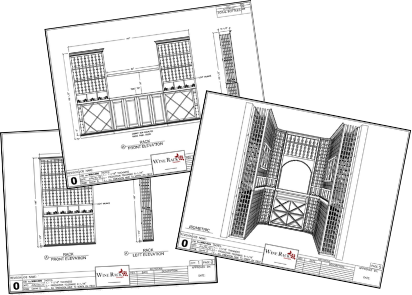
Have an expert help today!
Free 2D wine cellar design