Cable Wine Rack Systems for Modern Cellars

*Pictures are renderings. Actual wine racks may look different
The best cable wine rack system options balance materials, mounting style, and the cellar's overall look. Wine Rack Concepts offers cable, cable-and-glass, and cable-and-acrylic designs, as well as cable racks with solid brass components. Wall-mounted and floor-to-ceiling layouts create different ways to display a collection. The right choice depends on your room and the presentation you want.
It's natural to focus first on the cables and hardware, but the installation plan matters just as much. Ceiling height, available wall space, desired capacity, and whether you want labels displayed prominently all shape the design.
This guide explains how material choices affect a finished rack, what to consider when planning an installation, and how custom configurations can work in a modern cellar. You'll also learn what information helps shape a system around your space, whether you're planning a feature wall or storage for a larger collection.
Key Takeaways
- Match the rack layout to your cellar's bottle display goals, available wall or floor-to-ceiling space, and bottle formats.
- Compare cable finishes and construction materials to find a look that sits comfortably with the cellar's overall design.
- Plan installation around the mounting structure, cable length, and spacing so the system fits the room securely.
- Weigh cable racks against metal, wood, and acrylic styles to decide which best suits your priorities for display and design.
- A custom wine cellar design can bring cable racks, storage, and cooling together as a coordinated space.
Table of Contents
- How Does Professional Installation of a Floating Cable Wine Rack Work?
- What Materials Do You Use to Make Cable Wine Racks?
- Installation kits and installation planning
- Stainless steel cable and solid brass components
- How do cable wine racks compare with metal, wood, and acrylic wine racks?
- Wine Rack Concepts: Cable Wine Racks
How Does Professional Installation of a Floating Cable Wine Rack Work?
Wall and ceiling structure determine where a floating cable rack can be mounted. Secure attachment points are an important part of planning a stable installation. Plan mounting locations around the room's framing and finished surfaces.
A professional plan starts with the cellar's dimensions, bottle collection, and preferred display. The installer maps cable positions, mounting points, and bottle cradles before fitting the system. A 12-bottle floor-to-ceiling kit, for example, uses four high-tension architectural cable systems and is designed for ceilings up to 12 feet high. Systems can be adjusted for floor-to-ceiling heights from 6 to 14 feet.
Ceiling height affects cable spacing and estimated storage capacity. For an 8- to 9-foot ceiling, recommended spacing is 12 to 15 inches, with roughly 8 to 10 bottles per linear foot. At 10 to 12 feet, recommended spacing is 15 to 18 inches, with an estimated 12 to 15 bottles per linear foot. Above 13 feet, recommendations move to 18 to 24 inches, with roughly 15 to 20 bottles per linear foot. These estimates help guide the layout, while the chosen spacing also affects how open the display appears.
Bottle compatibility is another planning point. Cable-rack systems accommodate formats from Demi bottles at 375ml through Magnum bottles at 1.5L without changing hardware. Standard bottles are 750ml, while magnums and champagne bottles can also be displayed. Cradles or supports are typically sized around a 3.25-inch diameter, the standard diameter for most wine bottles. A professional considers the collection's formats when positioning supports, rather than planning solely around standard bottles.
Cradle design shapes both support and presentation. Bottles can sit label-forward for easy identification or cork-forward for a more uniform display. Consistent cradle positioning helps rows look orderly, while bottle spacing balances capacity with access. Wider gaps can accommodate larger formats; a tighter arrangement can make a compact display feel neat.
For a 12-bottle floor-to-ceiling kit, the installation plan includes the cable run, mounting points, and structural backing. The specified backing recommendation is 3/4-inch plywood. Integrating those decisions with custom wine cellar design can help align the rack's scale and position with the room's overall plan.
What Materials Do You Use to Make Cable Wine Racks?
In compact rooms, a wall-mounted arrangement keeps the display close to the wall. Commercial cellars can use repeated sections for a coordinated look. Choose materials that work with the cables, hardware, and any surrounding glass. Cable wine rack system options should suit both the cellar's dimensions and its design.
Rack Construction and Finishes
Cable rack designs can pair stainless steel cables with solid brass components, contrasting slender cable lines with substantial connection points. Consider how each element will appear against the cellar's walls, other racks, and lighting. A restrained finish can keep attention on the bottles, while stronger contrast can make the rack a feature. Compare cable wine rack system options by considering the complete assembly, not just the cable material.
Hardware and Mounting Finishes
Hardware finishes affect the visible details at clamps and tension mounts. Chrome and matte black offer different ways to coordinate cable rack hardware with nearby fixtures. Surrounding decor can guide the overall palette, but consider the finish across every visible mount rather than choosing based on a single fitting.
Construction and finish are separate decisions. Stainless steel describes the cable material; chrome or matte black describes a hardware finish. Keeping the categories distinct avoids confusing a polished cable with a chrome mount. For example, matte black hardware can complement dark metal details, while chrome can echo brighter fixtures.
Glass adds another surface to coordinate. Its appearance affects how the cable and hardware look from outside the cellar, so consider views from adjoining rooms as well as from inside. Clear glass keeps bottles and cable lines prominent; a shaded appearance can make the display feel quieter. Choose based on how visible you want the collection to be and the room's overall look.
In a small cellar, consistent finishes can keep visible components from competing for attention. In a commercial cellar, matching hardware across repeated sections can create a composed display. Assess the cable, clamps, tension mounts, and nearby glass together. A subtle detail can become prominent when repeated across the room.
Before settling on materials, define the visual priority: bottle labels, metal details, or the architecture around the rack. Then coordinate cable and hardware finishes with the glass and nearby fixtures. A design plan for your cellar can help bring those decisions into one coherent composition.
Installation kits and installation planning
A professional plans a custom cable wine rack from the wine cellar's measurements, wall and ceiling construction, desired capacity, and bottle formats. Share a floor plan or room dimensions, ceiling height, intended rack location, collection needs, and whether labels should face outward; these details shape the layout and kit requirements.
Kit selection depends on the display's mounting style and dimensions. A wall-mounted, single-bottle-depth cable rack sits about 6.5 inches off the wall, which can help preserve usable floor space. For a floor-to-ceiling design, the professional plans cable length around the room's measured height and the intended mounting points. A 12-bottle Float kit can be shortened to a cable length below 12 feet.
Structural preparation is central to installation planning. Cable racks need suitable blocking at their mounting points for stability. Plan where supports meet the rack's attachments and coordinate the layout with the surrounding construction. The installer sets cable tension during fitting; mount positions and alignment affect how the finished rack sits.
Dimensions also guide capacity and access. Map the available wall width, height, and depth against your storage needs, then plan cable and support locations to suit the space. If labels need to remain readable, account for that preference in bottle orientation and spacing. A narrow wall, for example, may suit a compact arrangement rather than one that projects farther into the room.
Installation planning should account for finished surfaces and how the rack will be used. Coordinate the mounting plan with wall finishes, ceiling details, nearby racks, and access to bottles. Leave practical access to cables and fittings. Suitable blocking, well-positioned mounts, and considered cable tension all contribute to a stable installation.
Customer support during planning means resolving design and installation questions in sequence. The professional can use the room dimensions and collection goals to clarify which kit configuration fits, where structural preparation is needed, and how a customizable layout can present bottles. A commercial wine cellar may require a different arrangement from a residential display, especially when capacity and label visibility are both priorities.
Stainless steel cable and solid brass components
A floating cable rack depends on the relationship between its cables, brackets, and bottle supports. Stainless steel cables form the suspended lines, while solid brass components provide connection points. Together, they create a display that feels visually light, with defined hardware details. The arrangement depends on whether the rack spans a wall or runs from floor to ceiling.
Cable length is a practical selection point. Float cable systems are offered with 12- or 20-foot-long cables, allowing the planned run to suit different installation layouts. A shorter run may suit a compact display, while a longer cable can accommodate a taller suspended arrangement. The professional design must match cable length to mounting positions and the cellar's dimensions, rather than treating cable length as an isolated choice.
Brackets and fittings connect stainless steel cables to the structure and help align the rack. In a floating installation, these attachment points are especially visible because bottles appear suspended rather than resting on continuous shelves. A clean, consistent line depends on coordinated cable placement and hardware positioning. For a double-column display, matching bracket positions across both runs helps keep the composition balanced.
Hardware selection also shapes how the system reads in the room. Brass components create a distinct metal accent beside stainless cable, while the chosen finish can coordinate with nearby fixtures or other cellar details. Consider the full installation together: cable, brackets, clamps, and visible supports. For example, a display with exposed fittings makes their finish more prominent than a design where surrounding architecture draws the eye first.
Steel and aluminum tariffs are a separate consideration from rack design. According to the White House, tariff charges on foreign steel and aluminum increased to 50%. That fact concerns foreign steel and aluminum; it does not establish the tariff treatment of every cable rack component or finished system. Material origin and the specific imported item matter when considering how tariffs may apply.
For a custom plan, identify the intended rack height, whether the layout is single or double column, and which hardware details will remain visible. Then coordinate those choices with cable runs and mounting locations. Stainless steel cable with brass components can suit a contemporary cellar where the display is meant to feel precise; simpler hardware can keep attention on the bottles. Plan the structure and appearance together before installation.
How do cable wine racks compare with metal, wood, and acrylic wine racks?
Each rack material gives a cellar a different balance of visibility, structure, and visual warmth. Cable suits an open display; metal, wood, and acrylic create distinct frames around a collection. Start by considering how you want bottles to appear, how much structure the room needs, and whether the rack should blend in or stand out.
Cable wine racks use narrow lines and individual supports, leaving more of the wall visible than a continuous shelf. This can make a display feel lighter, especially on a feature wall where labels or bottle shapes should stand out. The tradeoff is that cable systems need carefully planned mounting points. The room's structure and intended layout must support a suspended arrangement.
Metal wine racks offer a more defined framework. Visible rails and supports create a strong geometric pattern that can make storage feel like part of the architecture. A metal rack can also give rows a consistent look. Compare the frame with nearby fixtures and finishes; a bold structure may draw more attention than a slim cable display.
Wood brings a warmer, more traditional character. A wood wine rack can make storage feel integrated with cabinetry or other natural finishes, while cable can contrast with wood surfaces through its finer lines. The choice depends on whether the cellar should emphasize crafted shelving or let bottles appear more exposed. For example, a wood wall can provide a solid visual backdrop beside a floating cable display.
Acrylic offers a clear, contemporary look. Its transparent appearance can keep attention on bottles, much like cable's open effect, but the materials create different impressions: acrylic reads as a solid, clear support, while cable emphasizes suspended lines and hardware. Consider the surrounding lighting and finishes. Clear supports can recede visually, while polished cable fittings can become design details.
Compare materials by the role the rack needs to play. If you want bottles to appear suspended and the wall to remain visible, cable may suit the design. For a stronger frame, consider metal; for warmth, wood; for clear, minimal support, acrylic. Also consider how the rack will coordinate with cabinetry, wall finishes, and your display priorities.
In a custom cellar, materials can support the overall design rather than compete with it. Wine Rack Concepts can plan racking around room dimensions, bottle presentation, and chosen finishes, coordinating storage with the surrounding space.
Wine Rack Concepts: Cable Wine Racks
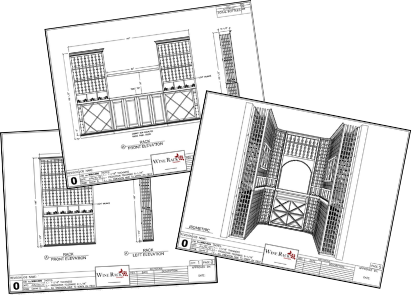
Wine Rack Concepts, LLC can help turn your cable rack preferences into a design suited to your cellar. Its cable wine racks can be planned around your collection, room dimensions, and preferred bottle presentation. If the rack is part of a larger project, a custom wine cellar design can bring storage and layout decisions together.
Planning can also include wine cellar cooling, so rack placement and the room's cooling arrangement work together as part of the overall design. Start with your available space, desired storage capacity, and whether the rack should blend into the cellar or stand out as a feature. Share your priorities with Wine Rack Concepts, LLC to discuss a design for your cellar.
Contact Wine Rack Concepts, LLC to discuss your cable wine rack project.
Shape the Cellar Around Your Collection
The next step is to turn your design preferences into a room plan. The cable wine rack system options that suit your cellar depend on how you want to present your collection and how storage fits into the space as a whole. Consider whether the rack should be a focal point or part of a broader cellar design, and how storage and cooling should work together.
Wine Rack Concepts, LLC brings these decisions together through its Wine Racks, Wine Cellar Cooling, and Custom Wine Cellar offerings. If you're planning a new cellar or refining an existing space, request a free custom design to clarify a direction that fits your collection and priorities.
A well-planned display makes room for both the bottles you value and the pleasure of sharing them. Start with your vision for the cellar, then shape the details around it.
Frequently Asked Questions
Can I only display bottles label-forward?
No. Cable rack designs can present bottles label-forward or cork-forward, depending on the cradle arrangement. Label-forward positioning makes bottles easier to identify at a glance, which can help when a collection is organized by producer or region. Cork-forward presentation gives the display a more uniform look when labels vary in color or design. Choose the view that best suits how you browse and present your collection.
Is The Cable Wine Display Safe?
A cable wine display is safe to use when its design, structural attachments, and installation suit the room and intended bottle load. Suitable blocking at mounting points is important for stability. A professional can assess the wall, ceiling, or floor structure and install the system accordingly. Keep bottles within their supports, and don't use the rack as a shelf for items beyond its intended wine storage use.
What are The Benefits of Using a Rack With a Cable System To Store Wine?
Cable systems create an open display that lets bottles stand out without a continuous shelf covering the wall. This suits a feature area where the collection is part of the room's design. The layout can also accommodate different bottle formats and display preferences. For example, a group of distinctive bottles can become a focal point rather than disappearing into cabinetry.
Which alternatives are available?
Wood, metal, and acrylic racks offer alternatives to cable construction. Wood can bring a warmer, furniture-like presence, while metal provides a more defined frame. Acrylic creates a clear, contemporary appearance. Choose based on the room's finishes and how much emphasis you want on the rack itself. A cellar with prominent wood cabinetry, for instance, may benefit from storage that complements it.
Which types of wine racking systems are available?
Wine storage systems include wood, metal, cable, and glass-based designs. Wood options include the Wall Wine Rack Series, Classic Series, Carpenter Series, and Vintner Series. Metal choices include wire racks, the Wine Peg Series, Fusion Wine Walls, and Deluxe Metal Wine Racks. The right category depends on the cellar's style, presentation, and storage plan. Wine Rack Concepts can bring these considerations together in a layout for residential or commercial use.
What types of cable wine rack systems are available?
Cable-based designs include cable racks, cable-and-glass systems, and cable-and-acrylic systems. These options combine suspended cable supports with different surrounding materials. Glass can create a more enclosed, polished presentation, while acrylic adds a clear, contemporary detail. Consider the room's architecture and whether you want an open cable feature or part of a larger enclosure.
How do cable wine racks attach to walls, ceilings, or floors?
Depending on the design, cable racks can mount to a wall or run between floor and ceiling attachment points. The mounting plan must align with suitable structural support, rather than relying only on finished surfaces such as drywall. For a cellar renovation, coordinate rack locations with framing and planned construction before closing the walls. This helps keep attachment points aligned with the finished display.
What materials and cable thicknesses are used in wine rack systems?
Cable systems can pair stainless steel cables with solid brass components; other wine rack materials include wood, metal, and acrylic. Consider cable thickness as part of the complete design, alongside the rack configuration, mounting approach, and collection needs. A professional can specify cable and fittings for the system being designed. Don't choose thickness separately from its supports and installation requirements.
Have an expert help today!
Free 2D wine cellar design