Bulk Wine Storage Racks: How to Plan a Scalable Storage System

*Pictures are renderings. Actual wine racks may look different
What if the best way to store more wine isn’t to fill every available wall with racks? Bulk wine storage racks work best when their capacity and layout are planned around the room, the bottles in your collection, and how you want to reach them. A large purchase may look efficient on paper, but awkward gaps or difficult access can make it less useful if rack dimensions and bottle formats aren’t considered together.
Before committing, answer two practical questions: how many bottle positions do you need, and will the system fit your space? A coordinated plan can balance dense storage with accessible rows and display areas, while leaving room for your collection to grow.
This guide covers how to estimate capacity, assess your room and bottle mix, and compare rack materials and configurations. You’ll also learn how to plan for expansion without sacrificing usable space, so the layout works from the first rack to the last.
Key Takeaways
- Plan bulk wine storage racks as one coordinated system, not just a larger quantity of individual units.
- Base your plan on your collection, room dimensions, bottle mix, and the space needed to move around and retrieve bottles.
- Compare wood, metal, and mixed layouts by appearance, care expectations, and fit with your project.
- Balance storage capacity with access and display needs.
- Consider a custom wine cellar plan when you need to coordinate racks with the room and leave room for future growth.
What Makes Bulk Wine Storage Racks Different from Buying Individual Racks?
Individual racks can solve an immediate storage need. Planning bulk wine storage racks is a broader decision: it means coordinating the quantity, layout, collection needs, and room dimensions as one system. A private collector may want to bring scattered bottles into a unified cellar, while a commercial operator may need storage that supports selection and display. In either case, the goal isn’t simply to fit the greatest stated bottle count into the room. It’s to create storage that suits the collection and remains practical to use.
Long-term storage depends on the conditions around the racks, not just the rack count. A wine’s ability to age is influenced by factors beyond how it is arranged, so consider the storage environment alongside the layout. Rack materials and presentation also shape the room’s appearance. For example, wooden wine racks can create a different look from metal systems.
For a visual reference, watch this example of a built-in wine cooler with wooden racks:
When does a wine collection need a coordinated rack system?
There’s no single collection size that calls for a planned system. Consider how much wine you store now, how the collection may grow, and whether your current racks make bottles difficult to find or reach. Separate units placed wherever space permits can leave awkward gaps or create an inconsistent layout. A coordinated plan organizes storage around the room while reserving space for access and future additions. Private collections may prioritize organization and personal display; commercial storage may place greater emphasis on visibility and convenient selection.
What does rack capacity tell you, and what does it leave out?
A rack’s stated bottle capacity is a starting point, not a guarantee of how many bottles will fit in your finished layout. Capacity can vary with the configuration and the shapes of the bottles being stored. A design suited to standard bottles may not accommodate every format in the same way, so check the product capacity against the specific configuration and bottle mix you plan to store.
Keep four planning measures distinct: the number of bottle positions you need, the number of racks required, the capacity the room can use after accounting for its dimensions and obstacles, and the number of bottles you can comfortably access. A room may have space for a certain number of racks but less usable capacity once doors, pathways, and retrieval needs are considered. Plan for your current collection, expected growth, and how you’ll use the room.
How to Plan Bulk Wine Storage Racks Around Your Space and Bottles
A reliable layout starts with the room and collection, not a rack count. Before comparing bulk wine storage racks, work through five steps: inventory your bottles, measure the room, map access, select a configuration, and verify the plan against your bottles and available space. This order can help you spot practical problems before committing to multiple racks.
Sort your collection by bottle shape and note any unusually sized formats. Then record usable wall and floor areas, ceiling height, doors, windows, corners, fixed obstacles, and intended rack locations. Mark the paths you’ll use to enter, move through, and retrieve bottles. If you need a work or display area, include it in the plan rather than treating every open patch as rack space.
Which room measurements matter before ordering multiple racks?
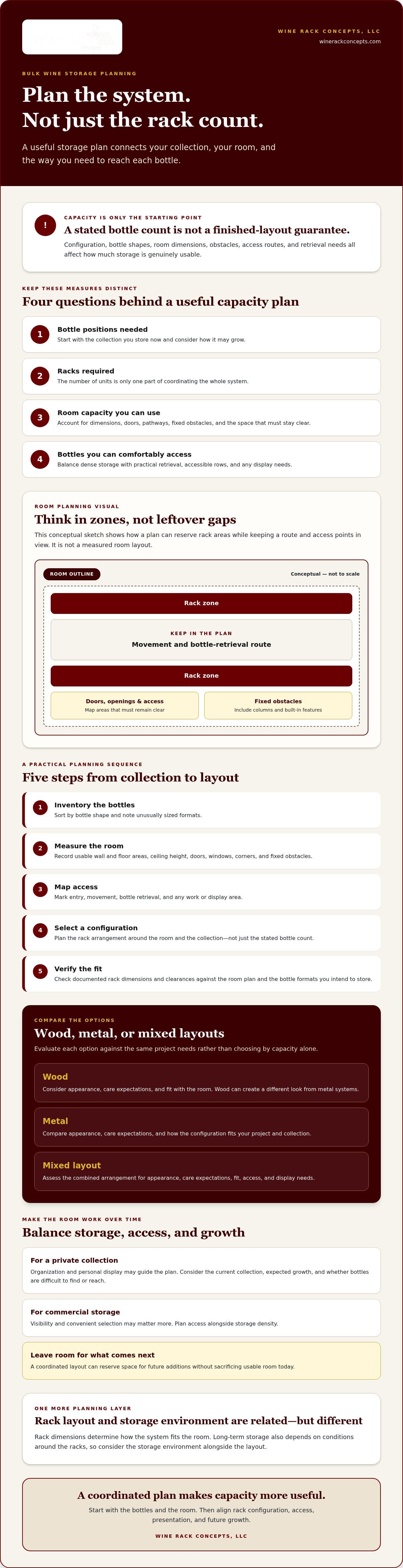
Measure the surfaces where racks could go, and map the areas that must remain clear. Door swings, openings, columns, built-in features, and access routes can all reduce the space that’s genuinely available. A sketch showing rack locations and movement paths can reveal conflicts early. Compare the plan with the selected configuration’s documented dimensions and required clearances, and confirm the fit before finalizing quantities.
Keep rack selection separate from the room’s construction and storage conditions. Rack dimensions determine how the system fits; insulation, moisture management, and cooling relate to the cellar environment. For background on the conditions for storing wine, consider how light, humidity, and temperature factor into the broader plan. If the room will be climate controlled, assess its construction and cooling needs separately from the racks.
How should bottle formats influence rack planning?
Usable capacity depends on the rack design and the bottle formats it’s intended to hold. Inventory standard-shaped bottles separately from wider, taller, or otherwise unusual formats, then check that each planned configuration suits the mix. Don’t assume a stated capacity applies equally to every bottle shape. Confirm compatibility for specialty bottles and verify the expected capacity for the configuration you’re considering.
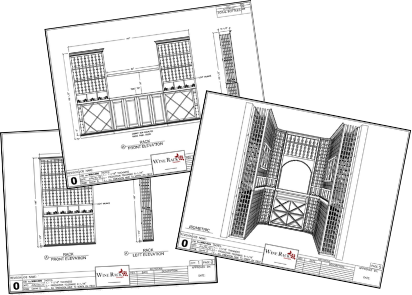
Once you have your inventory and measurements, compare suitable options, map where each rack type will go, and check the complete layout against access needs and future additions. If the dimensions and configuration choices are difficult to coordinate, the free design service can help you review the plan.
Wood, Metal, or Mixed Layouts: Compare Bulk Wine Rack Options
Material helps define the character of a large wine room, but no option is right for every project. Consider the room’s style, how you want bottles presented, your collection’s needs, and the care each finish may require. A consistent choice can give a large installation a unified appearance. A deliberate mix can distinguish storage zones or create a focal display.
Rack material is only one part of the plan. It doesn’t replace suitable cellar conditions, a point underscored by Wine Folly’s discussion of scientific proof related to wine storage temperature. Treat environmental planning and rack selection as connected but distinct decisions.
| Option | Visual character | Planning considerations |
|---|---|---|
| Wood | Warm, traditional, and visually substantial | Review finish, care expectations, configuration, and fit with the room. |
| Metal | Clean, streamlined, and suited to a contemporary look | Confirm the selected system’s dimensions, bottle compatibility, and intended presentation. |
| Mixed materials | Combines contrasting textures and display styles | Check that the materials work together visually and fit the same layout requirements. |
When might wooden wine racks suit a bulk storage project?
Wood can bring warmth and a classic architectural feel to a cellar. It may suit owners who want the racks to feel integrated with the room. Wine Rack Concepts, LLC offers wooden wine rack options, including the Classic, Carpenter, and Vintner series. These are distinct product series, so compare their available configurations and confirm which suits your room and bottle mix rather than assuming every option fits the same plan.
When might metal or mixed-material racks fit the design?
Metal may suit a project where you prefer a minimal appearance or a different way to present bottles. Explore metal wine rack options from Wine Rack Concepts, LLC and check the selected configuration against room dimensions, access needs, and bottle formats. Cable and glass systems can create a distinct visual effect, particularly when the storage is meant to be seen. Their suitability depends on the project, so verify the details before choosing.
For bulk wine storage racks, cohesion comes from making material and configuration choices intentionally. You might use one style throughout for a continuous appearance, or reserve a contrasting system for a display area while keeping the main storage consistent. Before finalizing, verify the product’s dimensions, capacity, bottle compatibility, care requirements, and installation details. That keeps design decisions grounded in the needs of the room and collection.
How to Keep Bulk Wine Racks Accessible and Scalable
A storage layout is useful only if you can find and retrieve bottles without turning the room into a puzzle. With bulk wine storage racks, usable capacity includes more than bottle positions. It also depends on clear access paths, convenient placement, and how the collection is organized. Plan those details alongside the rack arrangement so efficiency doesn’t come at the expense of everyday use.
How can a large collection stay organized and easy to reach?
Choose a grouping system that reflects how you think about your wine. You could organize by region, varietal, producer, or drinking occasion. Place bottles you reach for often in accessible positions, and use less accessible areas for bottles you select less frequently. Leave enough room to approach racks and remove bottles comfortably.
- Use consistent labels or rack markers to identify groups.
- Keep a written or digital inventory that matches the physical layout.
- Consider a display area for bottles you want to see, separate from everyday storage.
A clear organizing method makes a large collection easier to browse and helps prevent the need to rearrange racks or move bottles just to find a particular group. Choose a system you’ll maintain as the collection changes.
What should you consider before leaving room to expand?
Think about how your collection may grow, then reserve space only where the room and layout can support it. An empty area isn’t automatically a suitable expansion zone. Doors, access routes, room features, and other racks may limit what can be added later. Preserve enough working space for retrieval rather than filling every available surface from the start.
Before planning to add racks, confirm whether the specific configuration can be extended or integrated with additional units. Compatibility may depend on the design, dimensions, and bottle mix, so don’t assume a system is modular without checking. Identify where possible additions could go and what must be confirmed before ordering them.
For help mapping access, organization, and potential expansion into one layout, request a free wine rack design.
Bring Your Bulk Wine Storage Rack Plan Together with Expert Design
A well-planned rack system brings several decisions into alignment: your collection, room dimensions, bottle mix, preferred material, access needs, and plans for growth. Reviewing them together helps you move from an estimated bottle count to a layout that fits the space and supports how you store and use wine. Design support can be especially useful when the room has unusual dimensions or the racks need to coordinate with a larger cellar plan.
What information should you prepare for a design conversation?
Gather room measurements, photographs, and notes about doors, windows, fixed obstacles, and intended rack locations. Then describe your collection and priorities, including current quantity, bottle formats, desired capacity, preferred appearance, and how you expect to access or display bottles.
It also helps to clarify whether the project is residential or commercial. A private cellar may emphasize personal organization and convenient retrieval, while a commercial space may need a different balance of storage, access, and presentation. The more clearly you describe how the room will be used, the more focused the layout discussion can be.
When do racks need to be planned with the wider cellar?
If racks are part of a custom cellar, planning them alongside the room can help coordinate storage with its dimensions, appearance, and intended use. A custom wine cellar design guide can help you consider how rack selection fits into the broader project. For a commercial installation, outline how staff or visitors will approach and access the collection so those needs inform the arrangement.
Cooling is a separate project consideration. If the cellar will use wine cellar cooling, account for it as part of the wider room plan rather than assuming a rack choice addresses environmental requirements. Confirm product dimensions, bottle compatibility, and installation details for the selected configuration before finalizing the layout.
With these details assembled, you can review the proposed arrangement as a complete plan: what it stores, how it fits, how bottles are reached, and where future additions may go. A project-specific layout can clarify those decisions before you commit to a coordinated system.
To start reviewing your layout, request a free wine rack design.
Plan a Wine Storage System That Grows with Your Collection
A successful plan starts with your collection and the room it needs to occupy. Before choosing bulk wine storage racks, account for room dimensions, bottle formats, and the access paths that make storage comfortable to use. Then compare materials and configurations, confirm the fit, and consider where future additions could go without crowding the space.
Wine Rack Concepts offers rack systems for residential and commercial applications, along with custom wine cellar design and wine cellar cooling options. These offerings can help bring storage capacity, room layout, and visual preferences into one coordinated plan, whether you’re organizing a private collection or planning a commercial space.
Gather your measurements, collection details, and design preferences, then request a free wine rack design to take the next step.
A considered plan can make your collection easier to access today and leave room for the bottles you add tomorrow.
Frequently Asked Questions
What are bulk wine storage racks?
Bulk wine storage racks are a coordinated group of racks planned as one layout, rather than a single unit or universal rack category. The plan accounts for collection size, room dimensions, bottle mix, access, and appearance. Private collectors and commercial operators may both need a larger system, though their priorities can differ. Bottle capacity alone doesn’t define a useful installation.
How do I calculate how many wine racks I need?
Count your current bottles and decide how much room you want for likely growth. Check the capacity of the specific rack configuration against your bottle formats, then estimate how many units would provide the positions you need. Next, test that quantity against the room plan. Openings, obstacles, access paths, and display areas can reduce usable space, so don’t base the calculation on advertised capacity alone.
Will bulk wine racks fit different bottle sizes?
Not necessarily. Bottle fit and usable capacity may vary by rack design, so identify the shapes and formats in your collection before choosing a configuration. Separate standard bottles from unusually wide, tall, or specialty formats, then confirm compatibility for each rack type. If your collection includes a mix, verify how the proposed layout will store those bottles before finalizing quantities.
Are wooden or metal wine racks better for a large collection?
Neither material is universally better. The right choice depends on the room, preferred look, and project requirements. Wood can bring a warm, traditional character, while metal may suit a more streamlined design. Consider care expectations and how each option will look across a large installation. Compare the actual configurations and confirm dimensions and bottle fit before choosing based on appearance alone.
Can I expand a bulk wine rack system later?
Expansion may be possible, but don’t assume every rack system is designed to accept additional units. Consider where future racks could go, whether that space will remain available, and how additions might affect access or the room’s appearance. Before choosing a system, ask whether the specific configuration can integrate with additional racks and verify any dimension or bottle-format requirements.
Do bulk wine storage racks need a wine cellar?
No. Racks can be planned for different spaces, and a dedicated wine cellar isn’t automatically required. Consider whether the environment suits your storage goals, including factors such as light, humidity, and temperature. If you’re planning a climate-controlled room, treat cooling and room conditions as separate considerations from rack selection. Wine Rack Concepts, LLC offers both wine racks and wine cellar cooling options.
What should I send for a wine rack design consultation?
Share room measurements, photographs, and notes about doors, openings, and fixed obstacles, along with intended rack locations. Include your collection size, bottle formats, preferred materials or appearance, and how you want to organize and access the wine. It’s also helpful to explain whether the project is residential or commercial and note any plans for collection growth. These details make the layout discussion more specific.
Have an expert help today!
Free 2D wine cellar design