Apartment Wine Storage Solutions: Professional Ideas for Small Spaces

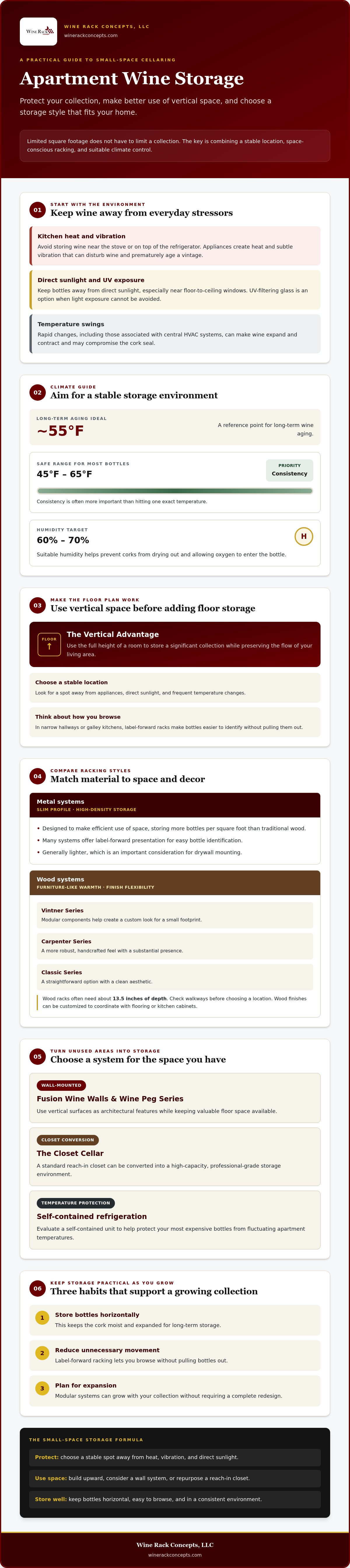
*Pictures are renderings. Actual wine racks may look different
*Pictures are renderings. Actual wine racks may look different
What if your limited square footage wasn't a barrier to building a world-class wine collection, but rather an opportunity for sophisticated design? Many collectors feel that professional storage is a luxury reserved for sprawling estates, leaving them to struggle with apartment wine storage solutions that either clash with modern decor or fail to protect against heat and vibration. You've likely experienced the anxiety of watching a prized bottle sit on a kitchen counter while the afternoon sun pours in, wondering if the wine is losing its character before you even pull the cork.
It's understandable to feel that a growing collection will eventually crowd you out of your own home. This guide will show you how to protect and display your wine in limited square footage using professional-grade racking and climate control systems. We'll examine space-efficient options like the Fusion Wine Wall and the Vintner series, helping you move from cluttered corners to a curated gallery that scales with your passion. By the end, you'll have a clear path to creating a stable environment that respects both your floor plan and your palate.
Key Takeaways
- Identify why common kitchen locations are detrimental to wine and how to choose more stable, vibration-free environments within your floor plan.
- Compare the slim profiles of metal systems against the classic warmth of the Vintner and Carpenter series to find the right apartment wine storage solutions for your decor.
- Discover how Fusion Wine Walls and the Wine Peg Series turn vertical surfaces into architectural features without sacrificing valuable square footage.
- Learn the secrets of the "Closet Cellar" concept to convert standard reach-in storage into a high-capacity, professional-grade environment.
- Evaluate the benefits of self-contained refrigeration units to ensure your most expensive bottles remain protected from fluctuating apartment temperatures.
The Fundamentals of Apartment Wine Storage Solutions
Apartment wine storage solutions require a delicate balance between optimizing limited square footage and maintaining strict environmental control. In a high-rise or a compact studio, every inch of floor space is valuable. This means your storage must do more than just hold bottles; it must act as a protective barrier against the unique stressors of urban living.
Many enthusiasts fall into the "Kitchen Trap." While it's convenient to keep wine near the stove or on top of the refrigerator, these are the most hostile environments in your home. Appliances generate consistent heat and subtle vibrations that can prematurely age a vintage or disturb the sediment in a fine red. Similarly, modern apartments with floor-to-ceiling windows introduce high levels of UV exposure. Light-strike can degrade wine quickly, making it essential to choose storage locations away from direct sunlight or to invest in UV-filtering glass.
The most effective strategy for small spaces is the "Vertical Advantage." When floor space is at a premium, look to your walls. Utilizing the full height of a room allows you to house a significant collection without sacrificing the flow of your living area.
Environmental Factors to Monitor
Understanding the fundamental principles of wine storage is the first step toward protecting your investment. While the ideal temperature for long-term aging is approximately 55°F, a safe range for most bottles falls between 45°F and 65°F. Consistency is often more vital than hitting a specific number. Rapid fluctuations in temperature, common in apartments with central HVAC systems, cause the wine to expand and contract, which can eventually compromise the seal of the cork. Humidity should ideally stay between 60% and 70% to prevent corks from drying out and allowing oxygen to enter the bottle.
Space-Saving Storage Principles
Efficient storage starts with orientation. Storing bottles horizontally is a non-negotiable requirement for long-term health as it keeps the cork moist and expanded. In narrow hallways or galley kitchens, consider the benefits of label-forward racking. This orientation allows you to browse your collection without pulling bottles out, which minimizes unnecessary movement. If you're just starting out, prioritize modular designs. Systems that allow for expansion ensure that your setup can grow alongside your collection without requiring a complete redesign of your space. For those looking to start their project, our free design service can help you visualize how these principles fit your specific layout.
Comparing Racking Materials for Small Spaces
Selecting the right materials for apartment wine storage solutions involves balancing aesthetic preference with the structural realities of your living space. While a sprawling basement cellar allows for heavy, deep racking, an apartment requires a more strategic approach to weight and depth. You must consider how the material interacts with your walls and how much it protrudes into your living area.
Traditional Wood Series: Vintner and Carpenter
Wood provides a timeless, furniture-grade quality that integrates seamlessly with existing cabinetry. Our Vintner Series is particularly effective for small footprints because its modular components allow you to build a custom look without the custom price tag. If you desire a more robust, handcrafted feel, the Carpenter Series offers exceptional durability and a substantial presence. For those seeking a straightforward, reliable option, the Classic Series provides a clean aesthetic that fits almost any decor. You can customize wood finishes to match your apartment's floor or kitchen cabinets, creating a cohesive design. Keep in mind that wooden wine racks often require a depth of about 13.5 inches, so ensure your chosen wall doesn't obstruct high-traffic walkways.
Contemporary Metal Racking
Metal systems excel where space is at a premium. Their slim profiles and high-density storage capabilities allow you to store more bottles per square foot than traditional wood. Many of these systems feature label-forward designs. This turns your collection into a visual focal point, making it easy to identify specific bottles at a glance. Metal is also generally lighter, which is a critical consideration if you're mounting to drywall. While many of our components are manufactured in the USA, we source materials globally to ensure the highest quality for our metal wine racks. These systems are often easier to install or move, making them ideal for renters who may want to take their storage with them to a future home.
When planning your layout, consider the load-bearing capacity of your walls. A full case of wine weighs approximately 30 to 40 pounds. If you're mounting a large system on drywall, you'll need to locate studs or use specialized heavy-duty anchors. Depth is equally important. Choosing a system with a slim profile ensures that your collection doesn't become a tripping hazard in a narrow apartment hallway. If you're unsure which material best suits your floor plan, you might find it helpful to use a free design service to map out your specific dimensions. This ensures your apartment wine storage solutions are both beautiful and structurally sound.
Modern Innovations: Fusion Wine Walls and Peg Systems
Modern apartment living often lacks the architectural depth required for a traditional walk-in cellar. This structural limitation has driven the development of specialized apartment wine storage solutions that shift from simple furniture to integrated design features. Fusion Wine Walls and precision peg systems allow you to utilize thin wall profiles without sacrificing the luxury feel of a professional environment. These innovations treat the bottle as a piece of art, using the wall itself as a canvas for your collection. This level of bespoke integration is a hallmark of high-end joinery, often overseen by a specialist such as an ébéniste sur mesure Neuchâtel, where every millimeter is considered to maximize both form and function.
The Fusion Wine Wall series represents a sophisticated blend of natural wood warmth and modern metal precision. If you want to define a specific area of your living room or dining area as a dedicated wine zone, these panels provide the necessary visual weight without the bulk of floor-standing units. The system combines high-quality wood backings with sleek metal plates, creating a textured look that complements high-end cabinetry. You can explore modern wine wall displays to see how these systems act as a centerpiece in contemporary interiors. They are particularly effective for creating a "cellar feel" in a multi-purpose room where space must remain fluid and open.
Minimalist Wine Pegs and Cables
For those dealing with extremely narrow spaces or unique architectural features like kitchen backsplashes, the Wine Peg Series offers the ultimate in minimalism. These precision-engineered pegs hold bottles securely while keeping the labels front and center, allowing for easy identification of your favorite vintages. By utilizing a grid of individual pegs, you maximize bottle density per square inch, turning even a small vertical surface into a high-capacity storage area. While many of our components are manufactured in the USA, we utilize globally sourced materials for certain metal series to ensure the highest standard of durability and finish.
Open-concept apartments benefit significantly from Cable and Glass Wine Racks. These systems create a "floating" effect that maintains sightlines across a room, providing a sense of transparency that heavier wood racking cannot match. They are ideal for separating a kitchen from a living area without closing off the space. These modern systems also provide exceptional flexibility for irregular bottle shapes. Whether you collect oversized Champagnes or slim, tall Rieslings, peg and cable systems allow you to adjust the spacing to fit your specific inventory. This adaptability ensures that your apartment wine storage solutions remain functional as your tastes and collection evolve over time.
Strategic Placement: Maximizing Every Inch
Apartment living requires a creative eye for architectural dead zones that you can reclaim for storage. Hallways, alcoves, and even the space under a staircase often sit empty; however, they provide the perfect footprint for specialized apartment wine storage solutions. By prioritizing wall-mounted systems, you preserve floor space for furniture and movement while elevating your collection into the room's visual design. This approach turns a functional necessity into a sophisticated interior feature that defines the atmosphere of your home.
When you're dealing with narrow passages like a front entryway or a galley-style hallway, depth is your primary constraint. You need to select a wall mounted wine rack that offers a slim profile without sacrificing bottle security. Many of these professional systems allow for label-forward display. This keeps the rack's depth under four inches while making every bottle in your inventory immediately accessible. It's a practical way to display your collection without obstructing the flow of your living space.
Closet Conversions and Built-ins
A standard reach-in closet can be transformed into a professional storage room with the right planning. Most apartment closets offer enough depth to accommodate the 13.5-inch footprint of the Vintner Series, which is a favorite for creating a seamless built-in look. This series uses modular components that you can stack or sit side-by-side to fill the entire height of the closet. Measuring is the most critical step. You must account for the thickness of the racking and the space needed to pull bottles out comfortably. Ventilation is another vital consideration. If you're keeping the closet door closed, you'll need to ensure adequate airflow to prevent heat buildup. This is especially true if you plan to integrate a self-contained cooling unit to stabilize the environment for long-term aging.
Corner and Niche Solutions
When planning a high-end closet conversion or custom cabinetry project, it is often helpful to look at broader design trends; for example, bazzottidesign.com highlights how architectural features like stretch ceilings can complement luxury interiors.
Corners are often the most underutilized areas in any floor plan. A dedicated corner wine rack can bridge the gap between two walls or furniture pieces, creating a continuous flow of storage that looks intentional. For smaller alcoves or dead walls between doors, a metal peg system creates a compact wine nook that adds character to the space. Stability is key. Because these systems focus significant weight into a small footprint, secure anchoring is non-negotiable. It's best to fasten your racking directly into wall studs or use professional-grade hardware designed for the specific weight of full glass bottles. If you also require heavy-duty organization for utility spaces or home storage, Zessentials Holdings Pte. Ltd. provides premium boltless storage systems that offer industrial-grade stability. These thoughtful details ensure your apartment wine storage solutions are both secure and stylish.
For entrepreneurs who value professional organization in all aspects of their life, visit The CEO Creative to explore custom branding and business supplies that complement a high-end lifestyle.
Establishing a stable environment is the final and most critical step in implementing effective apartment wine storage solutions. While high-quality racking organizes your collection, professional-grade climate control ensures that your investment actually matures as intended. In an apartment setting, where central heating systems and large windows create frequent temperature swings, relying on ambient room air is often a gamble. If you're serious about long-term aging, you must move beyond the limitations of a standard kitchen wine fridge and consider a dedicated cooling system.
Investing in a professional cooling system provides precision that standalone appliances cannot match. Standard wine fridges often struggle with humidity regulation and can transmit harmful vibrations through their light-duty compressors. In contrast, integrating Self Contained Refrigeration Units into a closet or nook allows for consistent humidity levels and superior thermal stability. To complete the environment, Metal Wine Cellar Doors act as a functional seal. These doors are designed to maintain a strict thermal barrier, preventing the cool, humidified air of your storage zone from escaping into the rest of your living space.
Self-Contained Cooling Units
For small-scale closet cellars or converted pantries, through-the-wall units offer a streamlined solution. These systems are designed to sit within the wall framing, venting heat into a well-ventilated adjacent room. When selecting a unit for an apartment, noise levels and BTU sizing are the primary considerations. A unit that's too small will run constantly, increasing noise and energy costs, while a correctly sized system maintains the target temperature with minimal cycles. You can review the technical specifications for wine cellar cooling to determine which capacity fits your specific square footage. This technical precision is what separates a professional storage space from a simple shelving unit.
The Value of Custom Design
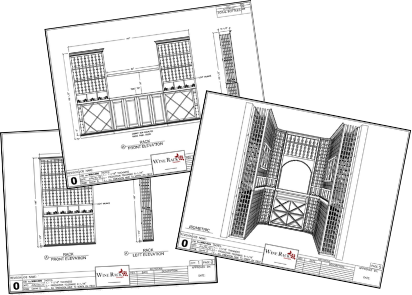
Navigating the constraints of a compact floor plan often requires more than just a measuring tape. Utilizing professional design services allows you to see 3D renderings of your space before any hardware is installed. This visual aid is essential for identifying potential clearance issues in narrow hallways or ensuring that a Vintner Series rack fits perfectly into a non-standard alcove. Working directly with a manufacturer helps you maximize your return on investment by choosing durable materials that are scaled to your current collection and future goals. A professional designer acts as a guide, helping you avoid costly mistakes and ensuring that your finished storage looks like a seamless architectural feature rather than an afterthought.
Transforming Your Urban Space into a Collector's Haven
Building a professional-grade collection doesn't require a sprawling estate; it simply requires a strategic approach to the space you have. By utilizing vertical surfaces and choosing high-density systems like Fusion Wine Walls or the Vintner series, you can turn underused hallways and closets into architectural focal points. It's vital to remember that protecting your investment is just as important as displaying it. Integrating specialized cooling systems for small spaces and high-quality racking ensures your bottles remain stable regardless of apartment temperature fluctuations.
Implementing these apartment wine storage solutions transforms a simple hobby into a lasting legacy of curation and taste. With American-made components available for many of our series and expert design consultation for any room size, you have the resources to build a cellar that reflects your personal style. You're now ready to move from basic shelving to a sophisticated environment that respects both your floor plan and your palate.
Your collection deserves a home that is as carefully crafted as the vintages themselves. We look forward to helping you envision a space that brings you pride every time you select a bottle.
Frequently Asked Questions
Can I store wine on my kitchen counter if it is in a rack?
Storing wine on a kitchen counter is generally discouraged regardless of the rack used. Heat from the oven and consistent vibrations from the refrigerator or dishwasher can degrade the wine's quality over time. If you must use the kitchen, choose a low spot away from heat sources. For long-term protection, moving your collection to a cooler, quieter area like a hallway or closet is a far more reliable strategy.
How many bottles can I realistically store in a small apartment?
You can store a surprisingly large collection by utilizing vertical space. A single Fusion Wine Wall panel can hold between 3 and 48 bottles depending on the configuration. If you utilize a full reach-in closet with the Vintner series, it's possible to house over 200 bottles in a very small footprint. These apartment wine storage solutions ensure you don't have to compromise on the size of your collection due to limited square footage.
Do I need a cooling unit if my apartment is always air-conditioned?
Standard residential air conditioning isn't designed for wine preservation. While it keeps you comfortable, it often lacks the precise humidity control and thermal stability required for aging. Wine needs a consistent environment of about 55 degrees and 60% humidity. Self-contained refrigeration units are a better choice for collectors. They provide the dedicated climate control necessary to prevent corks from drying out and wine from oxidizing prematurely.
Are wall-mounted wine racks safe for apartment drywall?
Wall-mounted systems are safe for drywall as long as you follow professional installation guidelines. You should always aim to secure the mounting hardware directly into wall studs for maximum stability. If studs aren't available, high-quality toggle bolts or specialized drywall anchors can support the weight of a smaller rack. Given that a full case of wine weighs roughly 40 pounds, ensuring a secure structural connection is essential for safety.
What is the best wine storage solution for a renter?
Renters often find that modular metal racking or the Wine Peg Series offers the best flexibility. These systems are typically easier to install and leave minimal damage to walls when it's time to move. Because they are compact, they fit well in temporary living situations. You can take these apartment wine storage solutions with you to your next home, allowing your storage setup to evolve along with your living arrangements and collection.
How do I protect my wine from vibrations in a small space?
Protecting wine from vibrations requires careful placement away from heavy appliances and high-traffic areas. Vibrations can disturb the natural sediment in red wines and negatively impact the aging process. Using sturdy, professional-grade racking like the Carpenter or Vintner series helps dampen subtle movements. If you're building a closet cellar, ensure your cooling unit is properly mounted to avoid transferring mechanical hums directly into the bottle supports.
Is a wine fridge better than a wine rack for an apartment?
A wine fridge is excellent for short-term service, but a professional racking system with a dedicated cooling unit is superior for serious collectors. Wine fridges have limited capacity and can sometimes struggle with consistent humidity. A custom-designed zone using a self-contained refrigeration unit offers more storage density and better long-term protection. This setup allows you to display your bottles as decor while maintaining the strict environmental standards of a traditional cellar.
How much depth do I need for a label-forward wine wall?
Label-forward wine walls are exceptionally space-efficient, typically requiring only 4 to 5 inches of depth. This slim profile makes them perfect for narrow hallways or as a backsplash in a dining area. Because the bottles sit parallel to the wall, you maximize your walkway space while keeping every vintage clearly visible. This orientation allows you to browse your inventory effortlessly without having to pull bottles out to read the labels.
Have an expert help today!
Free 2D wine cellar design